📑 Table of Contents
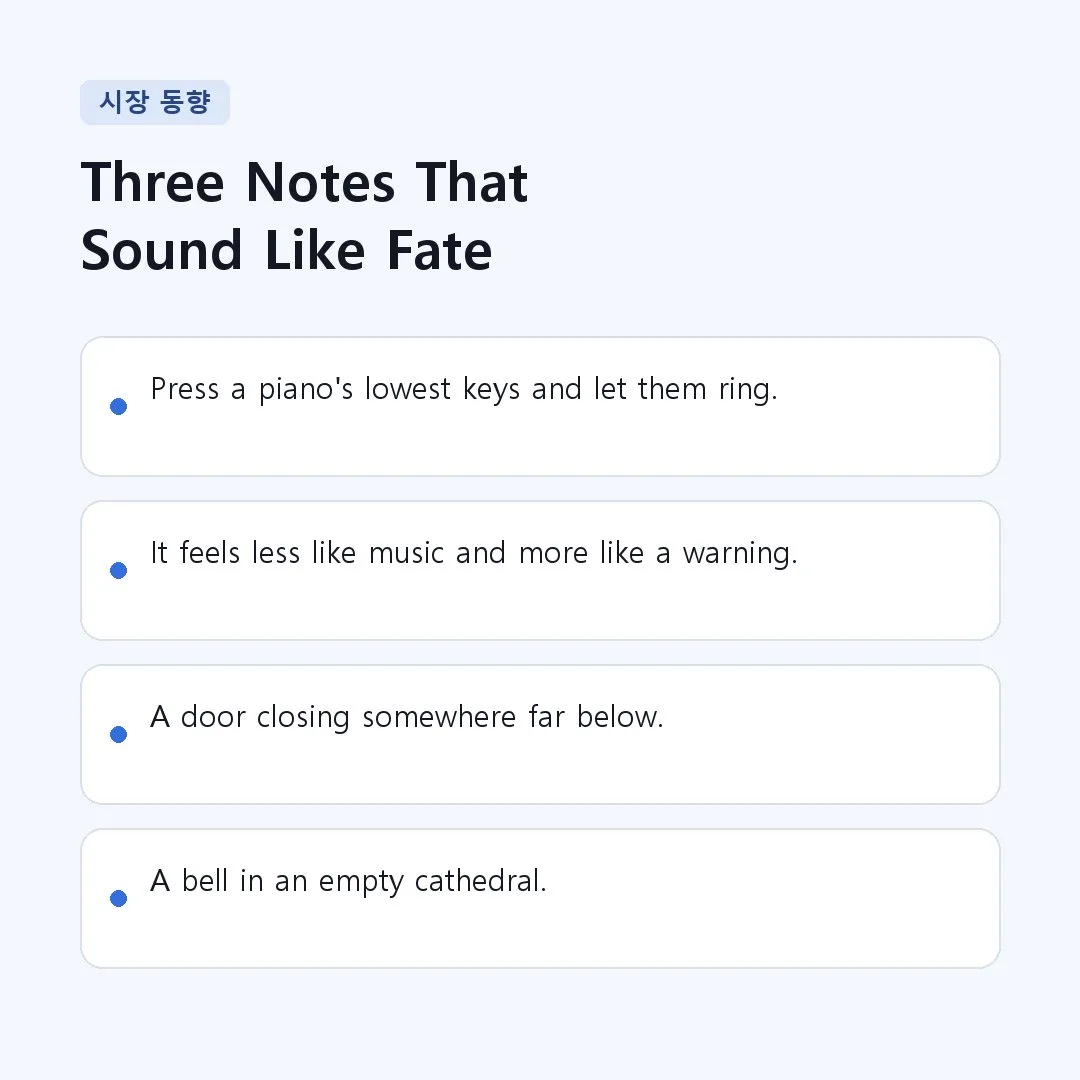
Press a piano’s lowest keys and let them ring. That deep, ominous toll — three falling notes, A, G-sharp, C-sharp — is the first thing you hear in this piece, and it never quite lets you go. It feels less like music and more like a warning. A door closing somewhere far below. A bell in an empty cathedral.
If you’ve ever sat with a feeling too heavy to name — grief, dread, the weight of something you can’t fix — this Prelude already understands it. Composed in 1892, it has spent more than a century giving shape to emotions most of us can only feel in silence. And the strangest part of its story is that the young man who wrote it grew to resent it deeply.
The Genius Who Couldn’t Escape His Own Hit
Sergei Rachmaninoff was barely nineteen when he composed this Prelude, fresh out of the Moscow Conservatory. He was tall, intensely shy, with hands so enormous he could stretch across more keys than almost any pianist alive. He would become one of the greatest pianists of his era and a composer whose lush, aching melodies still anchor the Romantic repertoire.
But in 1892 he was broke. He sold this Prelude — as part of a small set called the Morceaux de fantaisie — for the equivalent of about forty rubles, a flat fee with no royalties. He had no idea what he was giving away.
The piece exploded in popularity. Audiences across Russia, Europe, and America demanded it everywhere he played. For the rest of his life, no recital felt complete to listeners until he performed it. He came to call it, with weary irony, simply “It.” He earned not a single extra coin from the millions of copies sold, and he was chained to a four-minute piece he’d written as a teenager. Imagine being remembered forever for the first thing you ever made.
The Bells Beneath the Music
To understand why this Prelude lands so hard, you have to hear what’s hidden inside it.
Rachmaninoff grew up surrounded by the sound of Russian Orthodox church bells — vast, resonant, layered tones that ring across whole cities. Bells run through his entire body of work like a signature. This Prelude is essentially a piano pretending to be a set of cathedral bells.
The structure is simple enough that a beginner can follow it on a first listen. There are three clear sections:
The opening is slow and grave. Those three heavy bass notes toll again and again beneath a hushed, mournful melody. It’s the sound of standing in a cold, stone space, alone with a heavy thought.
The middle suddenly accelerates into a storm — fast, agitated, almost panicked, like emotion finally breaking loose and crashing in waves. If the opening is grief held in, this is grief that can’t be held anymore.
The return brings the bells back, but now thunderous. Rachmaninoff piles up enormous chords across the full range of the keyboard, demanding both hands hammer out massive sonorities. It’s overwhelming on purpose — the bells are no longer distant; they’re crashing down around you. Then it all subsides into quiet, and the piece simply lets go.
There’s a persistent legend that the Prelude depicts a man buried alive, clawing at his coffin lid. Rachmaninoff never confirmed it, and it’s almost certainly a myth invented by audiences. But the fact that the story stuck tells you everything about how the music feels: claustrophobic, urgent, and finally resigned.

How to Listen When You’re Carrying Too Much
You don’t need to know a single technical term to let this piece work on you. Put on headphones and try this:
In the first minute, don’t listen for anything. Just notice the three repeating low notes and how they sit under everything like a heartbeat you can’t ignore. Let them be as heavy as they want to be.
When the music speeds up in the middle, follow the rising tension instead of resisting it. This is the piece doing the work of feeling on your behalf — letting agitation build so you don’t have to manufacture it yourself.
In the final section, brace for the volume. Those colossal chords are meant to flood you. Many listeners find this is where something releases — the music expresses an overwhelm so total that your own suddenly feels witnessed, even shared.
At roughly four minutes long, it asks almost nothing of your time and offers a complete emotional arc: descent, struggle, catharsis, quiet.
Recordings Worth Your First Listen
A handful of interpretations stand out for newcomers, each offering a different door in:
Sergei Rachmaninoff himself recorded the Prelude in the 1920s. The sound is old and crackly, but there’s something irreplaceable about hearing the composer play the piece he wished he’d never sold. His tempo is more flowing and less heavy-handed than you might expect — a reminder that the “doom” reading is partly the audience’s invention.
Vladimir Horowitz delivers the version many consider definitive: ferocious, electric, with bells that genuinely seem to shake the room. Choose this if you want maximum drama and overwhelming power.
Sviatoslav Richter plays it with monumental gravity and control, leaning into the architecture and the silence between the notes. This is the recording for when you want depth over fireworks.
For a clear, modern, well-recorded version, search for Nikolai Lugansky or Boris Berezovsky, both Russian pianists whose accounts are easy to find on streaming platforms and beautifully capture the bell-like resonance.
A Teenager’s Letter We’re Still Reading
There’s a quiet irony at the heart of this Prelude. A shy nineteen-year-old, short on money, dashed off a few minutes of music and signed away its future — and accidentally created one of the most recognized piano pieces ever written. He spent decades trying to outrun it, and never could.
But maybe that’s exactly why it endures. The piece doesn’t sound like a calculated masterpiece. It sounds like a young person who already understood that some weights don’t lift — they only toll, and recede, and toll again. When you’re overwhelmed, you don’t need music that fixes anything. You need music that knows. This one has known, for over a century, and it’s still ringing.