Why Does Music Give Me Chills? What Science Can Tell Us
Why does music give me chills? Learn how anticipation, surprise, memory, and brain reward circuits may turn a passage of music into goosebumps.
0 Comments
November 1, 2026

Why does music give me chills? Learn how anticipation, surprise, memory, and brain reward circuits may turn a passage of music into goosebumps.
What is a cadenza? Learn why a concerto soloist suddenly plays alone, how that passage works, and what to hear when the orchestra returns.
A beginner's guide to the Andante from Rachmaninoff's 1901 Cello Sonata, written the same year as his famous Piano Concerto No. 2. Discover why this aching, song-like movement is the perfect companion for late nights, heartache, and quiet emotional release.
In 1934, Rachmaninoff turned a devilish violin tune upside down and accidentally created one of the most romantic melodies ever written. The story behind Variation 18 and how to fall in love with it on first listen.
How a 19-year-old Rachmaninoff wrote the doom-laden piece that made him famous and trapped him forever. A beginner's guide to the 'Bells of Moscow' Prelude, its meaning, and the best recordings to hear.
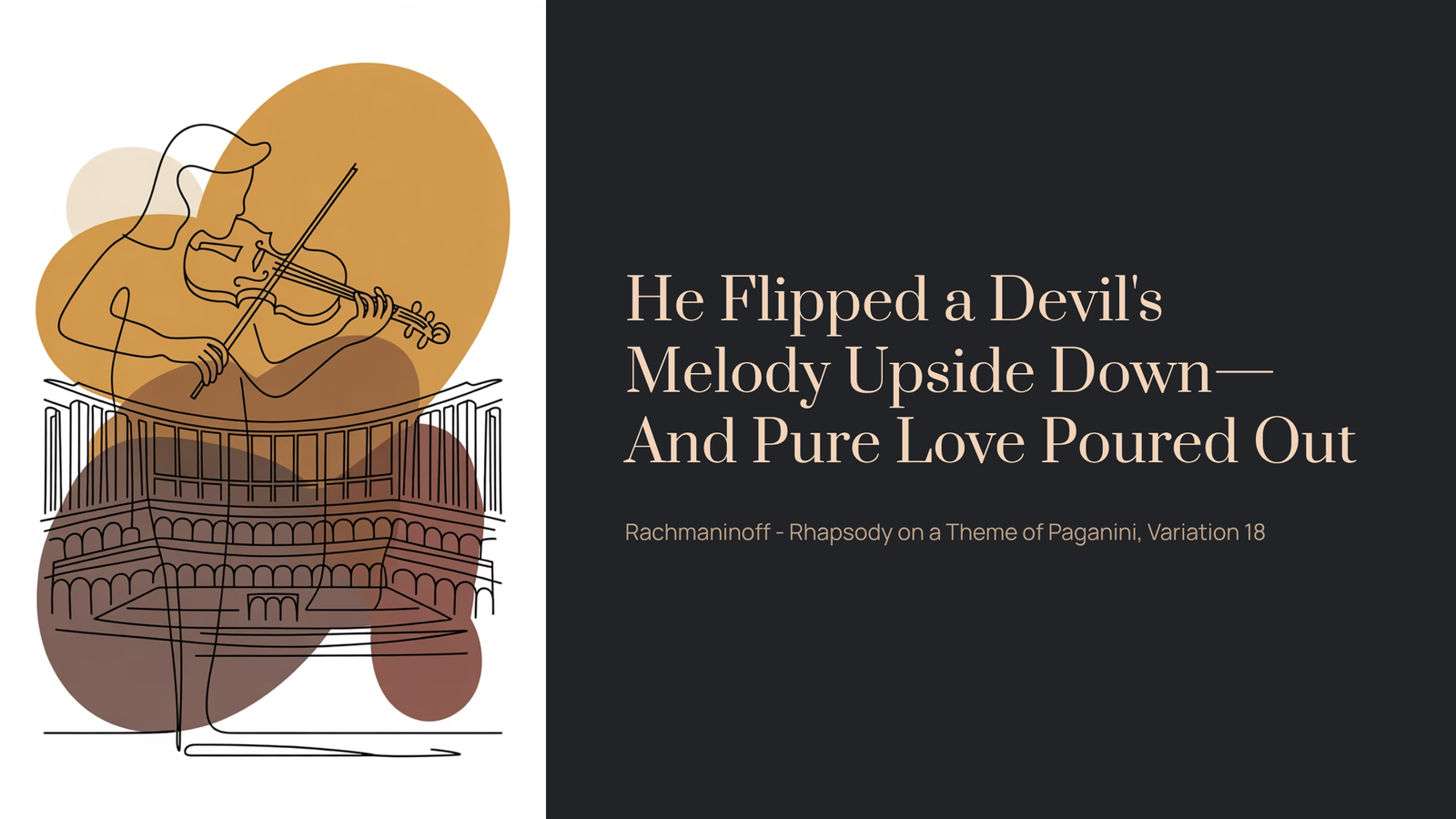
Discover how Rachmaninoff transformed Paganini's dark, demonic caprice into one of classical music's most romantic melodies through a simple yet genius technique—melodic inversion. A 1934 masterpiece born at Villa Senar, Switzerland.
A deeply personal journey through Rachmaninoff's luminous Étude-Tableau in C major, exploring the mystery of music that paints pictures without revealing what they are
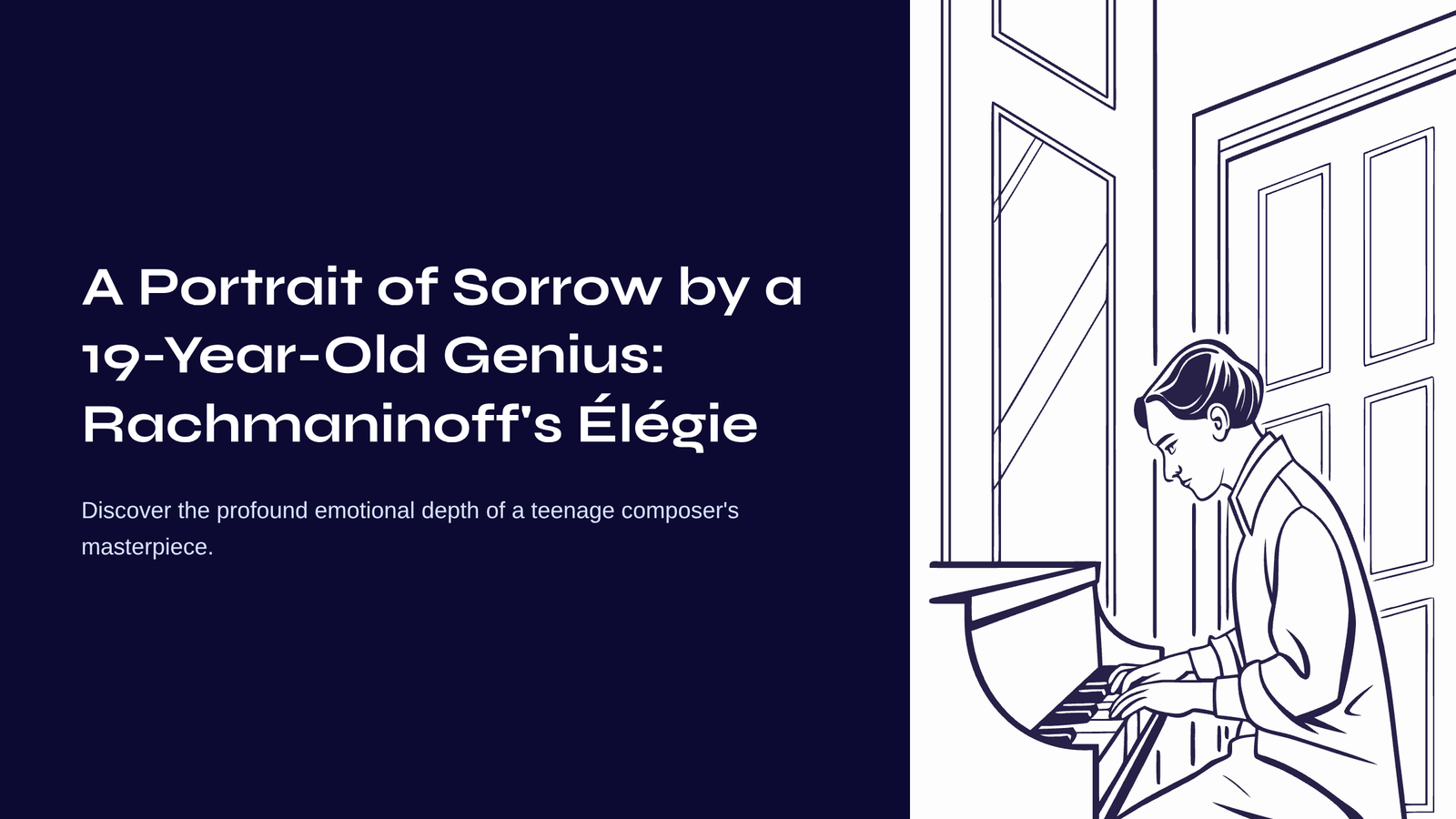
An in-depth listening guide to Rachmaninoff's Élégie Op. 3 No. 1. Exploring the restrained sorrow and dramatic beauty captured by the young 19-year-old composer.
A curated listening guide to Rachmaninoff's Vocalise across various instrumental arrangements. Discover the unique charms of piano solo, cello, violin, and orchestral versions and learn how to listen deeply to this masterpiece.

An in-depth analysis and listening guide to Rachmaninoff's Moment Musical No. 4 in E minor. Exploring the essence of Russian Romantic piano music through this brief yet intense masterpiece.