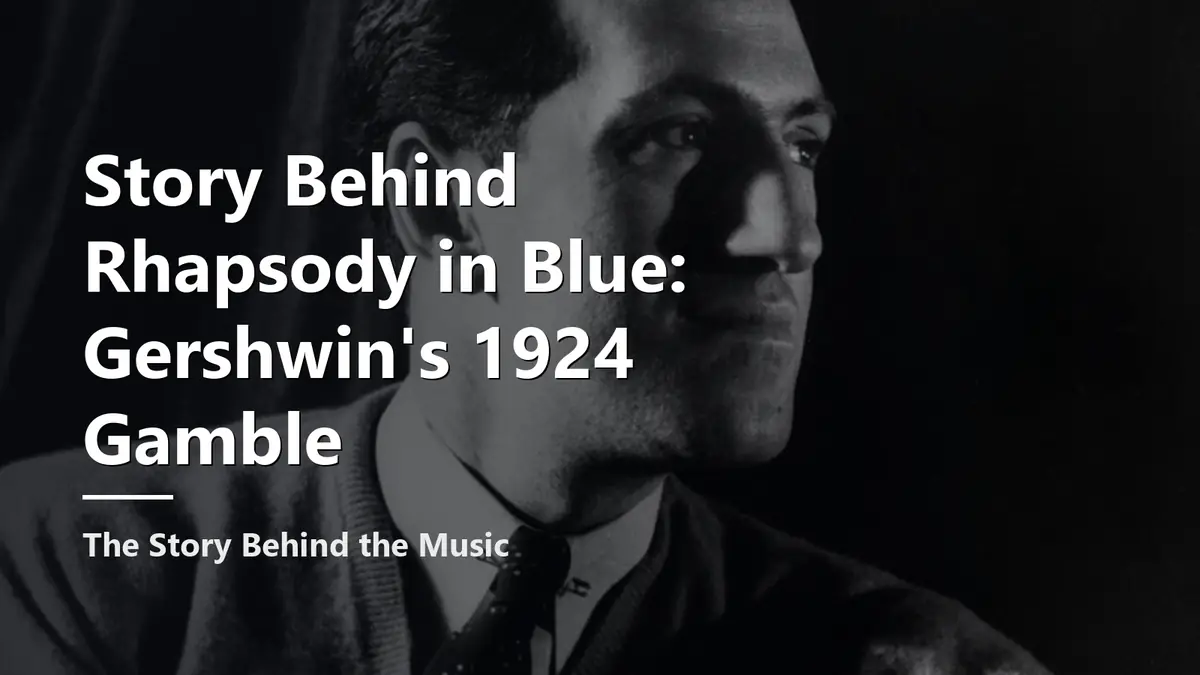
George Gershwin wrote Rhapsody in Blue for a 1924 concert organized by bandleader Paul Whiteman to bring jazz and concert music together. Its famous opening clarinet slide grew out of rehearsal, while Gershwin later described finding ideas for the piece during a train ride.
That mixture of planning, speed, and surprise suits the music. The piano can sound like a concert soloist one moment and a quick-witted partner to the band the next. If you know the opening but have never followed the whole piece, the story gives you a way in.
📑 Table of Contents
Why Was Rhapsody in Blue Written?
Whiteman’s concert was billed as “An Experiment in Modern Music.” He wanted to show how the sounds associated with jazz could work in a concert hall, and he asked Gershwin to contribute a new work. Gershwin was already known for popular songs and musical theater; this was a chance to write on a larger scale without leaving those sounds behind.
The schedule became part of the story. Gershwin learned that Whiteman had announced the work for the concert before he had finished writing it. He completed it in a matter of weeks, and Rhapsody in Blue was first performed on February 12, 1924, at Aeolian Hall in New York City, with Gershwin at the piano.
The train story needs a little care. Gershwin later recalled hearing the work take shape in his mind amid the rhythm and noise of a train journey. That is his account of finding musical ideas, not evidence that every passage arrived fully formed on the train. The clarinet opening has its own rehearsal story.
The title also tells you what kind of piece to expect. A rhapsody can move through contrasting ideas more freely than a conventional concerto, a work that sets a soloist against an orchestra. For a very different use of the word, our look at Liszt’s Hungarian Rhapsody No. 2 follows music that makes room for sharp changes of mood and pace.
How Gershwin’s Piano Music Became a Band Showpiece
Gershwin composed the music, and Ferde Grofé arranged it for Whiteman’s band. That distinction matters when you listen. Gershwin’s piano part is central, but the bright colors surrounding it come from an ensemble shaped for Whiteman’s concert. Grofé later made other arrangements, including a version for symphony orchestra.
As a result, you may hear recordings with noticeably different instrumental colors. One might give the brass a particularly bold presence; another may sound more like the modern orchestra you expect at a symphony concert. Neither difference changes the identity of the piece. The conversation between piano and ensemble remains its engine.
Gershwin did not simply place a popular tune inside an orchestral frame. The piano shifts between ringing chords, nimble runs, and more reflective passages. Sometimes it leads; sometimes it answers a phrase the ensemble has just offered. Notice how often a new idea seems to interrupt the last one, then turns out to belong in the same conversation.
That ease between musical worlds continued in Gershwin’s later work. His orchestral piece An American in Paris offers another meeting of concert writing and the sounds of everyday life; our guide to An American in Paris is a natural next stop if that combination catches your ear.
The Rhapsody in Blue Clarinet Opening
The first sound is a low clarinet trill followed by a long slide upward. A clarinetist normally moves between distinct notes, so the sliding line makes an immediate impression: playful, bold, and hard to mistake for the start of a traditional symphony.
Accounts of the early rehearsals credit Whiteman’s clarinetist Ross Gorman with turning a written rising figure into the glissando, or sliding pitch, we now know. Gershwin liked it and kept it. The precise details of a rehearsal can be difficult to recover, but the important point is clear: this striking sound was shaped through performance as well as composition.
After that entrance, listen for the way the ensemble picks up the clarinet’s energy. The piano does not rush in to take command of a settled tune. Instead, the music keeps changing shape, as though each new phrase offers another possible direction. The opening slide prepares you for those turns: it travels freely between notes before landing.
It is easy to hear the clarinet gesture as a shorthand for the whole work, but give the quieter stretches equal attention. Their restraint makes the next burst of band color feel sharper. On a first hearing, try following the handoffs between clarinet, piano, and the full ensemble rather than trying to name every theme.
What to Listen for After the Famous First Minute
Start by following the piano’s entrances. At times Gershwin gives it crisp, busy figures; elsewhere it opens into a more expansive line. Those changes help you hear the piece as a journey through different kinds of musical speech, from quick exchanges to something closer to a song.
Then listen for the broad, lyrical melody in the later part of the work. Its longer phrases provide a contrast to the restless opening. When you reach it, pay attention to what happens around the tune: the supporting instruments help it grow, and the piano becomes one voice in a wider sound.
Finally, notice how the closing pages gather energy. Earlier ideas and gestures have taught your ear to expect sudden shifts, so the force of the ending feels earned. You do not need to decide whether a passage is “jazz” or “classical” to enjoy it. Hearing how the piano and ensemble trade roles is more useful than drawing a firm line between styles.
Different arrangements and performances emphasize different details. If the clarinet slide sounds longer or the piano takes more time over a phrase, that does not mean you remembered the music incorrectly. Return to the opening, the broad melody, and the final drive; those landmarks will help you find your way through any version.
Where You May Have Heard Rhapsody in Blue
The piece has a life beyond the concert hall. It accompanies the opening of Woody Allen’s film Manhattan, where its sweeping sound helps introduce a vision of New York City. Disney’s Fantasia 2000 gives it an animated sequence set in a stylized New York. If either scene brought you here, the complete work offers far more shifts of character than a familiar excerpt can show.
Those appearances can make the music feel like an established symbol of the city. Its 1924 beginning was more specific: a new piece prepared under pressure for a concert with an experimental aim. Gershwin, Grofé, Whiteman’s band, and a clarinetist’s rehearsal discovery all helped produce the sound listeners recognize today.
That history is part of the pleasure of hearing it again. The opening may feel inevitable now, yet it began as a choice made by musicians working together. Listen past it, and you can hear Gershwin keep testing what a piano and a band can do together.
Frequently Asked Questions
Who wrote Rhapsody in Blue?
George Gershwin composed Rhapsody in Blue and played the piano part at its 1924 premiere. Ferde Grofé arranged the music for Paul Whiteman’s band and later prepared other versions.
Why was Rhapsody in Blue written?
Gershwin wrote it for Whiteman’s “An Experiment in Modern Music” concert in New York City. The project gave him a chance to bring his experience in popular music to a large concert work.
Was the opening clarinet slide in Gershwin’s original idea?
Accounts of the rehearsals credit clarinetist Ross Gorman with shaping the rising figure into a glissando, which Gershwin kept. Gershwin’s recollection of finding ideas on a train concerns the piece more broadly; it is a separate story from the clarinet’s slide.
Sources
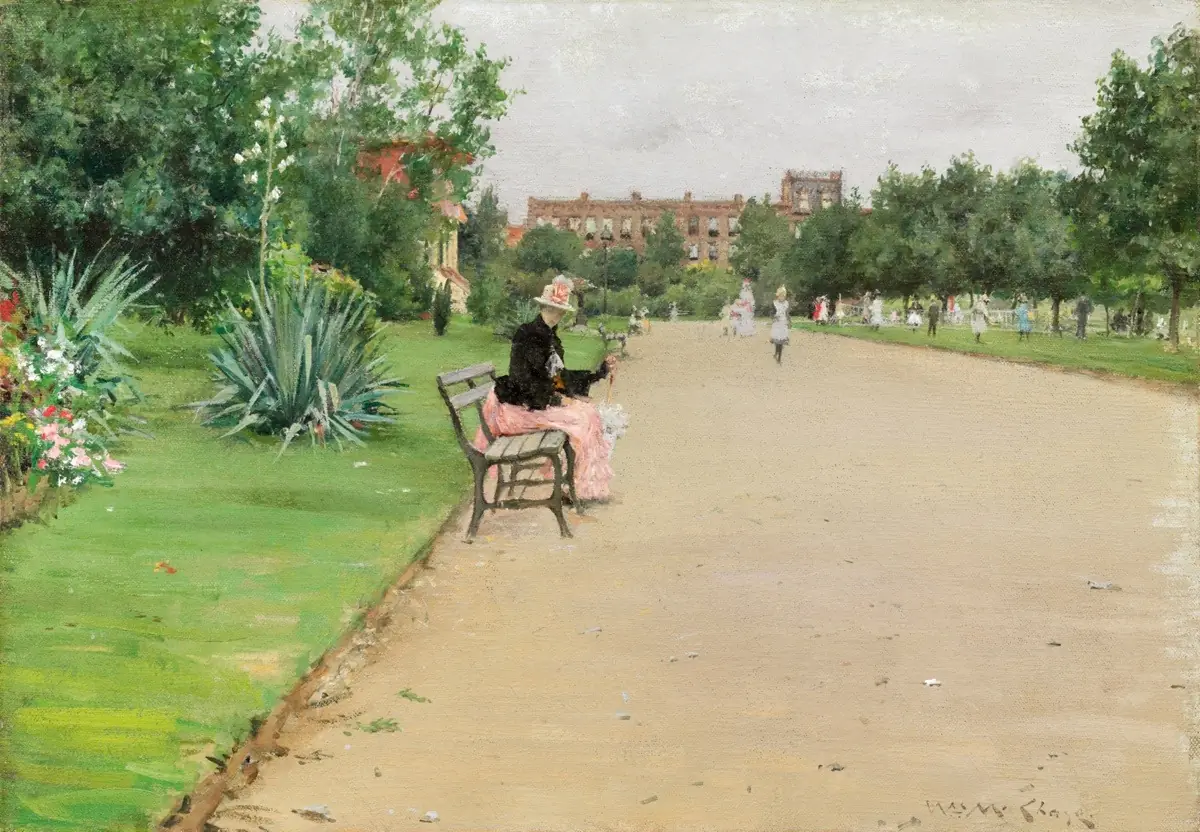
Cover art: Portrait of George Gershwin LCCN2004662906, Carl Van Vechten, 1937. Wikimedia Commons (public domain). Image: A City Park, William Merritt Chase, c. 1887. Art Institute of Chicago (public domain).