📑 Table of Contents
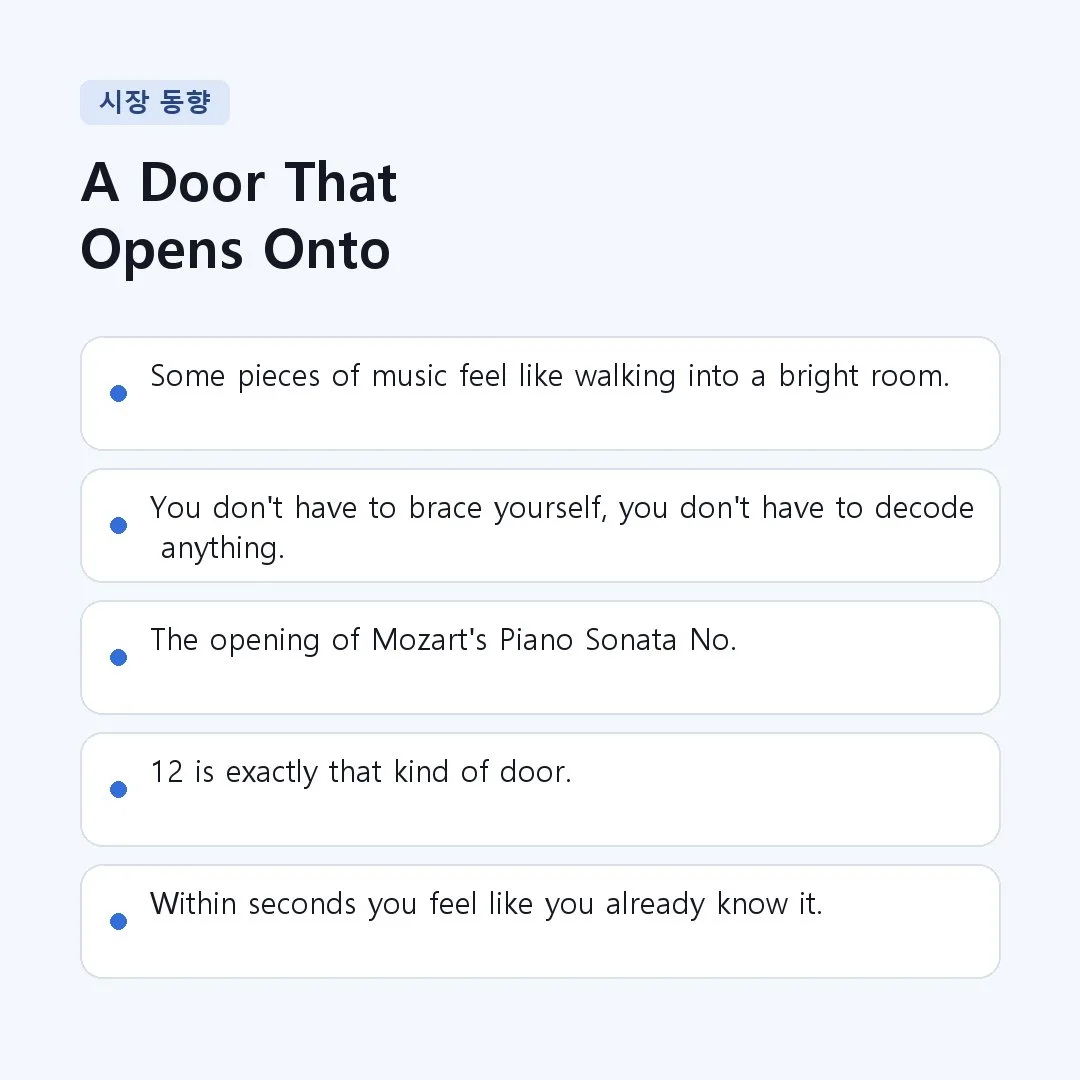
Some pieces of music feel like walking into a bright room. You don’t have to brace yourself, you don’t have to decode anything. You just step in.
The opening of Mozart’s Piano Sonata No. 12 is exactly that kind of door. A simple, singing melody floats down from the right hand, gentle and unhurried, the way someone might hum to themselves while waiting for coffee to brew. Within seconds you feel like you already know it.
And then Mozart, being Mozart, refuses to leave well enough alone. The clouds gather, the mood darkens, a flash of stormy feeling cuts across the sunshine. A moment later it passes, and the warmth returns as if nothing happened. This is the secret of the piece: it sounds effortless, but it’s full of quiet surprises. If you’ve ever wanted a gateway into classical piano music that asks nothing of you except to listen, this is it.

Who Was Mozart, Really?
We tend to picture Mozart as either a powdered-wig prodigy or the cackling figure from the film Amadeus. The truth is more human and more interesting.
Wolfgang Amadeus Mozart (1756–1791) was a working musician who spent his life trying to make a living from his gift. Born in Salzburg, he was performing for European royalty before he lost his baby teeth. But the famous child prodigy eventually had to grow up and survive in a world that didn’t quite know what to do with a freelance genius. He wrote music constantly, restlessly, and often under financial pressure.
What makes his music endure isn’t just technical brilliance. It’s the emotional honesty hiding underneath the elegant surface. Mozart could make you smile and then, in the space of a single bar, remind you that life has shadows too. That ability to hold light and dark in the same hand is everywhere in this sonata.
The Story Behind the Sonata
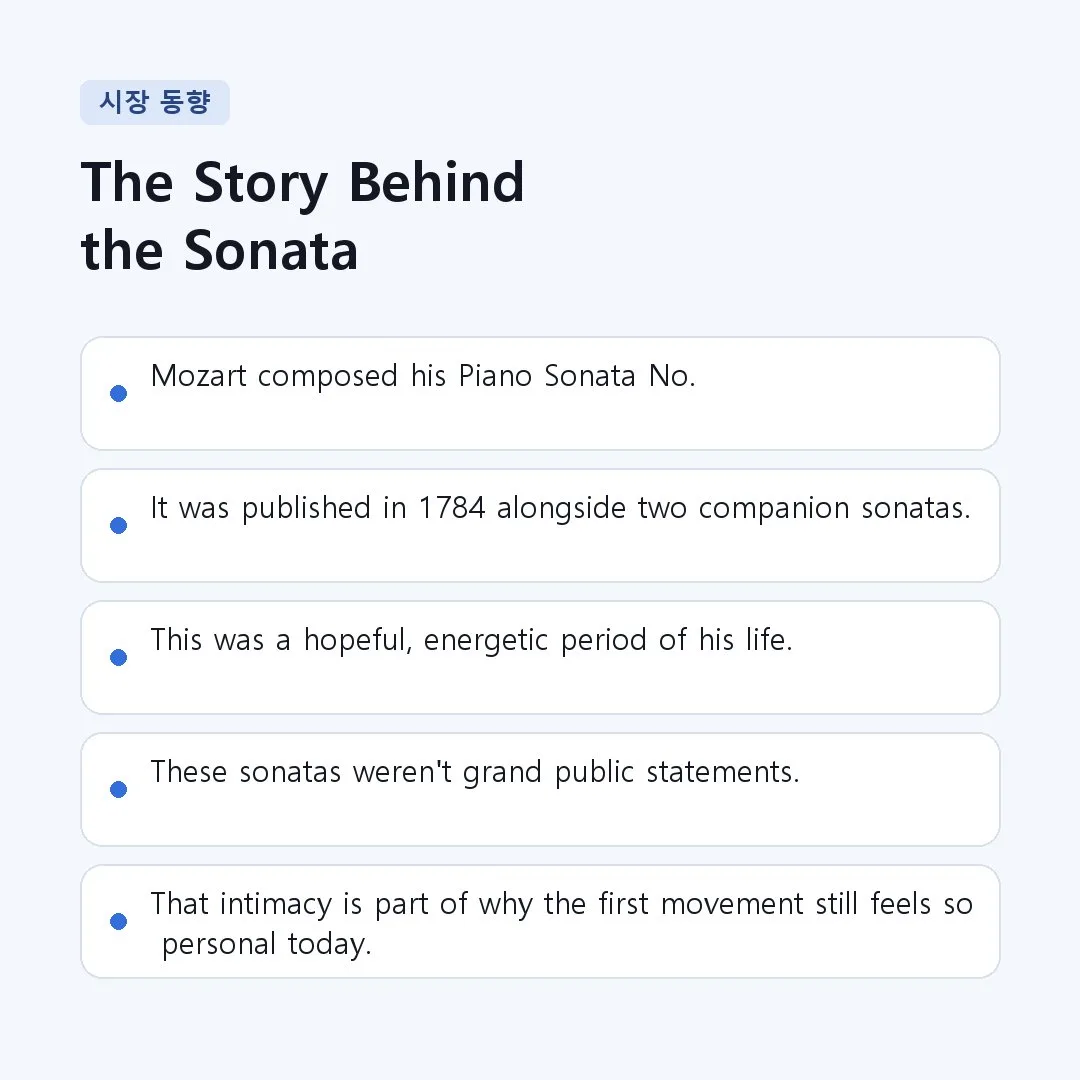
Mozart composed his Piano Sonata No. 12 in F major around 1783, likely during a productive stretch in Vienna, the city where he had recently settled as an independent artist. It was published in 1784 alongside two companion sonatas.
This was a hopeful, energetic period of his life. He had married Constanze Weber the year before, and he was building a reputation in Vienna as both a performer and a composer. The keyboard he wrote for was the fortepiano, a lighter, more delicate ancestor of the modern grand piano. Knowing that helps explain the music’s transparency: it was conceived for an instrument that whispered rather than roared.
These sonatas weren’t grand public statements. They were the kind of music played in drawing rooms, by skilled amateurs and professionals alike, made to be lived with rather than worshipped. That intimacy is part of why the first movement still feels so personal today.

How to Listen: A Guided Tour
You don’t need to read music to follow along. Here are the landmarks to listen for in this opening Allegro, which runs roughly six to seven minutes.
The first theme (the opening). A graceful, song-like melody in a sunny major key. Notice how relaxed it feels, almost like a conversation between friends. This is your home base.
The turn toward shadow (around the one-minute mark). Suddenly the music slips into a minor key and grows urgent and dramatic. The smooth lines break into restless, tumbling figures. It’s a small storm, and it’s startling precisely because the opening was so calm.
The second theme. After the turbulence, a new melody arrives, more playful and dancing, full of little ornamental flourishes. Mozart loves this contrast: serene, then stormy, then sparkling.
The development (the middle section). Here Mozart takes the ideas you’ve heard and tosses them around, exploring different keys and moods like someone trying on different outfits. It feels searching and a little unsettled.
The return (the final third). The opening melody comes back like a friend walking through the door again, and the whole journey resolves warmly. By the end, you feel like you’ve traveled somewhere and come safely home.
The trick is to listen for the contrasts. Mozart isn’t writing background wallpaper. He’s telling a small story with mood swings, and once you hear them, the piece opens up.
Where to Start: Recommended Recordings
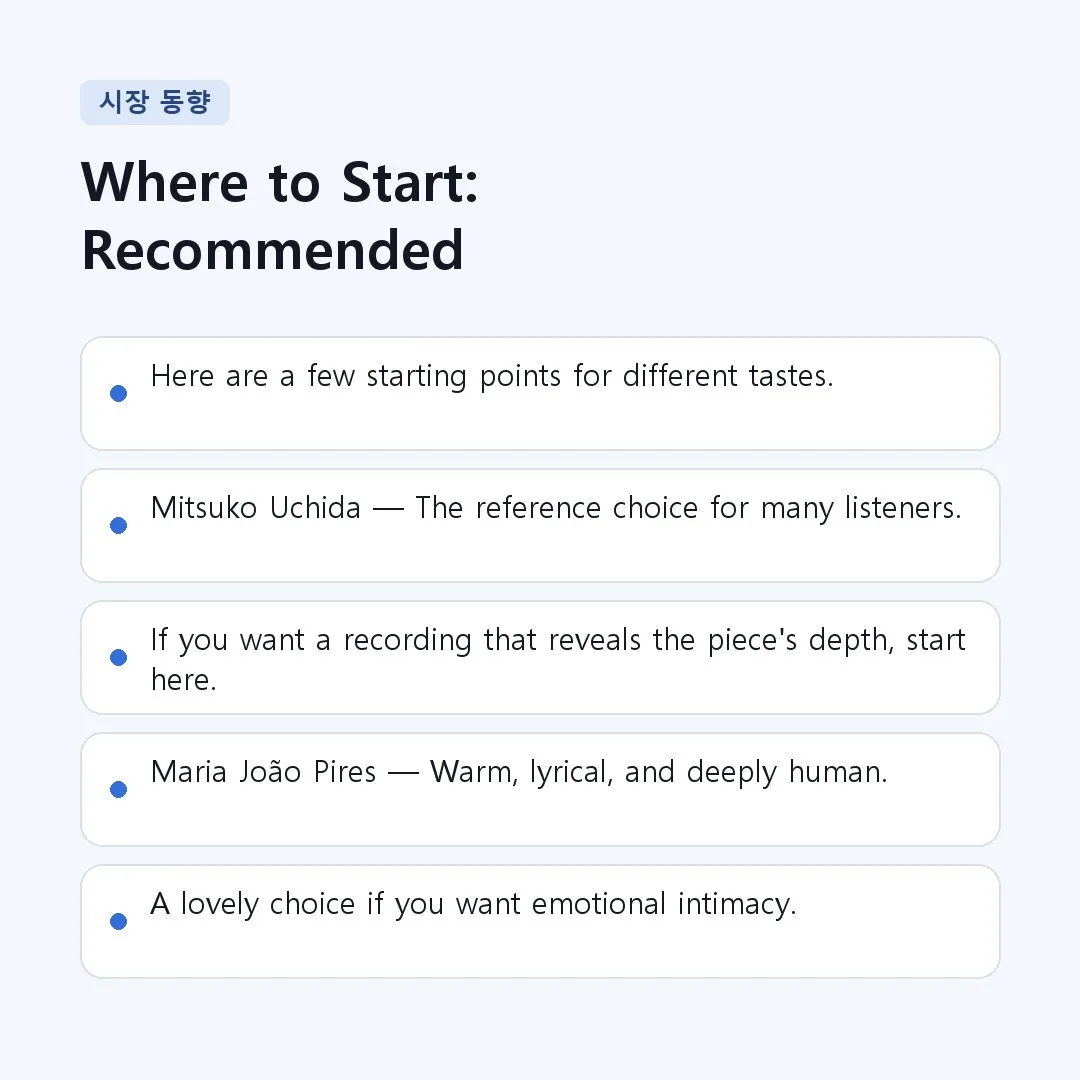
There’s no single “correct” Mozart, and half the fun is hearing how different pianists shape the same notes. Here are a few starting points for different tastes.
Mitsuko Uchida — The reference choice for many listeners. Her Mozart is crystalline, intelligent, and beautifully shaded, with a wonderful sensitivity to the music’s shifting emotions. If you want a recording that reveals the piece’s depth, start here.
Maria João Pires — Warm, lyrical, and deeply human. Pires plays Mozart with a singing tone and an unforced naturalness that makes the music feel like it’s being spoken to you directly. A lovely choice if you want emotional intimacy.
Christian Zacharias — Elegant and clear, with a fine sense of the music’s classical poise. A balanced, satisfying interpretation that lets the structure shine.
For the historically curious: Seek out a fortepiano recording, such as those by Kristian Bezuidenhout. Hearing the sonata on the instrument Mozart actually wrote for is a small revelation. The textures become lighter and more conversational, and you understand the music differently.
Why This Music Still Matters
It’s easy to mistake Mozart’s clarity for simplicity. But the more you listen to this sonata, the more you notice how much is happening beneath that polished surface, how the sunshine and the shadows are always in dialogue.
That, finally, is what makes this Allegro such a good place to begin with classical music. It doesn’t demand reverence or expertise. It just invites you in, hands you a melody you’ll be humming by the end, and quietly shows you that even the most graceful music can contain whole weather systems of feeling.
Press play. Let the sunlight in.