📑 Table of Contents
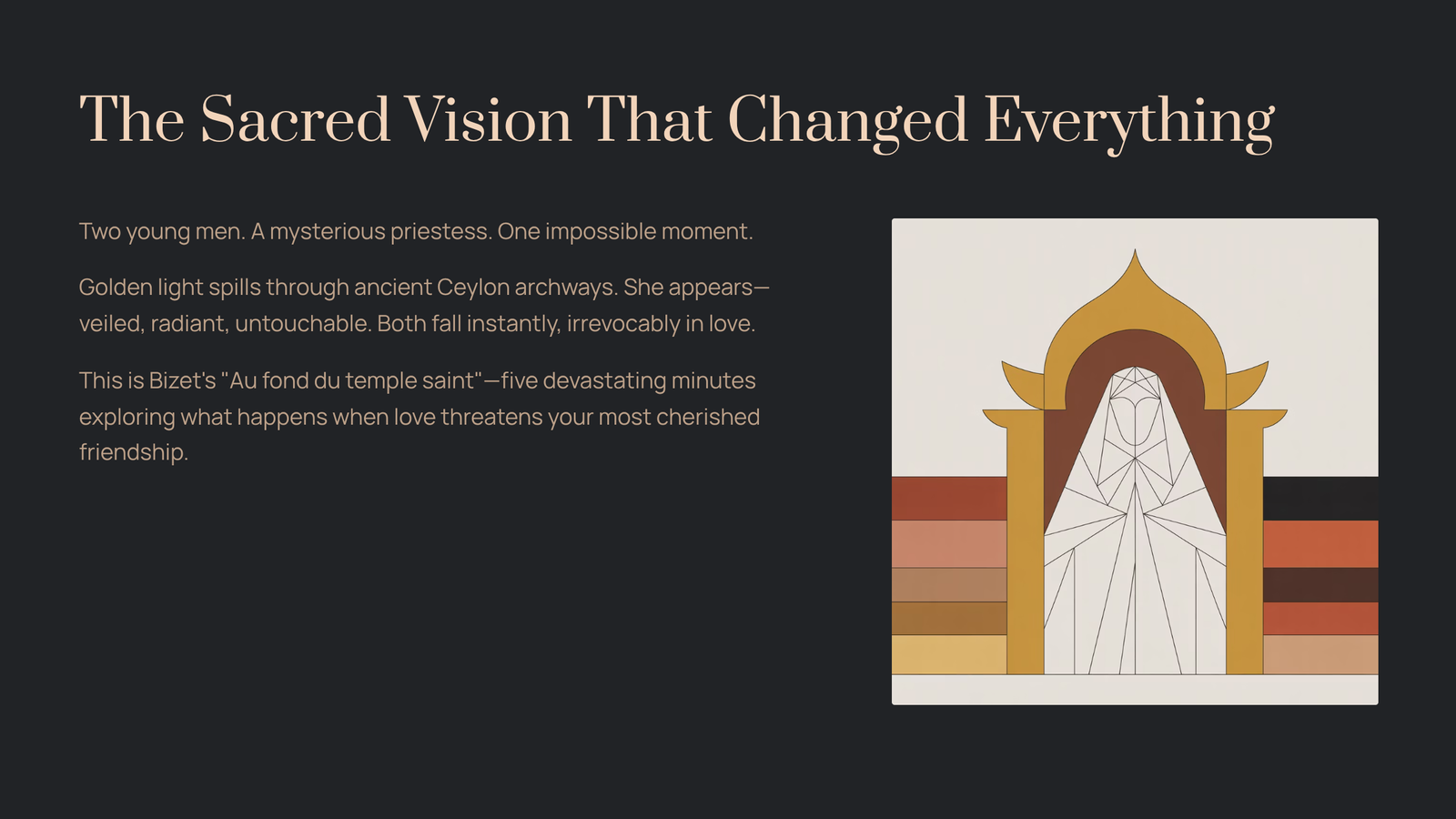
Picture two young men standing before a sacred temple in Ceylon. Golden light spills through the ancient archways. A mysterious priestess appears—veiled, radiant, untouchable. Both men fall instantly, irrevocably in love.
This is the moment that Georges Bizet captured in “Au fond du temple saint” (At the back of the holy temple), and it remains one of the most emotionally devastating five minutes in all of opera. Not because of tragedy or death, but because of something far more relatable: the terrifying realization that love might destroy your most cherished friendship.
The 24-Year-Old Composer Nobody Believed In
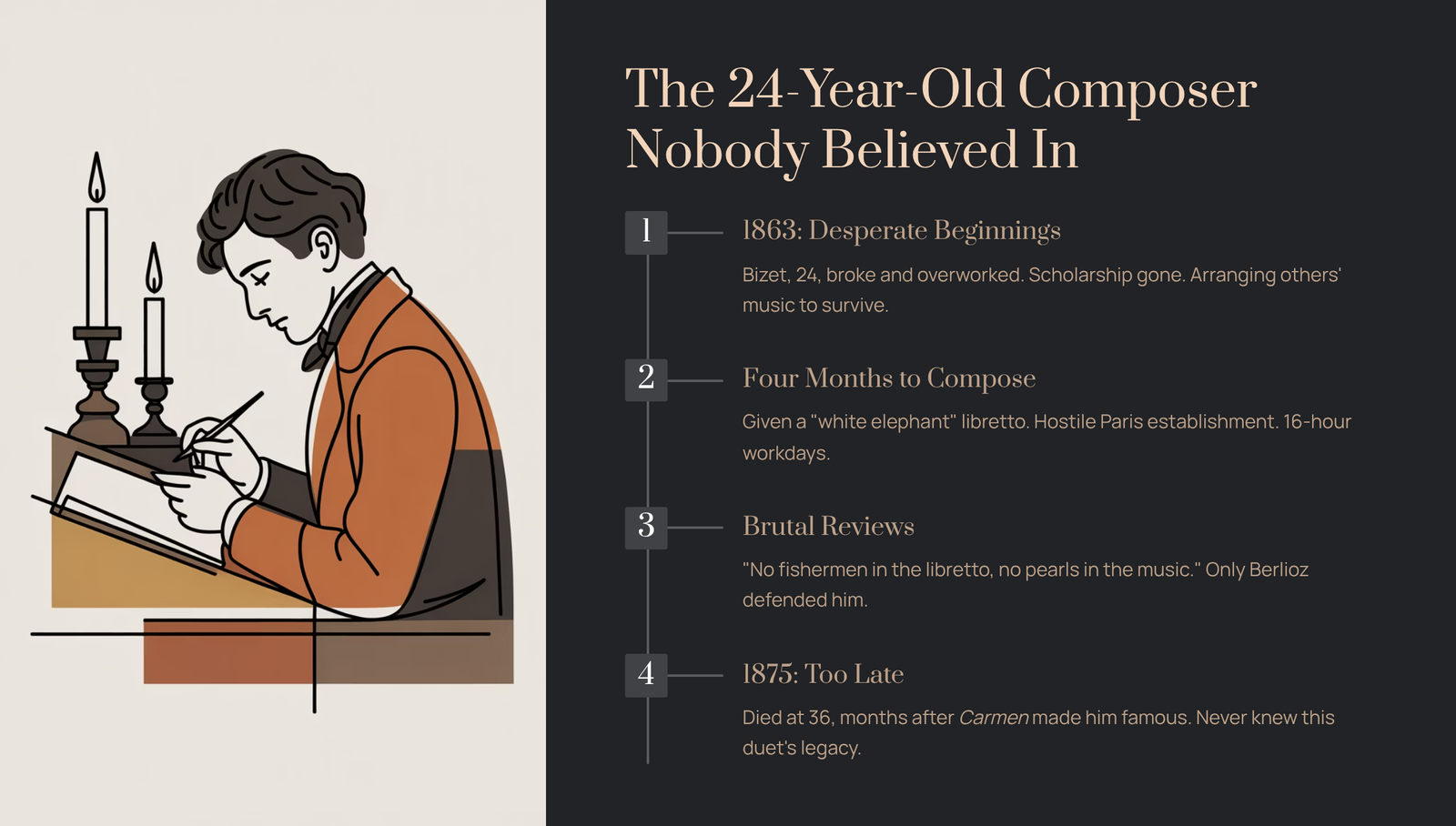
When Bizet composed Les pêcheurs de perles (The Pearl Fishers) in 1863, he was just 24 years old—broke, overworked, and desperate for recognition. His scholarship money had run out, forcing him to arrange other composers’ music for publishers just to survive. He worked sixteen-hour days, his childhood health problems flaring up from the stress.
The Paris opera establishment was notoriously hostile to young French composers. Of 54 Prix de Rome winners between 1830 and 1860, only eight ever saw their work performed at the prestigious Opéra. Bizet was given just four months to compose an entire opera from a problematic libretto that the writers themselves would later call a “white elephant.”
The premiere received applause from the audience—but critics were merciless. One reviewer delivered a cutting verdict that would haunt Bizet: “There are no fishermen in the libretto, and no pearls in the music.” Only the legendary Hector Berlioz defended the young composer, praising the score’s “fiery passion and rich coloring.”
Bizet died twelve years later at 36, just months after Carmen finally made him famous. He never knew that this early duet would become one of classical music’s most beloved treasures.
What Makes This Duet So Unforgettable
The genius of “Au fond du temple saint” lies in how Bizet translates psychological complexity into pure sound.
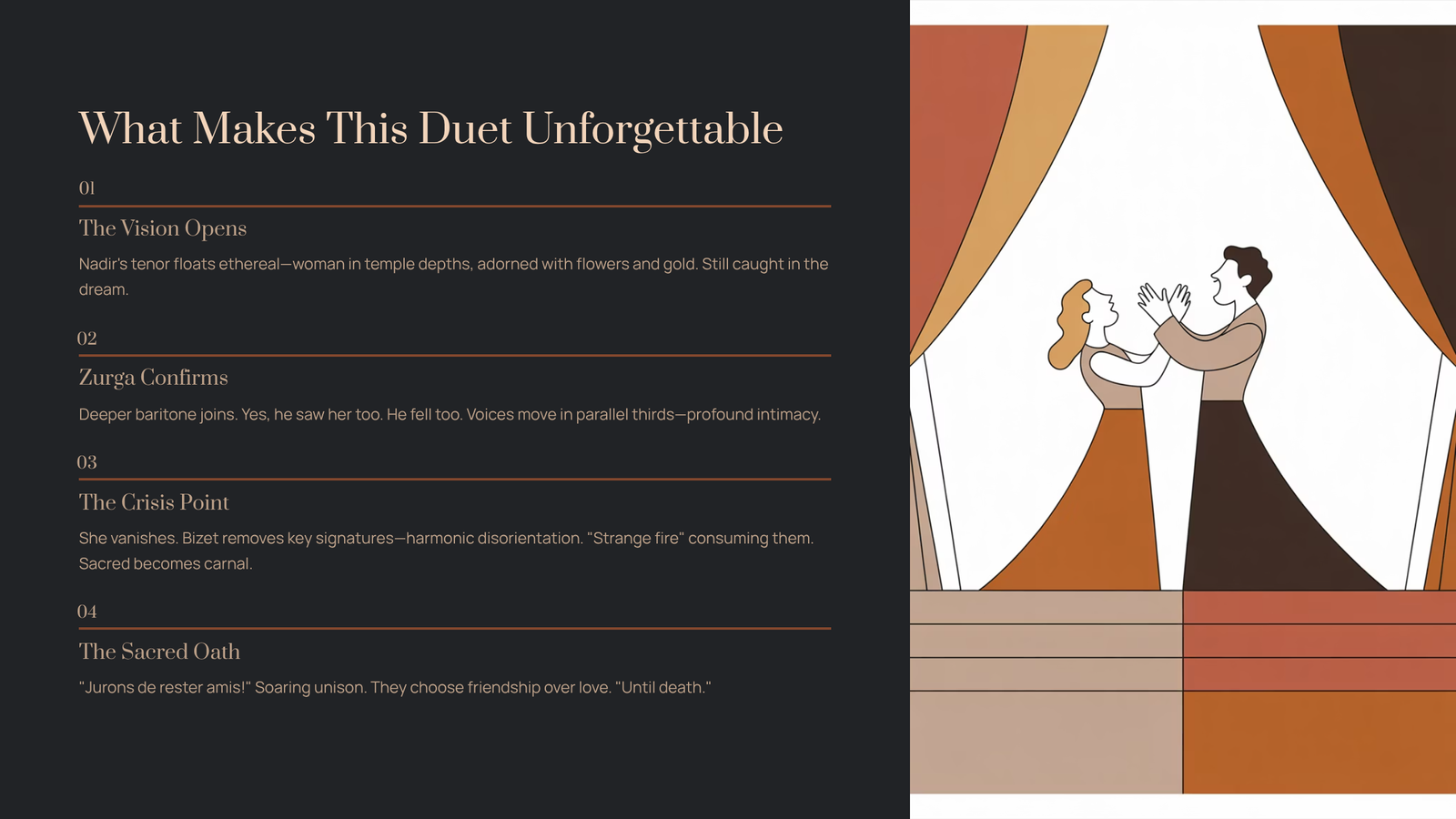
The duet opens with Nadir, a tenor, recalling the vision: a woman appearing in the depths of the holy temple, adorned with flowers and gold. His voice floats high and ethereal, as if still caught in the dream. Then Zurga, a baritone, joins him—his deeper, richer voice confirming that yes, he too saw her. He too fell.
What happens next is musically extraordinary. The two voices begin moving together in parallel thirds and sixths, creating a sound of profound intimacy. This isn’t just singing together—it’s two souls remembering in unison, their harmonies so intertwined they become almost one voice.
Then comes the crisis point. The woman vanishes into the crowd. The music shifts dramatically—Bizet actually removes all key signatures from the score at this moment, creating a sudden harmonic disorientation. The men sing of “strange fire” and “new flames” consuming them. The sacred vision has become carnal desire.
And here’s the turning point that makes audiences catch their breath: both men recognize what’s happening. They could become enemies. Love could destroy everything between them.
Instead, they choose friendship.
“Jurons de rester amis!” they sing in soaring unison. “Let us swear to remain friends!” The orchestra surges to its fullest glory as they pledge loyalty “jusqu’à la mort”—until death.
How to Listen: A Section-by-Section Guide
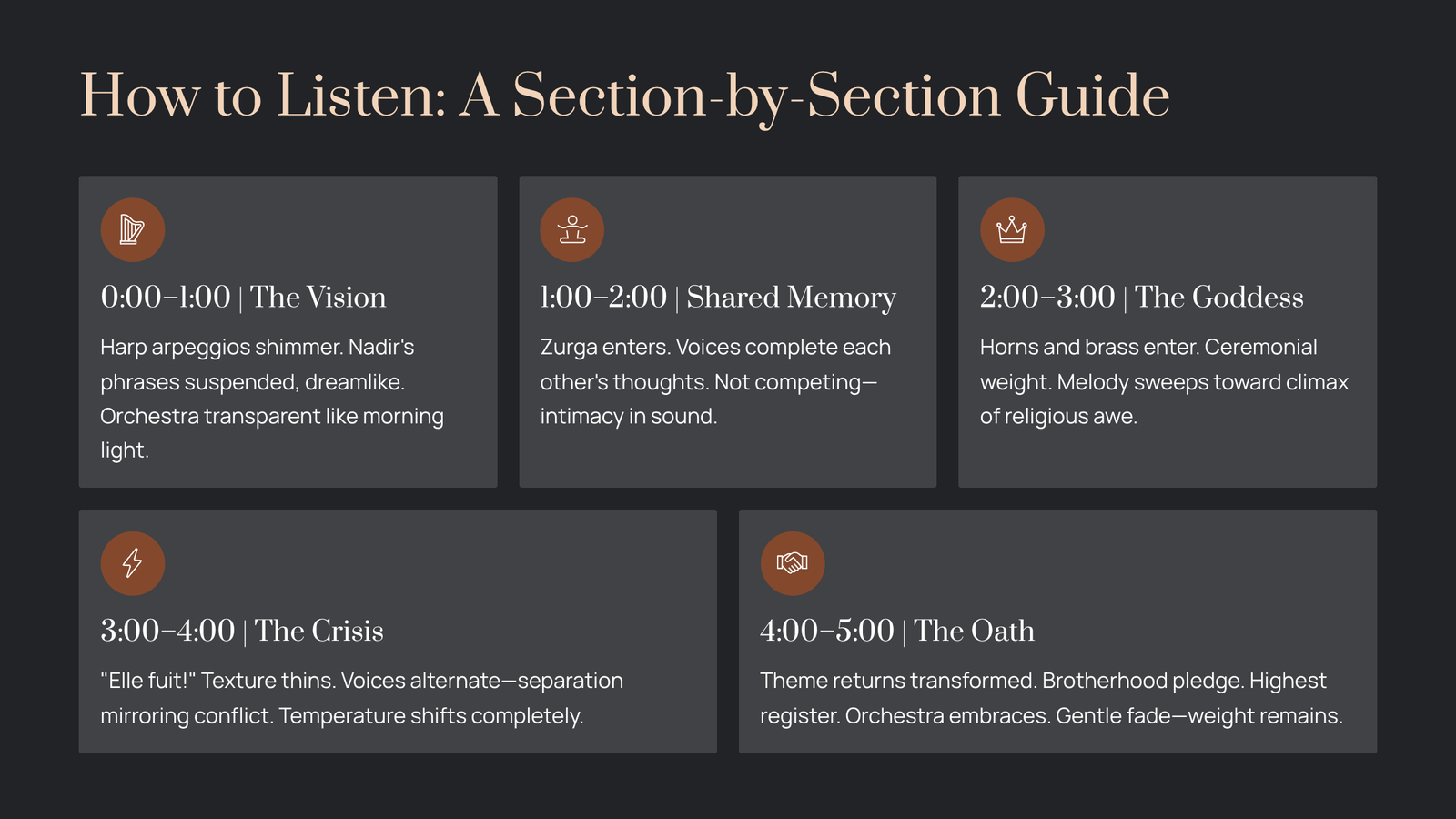
0:00–1:00 | The Vision
Listen for the harp’s shimmering arpeggios creating a sense of sacred space. Nadir’s opening phrases should feel suspended, dreamlike. Notice how the orchestra keeps the texture transparent, like morning light.
1:00–2:00 | Shared Memory
When Zurga enters, pay attention to how the two voices relate. They’re not competing—they’re completing each other’s sentences, finishing each other’s musical thoughts. This is the sound of genuine intimacy.
2:00–3:00 | The Goddess Appears
The music becomes more grand as both men describe the crowd bowing before the priestess. Horns and brass enter, giving the scene ceremonial weight. The melody sweeps upward toward a climax of religious awe.
3:00–4:00 | The Crisis
Listen for the moment marked “Elle fuit!” (She flees!). The texture suddenly thins. The voices begin alternating rather than harmonizing—musical separation mirroring emotional conflict. The temperature changes completely.
4:00–5:00 | The Sacred Oath
The triumphant return of the main theme, now transformed into a pledge of brotherhood. Both voices unite in their highest, most powerful register. The orchestra provides a full, warm embrace. Notice how the ending fades gently—a reminder that this oath carries weight.
Recommended Recordings
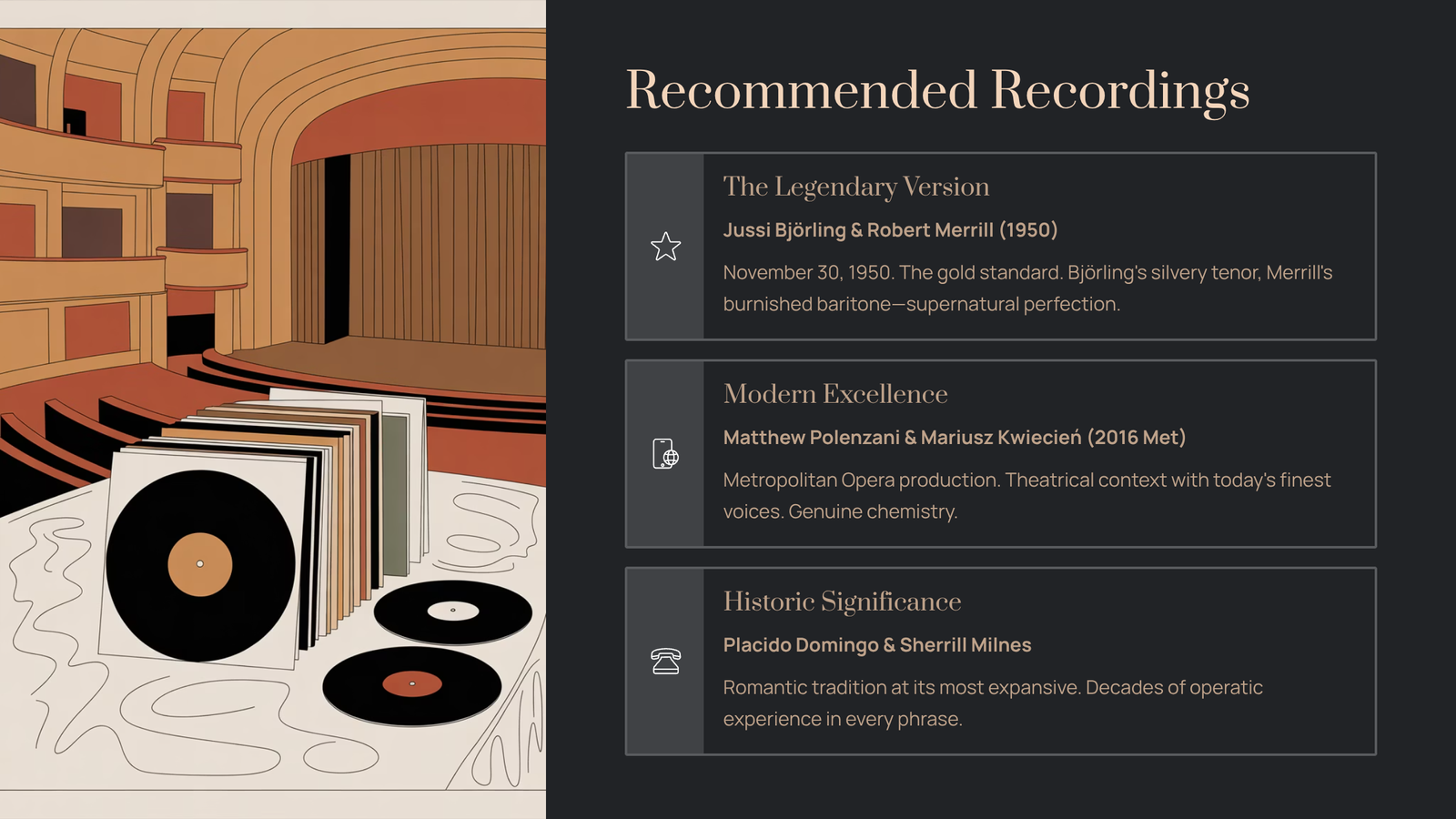
The Legendary Version: Jussi Björling & Robert Merrill (1950)
Recorded on November 30, 1950, this remains the gold standard against which all others are measured. Björling’s silvery tenor and Merrill’s burnished baritone blend with almost supernatural perfection. Available on various RCA reissues.
Modern Excellence: Matthew Polenzani & Mariusz Kwiecień (2016 Met)
The Metropolitan Opera’s production captures the theatrical context while showcasing two of today’s finest voices. The chemistry between them feels lived-in and genuine.
Historic Significance: Placido Domingo & Sherrill Milnes
A recording that demonstrates the Romantic tradition at its most expansive. Both singers bring decades of operatic experience to these roles.
Beyond the Concert Hall
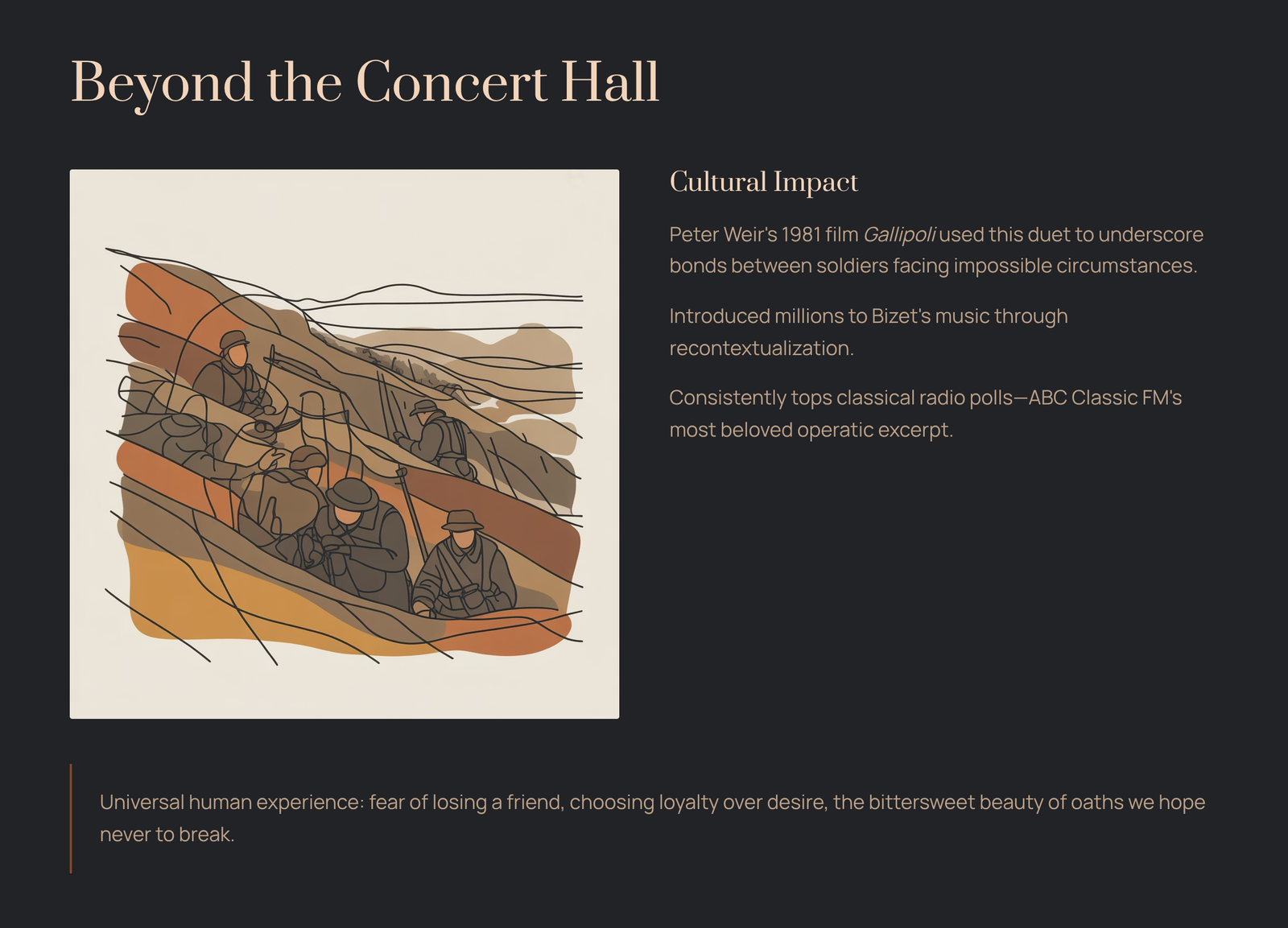
This duet transcends opera houses. Australian director Peter Weir used it in his 1981 film Gallipoli to underscore the bond between two young soldiers facing impossible circumstances—a recontextualization that introduced millions to Bizet’s music.
The piece has topped classical radio countdowns for decades, including ABC Classic FM’s listener polls where it consistently ranks as the most beloved operatic excerpt. There’s something about this music that speaks to universal human experience: the fear of losing a friend, the choice to prioritize loyalty over desire, the bittersweet beauty of oaths we hope never to break.

Why This Matters Now
In an age of disposable connections and shallow interactions, “Au fond du temple saint” reminds us what genuine commitment sounds like. Bizet gave us a musical portrait of two men choosing each other over romantic passion—not because they don’t feel desire, but because they value their friendship more.
The irony that the 24-year-old composer died thinking he had failed only deepens the poignancy. What he created in those desperate four months of 1863 has outlived every hostile review, every dismissive critic, every doubt he ever had about himself.
Some pearls take time to find.
Listen with headphones in a quiet space. Let the first notes wash over you. And when those two voices finally join in their oath of friendship, notice what you feel. That’s not just beautiful music—that’s 160 years of human hearts recognizing something true.