📑 Table of Contents
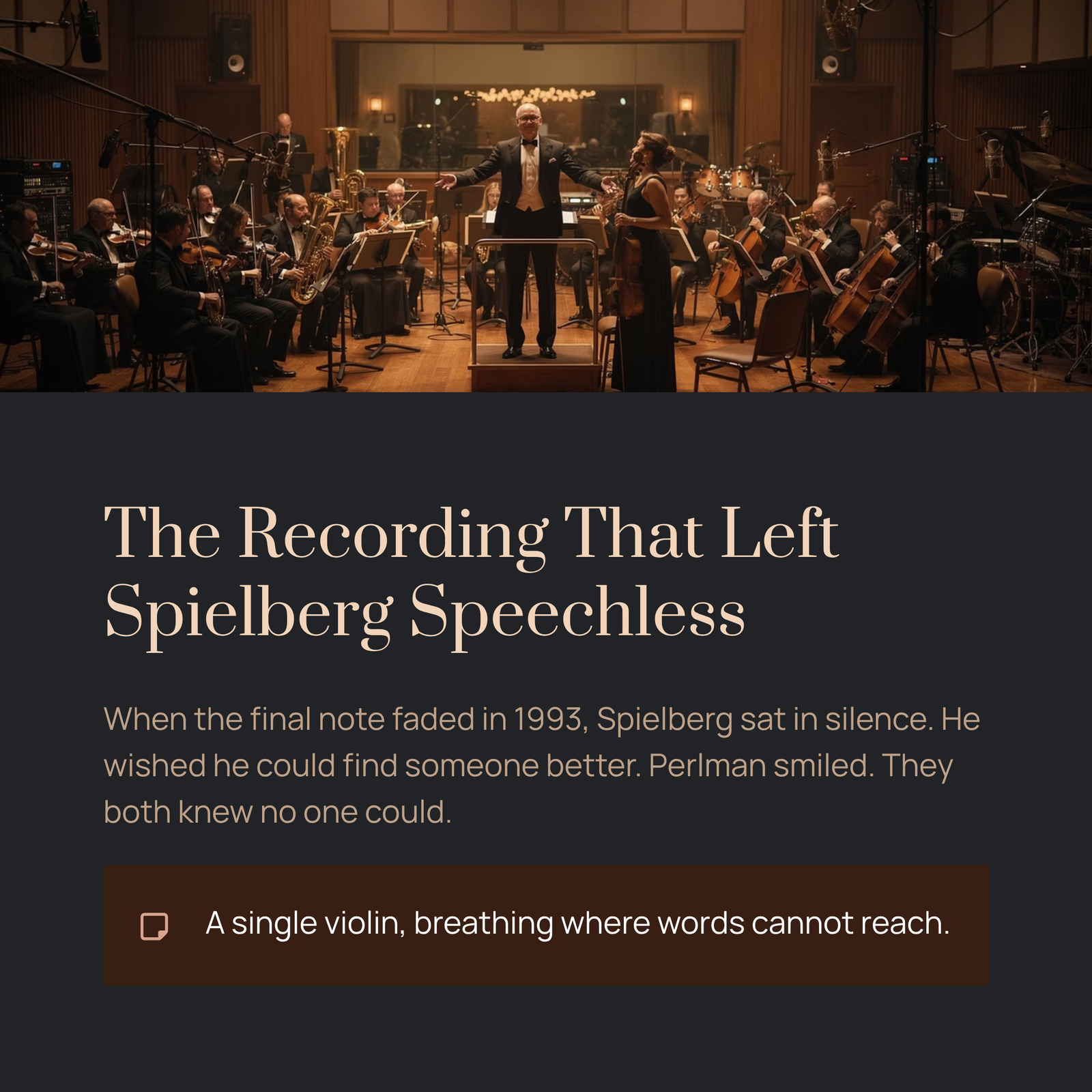
There is a story, often told, about the day Itzhak Perlman recorded the main theme for Schindler’s List. When the final note faded, Steven Spielberg reportedly sat in silence. Then he said something to the effect of: he wished he could find someone better to play it. Perlman smiled. They both knew no one could.
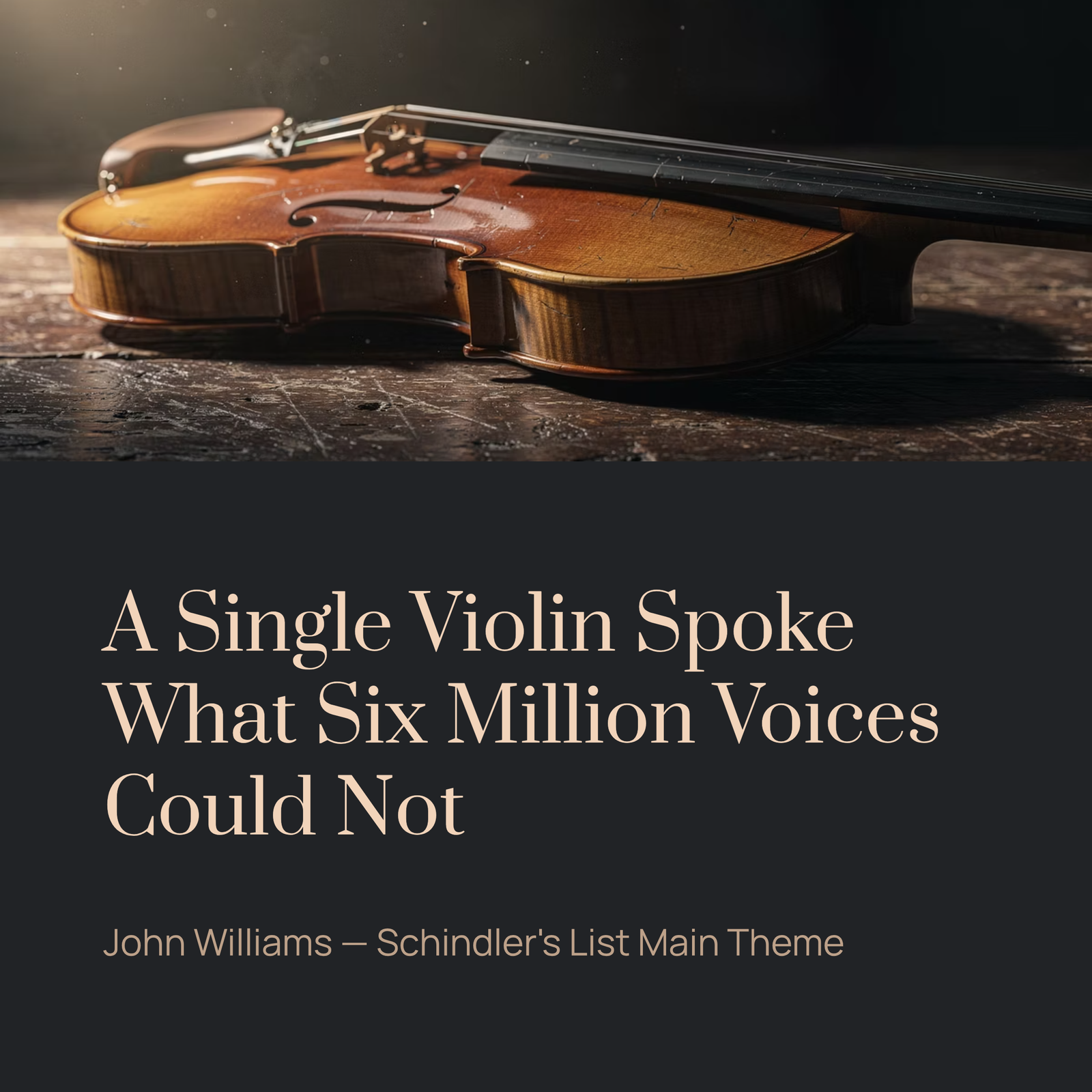
That recording session in 1993 produced one of the most emotionally devastating pieces of music in film history. Not because it is loud, or dramatic, or overwhelming — but because it is unbearably intimate. A single violin, breathing where words cannot reach.
If you have never listened to classical or orchestral music before, this is a door you can walk through without any preparation. You don’t need to know time signatures or key changes. You just need to be willing to sit with something honest.
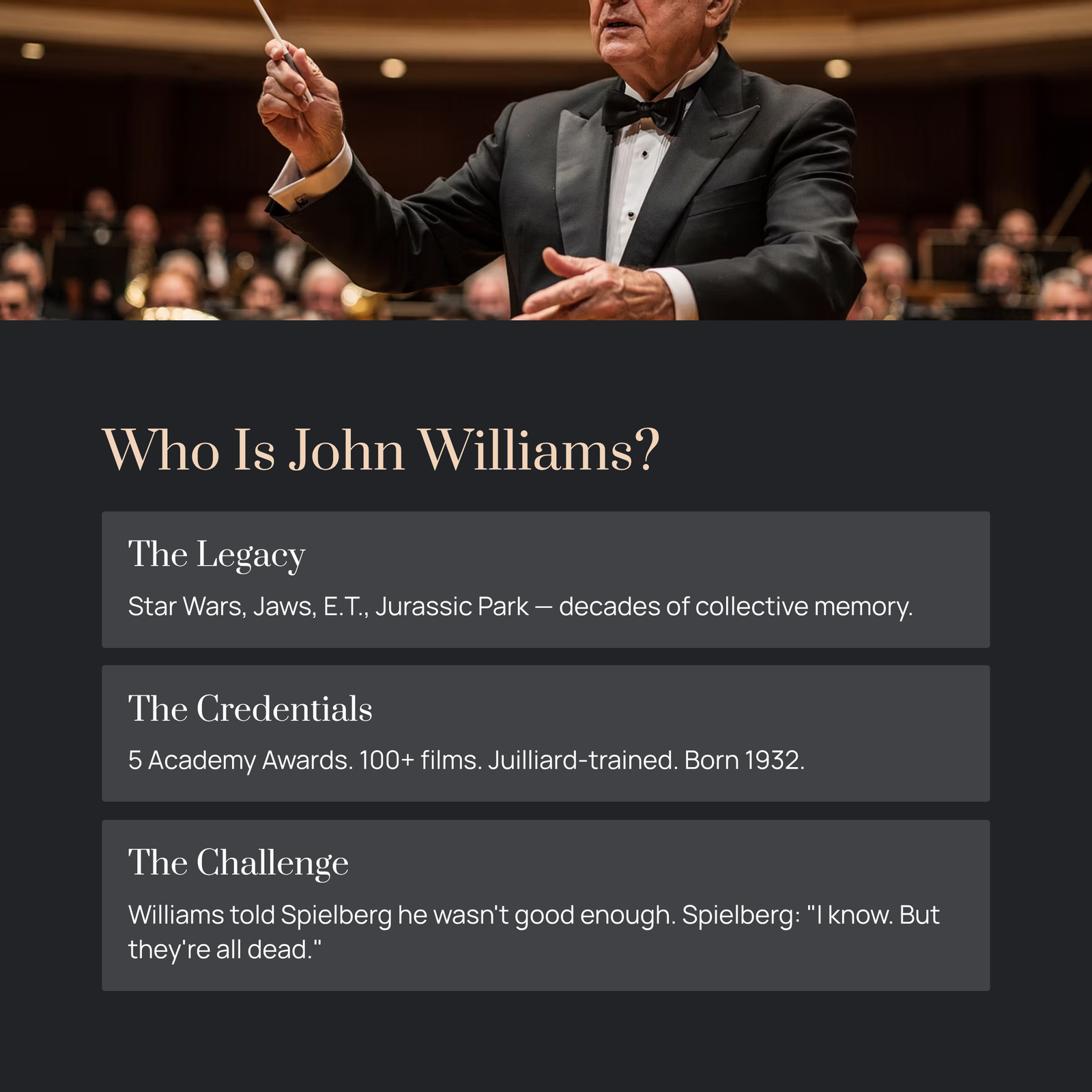
Who Is John Williams — And Why Does His Music Live Inside Us?
You already know John Williams. You may not realize it yet, but his music has been the backdrop to some of the most defining moments of modern cinema. Star Wars, Jaws, E.T., Jurassic Park, Harry Potter, Indiana Jones — the list stretches across decades like a living catalog of collective memory.
Born in 1932 in Floral Park, New York, Williams studied at Juilliard and began his career as a jazz pianist and studio musician in Hollywood. Over the course of his life, he has won five Academy Awards, composed for over a hundred films, and earned a reputation that places him alongside the great orchestral composers of the past two centuries.
But Schindler’s List was different.
This was not a score designed to thrill or uplift. Williams has said that when Spielberg first showed him a rough cut of the film, he felt the material was beyond him — that it demanded a better composer. Spielberg’s response was devastating in its simplicity: “I know. But they’re all dead.”
So Williams wrote not for spectacle, but for grief. And in doing so, he created something that transcends film scoring entirely.
The Weight of History Behind Every Note
Schindler’s List (1993) tells the true story of Oskar Schindler, a German industrialist who saved over a thousand Jewish lives during the Holocaust by employing them in his factories. The film confronts one of the darkest chapters in human history with a rawness that shocked audiences worldwide.
Williams understood that music for this film could not manipulate. It could not sentimentalize. The horror was too real, the loss too vast for any kind of musical ornament. Instead, he stripped everything back to the most elemental sound he could imagine: a solo violin, singing in a minor key, carrying melodies rooted in Eastern European Jewish musical traditions.
The main theme draws from the klezmer tradition — the music of celebration and mourning that defined Jewish life in the shtetls of Poland and beyond. There is something ancient in the melody, as though it existed long before Williams put pen to paper, as though it had been waiting in the soil of history for someone to finally write it down.
How to Listen — Three Doorways Into the Music
You don’t need a music theory textbook to feel this piece. But here are a few things to listen for that might deepen the experience.
The first thirty seconds: breath and hesitation. Notice how the violin enters almost reluctantly. There is a quality of fragility in the opening phrase, as though the instrument itself is unsure whether it can bear the weight of what it must say. Perlman plays with a tone that trembles at the edges — not from technical weakness, but from a kind of emotional honesty that refuses to be polished away.
The middle section: when the orchestra joins. Around the two-minute mark, the strings of the orchestra swell beneath the solo violin. This is the moment where private grief becomes collective. The violin is no longer alone. It is as though an entire community has risen to stand beside it, not to overpower the melody, but to hold it up.
The final phrases: the silence between the notes. Pay attention to the pauses. Williams and Perlman both understood that the spaces between notes carry as much meaning as the notes themselves. The theme does not end with a grand resolution. It simply fades, like a candle that has burned all the way down — still giving light, but only barely.
Why This Music Still Matters — A Personal Reflection
There is a particular kind of art that does not allow you to remain a spectator. It reaches through whatever defenses you have built and touches something unguarded. The Schindler’s List main theme does this not through force, but through an almost unbearable gentleness.
I think the reason this piece continues to resonate with people — regardless of their background, regardless of whether they have seen the film — is that it speaks to a universal understanding of loss. Not the dramatic, cinematic kind of loss, but the quiet kind. The kind where you wake up one morning and someone is simply gone, and the world continues as though nothing has changed.
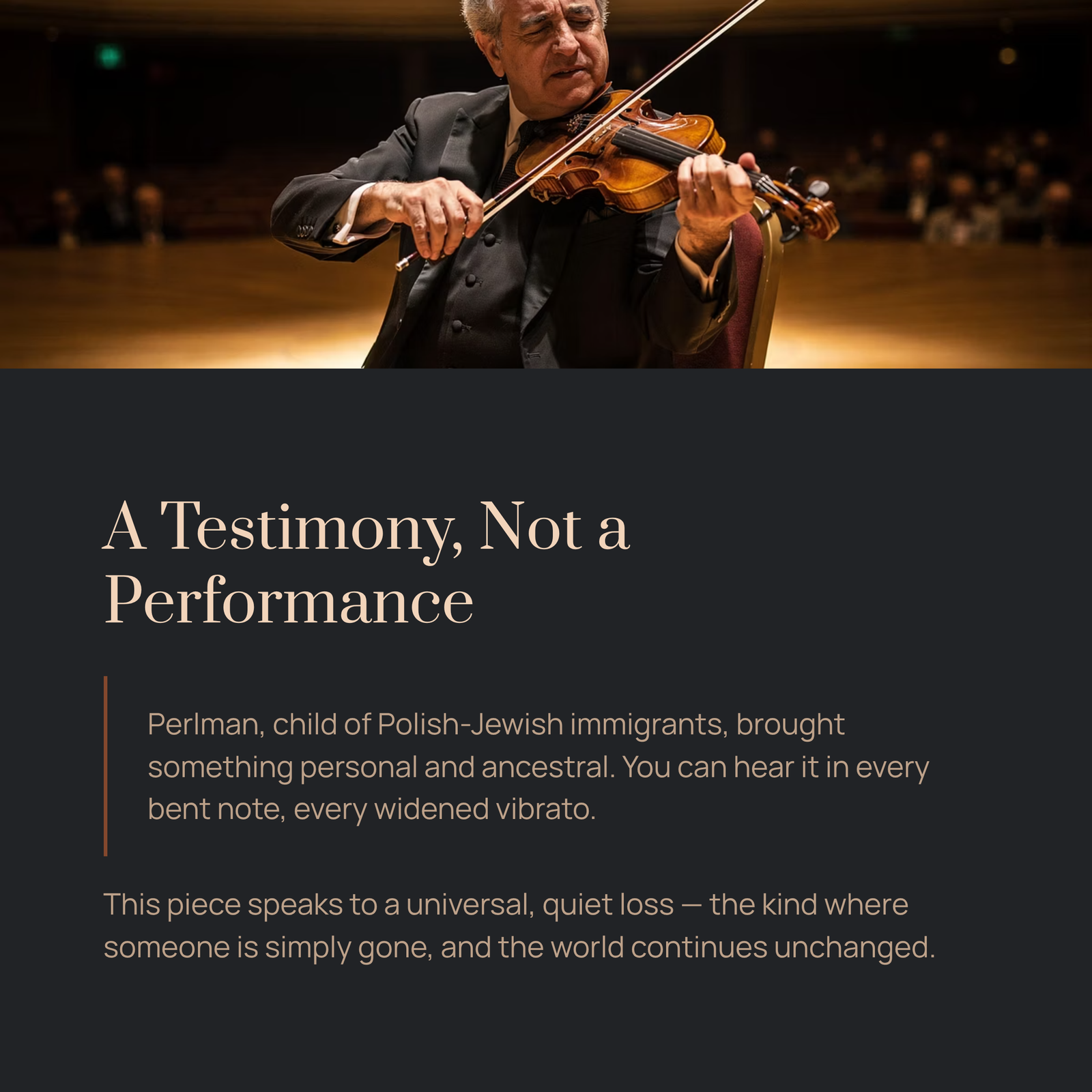
Perlman, himself the child of Polish-Jewish immigrants, brought something personal and ancestral to the recording. You can hear it in the way certain notes bend slightly, the way the vibrato widens at moments of peak intensity. This is not a performance. It is a testimony.
Recommended Recordings and Performances
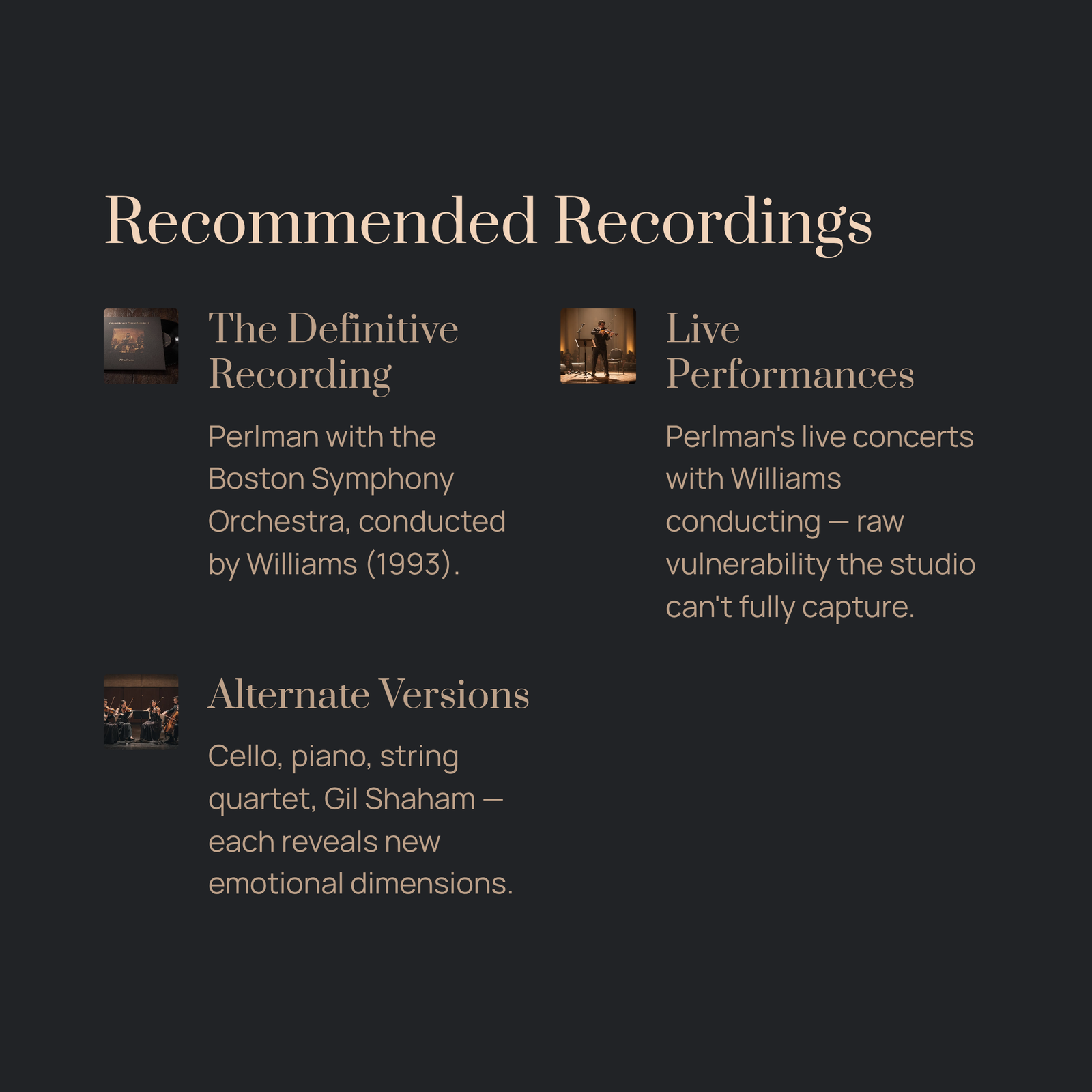
The definitive recording is the original 1993 soundtrack album performed by Itzhak Perlman with the Boston Symphony Orchestra conducted by John Williams. This remains the standard against which all other interpretations are measured.
For a live experience, search for Perlman’s various live concert performances of the theme — particularly his appearances with John Williams conducting. There is a vulnerability in the live versions that even the studio recording cannot fully capture.
For a different perspective, the theme has been arranged for cello, piano, and even full string quartet. Gil Shaham has also recorded a powerful interpretation. These alternate versions reveal different emotional dimensions within the same melody — proof that great music can sustain infinite readings without losing its center.
A Melody That Refuses to Let Us Forget
John Williams once said that he writes music for the “common emotions” — the feelings that bind all human beings together regardless of time or place. The Schindler’s List main theme is perhaps the purest expression of that philosophy.
It does not lecture. It does not explain. It simply mourns. And in that mourning, it preserves something sacred: the insistence that every life lost mattered, that silence is not the same as forgetting, and that a single violin — played with enough truth — can hold the memory of millions.
If you listen to nothing else this week, listen to this. Not as background music. Not while checking your phone. Sit somewhere quiet, close your eyes, and give it the four minutes it asks for. You will not be the same afterward. Not because the music changes you, but because it reveals something that was always there — waiting, like the melody itself, to be heard.