📑 Table of Contents
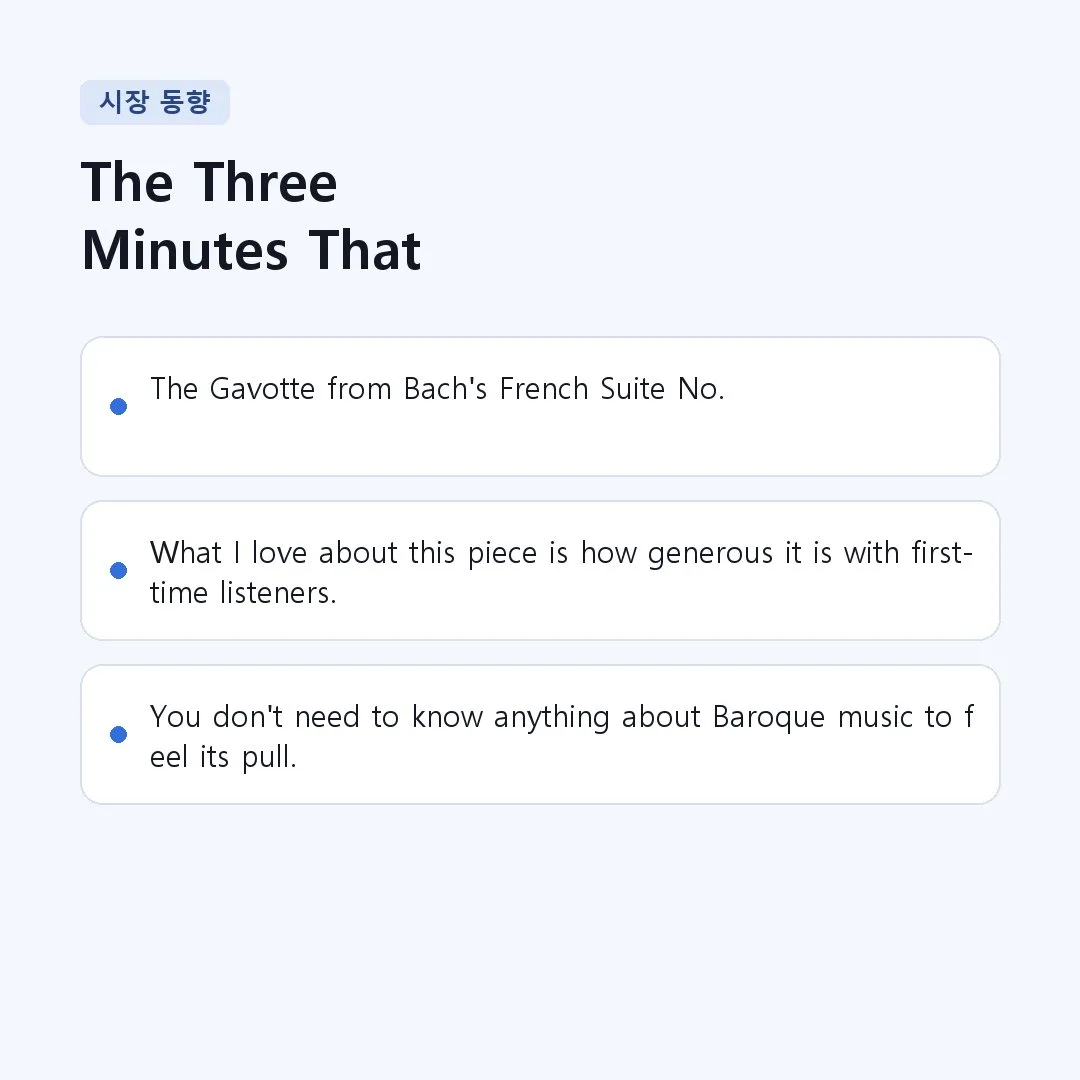
Press play on this short piece and something almost physical happens: your shoulders drop, your foot starts tapping, and a little involuntary lightness creeps into your chest. The Gavotte from Bach’s French Suite No. 5 is barely two to three minutes long, but it works like a window thrown open on a spring morning. There’s no grand tragedy here, no thunderous climax—just a bright, springing melody that seems to skip rather than walk.
What I love about this piece is how generous it is with first-time listeners. You don’t need to know anything about Baroque music to feel its pull. The tune is catchy enough that you might find yourself humming it later, surprised it lodged itself in your memory so easily. It’s one of those rare classical pieces that asks nothing of you and gives back immediately.
Who Was Bach, and Why Does He Still Matter?
Johann Sebastian Bach (1685–1750) was a German composer and organist who spent much of his life working as a church musician and court employee—not as the towering legend we know today. In his own time, he was respected more as a brilliant keyboard player than as a composer, and a good deal of his music was nearly forgotten for decades after his death until a nineteenth-century revival brought it roaring back.
Here’s the thing that makes Bach special: he could take the strictest, most mathematical musical rules and make them feel completely human. His music is built like architecture—every voice has its place, every note serves a structure—and yet it never sounds cold. The French Suites, written during a relatively happy and settled period of his life, show his warmer, more intimate side. These weren’t pieces for a cathedral or a prince’s grand hall. They were music for the home, for teaching, for the simple pleasure of playing.
What Is a Gavotte, Anyway?
The word “suite” in Bach’s time meant a collection of dances, each based on a real dance style with its own character and rhythm. A Baroque suite is a bit like a tasting menu of moods: a stately opening, a lively middle, an elegant close.
The Gavotte is one of those dances—originally a French country dance that became fashionable in royal courts. Its signature feature is the way it begins: instead of starting right on the strong beat, it starts halfway through the measure, giving the music a gentle little “lift-off” feeling, as though it’s already in motion before you’ve caught up. That subtle off-balance start is exactly why the Gavotte feels so buoyant and forward-leaning. Once you notice it, you’ll hear that springy upbeat every time.
You don’t need to count beats to enjoy this, though. Just know that the bounce you feel is built into the dance’s DNA.
A Listening Guide for Your First Time Through
Give the piece a single, uninterrupted listen first—just let it wash over you. Then try again with these anchors in mind:
The opening melody (first few seconds): Notice how the tune enters mid-step, with that little pickup that launches everything forward. This is your main theme, and Bach will keep circling back to it.
The conversation between hands: On a piano, listen for how the right hand carries the bright melody while the left hand answers underneath, almost like two dancers trading steps. Bach rarely lets one voice do all the work.
The middle section: The music shifts color slightly, exploring a related mood before finding its way home. See if you can feel the moment it “returns”—that small sense of homecoming when the opening tune comes back.
The clean ending: There’s no dramatic fade or big finish. The dance simply completes its steps and bows. That tidiness is part of its charm.
A good trick for beginners: try listening once on piano and once on harpsichord (the instrument of Bach’s era). The harpsichord’s brighter, more brittle sound reveals how this music would have originally sparkled.
Where to Start Listening
For a warm, modern piano interpretation, András Schiff’s recordings of the French Suites are a wonderful entry point—clear, singing, and never rushed. He treats Bach with a kind of conversational ease that suits beginners beautifully.
If you’re curious about how the music sounded in Bach’s own time, seek out a harpsichord recording by Christophe Rousset or Blandine Verlet. The period instrument gives the Gavotte a crispness and sparkle that a piano smooths over.
For something a little more spirited and rhythmically alive, Murray Perahia’s Bach playing brings a gentle momentum that makes the dance feel genuinely danceable.
Any of these will serve you well. If you’re searching online, simply look up “Bach French Suite No. 5 Gavotte” and let your ear decide which sound you prefer—piano warmth or harpsichord sparkle.
Why This Little Dance Endures
There’s a quiet wisdom in a piece like this. We tend to associate “great” classical music with size and seriousness—long symphonies, crashing chords, grand emotional arcs. But Bach understood that joy doesn’t need to be loud, and beauty doesn’t need to be vast. A two-minute dance, perfectly made, can lift a heavy afternoon just as surely as a symphony.
The next time you need a small reset—between meetings, before a difficult task, or just because the day feels gray—let this Gavotte do its quiet work. It was written three centuries ago for people who also had long days and tired shoulders. Some things, it turns out, don’t change at all.