📑 Table of Contents
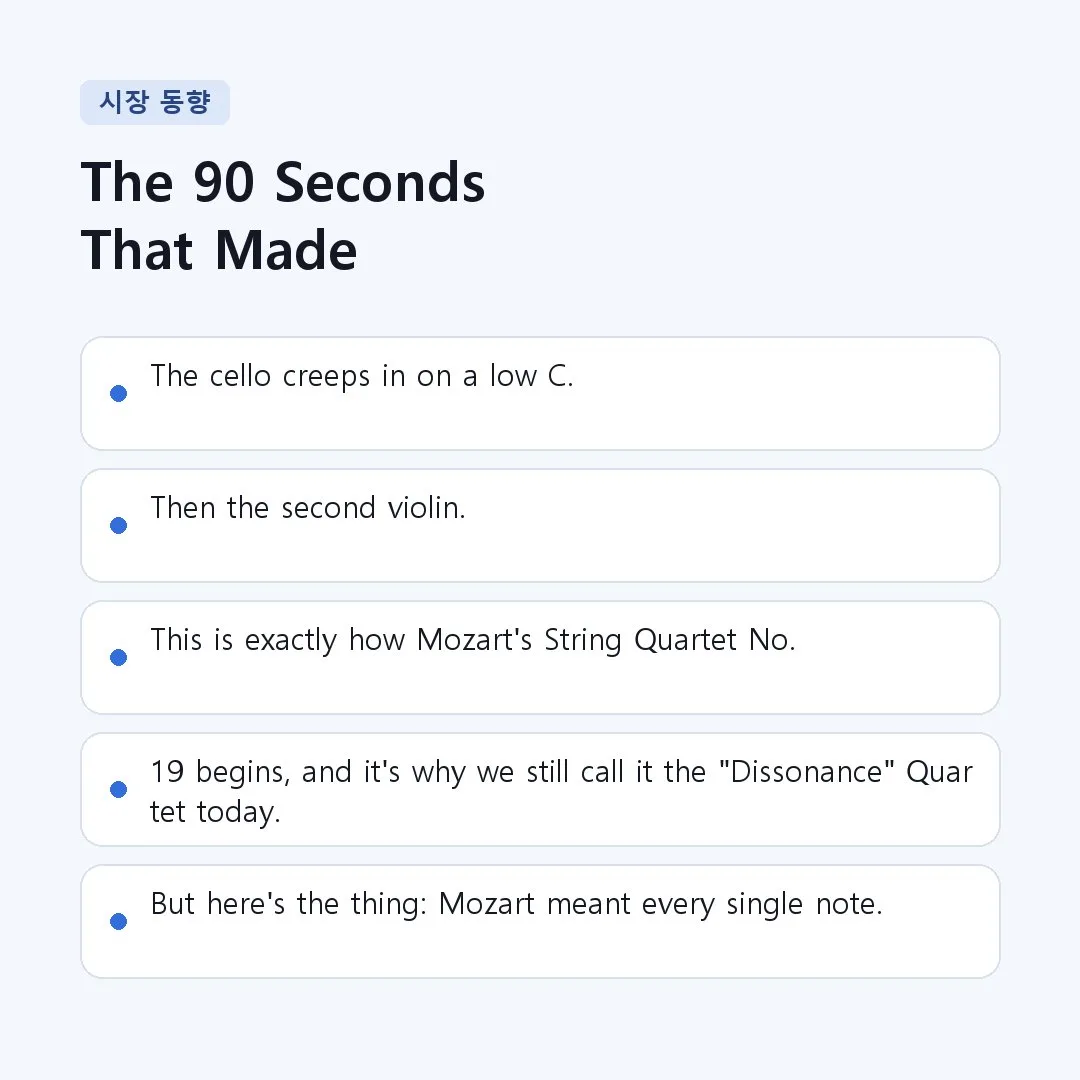
Imagine opening a brand-new piece of music in 1785 and finding notes that simply don’t belong together. The cello creeps in on a low C. The viola enters a beat later — but on a note that scrapes against the cello like two voices arguing in the dark. Then the second violin. Then the first. By the time all four instruments are playing, you’re not sure which key you’re in, or whether the musicians have made a terrible error.
This is exactly how Mozart’s String Quartet No. 19 begins, and it’s why we still call it the “Dissonance” Quartet today. Listeners were so baffled that one Italian publisher reportedly sent the manuscript back, convinced the printing was full of mistakes. A respected theorist of the era went through the score “correcting” the harmonies he thought Mozart had gotten wrong.
But here’s the thing: Mozart meant every single note.
Who Was Mozart in 1785?
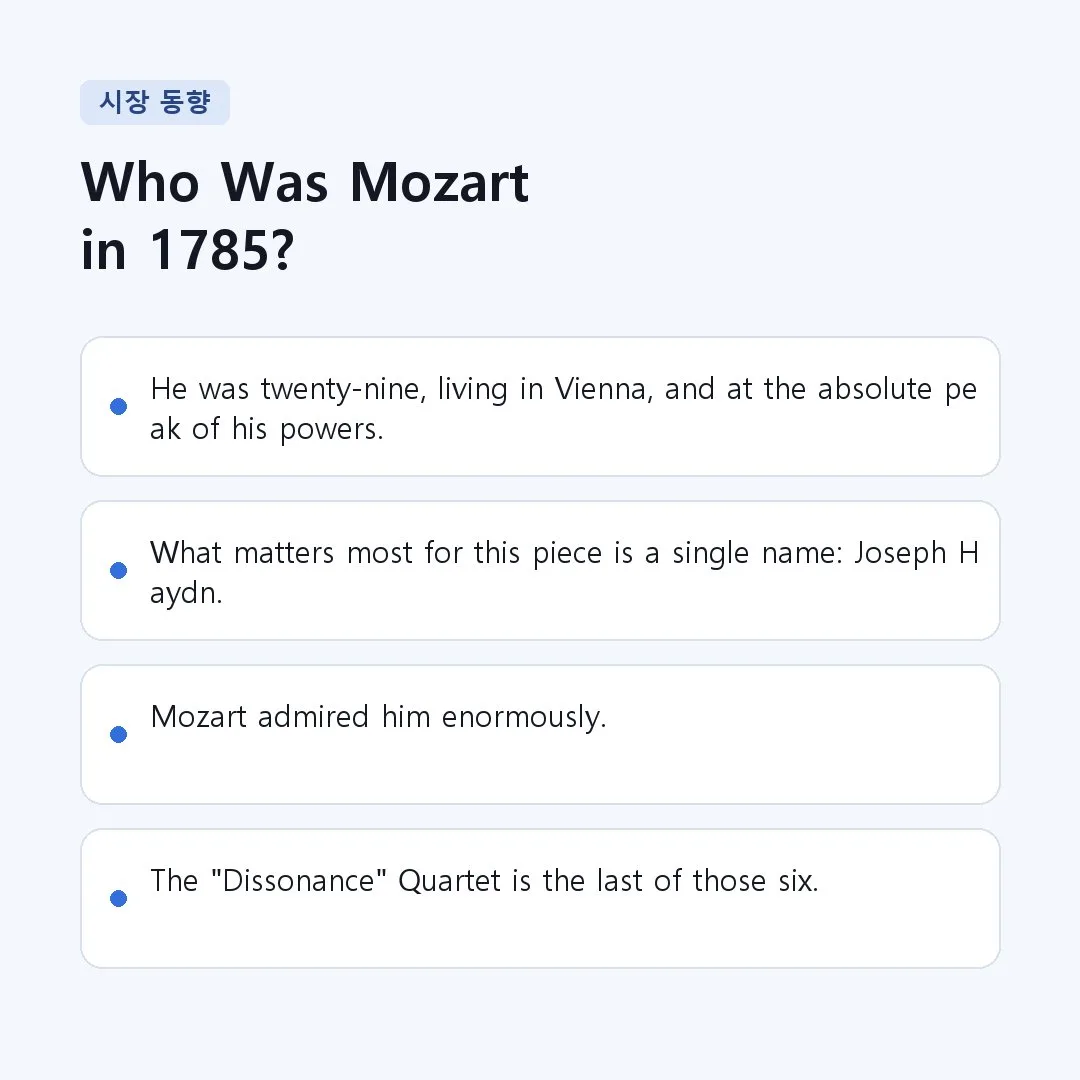
By the time he wrote this quartet, Wolfgang Amadeus Mozart was no longer the child prodigy paraded around the courts of Europe. He was twenty-nine, living in Vienna, and at the absolute peak of his powers. This was the same period that produced his great piano concertos and, soon after, The Marriage of Figaro.
What matters most for this piece is a single name: Joseph Haydn. Haydn was the older master who had essentially invented the string quartet as a serious art form — four instruments (two violins, one viola, one cello) conversing as equals. Mozart admired him enormously. Between 1782 and 1785, Mozart wrote six quartets and dedicated them to Haydn, calling them in his dedication the fruit of “long and laborious study.” For a composer who famously made everything look effortless, that’s a striking admission of how hard he worked on these.
The “Dissonance” Quartet is the last of those six. You can think of it as Mozart’s gift to a mentor — and as a young genius quietly showing that he could take the form somewhere even his teacher hadn’t dared to go.
What’s Actually Happening in That Strange Opening
You don’t need to read music to understand why the introduction is so unsettling. Here’s the trick: our ears expect music to tell us, almost immediately, “this is home.” A clear key, a stable chord, a sense of where we are.
Mozart refuses to give us that. For about ninety seconds — the slow introduction marked Adagio — he keeps the harmony deliberately murky. Notes that “should” resolve instead slide somewhere unexpected. It feels like fog, like searching for a light switch in an unfamiliar room. There’s beauty in it, but also genuine unease.
And then it breaks.
The fog lifts, the tempo quickens to a bright Allegro, and the first violin sings out a clear, sunny melody in radiant C major. The relief is physical. After all that wandering, arriving home has never felt so good — and that’s the whole point. Mozart made the introduction strange so that the arrival would feel earned. The darkness exists to make the light blinding.
A Listening Guide for the First Movement
Try this on your first listen. You don’t need to follow a score — just notice these three moments:
0:00 – The Uneasy Search (Adagio introduction). Let yourself feel disoriented. Notice how each instrument enters one at a time, layering tension. Don’t fight the discomfort; it’s intentional. Ask yourself: where is “home” in all this?
~1:30 – The Sunrise (Allegro begins). Listen for the moment the clouds part and the first violin launches into a clean, cheerful tune. This is the emotional payoff. The exact timing varies by performance, so trust your ears — you’ll feel the shift before you can name it.
The rest of the movement – The Conversation. Once the Allegro is rolling, stop tracking “home” and start tracking dialogue. The melody gets passed around: first violin states an idea, the others answer, comment, tease. This back-and-forth among four equal voices is the heart of what a string quartet is. Notice how no single instrument dominates for long.
One gentle reassurance for beginners: after that opening, the movement is overwhelmingly bright, elegant, and easy to enjoy. The dissonance is a doorway, not the whole house.
Recordings Worth Your Time
A few interpretations that suit different kinds of listeners:
The Alban Berg Quartett — Polished, intense, and beautifully recorded. Their account leans into the drama of the introduction without ever sounding harsh. A great default choice if you want clarity and emotional weight in equal measure.
The Quartetto Italiano — Warmer and more singing in tone, with a relaxed sense of conversation between the players. If you find some modern recordings too sharp-edged, this older classic feels like overhearing four friends talk.
The Hagen Quartett — More daring and transparent, with crisp detail that lets you hear exactly how Mozart stacks those opening notes. Rewarding once you already know the piece and want to study what makes the introduction tick.
If you only have time for one, the Alban Berg recording is the safest first encounter; the Quartetto Italiano is the one to return to when you want comfort.
Why This Piece Still Matters
We tend to file Mozart under “pretty” — graceful, balanced, the sound of powdered wigs and candlelit ballrooms. The “Dissonance” Quartet quietly demolishes that cliché. Here is a composer at the height of his fame deliberately writing something that confused the experts of his day, trusting that the strangeness would mean something.
What it means, I think, is simple and human: you can’t appreciate resolution without first knowing tension. Mozart built ninety seconds of unease so that a single major chord could feel like sunrise. Two hundred and forty years later, it still does — and that’s worth ninety seconds of your discomfort to discover for yourself.