📑 Table of Contents
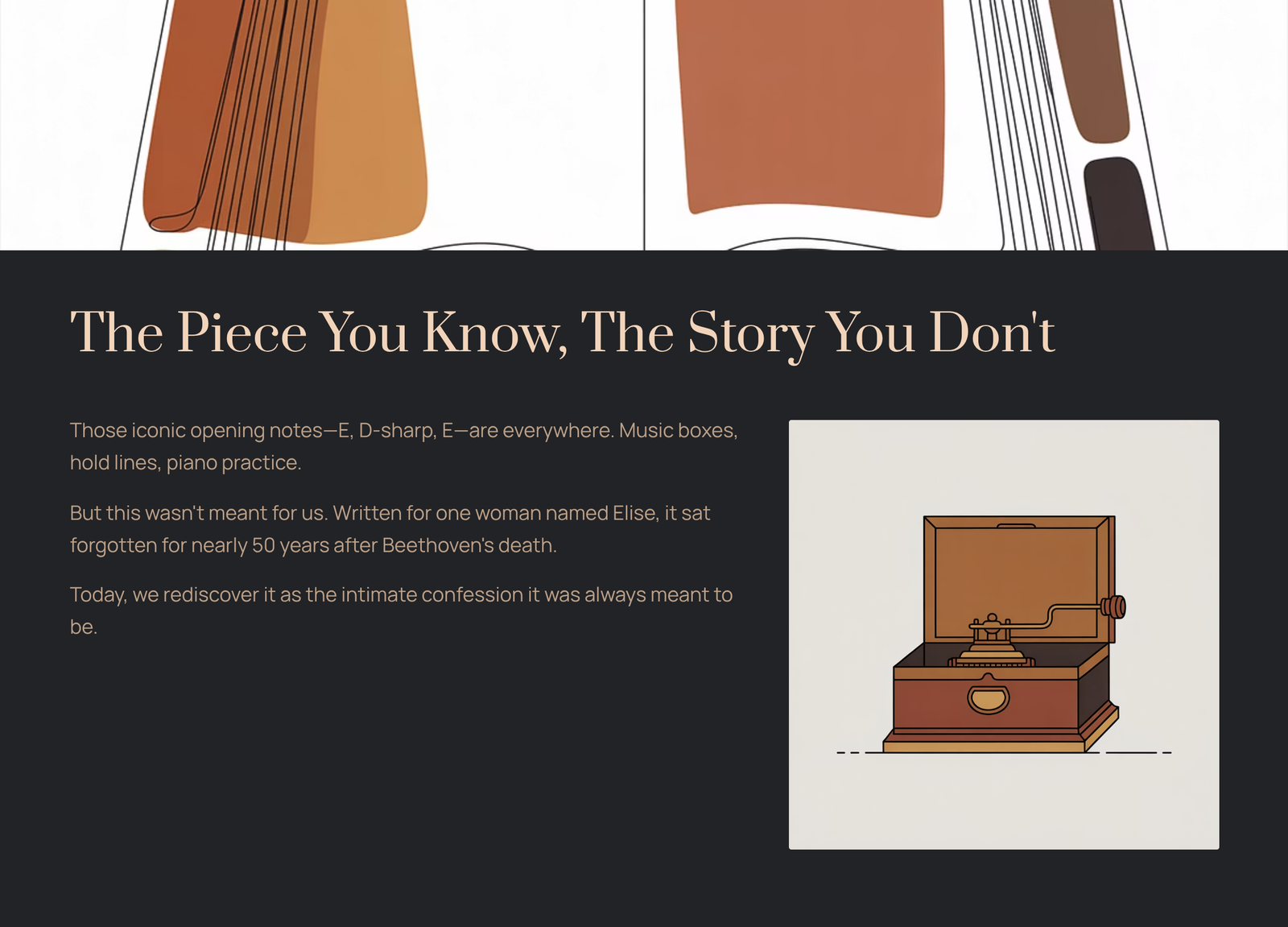
You’ve heard it a thousand times. In music boxes, on hold lines, drifting from a neighbor’s piano practice. Those instantly recognizable opening notes—E, D-sharp, E—have become so woven into our daily soundscape that we rarely stop to think about where they came from.
But here’s the thing: this piece was never meant for us. It was written for one person, a woman named Elise. And for nearly half a century after Beethoven’s death, it sat forgotten, gathering dust in someone’s private collection while the world remained completely unaware of its existence.
Today, let’s rediscover Für Elise—not as background music, but as the intimate confession it was always meant to be.
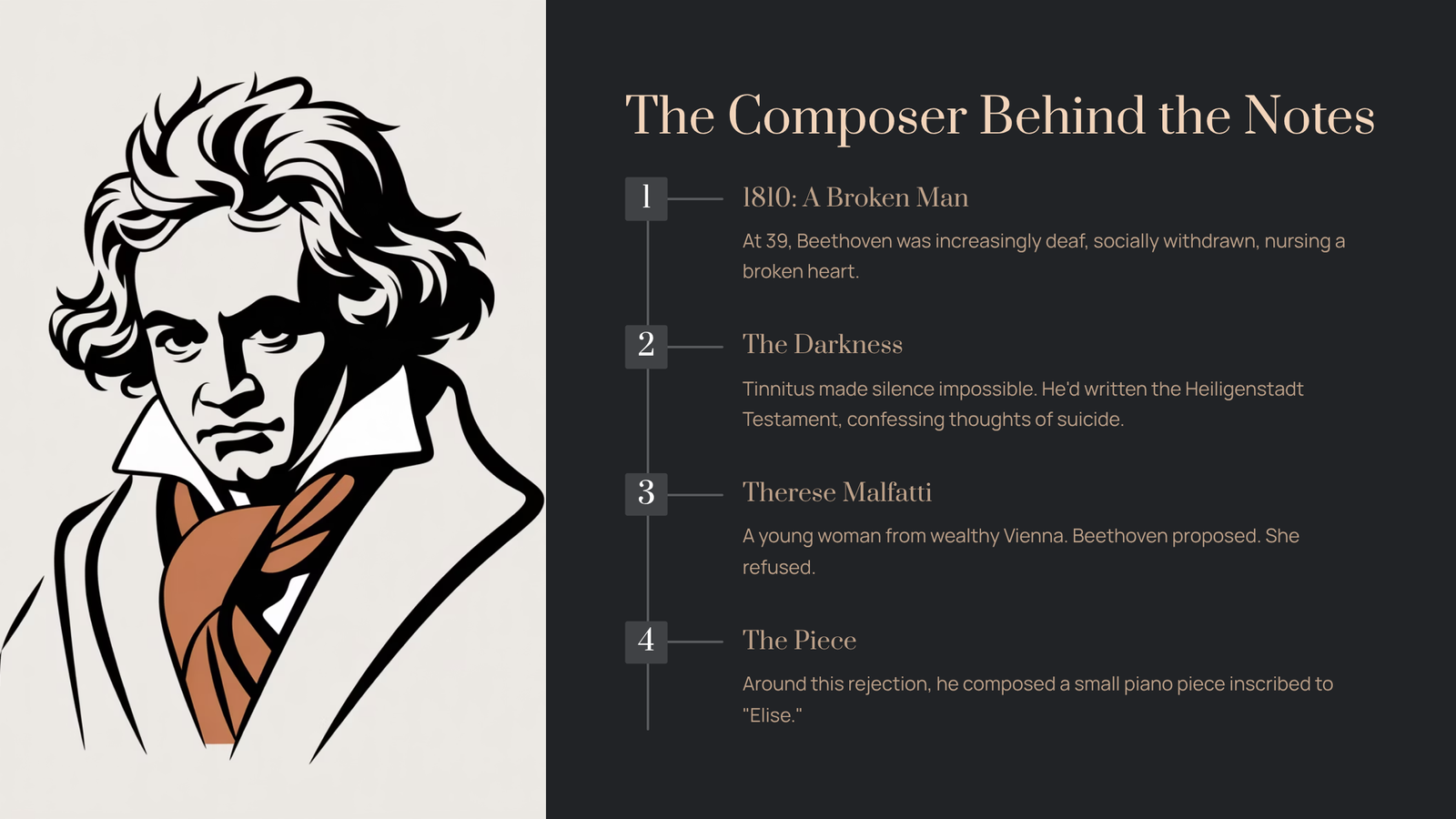
The Composer Behind the Notes
By 1810, when Beethoven penned this little piece, he was no longer the brash young virtuoso who had stormed Vienna’s salons. At thirty-nine, he was increasingly deaf, socially withdrawn, and nursing a broken heart from yet another failed romance.
His hearing had been deteriorating since his late twenties. By this point, conversation required shouting, and the tinnitus that plagued him made silence impossible to find. He had already written his famous Heiligenstadt Testament—that devastating letter where he confessed thoughts of suicide before resolving to live for his art.
Into this darkness came Therese Malfatti, a young woman from a wealthy Viennese family. Beethoven proposed marriage. She refused. And sometime around this rejection, he composed a small piano piece and inscribed it to someone named “Elise.”
The Mystery That Has Lasted Two Centuries
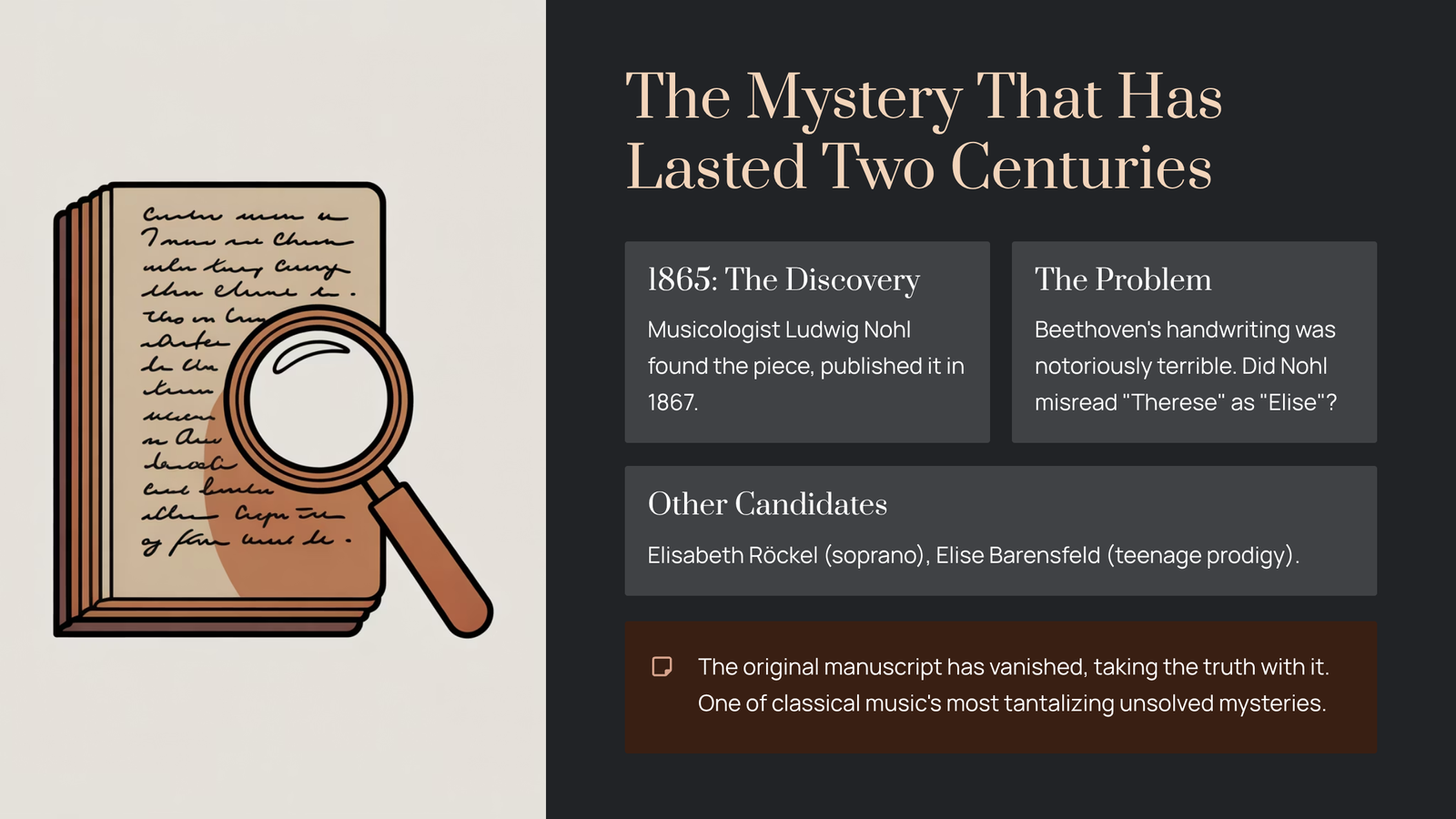
Here’s where things get interesting. We don’t actually know who Elise was.
When the German musicologist Ludwig Nohl discovered this piece in 1865 and published it two years later, he transcribed the dedication from Beethoven’s handwritten manuscript. The problem? Beethoven’s handwriting was notoriously terrible. Some scholars believe Nohl misread “Therese” as “Elise”—making this a farewell gift to the woman who had just broken his heart.
Others point to Elisabeth Röckel, a soprano and friend of the composer who went by “Elise.” Still others suggest Elise Barensfeld, a teenage piano prodigy who studied with Therese Malfatti.
The original manuscript has since vanished, taking the truth with it. We’re left with one of classical music’s most tantalizing unsolved mysteries.
Understanding the Music: A Journey in Three Acts
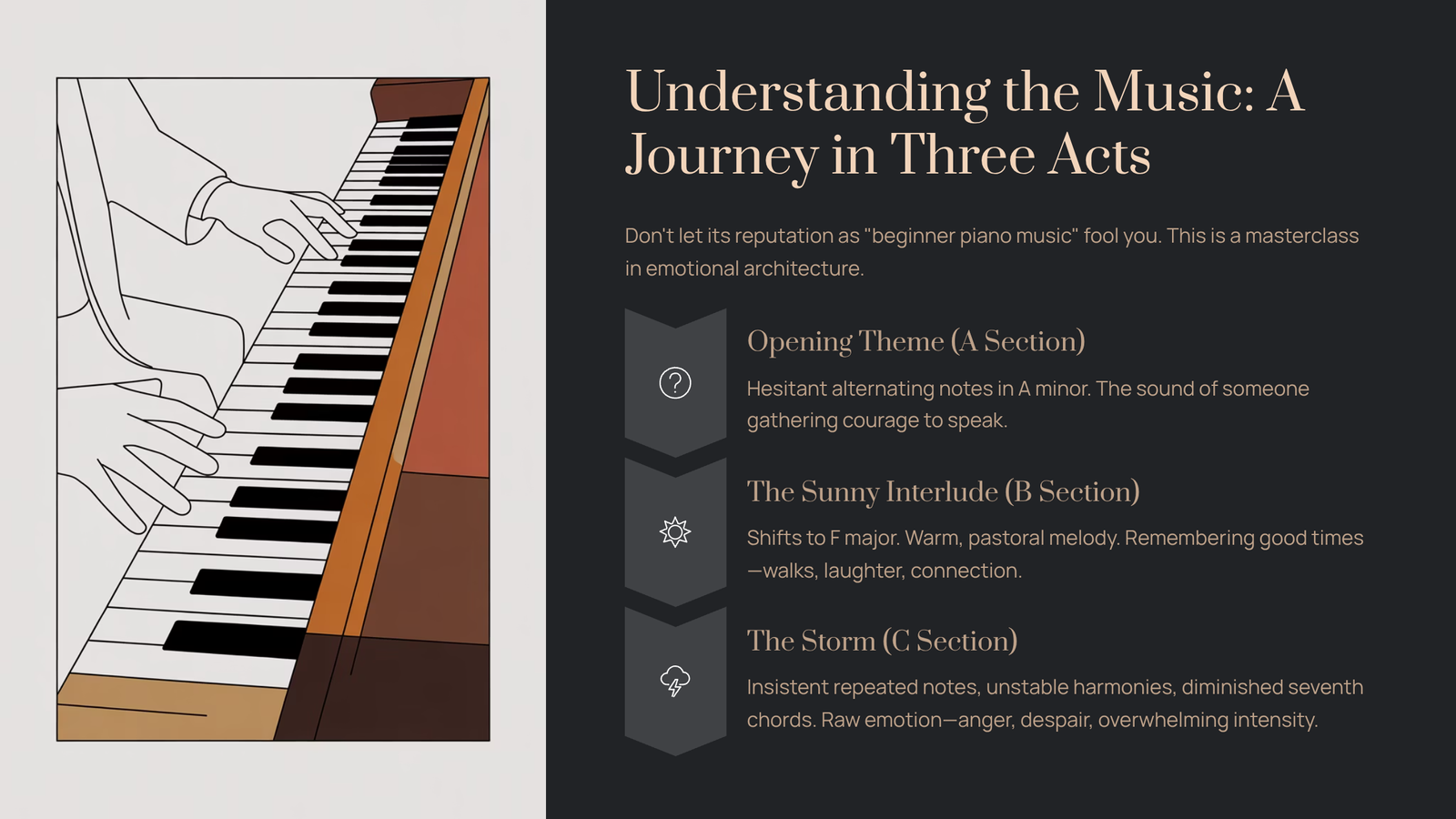
Don’t let its reputation as “beginner piano music” fool you. Für Elise is a masterclass in emotional architecture, packed into just three minutes.
The Opening Theme (A Section): Those famous alternating notes aren’t just catchy—they’re hesitant. Listen to how the melody seems to ask a question, pause, then ask again. The A minor tonality gives everything a wistful, nostalgic quality. This is the sound of someone gathering courage to speak.
The Sunny Interlude (B Section): Suddenly, the clouds part. The music shifts to F major, and a warm, almost pastoral melody emerges. If the opening theme is remembering lost love, this section is remembering the good times—walks in the park, shared laughter, moments of genuine connection. Notice how the left hand adopts a gentle rocking pattern, like being cradled in a pleasant memory.
The Storm (C Section): This is the part most people don’t remember. After the opening theme returns, something darker emerges. The left hand begins an insistent, almost obsessive repeated note—like a heartbeat that won’t calm down. The harmonies grow unstable, dissonant. Beethoven unleashes diminished seventh chords, a harmonic device that creates intense anxiety.
This is the moment of raw emotion—anger, despair, or perhaps the overwhelming intensity of feelings that couldn’t be contained. Then, just as suddenly, it subsides. The original theme returns one final time, and the piece ends quietly, as if the storm was just a memory.
How to Really Listen
Here’s my suggestion: don’t listen to this as background music. Give it your full attention for just three minutes. Put on headphones if you can.
On your first listen, just feel the emotional journey. Notice how your body responds to the shift into the bright B section. Feel the tension of that agitated C section.
On your second listen, focus on Beethoven’s craft. Pay attention to how he uses just a handful of musical ideas but develops them with perfect economy. The great conductor Leonard Bernstein once praised this piece for its absolute “rightness”—every note exactly where it needs to be.
Recommended Recordings
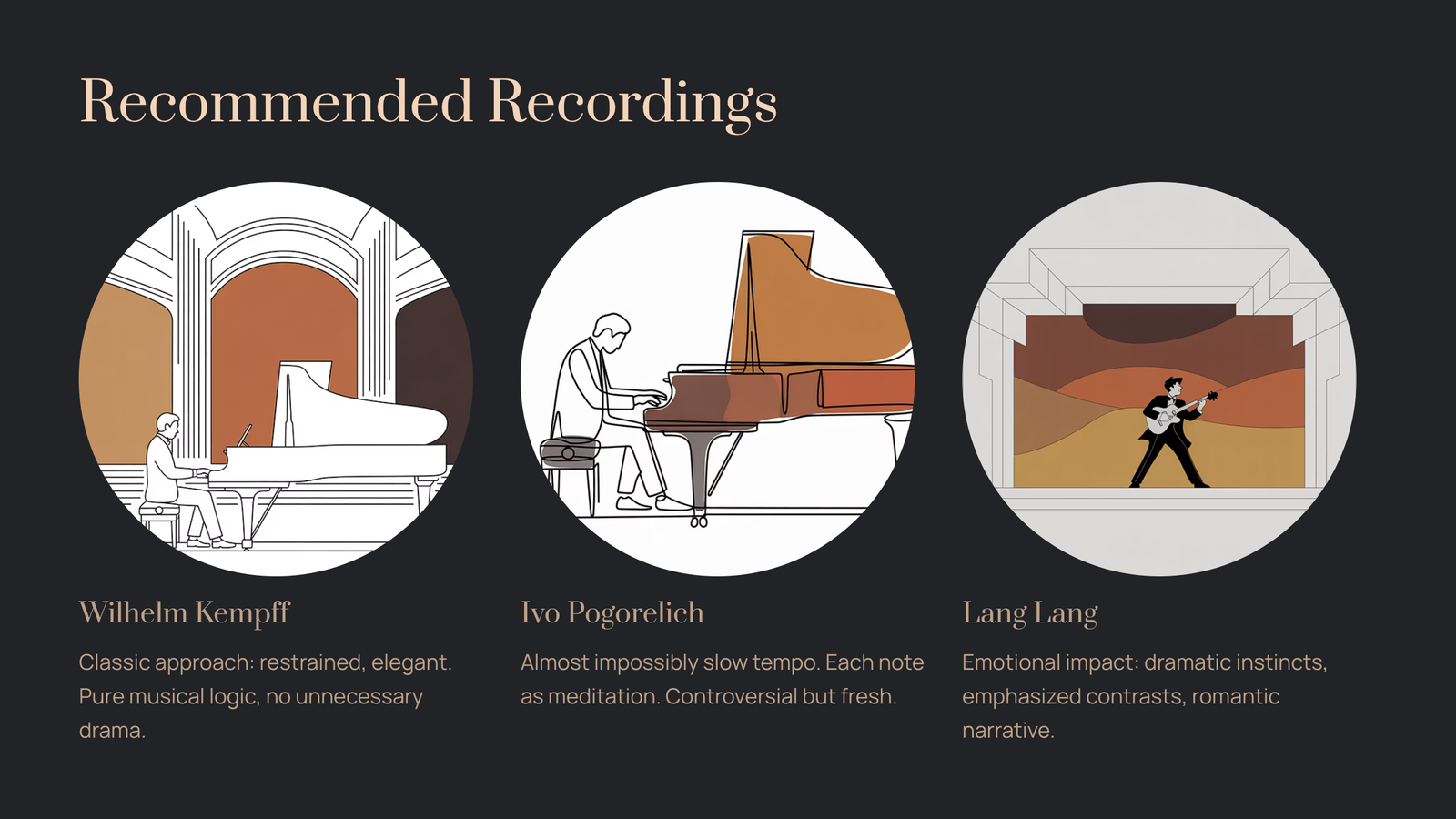
For the Classic Approach: Wilhelm Kempff’s interpretation is restrained and elegant, letting the structure speak for itself. No unnecessary drama, just pure musical logic.
For Something Different: Ivo Pogorelich takes the piece at an almost impossibly slow tempo, treating each note as an object of meditation. It’s controversial, but it forces you to hear familiar passages with fresh ears.
For Emotional Impact: Lang Lang brings all his considerable dramatic instincts to bear, emphasizing the contrasts between sections and playing up the romantic narrative.
A Final Thought
There’s something poignant about the fact that we’ll never know for certain who Elise was. Maybe that uncertainty is part of the piece’s enduring magic. Without a definitive answer, each of us can project our own lost loves, missed connections, and bittersweet memories onto these notes.
Beethoven wrote this as a private gift—a small token for someone who mattered to him. He never published it, never performed it publicly, perhaps never intended for anyone else to hear it. And yet here we are, two centuries later, still moved by this three-minute confession.
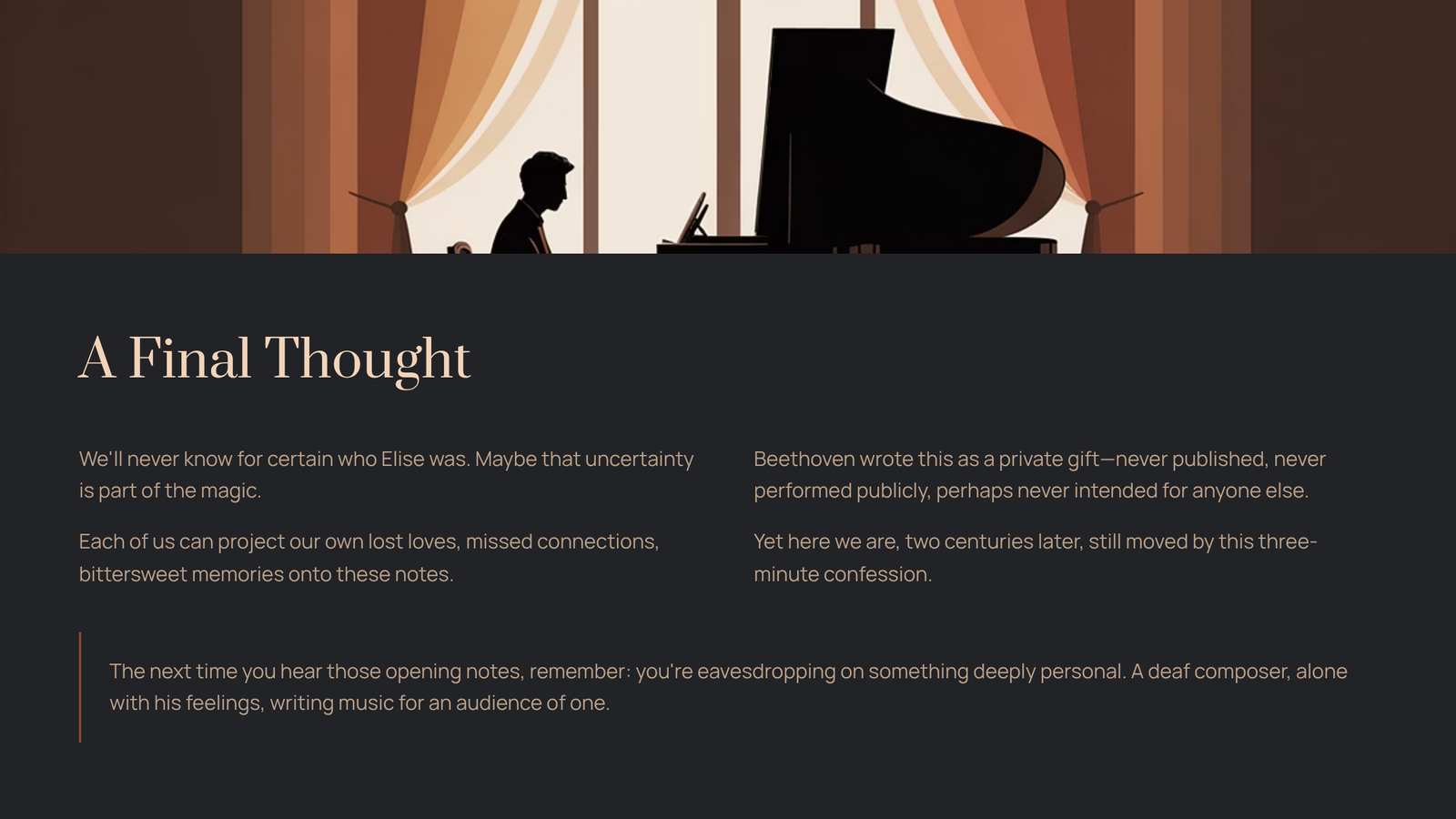
The next time you hear those opening notes in an elevator or a phone’s ringtone, remember: you’re eavesdropping on something deeply personal. A deaf composer, alone with his feelings, writing music for an audience of one.