The Lullaby Grieg Hid Inside a Mountain Dance | Grieg – Norwegian Dance, Op. 35 No. 2
Grieg's Norwegian Dance No. 2 (1880) sounds like a soft Scandinavian lullaby until a wild folk dance crashes in. A beginner's guide to its sly, tender charm.
Composed around 1730, Bach's Air from Orchestral Suite No. 3 has become one of the most soothing pieces in classical music. Here's why this slow, weightless melody still works as instant calm.
Schubert wrote the 1819 'Trout' Quintet during a carefree alpine summer. Discover why the 4th movement's playful variations are the perfect entry point into classical chamber music.
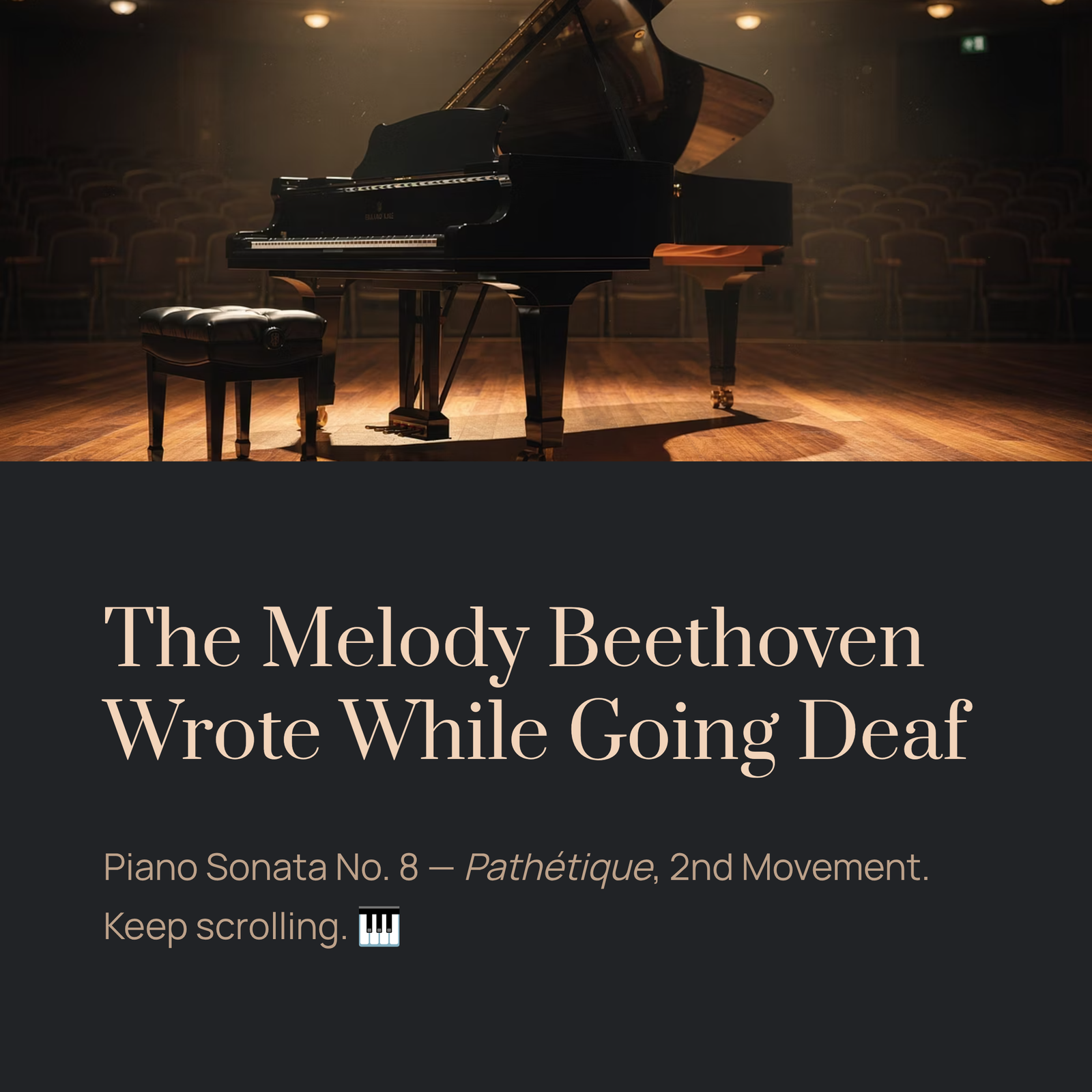
Discover why the Adagio cantabile from Beethoven's Pathétique Sonata (1798) remains one of the most comforting melodies in classical music. A beginner-friendly guide with listening tips and recommended recordings.
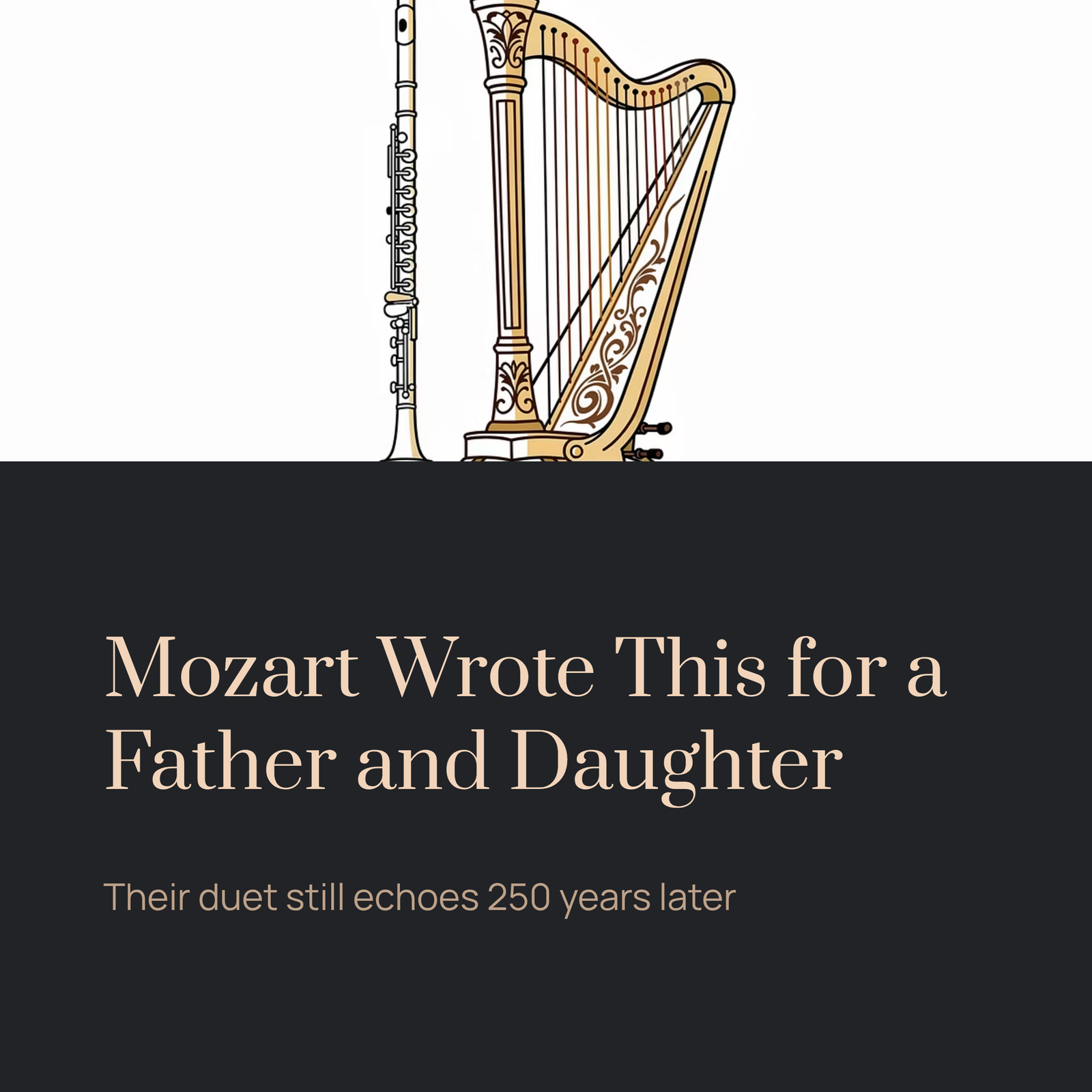
Discover the tender story behind Mozart's Concerto for Flute and Harp in C Major, K.299 — composed in 1778 Paris for a duke and his daughter. The Andantino second movement is a gentle musical conversation between two souls.
Discover how Beethoven's Symphony No. 6 'Pastoral,' composed while losing his hearing, captures the joy of arriving in the countryside. A listening guide to the serene first movement, with timestamps and recommended performances.
Discover how Erik Satie's 1888 piano piece revolutionized music by doing less. A beginner's guide to the hypnotic Gymnopédie No. 1 and the strange genius behind it.
Discover how a 1785 Vienna concert piece became synonymous with tragic romance. Mozart's Andante movement explained for beginners with listening tips and recording recommendations.
Discover how a young Claude Debussy broke every rule of classical composition in 1888 to create one of piano's most hypnotic pieces—sold over 100,000 copies in his lifetime.
Discover the haunting mystery behind Beethoven's most recognizable melody. Composed in 1810 for a woman whose identity remains debated, Für Elise wasn't published until 1867—and the original manuscript is still lost.