
📑 Table of Contents

Picture this: you’re alone in a Norwegian forest as dusk falls. The light goes blue, then gray. And then you hear it—a low, scrambling rhythm, like dozens of small feet pounding the earth, getting closer. Not quite human. Not quite animal. Something else.
That’s the world Edvard Grieg drops you into within the first three seconds of “March of the Trolls.” It’s one of the most thrilling 150 seconds in all of piano music, and you don’t need to know a single thing about classical music to feel your pulse quicken when it starts. The piece grabs you by the collar and runs.
If you’ve ever wondered what mythology sounds like when a master composer translates it into notes, this is your answer.

Who Was Edvard Grieg?
Edvard Grieg (1843–1907) was Norway’s first truly world-famous composer—a small man with a big mustache and an even bigger love for his homeland. While much of 19th-century classical music was dominated by German and Austrian giants, Grieg did something quietly revolutionary: he made Norway itself the subject of his music.
He soaked up the folk melodies of his country, the rhythms of village dances, the eerie tales told around winter fires. Then he poured all of it into music that felt unmistakably Norwegian—the way you can taste a place in its food. If you’ve heard “In the Hall of the Mountain King” or “Morning Mood” from his Peer Gynt music, you already know Grieg, even if you didn’t know his name.
He had a special gift for the miniature. Rather than writing hour-long symphonies, Grieg often worked in small, jewel-like piano pieces—and over his lifetime he wrote 66 of them, collected into ten books he called the Lyric Pieces. “March of the Trolls” comes from Book V, published in 1891.

What Exactly Is a Troll?
To understand this piece, you have to understand its stars. In Norwegian folklore, trolls aren’t the cute creatures of children’s cartoons. They’re creatures of the wilderness—lurking in mountains, under bridges, in dark forests. Some are enormous and lumbering; others are small, mischievous, and travel in swarms. They belong to the night and tend to vanish or turn to stone at sunrise.
Grieg grew up steeped in these stories, and trolls show up again and again in his music. Here, he gives us not one majestic troll king but what sounds like a whole horde of the little ones, stampeding across the landscape on some unknowable errand. The original Norwegian title, “Trolltog,” literally means “troll procession” or “march of the trolls”—a parade you’d absolutely want to watch from a safe distance.
How to Listen: Your Two-and-a-Half Minute Map
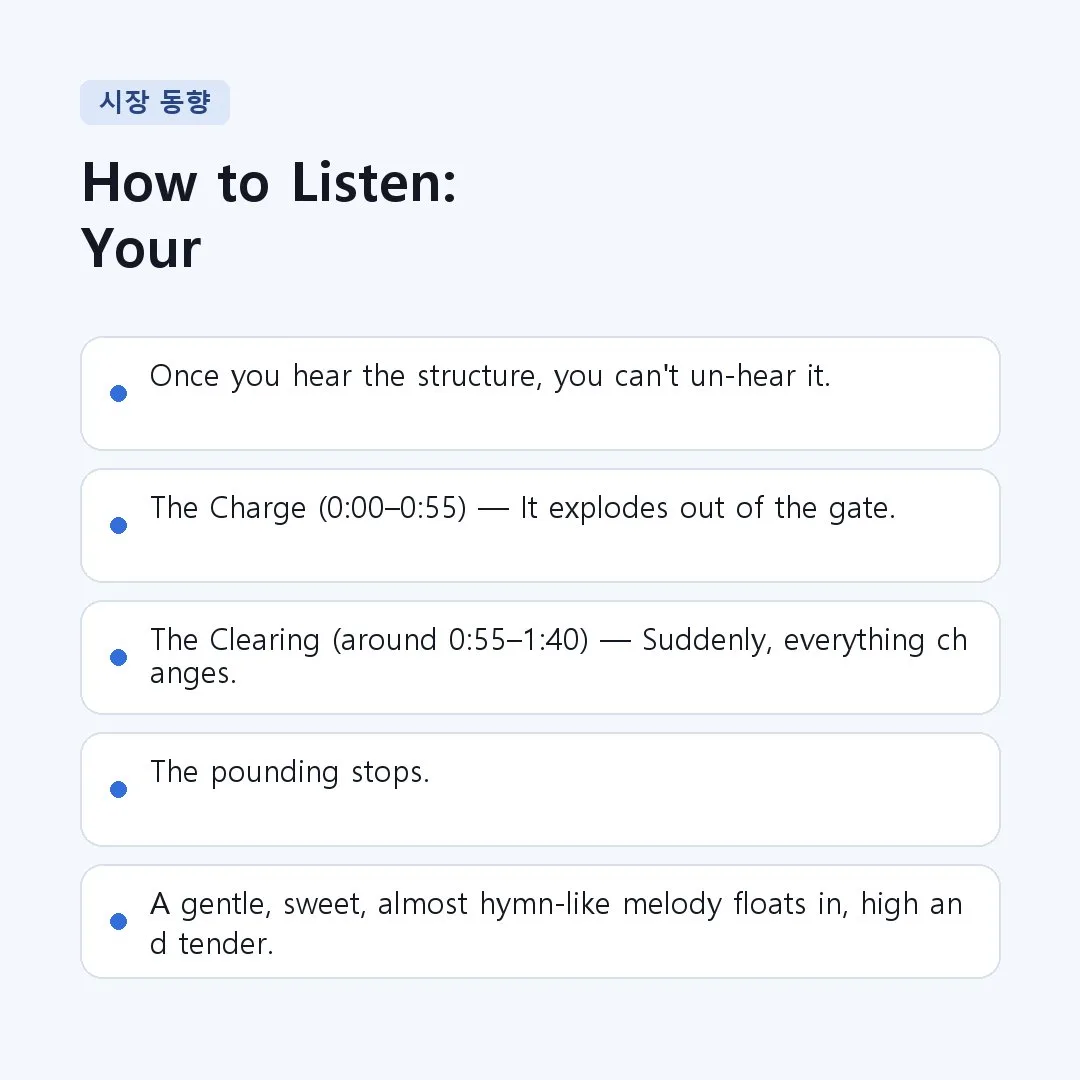
Here’s the beautiful thing about this piece: it has a clear, almost cinematic three-part shape. Once you hear the structure, you can’t un-hear it.
The Charge (0:00–0:55) — It explodes out of the gate. The pianist’s hands hammer out a fast, jagged rhythm in a minor key, low and growling. Listen for how the melody seems to scurry and lurch at the same time—that’s the trolls swarming toward you. There’s menace here, but also a wicked sense of fun, like a chase scene where you’re not entirely sure you’re in danger.
The Clearing (around 0:55–1:40) — Suddenly, everything changes. The pounding stops. A gentle, sweet, almost hymn-like melody floats in, high and tender. It’s a genuinely magical moment—as if the trolls have passed and you’ve stumbled into a moonlit clearing where something delicate and beautiful lives. Grieg was a master of these emotional pivots, and the contrast is what makes the piece unforgettable. Notice how the calm makes you almost miss the chaos.
The Return (around 1:40–end) — And then they’re back. The galloping rhythm comes thundering in again, and the trolls charge off into the distance, the sound fading as they disappear into the mountains. Listen for the very end, where the music seems to scatter and dissolve—poof, like they were never there at all.
Try listening once just letting it wash over you, then a second time following this map. You’ll be amazed how much more you hear.

Recordings Worth Your Time
The good news: this piece is short, popular, and beautifully recorded by many great pianists. A few places to start:
-
Emil Gilels recorded a celebrated selection of the Lyric Pieces for Deutsche Grammophon, and it’s widely considered one of the finest ever made. His “March of the Trolls” has both thunder and crystalline clarity—a perfect entry point if you want to hear the piece played with total authority.
-
Leif Ove Andsnes, a Norwegian pianist playing his own country’s music, brings a natural feel for the folklore and atmosphere. If you want the most “authentically Norwegian” interpretation, start here.
-
For something more theatrical and fiery, search for live performances on YouTube—many younger pianists relish the chance to show off the piece’s drama, and watching the hands fly across the keys adds a whole extra layer of excitement.
If you can, find a video where you can see the pianist. Half the fun of this piece is watching how physically demanding that troll-charge really is.

Why This Tiny Piece Stays With You
“March of the Trolls” lasts less time than a pop song, but it does something most music never manages: it tells a complete story with a beginning, a middle, and an end, using nothing but a piano. Chaos, then beauty, then chaos again—and underneath it all, a child’s wonder at the spooky, magical stories of a snowbound country.
That’s Grieg’s genius. He took something as humble as a folk legend and a single instrument, and built a whole little world you can step into anytime, in under three minutes. The trolls are always there in the mountains, waiting. All you have to do is press play.