📑 Table of Contents
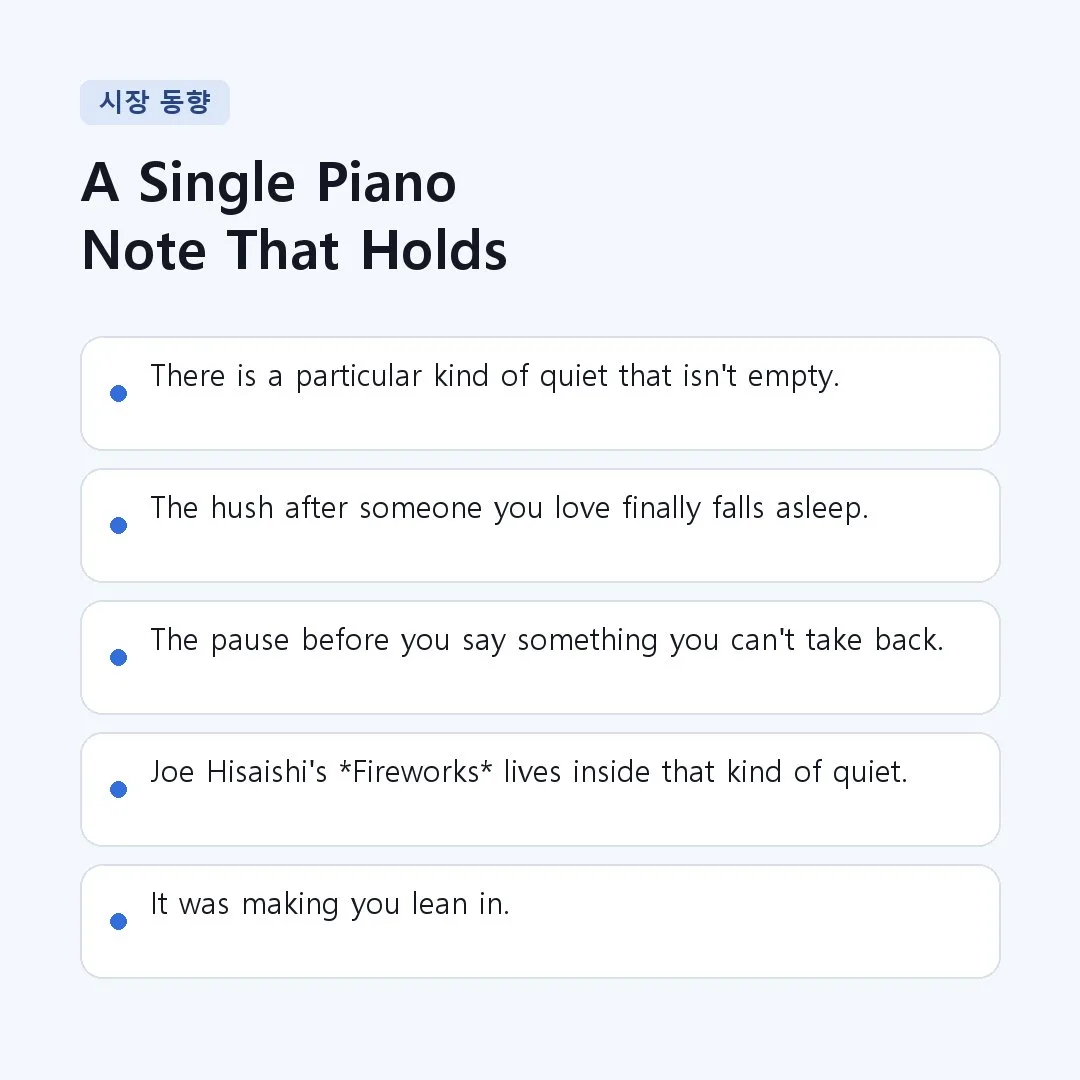
There is a particular kind of quiet that isn’t empty. You’ve felt it. The hush after someone you love finally falls asleep. The pause before you say something you can’t take back. The stillness of standing beside the sea in winter, when the wind drops and the whole world seems to be waiting for you to speak first.
Joe Hisaishi’s Fireworks lives inside that kind of quiet. It opens not with a flourish but with restraint, a piano line that seems almost reluctant to begin, as if it knows that whatever it says next will matter. And then the strings arrive, warm and unhurried, and you realize the music wasn’t hesitating at all. It was making you lean in. It was making sure you were listening before it told you something true.
If you’ve never thought of yourself as a “classical music person,” this is a wonderful place to discover that you might be one after all.
Who Is Joe Hisaishi?
If you’ve ever cried at a Studio Ghibli film, you already know Joe Hisaishi, even if you didn’t know his name. Born in 1950, he is the Japanese composer behind the music of Spirited Away, Princess Mononoke, My Neighbor Totoro, and nearly every Hayao Miyazaki film for decades. He’s been called “the John Williams of Japan,” and that comparison gets at something real: like Williams, Hisaishi writes melodies that feel less composed than remembered, as though they had always existed and he simply found them.
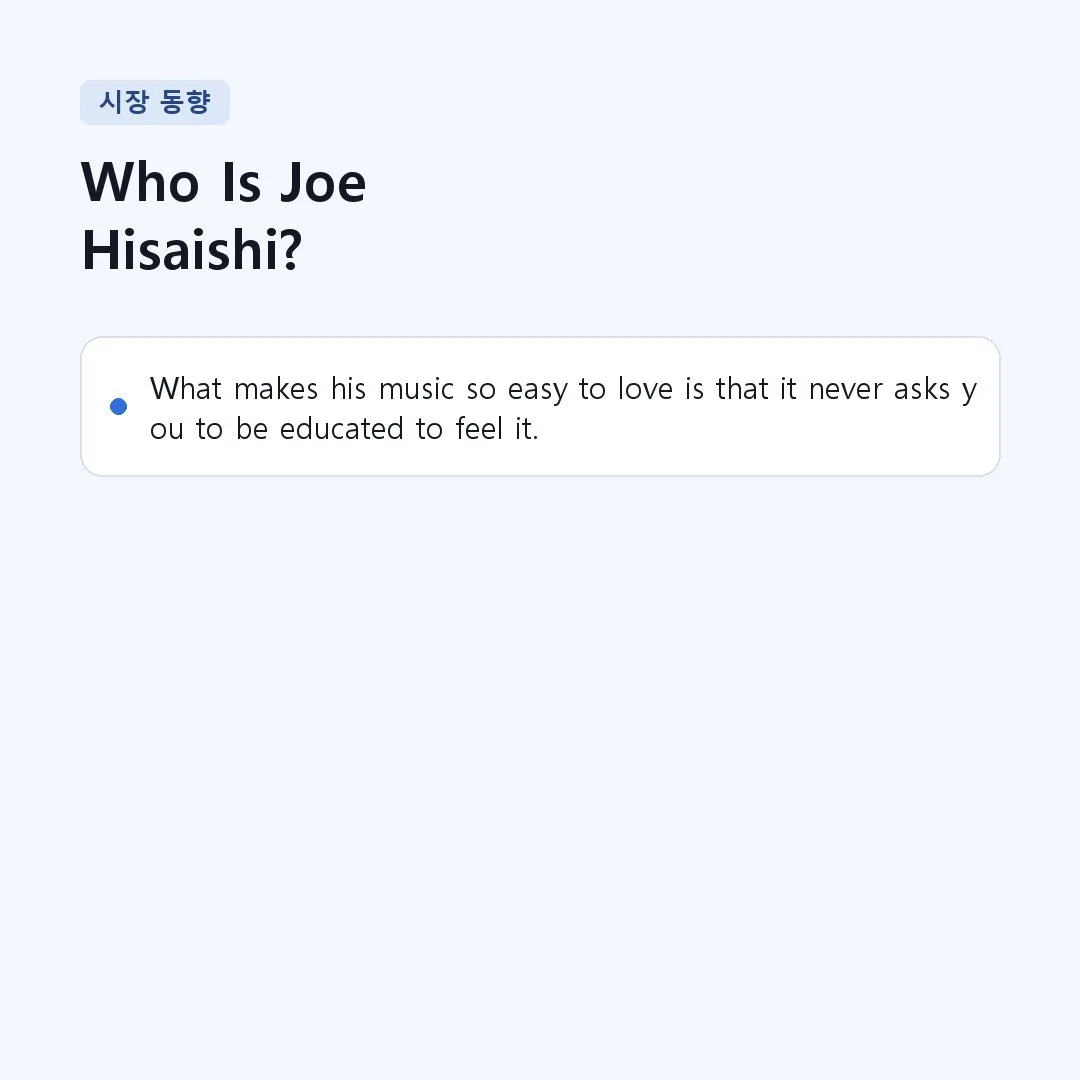
What makes his music so easy to love is that it never asks you to be educated to feel it. He often draws on the flowing, color-soaked language of Impressionist composers like Claude Debussy, but he filters it through a melodic warmth that is entirely his own. A Hisaishi theme tends to do one generous thing: it gives you a melody simple enough to hum after a single listen, then slowly reveals how much feeling was folded inside that simplicity.
He is also a serious orchestral artist who has won the Japanese Academy Award for Best Music many times over. Fireworks belongs to that side of his career, the cinematic and emotionally direct, rather than the fantastical worlds of animation.
The Story Behind the Music
Fireworks is the centerpiece of the score Hisaishi wrote for the 1997 film Hana-Bi, directed by and starring the Japanese filmmaker Takeshi Kitano. The title is a small poem in itself: in Japanese, hana means “flower” and bi means “fire.” Put them together, and you have the word for fireworks, a flower made of fire, beauty that blazes and then is gone.
The film tells the story of a former detective caring for his terminally ill wife, a story about love, loss, and the things people do for each other without ever explaining why. It is famously quiet; the wife barely speaks for the entire film. So the music had to carry what the characters could not say out loud. Hana-Bi won the Golden Lion at the Venice Film Festival, one of cinema’s highest honors, and Hisaishi won the Japanese Academy Award for his score.
That context is the key to hearing this music well. Fireworks is the sound of a promise kept in silence, of devotion that doesn’t announce itself. Once you know that, the restraint in the music stops sounding like shyness and starts sounding like the deepest kind of tenderness.
How to Listen: A Gentle Guide
You don’t need any training to follow this piece. You just need to notice three things.
First, listen for the piano alone at the beginning. Hisaishi almost always starts intimate. That solo piano is the voice of a single person, thinking, remembering, not yet ready to feel everything at once. Stay with it. Resist the urge to wait for the “big part.”
Second, notice the moment the strings enter. This is the emotional heart of how Hisaishi works. When the orchestra arrives behind the piano, it’s like a memory blooming into full color, or like someone you love quietly placing a hand on your shoulder. The melody doesn’t change much. What changes is that you are no longer alone with it.
Third, pay attention to how it ends. Hisaishi rarely finishes with a triumphant bang. Fireworks fades the way real fireworks do, the brilliance lingering for a heartbeat in the dark sky before it dissolves. Let that ending land. The quiet that follows is part of the piece.
A simple way in: play it once while doing nothing else. No phone, no second screen. Three or four minutes. Then play it a second time and notice what you missed.

Recordings Worth Hearing
A lovely thing about Hisaishi is that his music exists in several different shapes, and each one reveals a different feeling.
For the most intimate experience, look for Hisaishi’s own solo piano recordings from his Piano Stories series and related albums. Stripped to a single instrument, the melody feels like a private confession, perfect for late nights and quiet mornings.
For the full emotional sweep, seek out his live orchestral concert performances, many of which he conducts himself and which are widely available in video form. Hearing the strings swell in a concert hall gives the music its full cinematic ache, and watching Hisaishi conduct his own work is genuinely moving.
For the purest, most contemplative version, the original soundtrack album keeps the music in its native habitat, framed by the film’s silence and restraint.
If you’re brand new to him, start with a solo piano version first. Its simplicity makes it easy to fall in love with, and everything else will open up from there.
What Fireworks Leaves Behind
There’s a reason fireworks move us even though, or perhaps because, they don’t last. We gather, we look up, we share a moment of beauty knowing it will be gone in seconds. And somehow that brevity doesn’t cheapen the beauty. It deepens it.
Hisaishi’s Fireworks understands this completely. It is music about loving something you know you can’t keep, and choosing to love it fully anyway. That’s the promise hidden in the title, not a vow spoken aloud, but the quieter, harder commitment to stay present for something precious and fleeting.
So the next time you need a few minutes of stillness, a small refuge from a loud day, let this melody be that for you. Sit with it. Let the piano speak, let the strings answer, and let the silence at the end be yours to keep.
Beauty made of fire. It burns, and then it stays with you.