What Is Impressionist Music? A Beginner’s Listening Guide
What is impressionist music? Learn when it emerged, how its colors and harmonies work, and five pieces that make its sound easy to recognize.
0 Comments
October 29, 2026

What is impressionist music? Learn when it emerged, how its colors and harmonies work, and five pieces that make its sound easy to recognize.

Composed in 1877, Liszt's shimmering portrait of Italian fountains quietly invented modern piano impressionism. A glittering, meditative work for deep focus, calm, and creative flow.
Debussy's Clair de lune (1905) turns silver moonlight into sound. A beginner's guide to the most beloved piano piece for late-night calm, emotional reset, and quiet wonder.

Discover Debussy's 1910 piano miniature The Girl with the Flaxen Hair (La fille aux cheveux de lin), a tender, dreamlike portrait perfect for quiet mornings, gentle focus, and unwinding. A beginner's listening guide.

Debussy dismissed his own Rêverie (1890) as worthless, yet this gentle daydream became one of his most beloved pieces. A beginner's guide to its floating melody and quiet magic.

Ravel's 1912 ballet suite opens with the most breathtaking sunrise in orchestral history. Discover how Daybreak from Daphnis et Chloé builds an entire world from silence, and why this piece still leaves audiences speechless.

Discover how young Ravel revolutionized piano music in 1901 with Jeux d'eau, a shimmering masterpiece that captures the sound of water through radical new techniques. A beginner's guide to hearing every splash and ripple.
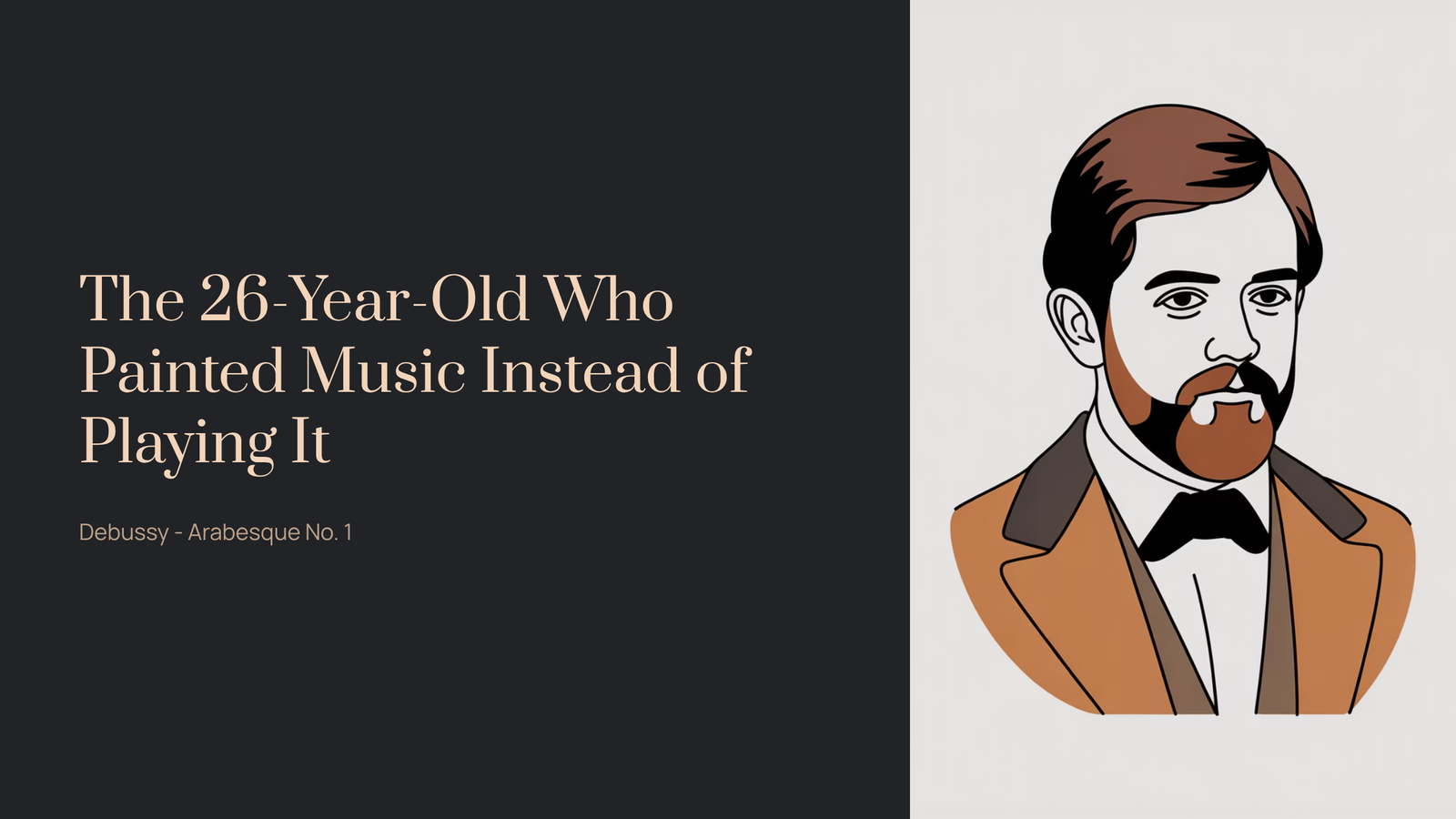
Discover how a young Claude Debussy broke every rule of classical composition in 1888 to create one of piano's most hypnotic pieces—sold over 100,000 copies in his lifetime.

Experience Debussy's magical miniature through a child's eyes - where falling snow transforms into an impressionist dance of sound, wonder, and fleeting winter magic.

The most beloved nocturne from Edvard Grieg's Lyric Pieces. The floating sensation of 9/8 time and impressionistic harmonies paint a Nordic nightscape