📑 Table of Contents
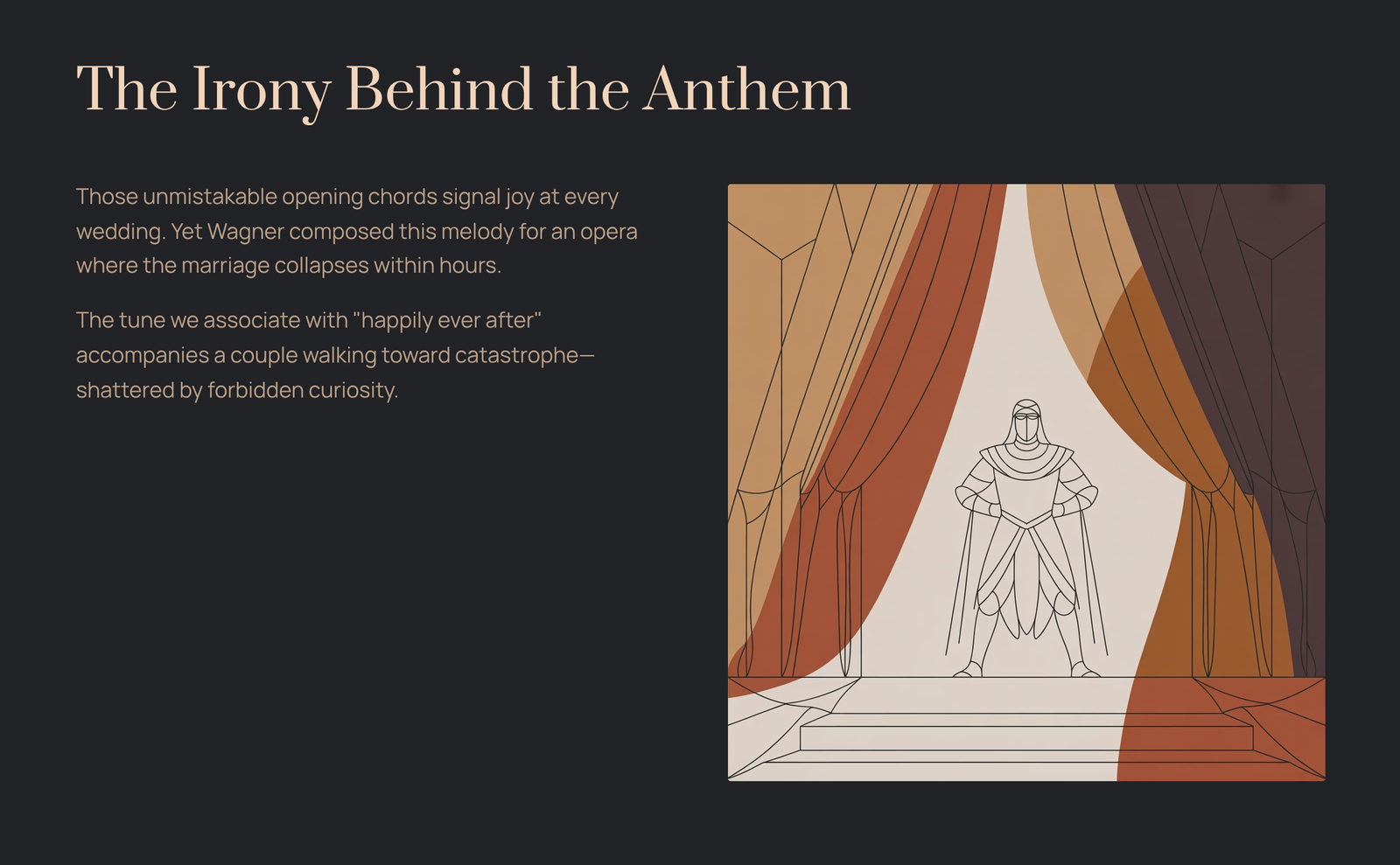
You’ve heard it a thousand times. At weddings, in movies, hummed by children playing pretend. Those unmistakable opening chords that signal a bride’s entrance have become so universal that most people don’t even know where they come from.
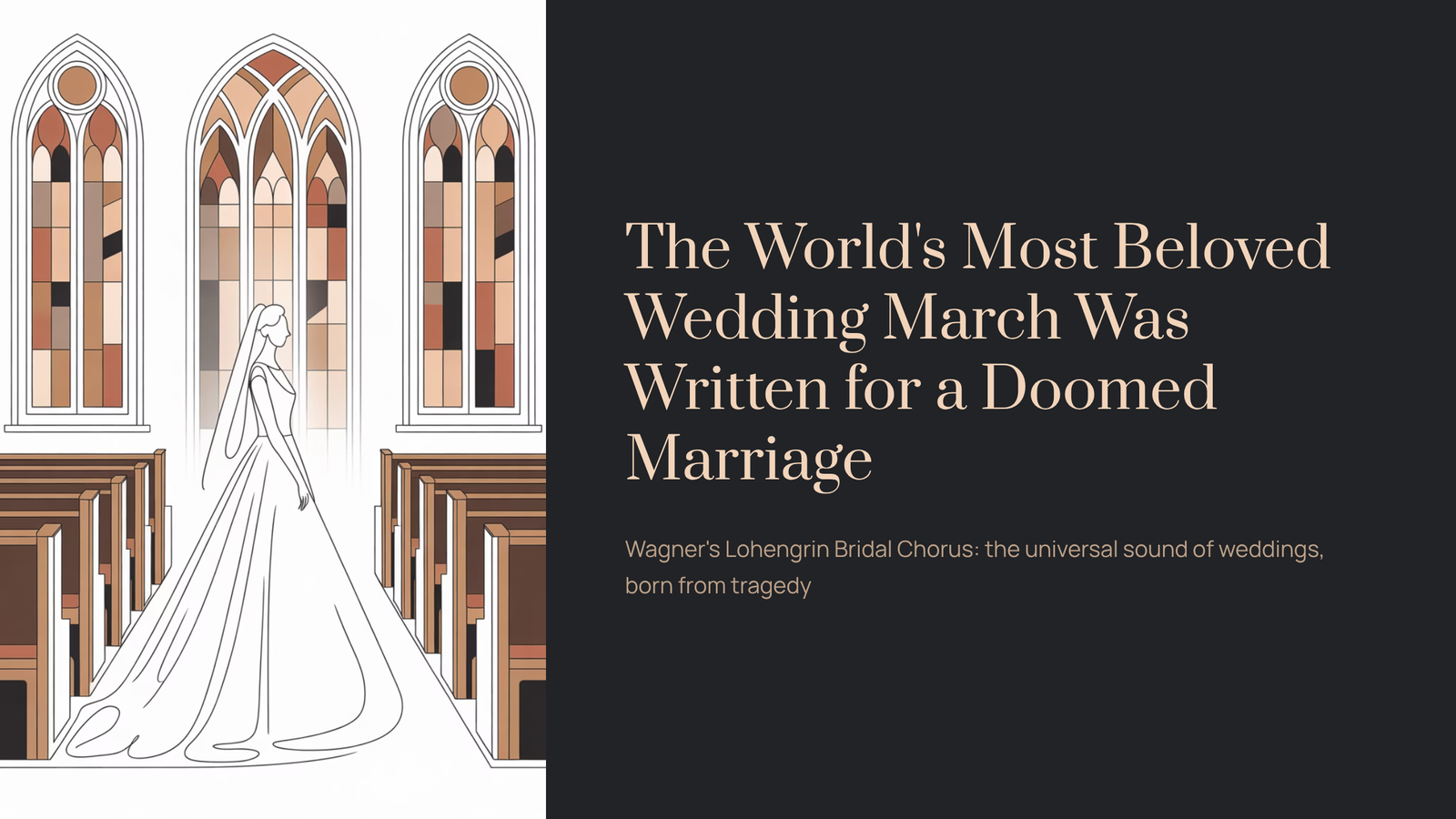
Here’s the twist: this joyful anthem was composed for an opera where the marriage falls apart within hours.
Richard Wagner wrote the “Bridal Chorus” for his 1850 opera Lohengrin, and if you’ve never heard the full story, prepare for your perception of this melody to shift entirely. The tune we associate with “happily ever after” actually accompanies a couple walking toward catastrophe—a marriage built on a forbidden question, shattered by the very curiosity that makes us human.
Wagner and the Birth of Lohengrin
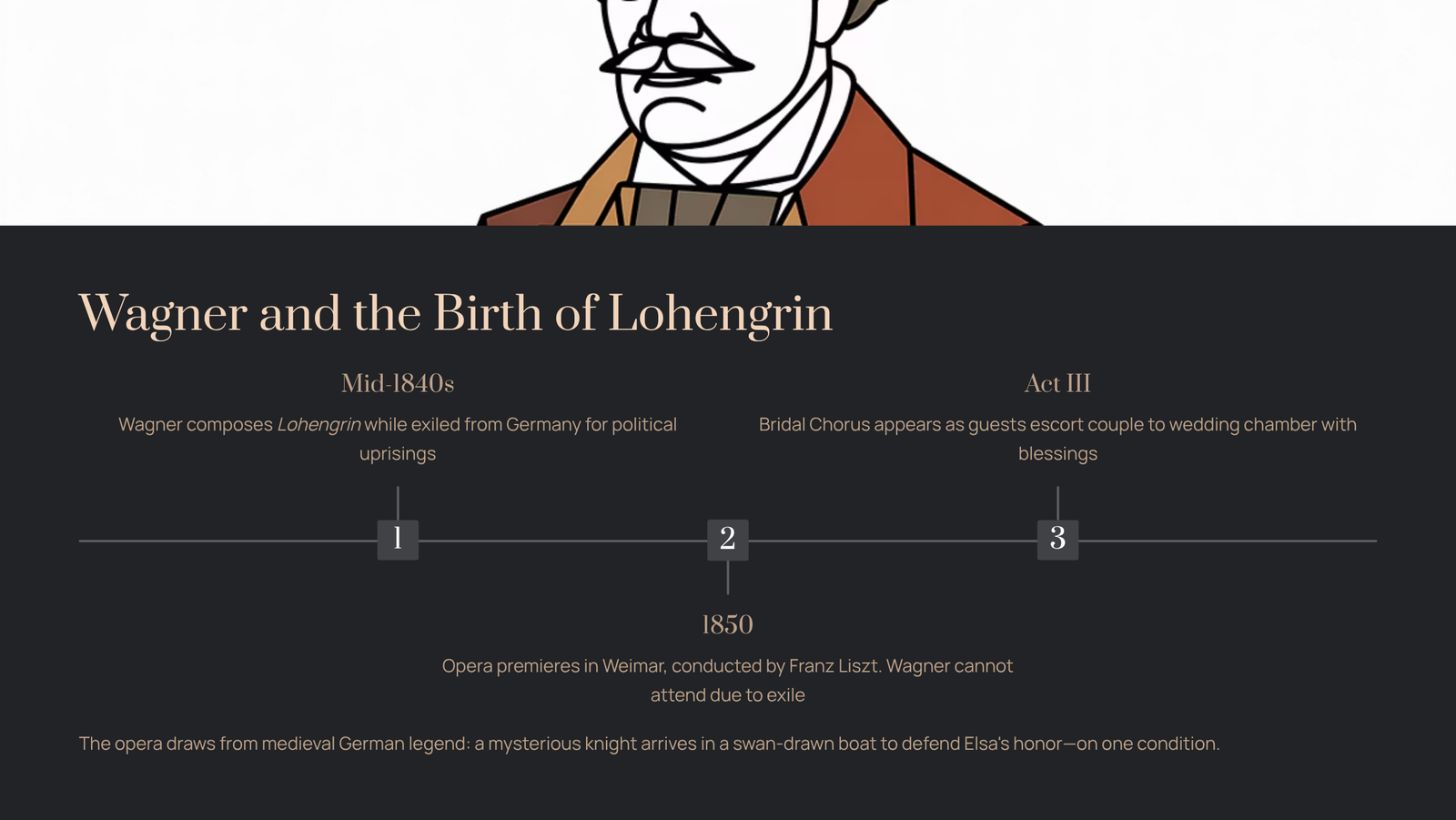
Richard Wagner (1813–1883) was never one for simple stories. The German composer revolutionized opera by weaving mythology, philosophy, and groundbreaking orchestration into sprawling musical dramas. By the time he began composing Lohengrin in the mid-1840s, Wagner was a fugitive—exiled from Germany for his involvement in political uprisings.
Lohengrin premiered in Weimar in 1850, conducted by Franz Liszt (Wagner himself couldn’t attend due to his exile). The opera draws from medieval German legend: a mysterious knight arrives in a swan-drawn boat to defend the honor of Elsa, a noblewoman falsely accused of murder. He agrees to marry her on one condition—she must never ask his name or origin.
The Bridal Chorus appears in Act III, as Elsa and Lohengrin are escorted to their wedding chamber. The assembled guests sing blessings upon the couple. The melody swells with hope, warmth, and ceremonial grandeur.
And then everything unravels.
What Happens After the Music Stops
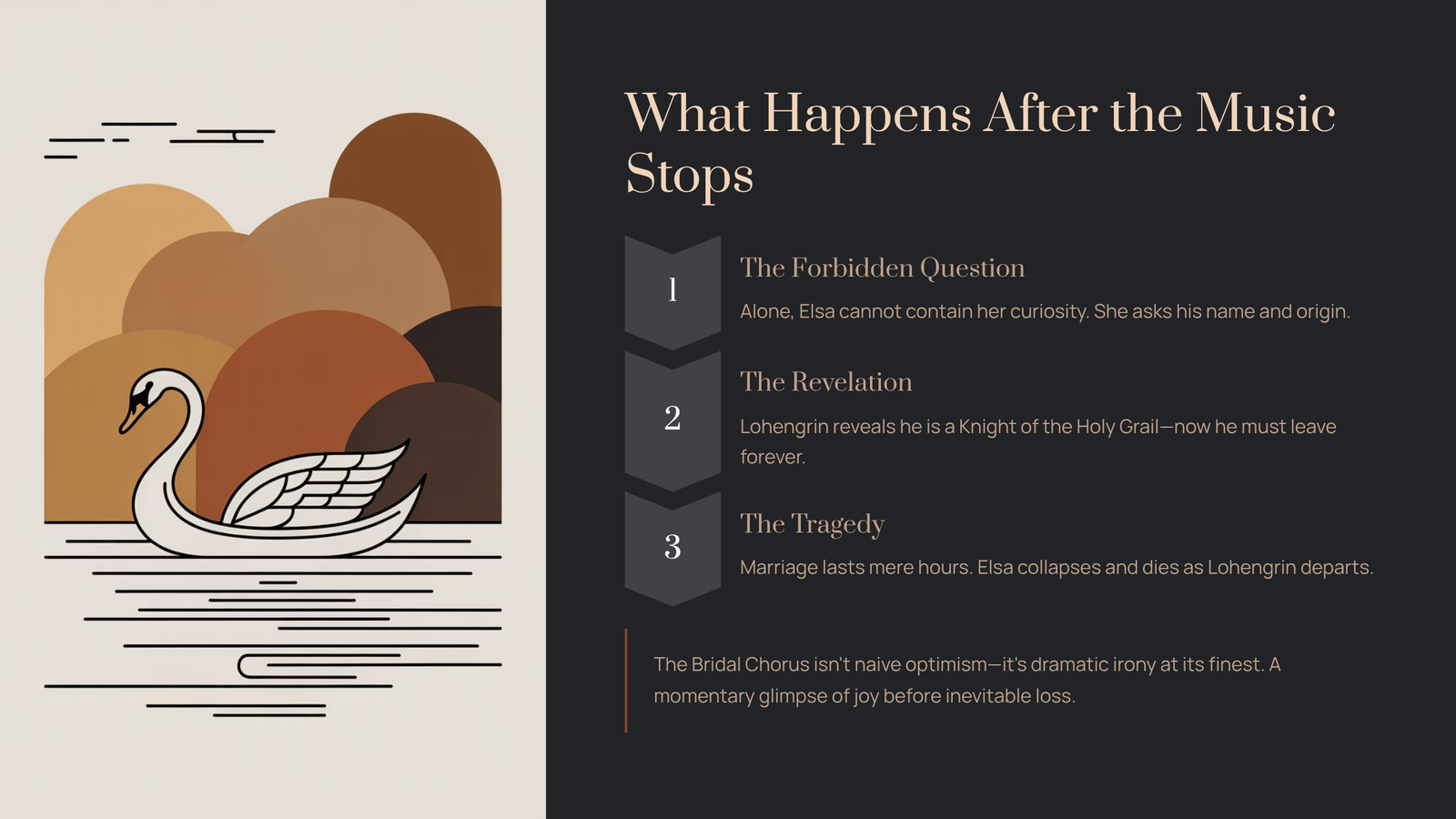
Once the guests depart and the couple is alone, Elsa cannot contain her curiosity. She asks the forbidden question. Lohengrin, heartbroken, reveals that he is a Knight of the Holy Grail—and now that his identity is known, he must leave forever.
The marriage lasts mere hours. Elsa collapses and dies of grief as Lohengrin departs in his swan-drawn boat.
This is the context Wagner intended. The Bridal Chorus isn’t naive optimism; it’s dramatic irony at its finest. The audience knows the tragedy ahead. The music becomes bittersweet, a momentary glimpse of joy before inevitable loss.

How It Became “Here Comes the Bride”
So how did a melody from a tragic German opera become the universal sound of weddings?
Thank Queen Victoria’s daughter. When Princess Victoria married Prince Frederick William of Prussia in 1858, she chose the Bridal Chorus for her processional. The royal endorsement transformed Wagner’s opera excerpt into a cultural institution. Within decades, churches and wedding halls across Europe and America adopted the tradition.
The irony was lost—or perhaps deliberately ignored. People embraced the melody’s emotional power without inheriting its narrative baggage. And in a way, that’s the magic of music: it transcends its original context and takes on new meaning in the lives of those who claim it.
Listening Guide: Finding Depth in the Familiar
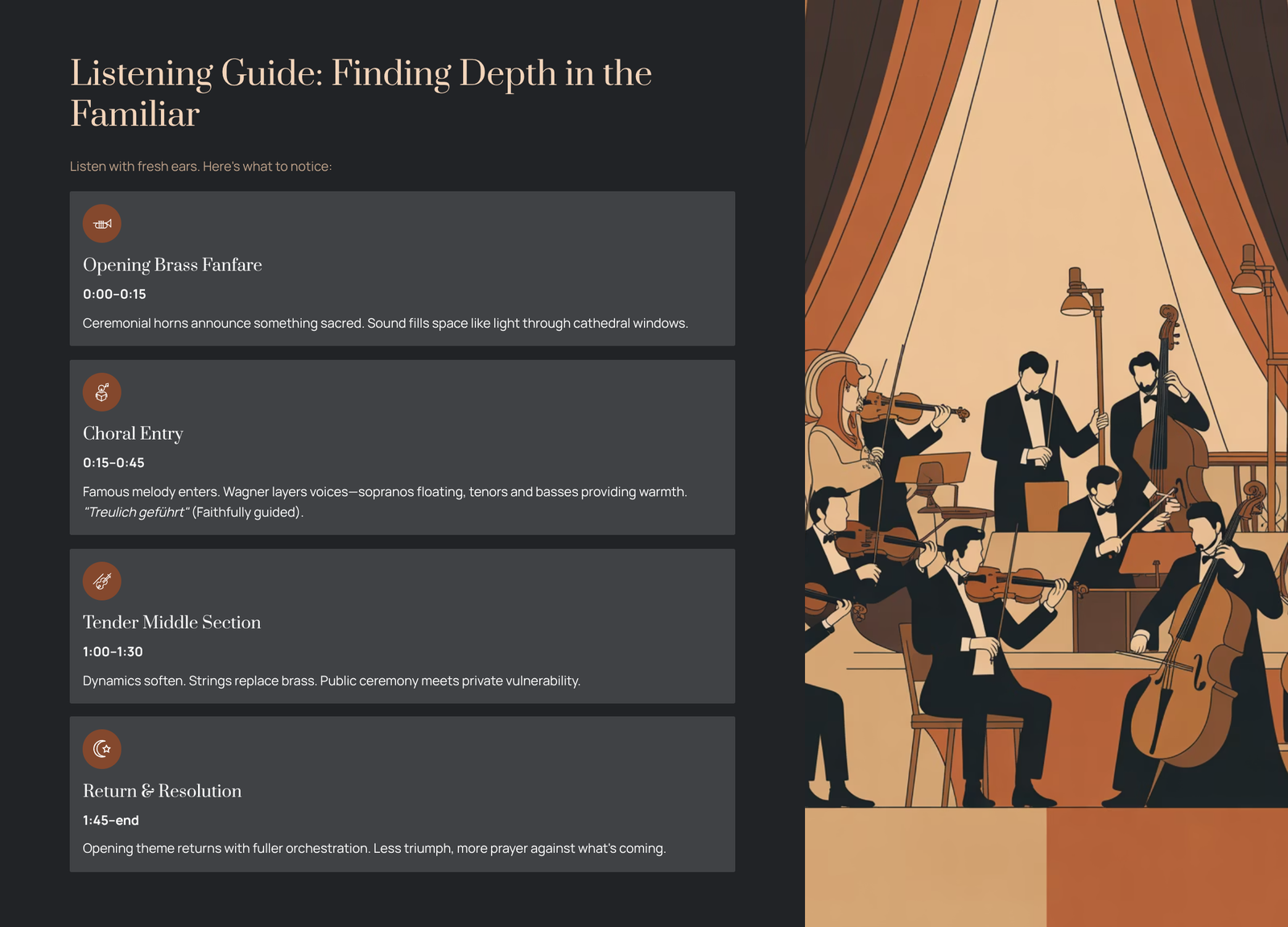
Even if you’ve heard this piece countless times, try listening with fresh ears. Here’s what to notice:
The Opening Brass Fanfare (0:00–0:15)
Those ceremonial horns announce something sacred. Wagner uses brass not for military triumph but for spiritual gravity. Feel how the sound fills space like light through cathedral windows.
The Choral Entry (0:15–0:45)
The chorus enters with the famous melody. Listen to how Wagner layers voices—sopranos floating above, tenors and basses providing warmth beneath. The German text blesses the couple: “Treulich geführt” (Faithfully guided).
The Middle Section’s Tender Shift (1:00–1:30)
The dynamics soften. Strings take over from brass. This isn’t just celebration; it’s intimacy. Wagner understood that weddings hold both public ceremony and private vulnerability.
The Return and Resolution (1:45–end)
The opening theme returns with fuller orchestration. But if you know the story, this crescendo feels different—less like triumph, more like a prayer against what’s coming.
Recommended Recordings
For Operatic Authenticity:
The complete Lohengrin recording conducted by Georg Solti with the Vienna Philharmonic (Decca, 1987) captures Wagner’s full dramatic vision. Hearing the Bridal Chorus within its proper context—after two acts of buildup—transforms the experience entirely.
For the Standalone Experience:
Herbert von Karajan’s orchestral arrangement with the Berlin Philharmonic offers pristine sound and sweeping grandeur. Perfect if you want the emotional impact without the four-hour opera commitment.
For Historical Perspective:
Wilhelm Furtwängler’s 1954 live recording from Bayreuth carries the weight of tradition. The slightly rougher sound adds warmth, like hearing the piece through the passage of time itself.
Why This Piece Still Matters
There’s something profound about a melody that billions associate with hope being rooted in tragedy. Perhaps that’s why it endures. Real love isn’t naive—it exists alongside risk, vulnerability, and the knowledge that nothing is guaranteed.
When you hear the Bridal Chorus at the next wedding you attend, let yourself hold both truths. Feel the joy in the room. But somewhere beneath the surface, acknowledge what Wagner knew: love is precious precisely because it’s fragile.
The music doesn’t lie. It never promised permanence. It simply offered beauty in the moment—which, in the end, might be all any of us can hope for.