What If Moonlight Could Be Written Down as Notes? | Debussy – Clair de lune
Debussy's Clair de lune (1905) turns silver moonlight into sound. A beginner's guide to the most beloved piano piece for late-night calm, emotional reset, and quiet wonder.
A piano ballad designed as a villain's anthem became Pixar's most emotionally devastating moment. Here's why 'Remember Me' destroys you every single time.
Discover Fauré's Sicilienne, Op.78 — a hauntingly tender piece born from an abandoned theater project in 1890s Paris. A perfect entry point for anyone new to French classical music.
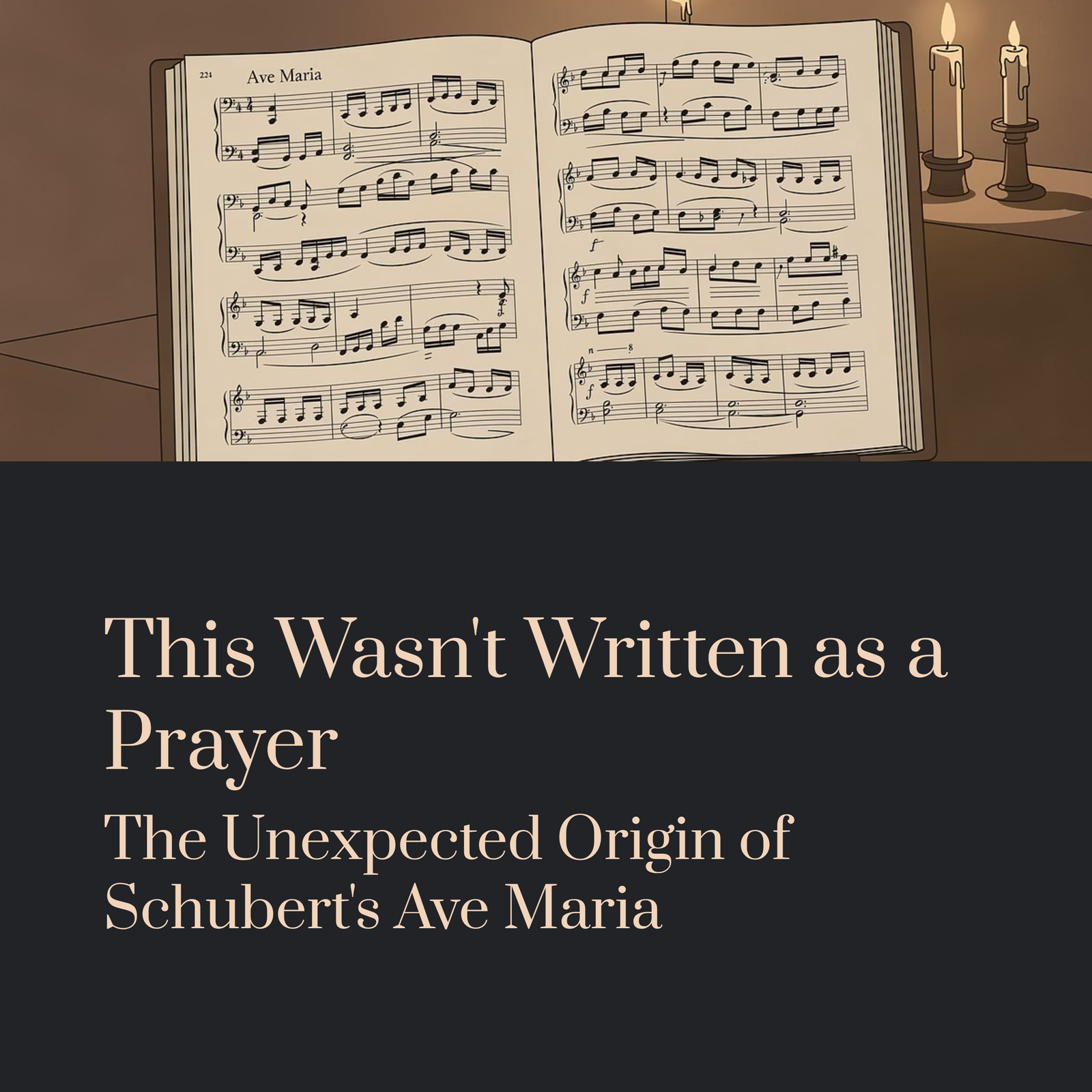
Schubert's Ave Maria (D.839) began as a scene from a Walter Scott poem, not a church hymn. Discover the surprising 1825 origin, emotional depth, and best recordings of this timeless melody.
In 1894, young Alexander Scriabin — still recovering from a devastating right-hand injury — composed the most explosive two minutes in solo piano literature. Discover why Horowitz made it his signature encore.
Manuel Ponce's 1912 Mexican love serenade became legendary after Jascha Heifetz scribbled an arrangement on a café napkin. Discover the bittersweet melody of unrequited love that conquered concert halls worldwide.
How a 28-year-old French composer and a teenage Spanish virtuoso created one of violin's most dazzling showpieces in 1863—a movement so brilliant it escaped its symphony.
Discover the surprising origin of Bach's Jesu, Joy of Man's Desiring from Cantata BWV 147. Originally composed for a 1723 church feast, this transcendent melody found its true calling at wedding ceremonies centuries later.
Discover Henryk Górecki's Symphony of Sorrowful Songs (1976), the haunting second movement featuring a mother's prayer inscribed in a Gestapo cell. A profound journey through loss, faith, and the resilience of the human spirit.
An intimate exploration of Clara Schumann's Romance Op.11 No.1, composed in 1839 and dedicated to Robert Schumann - a classical music appreciation essay on love, artistry, and the profound beauty of Romantic piano music