Impressionist music is a name for classical music that draws your attention to shifting color, atmosphere, and texture, often more than to a clearly stated musical argument. It emerged around the turn of the twentieth century, especially in France, and Claude Debussy and Maurice Ravel are the composers most often associated with it.
You do not need to know music theory to hear the difference. Try following the sound of a piano note as it fades into the next one, or notice how a familiar melody changes character when the harmony beneath it moves.
📑 Table of Contents
When did Impressionism in classical music begin?
Musical Impressionism belongs mainly to the late nineteenth and early twentieth centuries. The name borrows from visual art, but it is an imperfect label: music does not depict light or water in the same way a painting can. It can, however, suggest movement, distance, and changing shades of color through sound.
Debussy and Ravel are central to the story, though neither fits neatly into a single style. Debussy often lets a musical idea linger or change direction before you can predict where it will go. Ravel frequently gives equally colorful sounds a more sharply defined shape. Their differences are useful to hear; they also show why “Impressionism” works best as a listening guide, not a strict set of rules.
The style did not appear all at once. These composers inherited the piano, orchestra, and musical forms of earlier generations, then found new ways to use them. A piece can have an impressionistic passage without being impressionistic from beginning to end.
Impressionist music characteristics you can hear
Start with tone color: the particular character of a sound. On a piano, a composer can place notes far apart, overlap them with the sustaining pedal, or let quick figures shimmer around a slower melody. In an orchestra, different instruments can take turns coloring the same musical idea.
Harmony matters just as much. Many older pieces create a strong sense that one chord must lead to another and eventually arrive “home.” Debussy and Ravel sometimes delay that arrival. They may use unfamiliar scales or move between chords for the sound of the change itself, leaving you with a sense of possibility rather than a firm destination.
Rhythm can feel fluid, too. A melody may float across a steady accompaniment, or small figures may repeat while the music around them changes. That does not mean the piece has no structure. It means the structure may be easier to feel through returning sounds, changes in texture, and shifts in intensity than through a tune you can hum from start to finish.
For a first listen, choose one thread to follow. Listen to the melody once, then replay the passage and attend to the notes underneath it. The background often supplies the very color that makes the melody memorable.
Debussy and Ravel: two approaches to musical color
Debussy is a good place to begin because his piano writing makes subtle changes easy to hear. In Clair de lune, gentle motion supports a melody that grows fuller and then settles again. In Reflets dans l’eau, quick notes and changing harmonies make the piano seem to move in several layers at once. Arabesque No. 1 is lighter and more openly flowing, but its winding lines offer another way into his sound.
Ravel’s music can be just as delicate while making its patterns especially clear. Jeux d’eau sets bright, fast piano figures against moments where the sound briefly opens up. Pavane pour une infante défunte moves at an unhurried pace, giving you room to notice how each return of its melody feels.
These are differences in emphasis, not a contest between the composers. If Debussy’s music initially seems elusive, try listening for changes in density: when do the notes gather, and when does space return? With Ravel, follow a recurring figure and hear how he alters the sounds around it.
Five impressionist music examples to start with
These five pieces give you a manageable route through the style. You can hear each on its own; there is no need to play them in order.
-
Debussy, Clair de lune: Start at the quiet opening and follow the space between the melody notes. As the music becomes fuller, notice that the melody still feels connected to that first, restrained idea. For a closer look at the piece, see our guide to Debussy’s Clair de lune.
-
Debussy, Reflets dans l’eau: Start with the opening ripples of piano sound. Listen for the way small figures spread outward, then for the changes in weight and volume that make the surface seem less still.
-
Debussy, Arabesque No. 1: Start with the flowing pattern at the beginning. Try to hear when a longer melodic line comes forward from those moving notes; the pleasure lies partly in that exchange between line and pattern.
-
Ravel, Pavane pour une infante défunte: Start at the first statement of the melody. Its measured pace lets you hear how a slight change in accompaniment or register can give familiar notes a different shade.
-
Ravel, Jeux d’eau: Start with the quick, bright opening figure. Follow it through the piece and notice how Ravel makes the piano sound alternately sparkling and spacious. Our guide to Ravel’s Jeux d’eau explores that play of motion and color.
If five new titles feel like too many, begin with Clair de lune and Jeux d’eau. Their contrasting pace makes it easier to hear that impressionistic color can be calm or energetic.
Where does Ravel’s Boléro fit?
You will often see Boléro named alongside Ravel’s more impressionistic works. It is worth hearing, but it shows a different side of his craft. Its repeated rhythm and recurring melody are unusually easy to track; much of the change comes from which instruments play and how the sound builds.
Start at the opening and listen for each new instrumental color. You can hear how much Ravel achieves while keeping the basic material familiar. That makes Boléro a useful companion to the five pieces above: it brings tone color into focus, even though it is a less direct introduction to their fluid piano textures.
The broader lesson is that “Impressionist” does not describe everything Debussy or Ravel wrote. Use the word to identify sounds you hear, then let each piece tell you what else it is doing.
Frequently Asked Questions
What is the difference between Impressionist and Romantic music?
Romantic music often emphasizes expressive melody and a strong sense of dramatic movement. Impressionist music may put more of your attention on harmony, texture, and subtle changes in color. These are broad tendencies, and a piece can share qualities with both.
Is all of Debussy’s music Impressionist?
No single label captures all of Debussy’s music. “Impressionist” can help describe the color and atmosphere in some works, but it should not make you expect every piece to sound like Clair de lune.
Do I need to understand music theory to enjoy Impressionist music?
No. Pick one thing to notice, such as a repeating figure or a change from a thin sound to a full one. On a second hearing, follow another layer and see how it changes your impression of the piece.
Sources
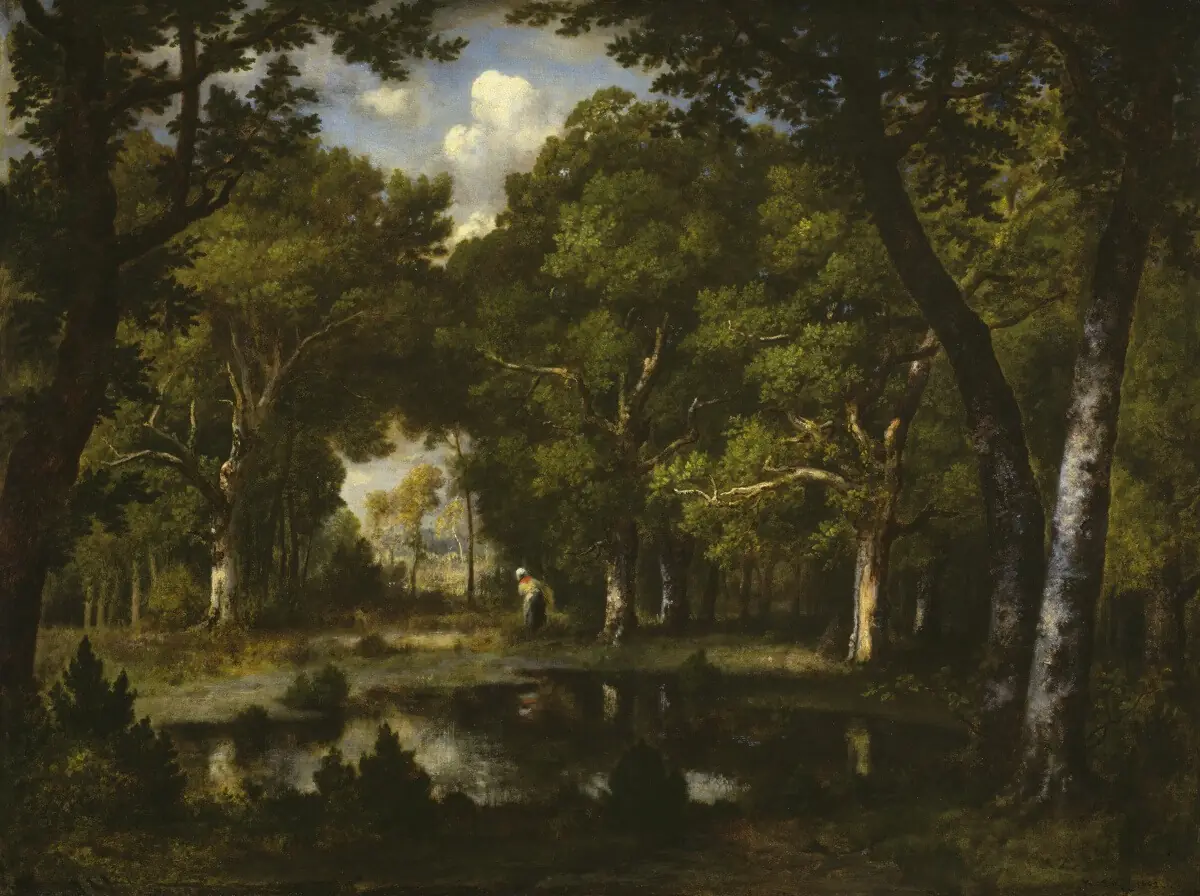
Cover art: Branch of the Seine near Giverny (Mist), Claude Monet, 1897. Art Institute of Chicago (public domain). Image: Pond in the Woods, Narcisse Virgile Diaz de la Peña, 1862. Art Institute of Chicago (public domain).