📑 Table of Contents
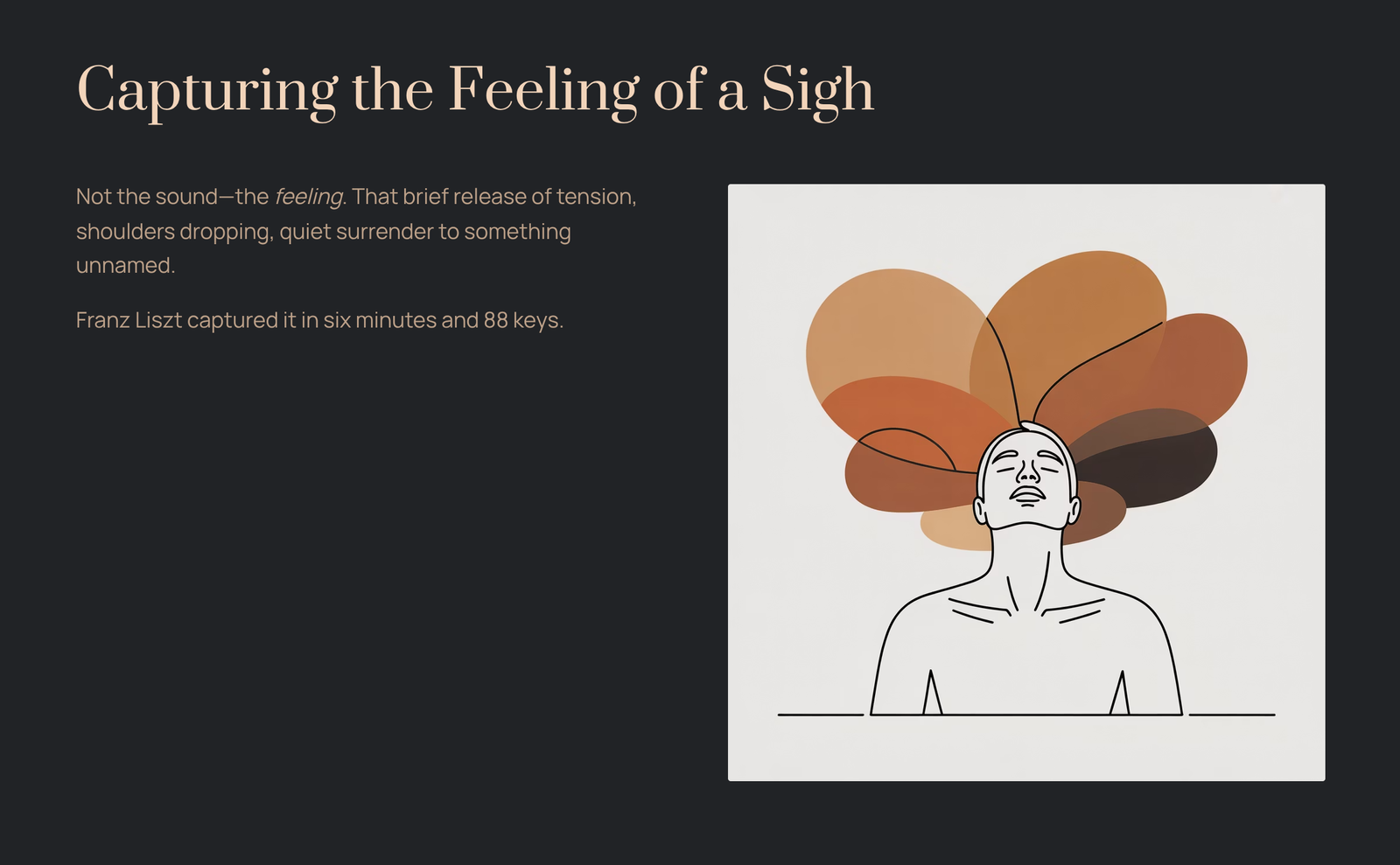
Have you ever tried to capture a sigh? Not the sound of it, but the feeling—that brief release of tension, the way your shoulders drop, the quiet surrender to something you can’t name. Franz Liszt did exactly that, and he needed only six minutes and 88 keys.

The Composer Who Could Make a Piano Weep
Franz Liszt (1811–1886) was the rock star of the Romantic era—literally. Women fainted at his concerts. Fans collected his discarded cigar butts. He invented the modern piano recital as we know it. But beneath all that showmanship lived a composer of extraordinary sensitivity.
By the late 1840s, Liszt had already dazzled Europe with thunderous virtuosity. Yet in his Trois études de concert (Three Concert Études), composed around 1845–1849, he revealed a different side: intimate, poetic, almost vulnerable. The third of these études, unofficially titled Un sospiro—Italian for “A Sigh”—stands as proof that technical brilliance and emotional depth are not opposites.
Why “A Sigh”? The Story Behind the Title
Here’s a curious detail: Liszt himself never named this piece Un sospiro. The title was added later by publishers, yet it fits so perfectly that no one argues. The music genuinely sounds like breathing—a long, wistful exhale stretched across time.
Set in the warm key of D-flat major, the étude unfolds as a single, sustained melody floating above rippling arpeggios. Those arpeggios aren’t just accompaniment; they’re the air itself, shimmering and endless, while the melody rises and falls like the chest of someone lost in thought.
What Makes This Piece So Special (And So Tricky)
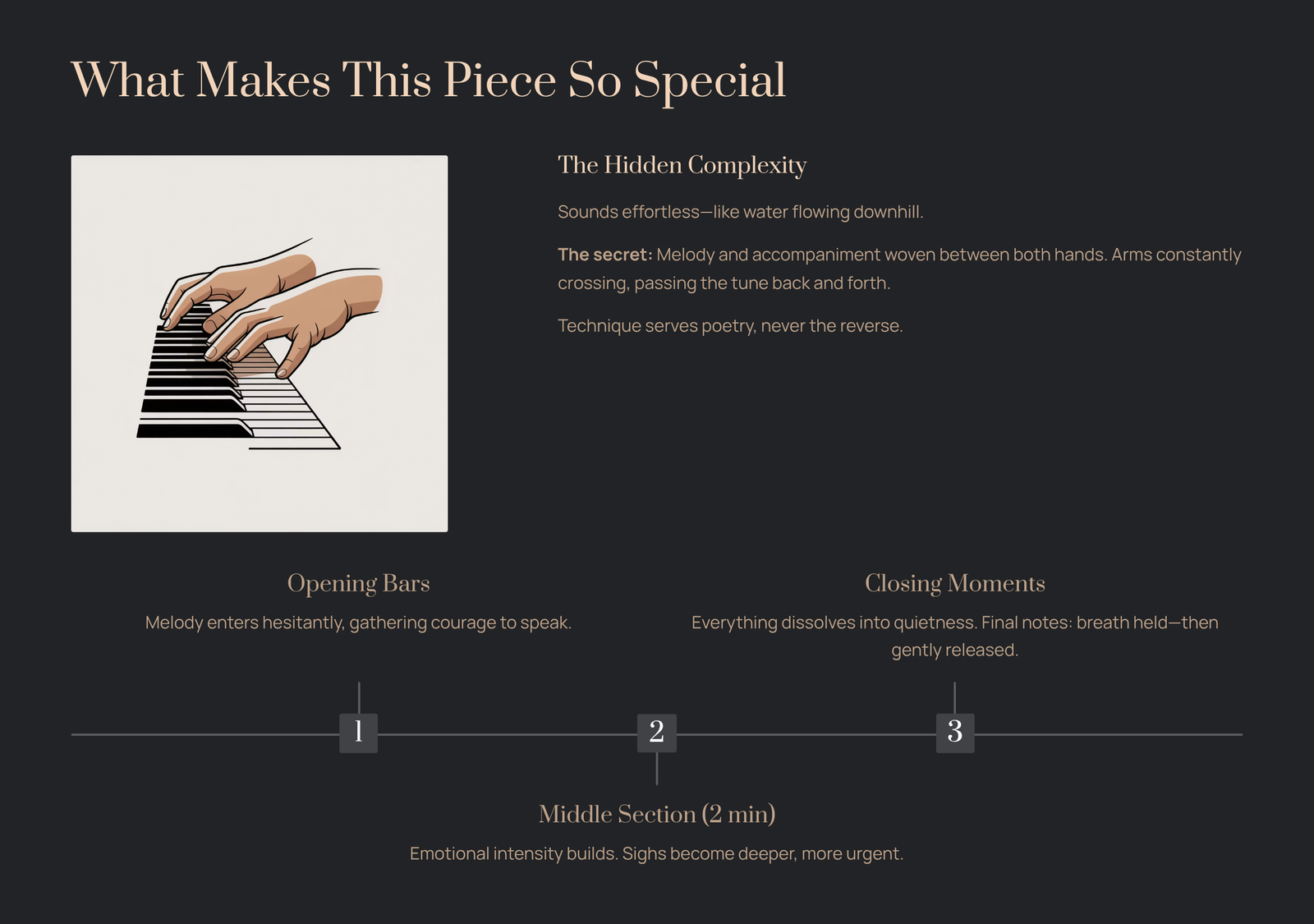
From a listener’s perspective, Un sospiro sounds effortless—like water flowing downhill. But here’s the secret that pianists know: the melody and accompaniment are woven together between both hands. The performer’s arms must constantly cross over each other, passing the tune back and forth while maintaining an unbroken cascade of notes.
This is Liszt’s genius. He created music that sounds simple and feels profound, yet demands extraordinary control to perform. The technique serves the poetry, never the other way around.
Key listening points:
- The opening bars: Notice how the melody enters almost hesitantly, as if gathering courage to speak.
- The middle section: Around the 2-minute mark, the emotional intensity builds. The sighs become deeper, more urgent.
- The closing moments: Everything dissolves into quietness. The final notes feel like a breath held—and then gently released.
How to Listen: A Beginner’s Guide
If this is your first time with Un sospiro, try this approach:
- First listen: Don’t analyze. Just close your eyes and let the music wash over you. Notice where your breathing naturally slows.
- Second listen: Focus on the melody alone. Can you hum along? It’s surprisingly singable despite all those notes swirling around it.
- Third listen: Watch a performance video. Seeing how the pianist’s hands cross and dance adds a whole new dimension to your appreciation.
This is music for quiet evenings, for rainy afternoons, for moments when words feel inadequate. Keep it nearby.
Recommended Recordings
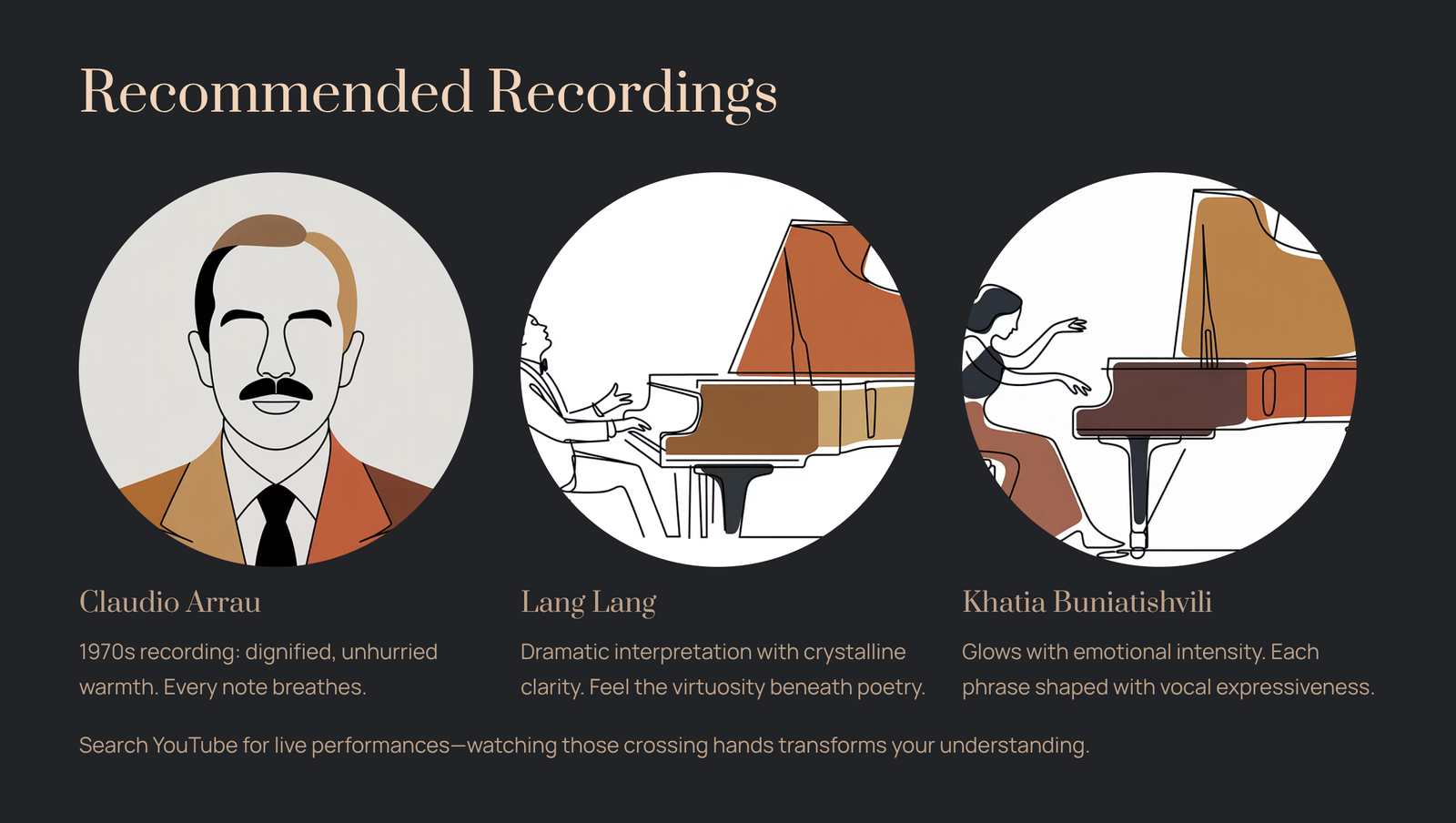
- Claudio Arrau: His 1970s recording brings a dignified, unhurried warmth. Every note breathes.
- Lang Lang: A more dramatic interpretation with crystalline clarity—perfect if you want to feel the virtuosity beneath the poetry.
- Khatia Buniatishvili: Her performance glows with emotional intensity, each phrase shaped with almost vocal expressiveness.
For a visual experience, search YouTube for live performances. Watching those crossing hands transforms your understanding of what Liszt achieved.
Final Thoughts: Why This Piece Matters
In a world that moves too fast, Un sospiro asks you to slow down. It reminds you that a sigh isn’t weakness—it’s wisdom. It’s the body’s way of saying: I’ve been holding something, and now I’m letting it go.
Liszt understood this. Nearly two centuries later, his six-minute meditation still teaches us how to breathe.