📑 Table of Contents
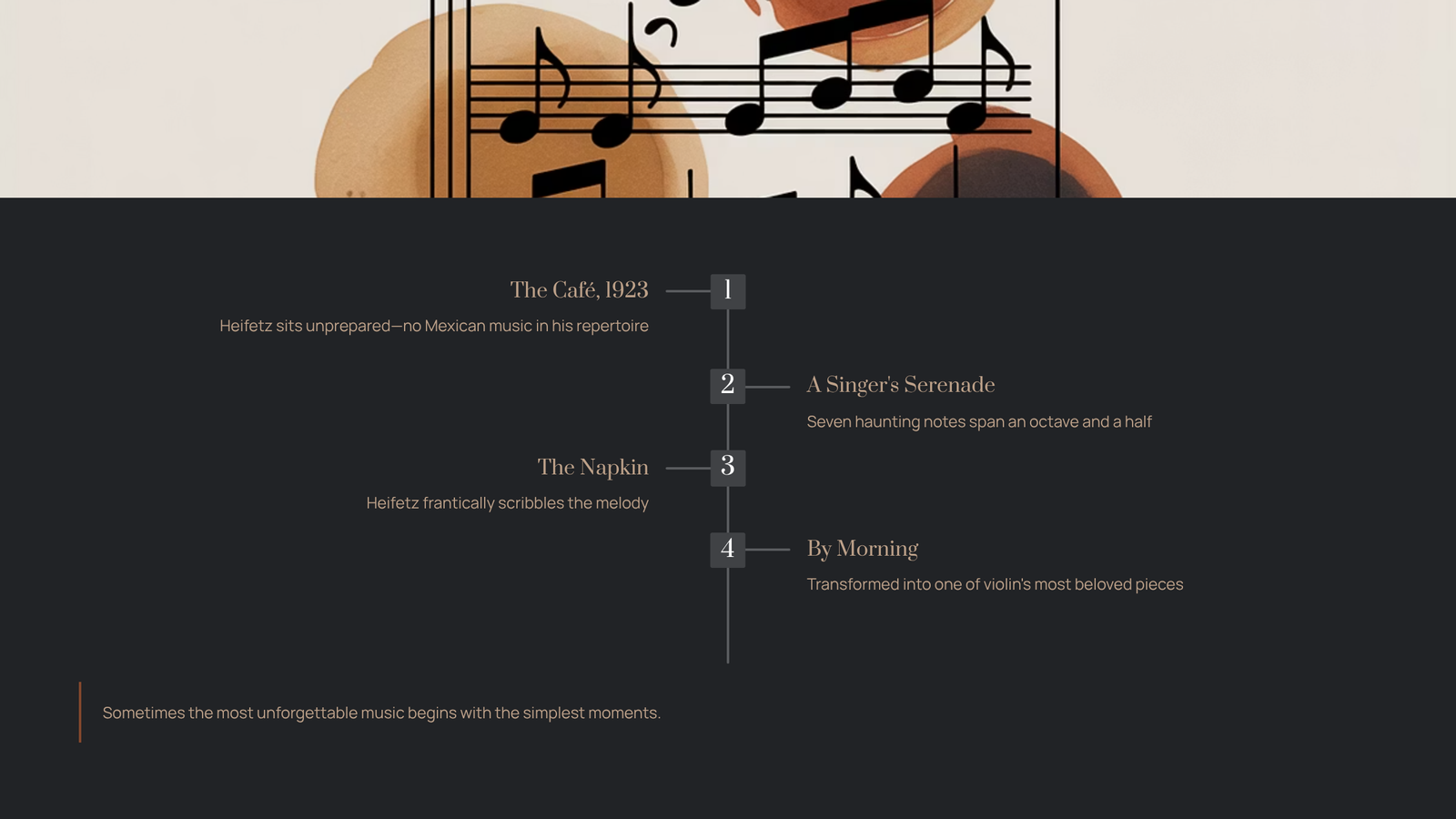
Sometimes the most unforgettable music begins with the simplest moments. A café. A local singer. A napkin. And a violinist who refused to let a melody slip away.
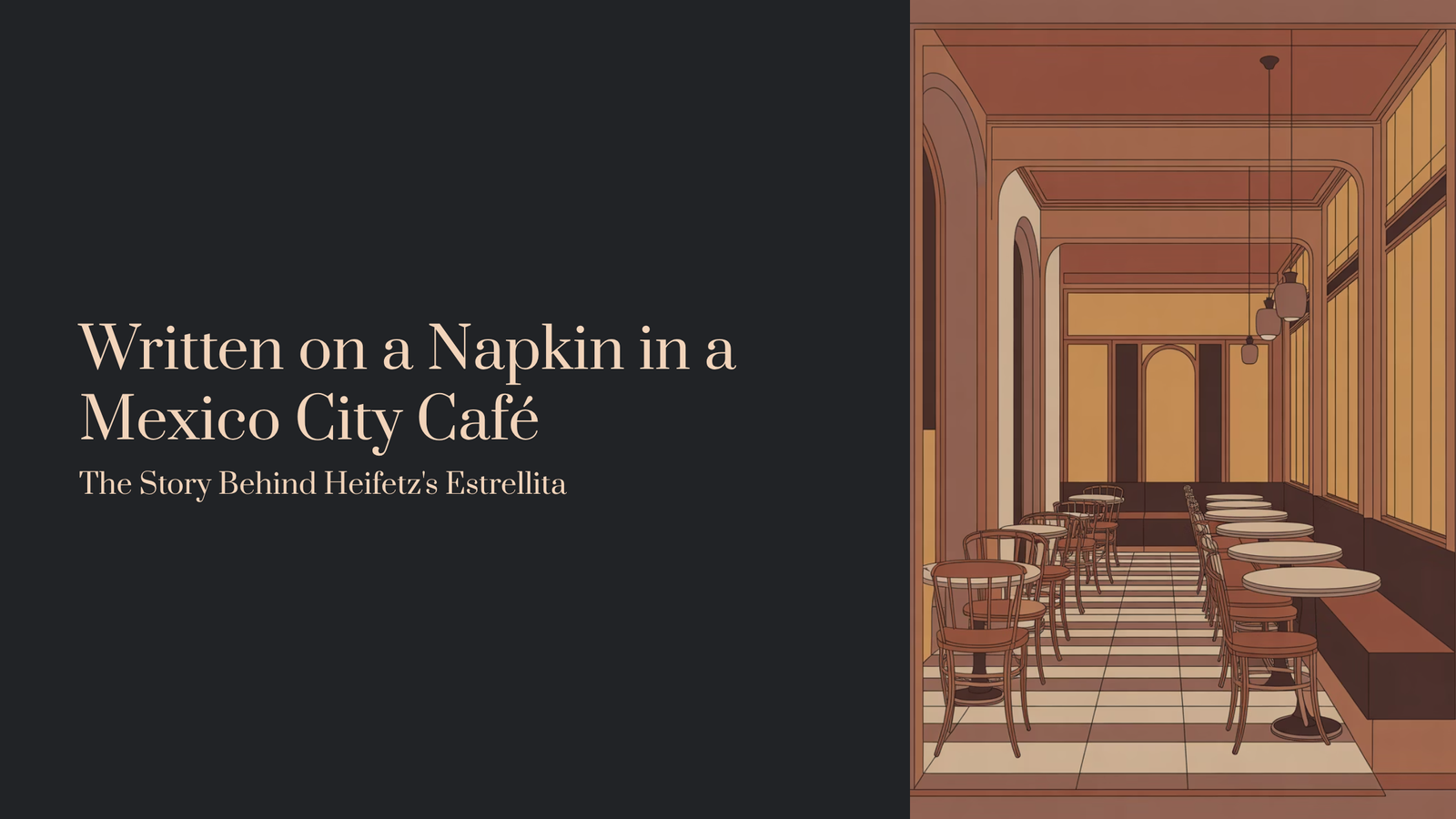
In 1923, Jascha Heifetz—already the most celebrated violinist in the world—sat in a Mexico City café feeling unprepared. He was about to perform for a Mexican audience, yet he had nothing by a Mexican composer in his repertoire. Then, from somewhere across the room, a singer began a tender serenade. The melody rose and fell like a quiet confession, spanning an octave and a half in just seven haunting notes. Heifetz grabbed the nearest napkin and started writing.
That song was Estrellita—Little Star—and by the next morning, Heifetz had transformed it into one of the most beloved violin pieces ever performed.
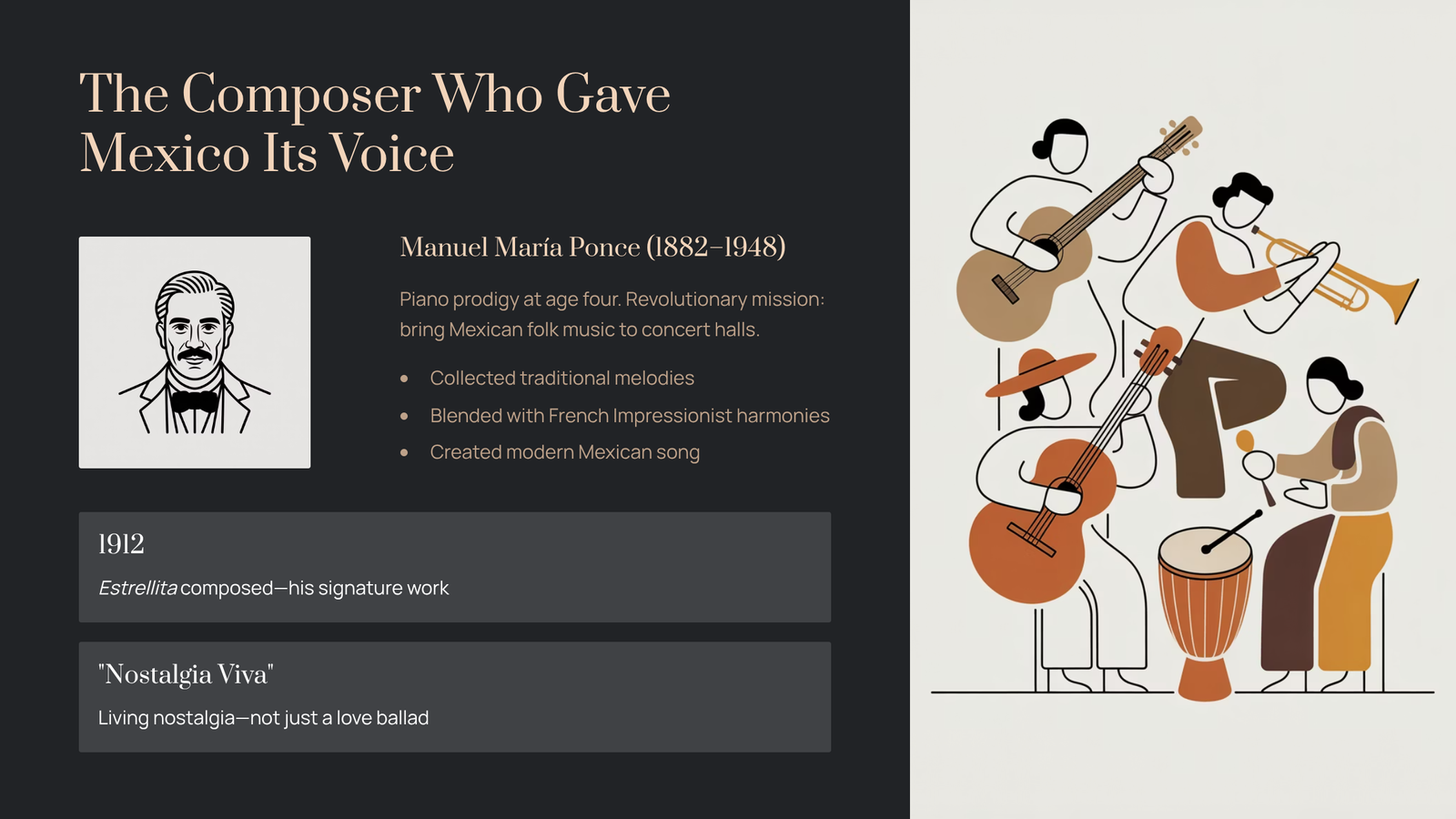
The Composer Who Gave Mexico Its Voice
Manuel María Ponce (1882–1948) was no ordinary composer. Born in Fresnillo, Zacatecas, he was a musical prodigy who sat at the piano at age four, imitating what he’d heard during his sister’s lessons. By adulthood, he had become obsessed with a radical idea: Mexican folk music deserved a place in concert halls.
At the time, classical music circles in Mexico looked only toward Europe. Ponce thought differently. He collected traditional melodies, studied their rhythms, and dressed them in the sophisticated harmonies of French Impressionism. His mission earned him an honorific title that still stands today—El Creador de la Canción Mexicana Moderna (The Creator of the Modern Mexican Song).
Estrellita, composed in 1912, became his signature work. But Ponce himself once clarified that the song wasn’t merely a love ballad. He called it “Nostalgia Viva”—living nostalgia—a subtle distinction that changes everything about how we hear it.
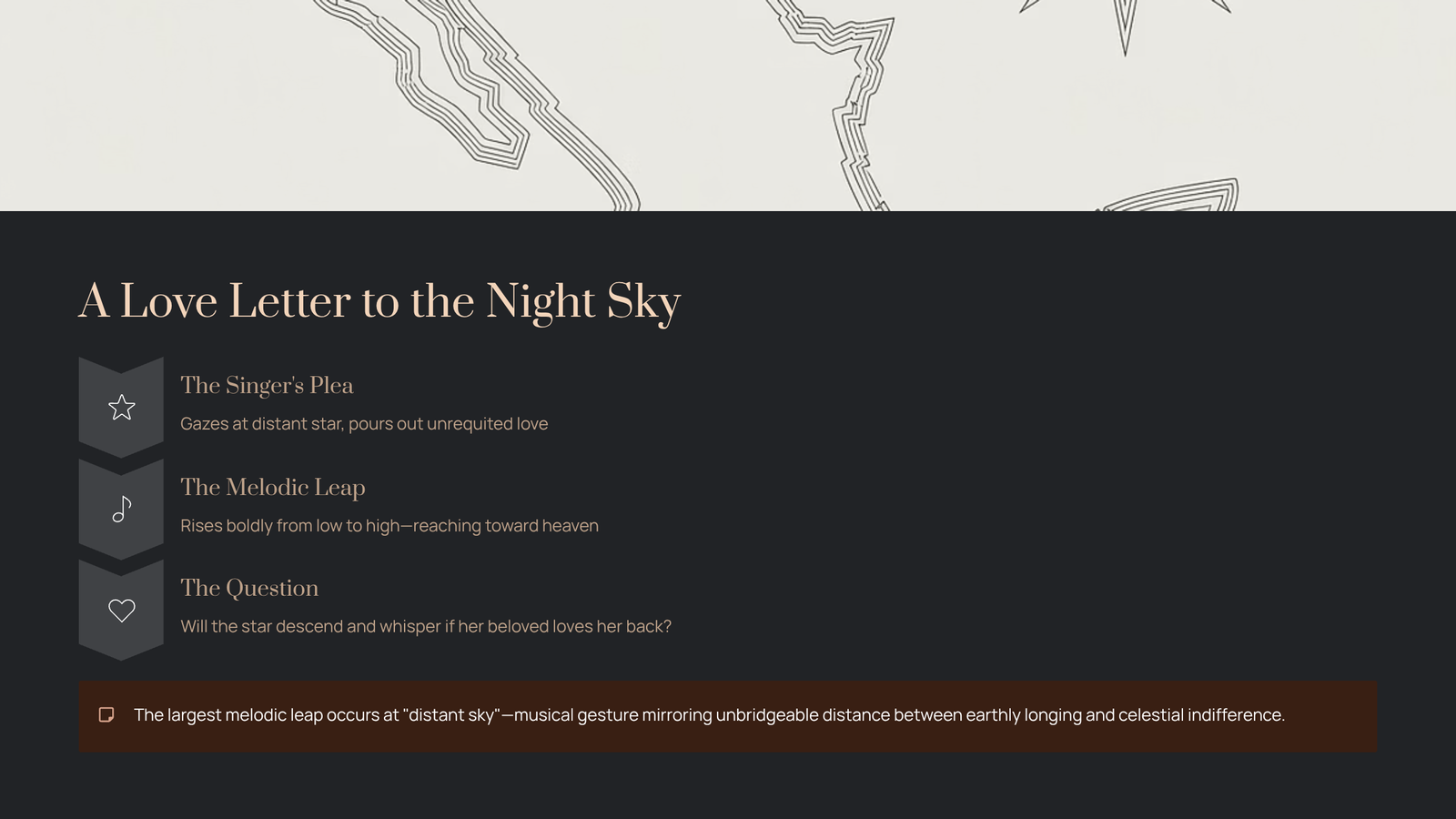
A Love Letter to the Night Sky
The original Estrellita was written for voice and piano. In the song, the singer gazes upward at a little star shimmering in the distant sky and pours out her heart. She speaks of unrequited love so consuming that she believes she will die without it. Her only hope? That the little star might descend from heaven and whisper whether her beloved loves her back—even just a little.
The opening melody is extraordinary in its simplicity and its ache. It rises boldly, spanning from low to high registers in just a few notes, as if reaching desperately toward the heavens. When the singer mentions the “distant sky,” the largest melodic leap occurs—a musical gesture that mirrors the unbridgeable distance between earthly longing and celestial indifference.
The second stanza shifts into broader triplets as the singer contemplates her impending death from heartache. Yet here lies the song’s subtle genius: despite the mournful text, the music remains warm, tender, almost content. It’s a bittersweet contradiction—the kind of emotional complexity that elevates Estrellita from a simple folk song to a profound meditation on love and loss.
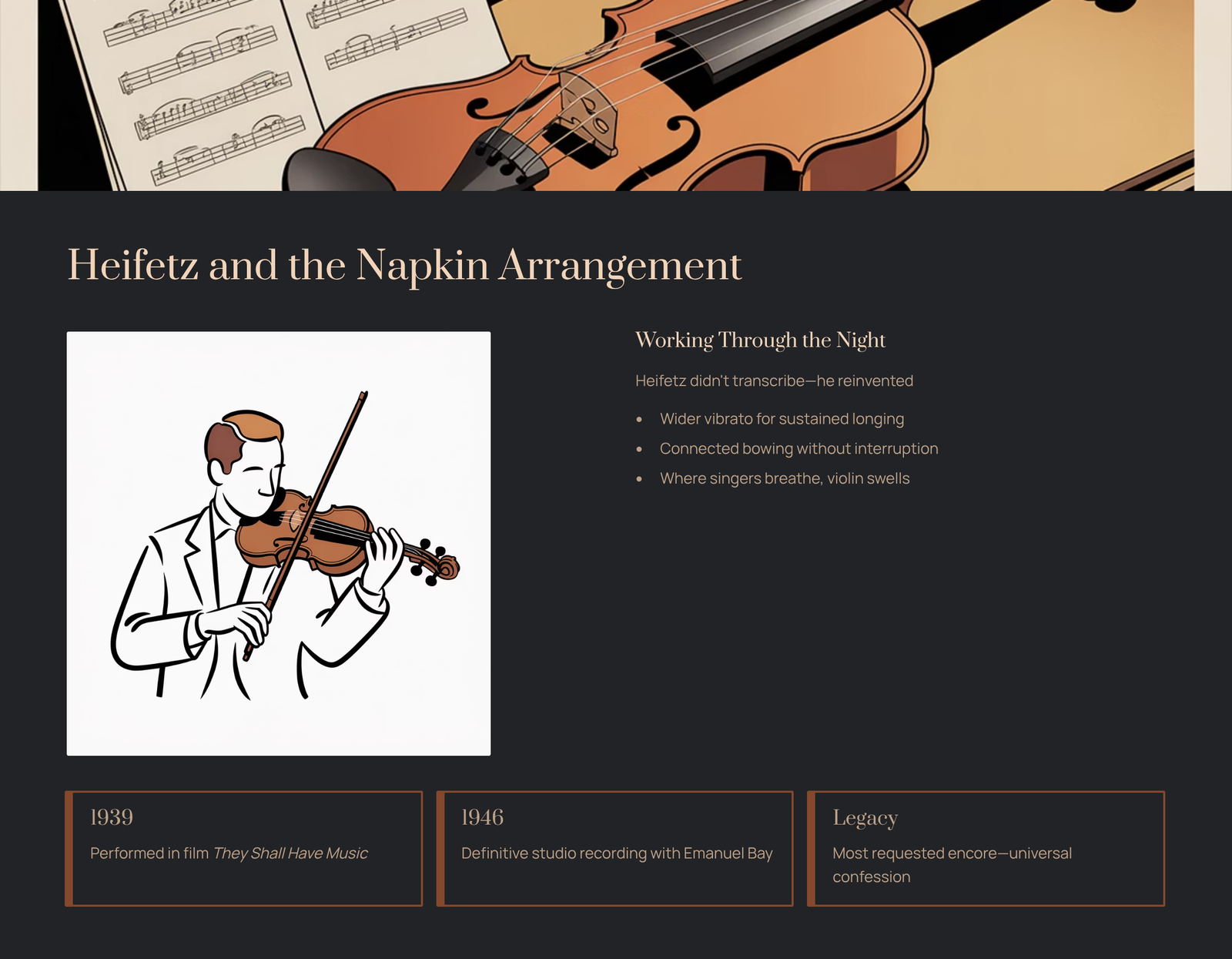
Heifetz and the Napkin Arrangement
Back to that café in 1923. Heifetz didn’t just transcribe Estrellita for violin—he reinvented it. Working through the night with only his napkin scribbles as a guide, he created an arrangement that scholars and performers often describe as an improvement over the original.
What made Heifetz’s version special? He understood that the violin could sing in ways the human voice cannot. His arrangement employed wider vibrato and connected bowing patterns that sustained the melody’s longing quality without interruption. Where a singer must breathe, the violin can sustain and swell. Heifetz used this to deepen the emotional intensity, transforming a Mexican serenade into a universal confession.
The piece became one of his most requested encores. He performed it in the 1939 film They Shall Have Music, and his 1946 studio recording with pianist Emanuel Bay remains definitive. In that recording, you can hear exactly what Heifetz heard in that café: a melody too beautiful to forget, now given wings.
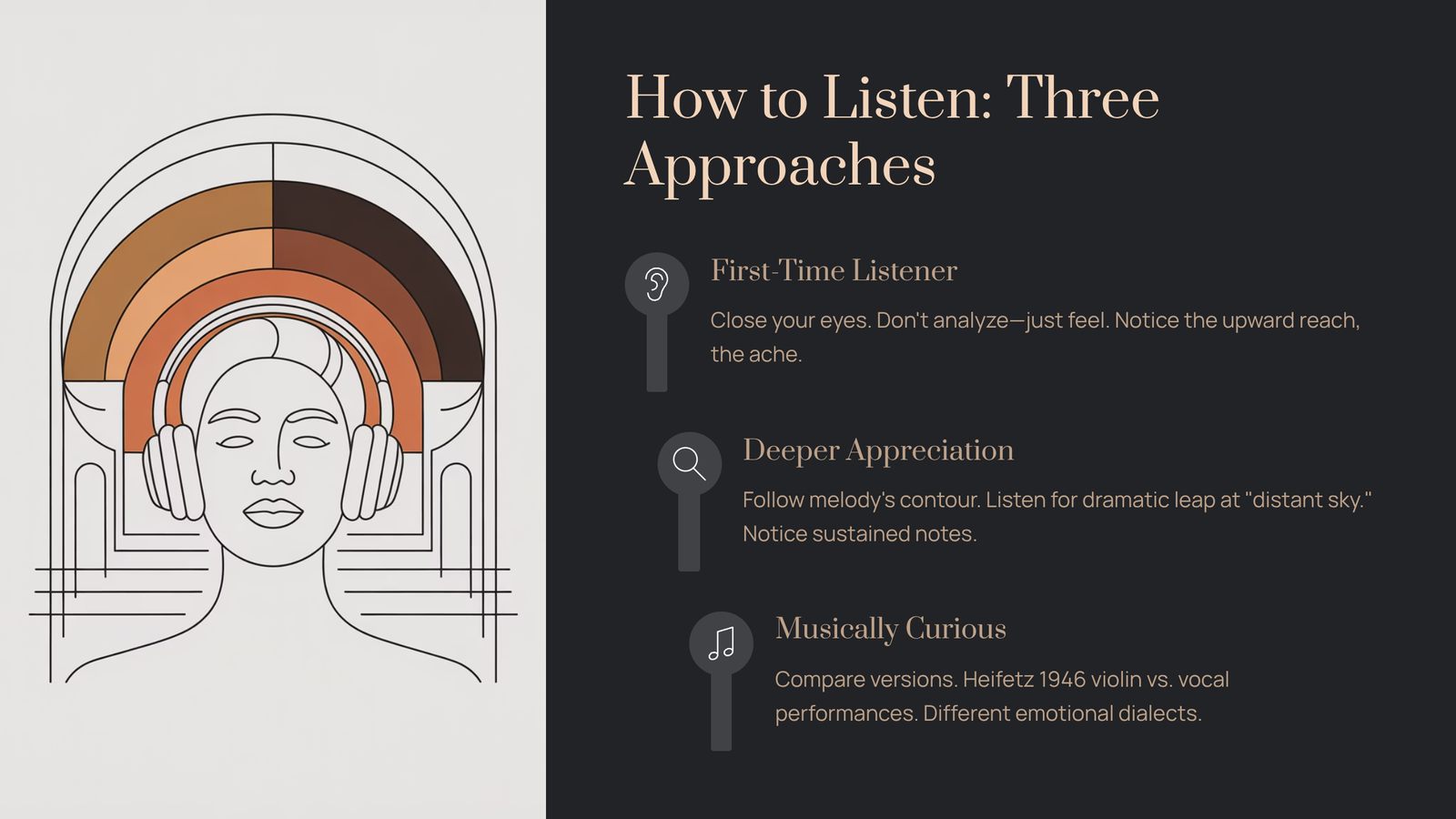
How to Listen: Three Approaches
For the first-time listener: Close your eyes and let the melody wash over you. Don’t analyze—just feel. Notice how the opening phrase seems to reach upward, stretching toward something just out of grasp. That ache you feel? That’s Estrellita.
For deeper appreciation: Follow the melody’s contour. Listen for the moment when it leaps dramatically—that’s the “distant sky” the lyrics describe. Pay attention to how the violin sustains notes that a singer would break. This is where Heifetz’s genius shines through.
For the musically curious: Compare versions. Start with Heifetz’s 1946 recording for the definitive violin interpretation. Then find a vocal performance (soprano Ailyn Pérez offers a gorgeous rendition) to hear the original context. Notice how different instruments tell the same story in different emotional dialects.
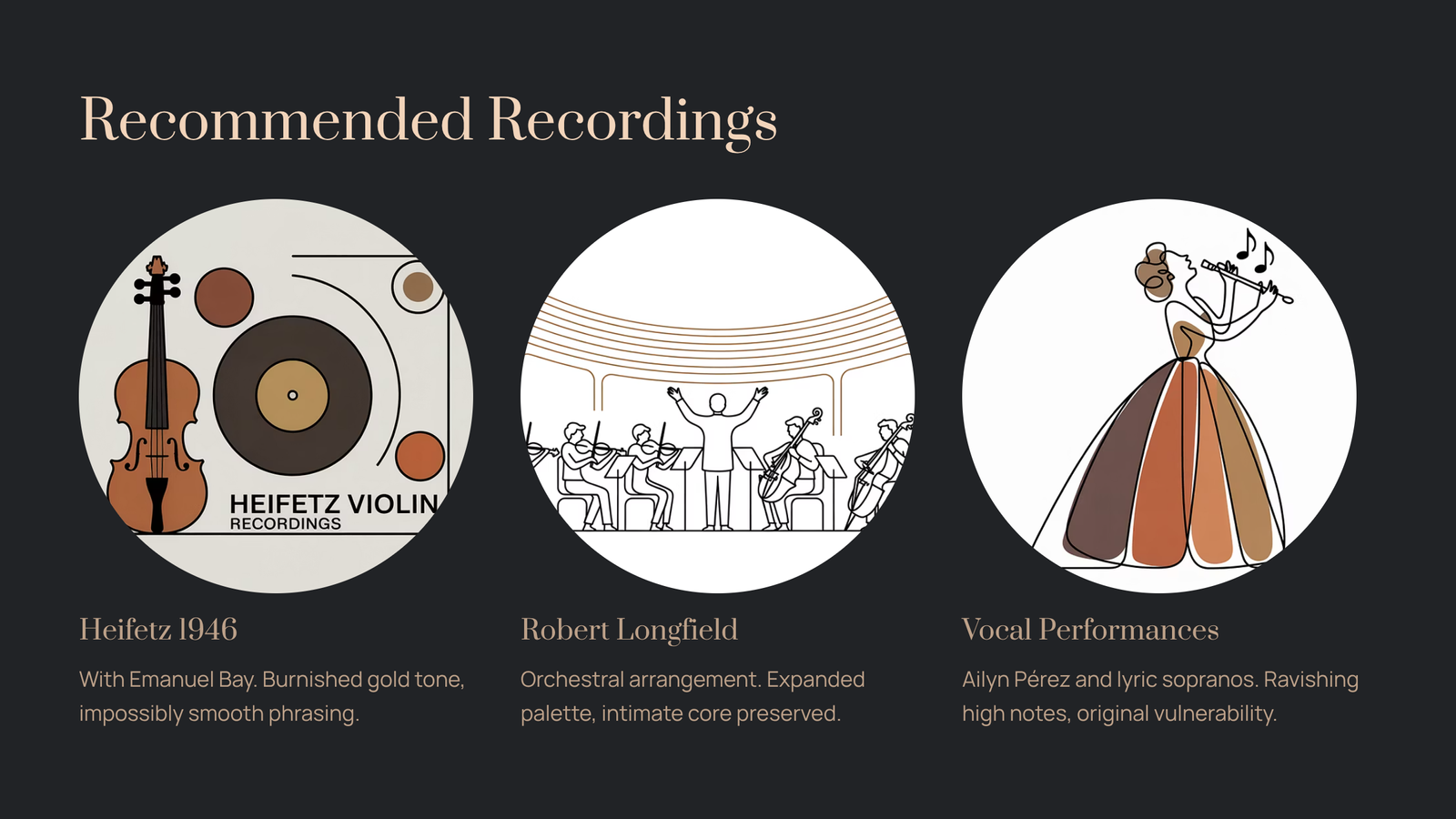
Recommended Recordings
The Heifetz recordings are essential listening—particularly the 1946 version with Emanuel Bay on piano. The tone is burnished gold, the phrasing impossibly smooth, the emotion restrained yet overwhelming.
For orchestral arrangements, seek out Robert Longfield’s version, which expands the piece’s palette while preserving its intimate core. And for the original vocal experience, performances by lyric sopranos often capture the vulnerability the song demands—those “ravishing leaps to soft high notes” that Ponce imagined when he composed it.
Why Estrellita Still Matters
More than a century after its composition, Estrellita continues to resonate because it speaks to something universal: the ache of loving someone who may never love you back. We’ve all looked up at the night sky and wondered. We’ve all wished for a sign, an answer, a messenger from the heavens.
Ponce understood this. Heifetz understood this too—so deeply that he couldn’t let the song disappear with the café singer’s final note. He captured it, transformed it, and gave it to the world.
That’s the power of Estrellita. It’s not just a little star. It’s every unanswered question we’ve ever whispered into the darkness, hoping—against all reason—that the universe might whisper back.