📑 Table of Contents
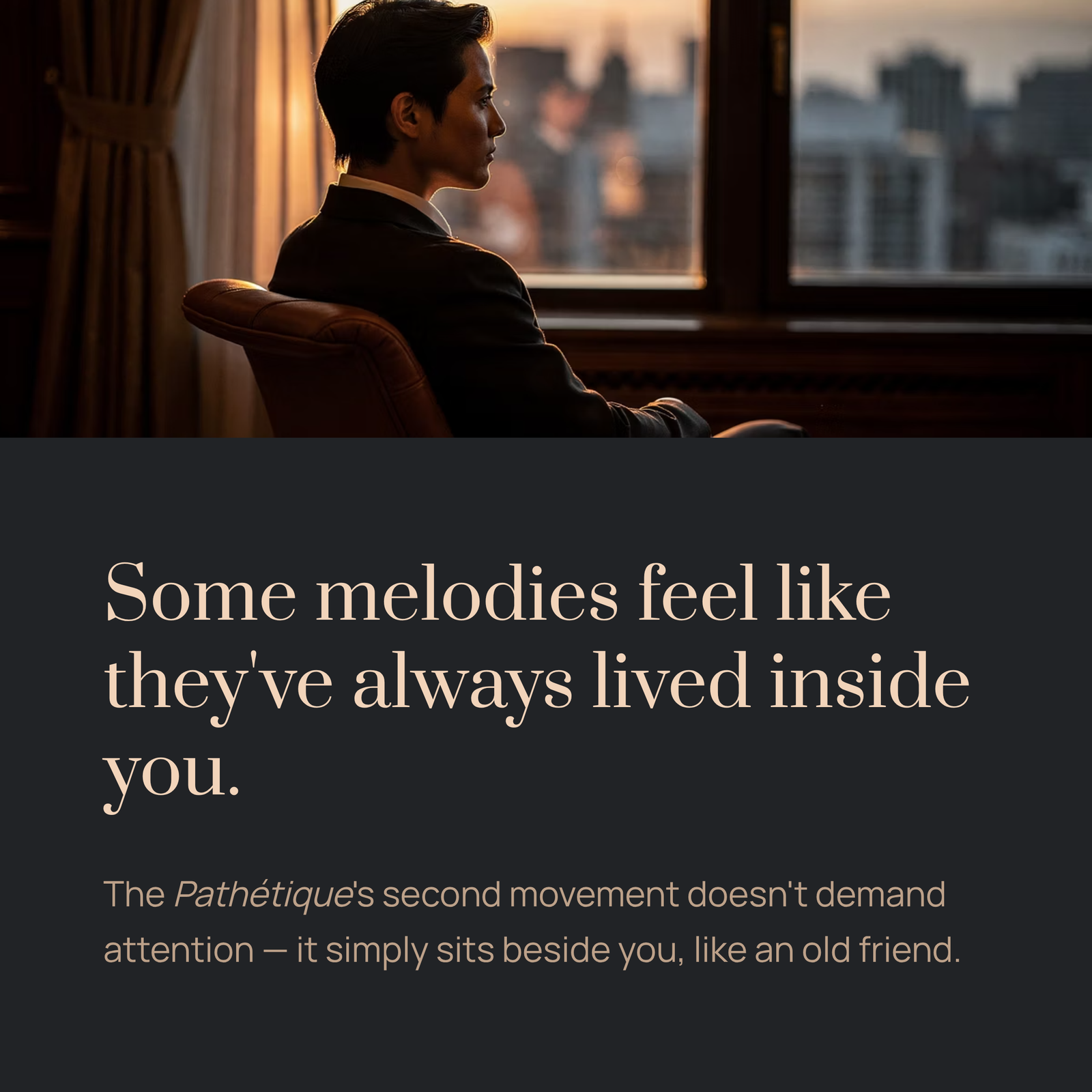
There are melodies you hear once and forget. Then there are melodies that seem to have always lived somewhere inside you — you just hadn’t found them yet. The second movement of Beethoven’s Piano Sonata No. 8, known as the Pathétique, is one of those melodies.
It doesn’t demand your attention. It doesn’t announce itself with thunder or drama. Instead, it sits down beside you, quietly, like an old friend who knows exactly when not to talk — and when to simply be present. If you’ve never listened to classical music before, this might be the piece that changes your mind about it entirely.
Who Was Beethoven at 27?
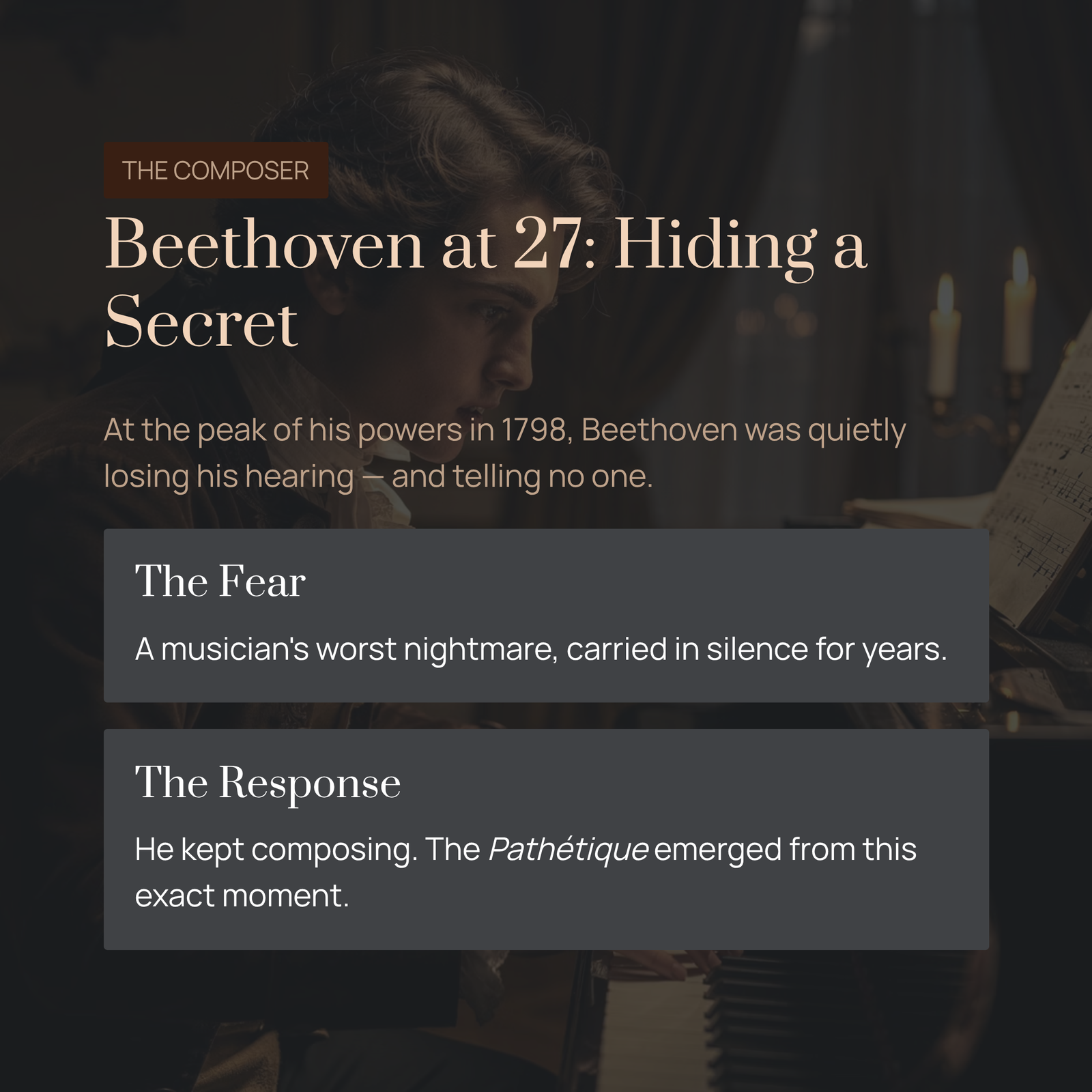
When Ludwig van Beethoven composed the Pathétique Sonata in 1798, he was just twenty-seven years old and already one of the most talked-about pianists in Vienna. But beneath the bravado and ambition, something terrifying was unfolding in secret. He was beginning to lose his hearing.
Imagine being a young musician at the peak of your powers, and the one sense you depend on most starts to betray you. Beethoven didn’t tell anyone for years. He kept performing, kept composing, kept showing up — all while carrying a fear so enormous it nearly drove him to despair.
The Pathétique Sonata emerged from this exact period. Its outer movements crackle with defiance and fury. But the second movement — the Adagio cantabile — is something else entirely. It’s the sound of a man pausing between battles, finding a pocket of stillness no one can take from him.
What Makes the Adagio Cantabile So Special
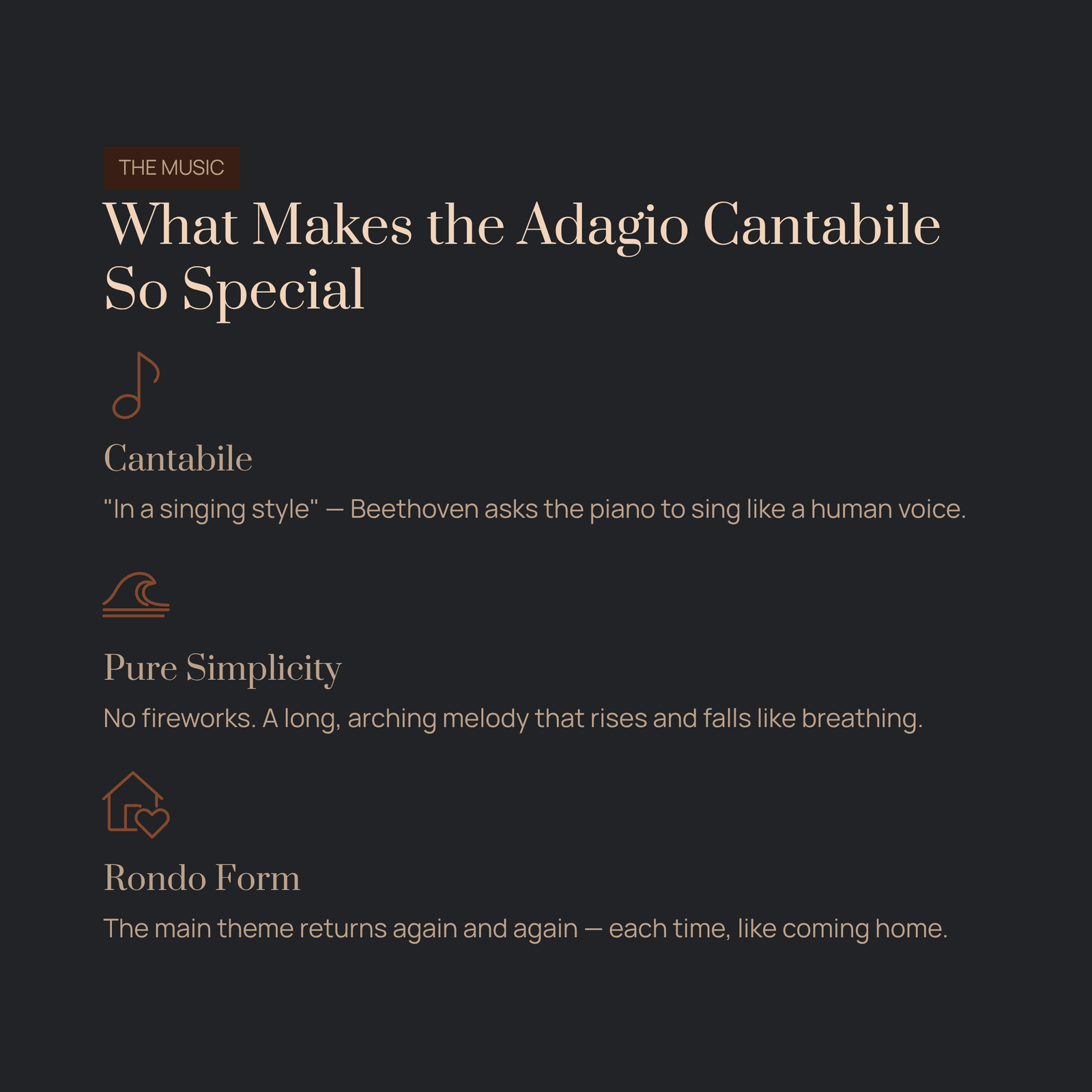
The movement opens with a singing melody in A-flat major, played gently in the right hand over a rocking accompaniment. The word cantabile literally means “in a singing style,” and that’s precisely what Beethoven asks of the pianist here: make the piano sing as if it were a human voice.
What makes this melody so extraordinary is its simplicity. There are no fireworks, no virtuosic runs, no shocking harmonic twists. Beethoven strips everything back to the essentials — a long, arching line that rises and falls like breathing. It’s the musical equivalent of someone placing a warm hand on your shoulder.
The structure follows a rondo form (A–B–A–C–A), meaning the main theme keeps returning after contrasting episodes. Each return feels like coming home. The middle sections introduce moments of gentle tension — a darker color here, a minor-key shadow there — but Beethoven always guides you back to that opening melody, each time a little more tender than the last.
How to Listen: Three Ways In
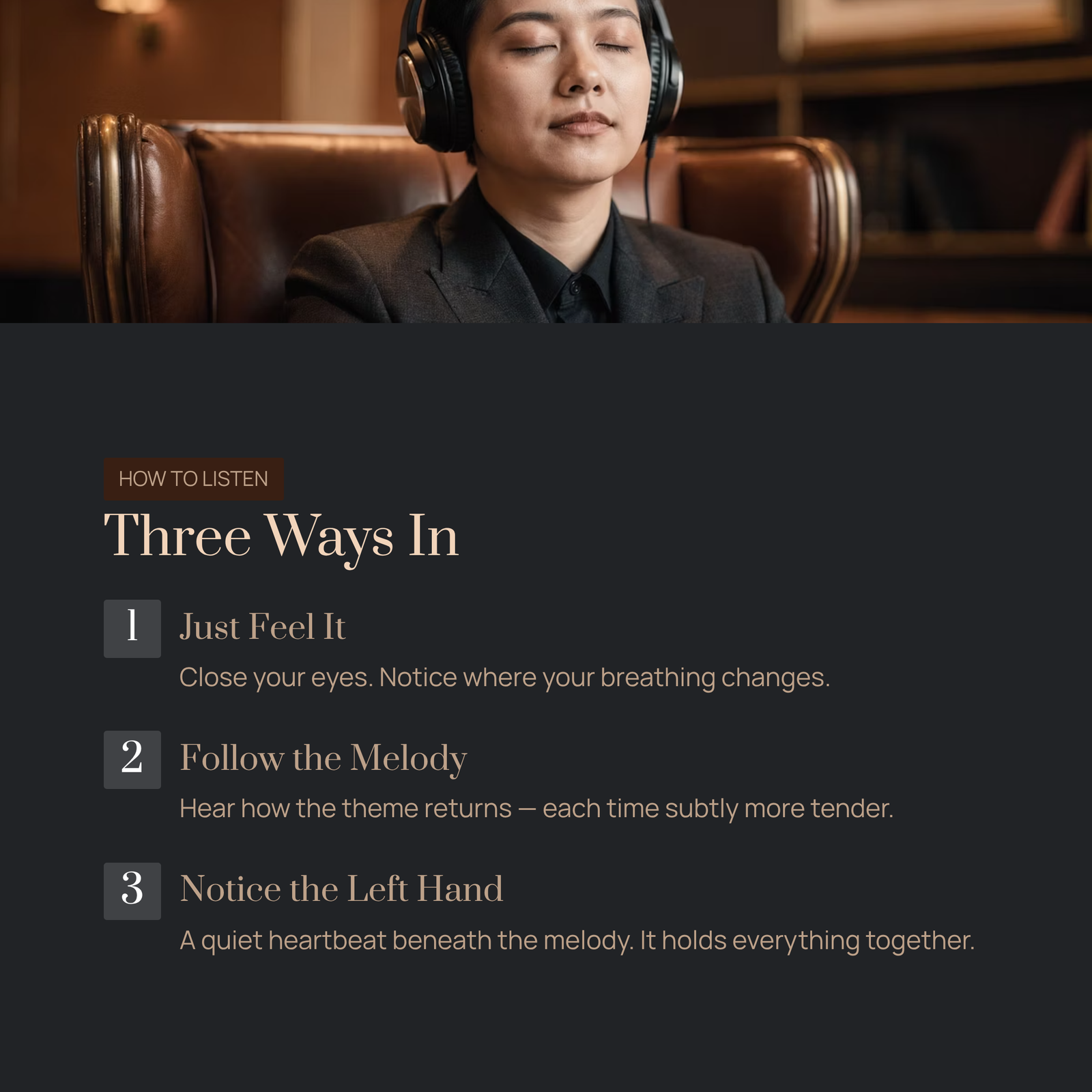
First listen — just feel it. Don’t analyze anything. Put on headphones, close your eyes, and let the melody wash over you. Notice where your breathing changes. Notice what images or memories surface. This piece has an uncanny ability to find whatever emotion you’ve been carrying.
Second listen — follow the melody. Pay attention to how the main theme (the opening melody) keeps coming back. Each time it returns, listen for subtle differences. Is Beethoven adding a new ornament? Is the dynamic slightly softer? These tiny variations are where the emotional depth lives.
Third listen — notice the left hand. While the right hand sings, the left hand maintains a gently pulsing accompaniment, almost like a heartbeat. This steady, quiet presence underneath the melody is what gives the piece its sense of calm and groundedness. Without it, the melody would float away. With it, the melody is held.
Recordings Worth Your Time
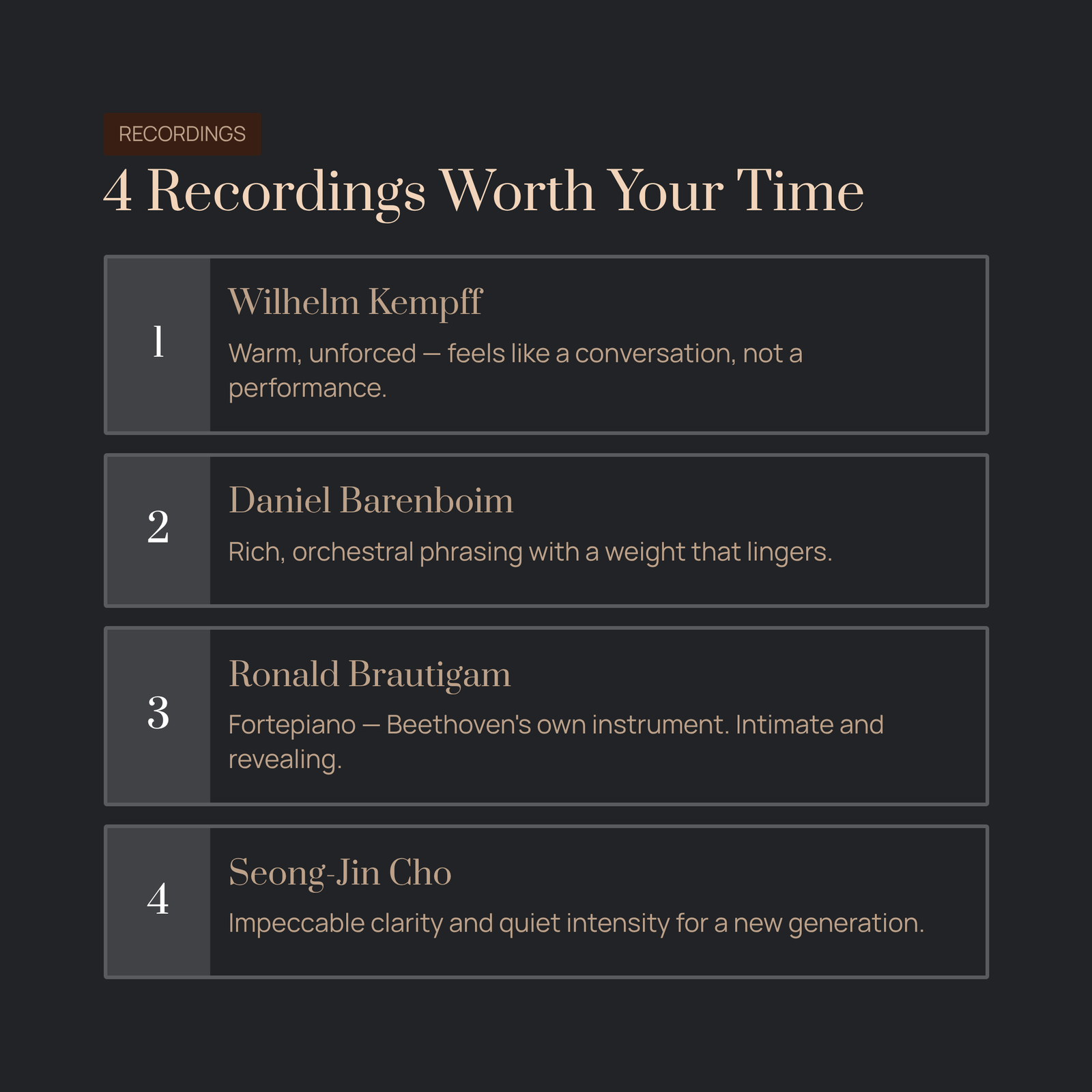
If you’re listening to this piece for the first time, the recording by Wilhelm Kempff is an ideal starting point. His tone is warm and unforced, with a naturalness that makes the music feel like a conversation rather than a performance.
For something more dramatic and richly textured, try Daniel Barenboim’s interpretation. He brings a deep orchestral quality to the piano, and his phrasing in the Adagio has a weight that lingers long after the last note.
If you’re drawn to historically informed performance, Ronald Brautigam plays this sonata on a fortepiano — the instrument Beethoven himself would have known. The sound is lighter and more intimate, and it reveals details that can get smoothed over on a modern concert grand.
And for a contemporary perspective, Seong-Jin Cho’s recording offers impeccable clarity and a quiet intensity that speaks to a younger generation of listeners without sacrificing any of the music’s depth.
Why This Piece Still Matters
There’s a reason the Adagio cantabile from the Pathétique keeps appearing in films, in compilations, in moments when words fall short. It’s not because it’s historically important (though it is). It’s because it does something that very few pieces of music can do: it meets you exactly where you are.
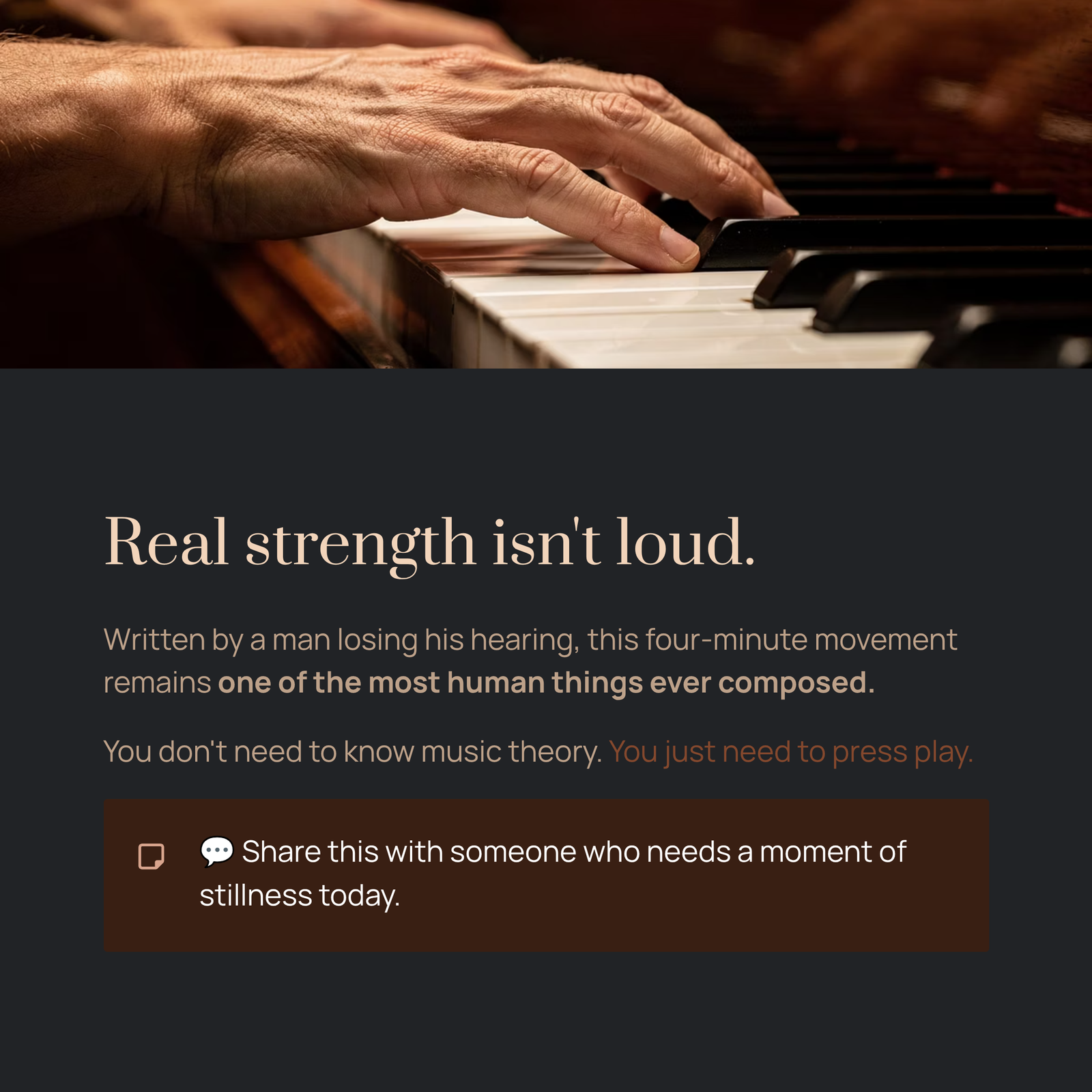
Having a rough day? It sits with you. Feeling peaceful? It deepens that peace. Missing someone? It gives shape to that ache without making it worse. Beethoven, at twenty-seven, already knew something that takes most people a lifetime to understand — that real strength isn’t loud. Sometimes the bravest thing you can do is be gentle.
This four-minute movement, written over two centuries ago by a man who was slowly losing the ability to hear his own music, remains one of the most human things ever composed. You don’t need to know anything about sonata form or classical harmony to feel it. You just need to press play.