📑 Table of Contents
There’s a story that still gives me chills every time I think about it.
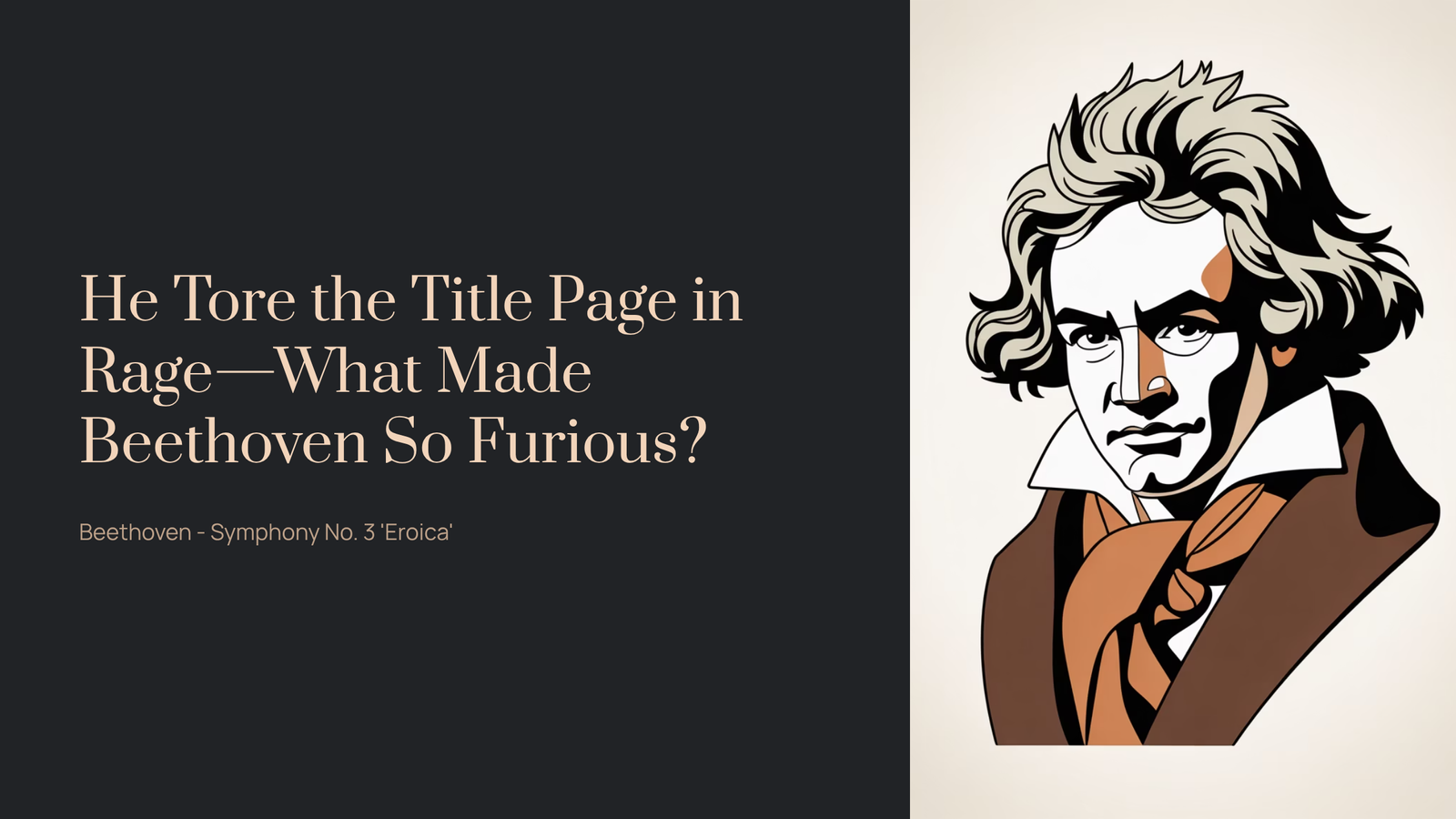
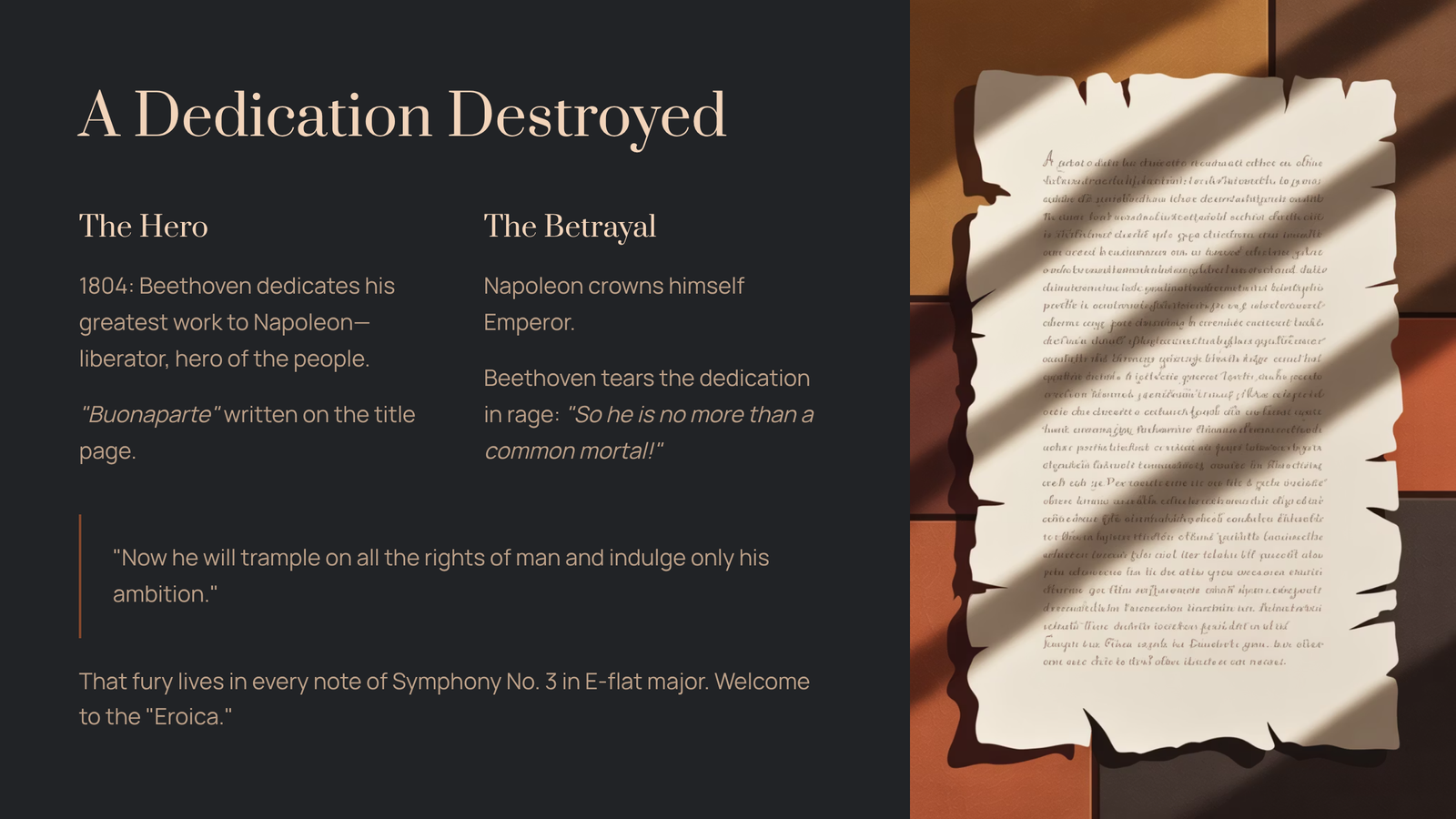
In 1804, a composer sat in his Vienna apartment, putting the finishing touches on what he believed would be his greatest work yet. On the title page, he had written a dedication: “Buonaparte.” This symphony was meant for Napoleon—the man Beethoven saw as a hero of the people, a liberator who would bring equality and freedom to Europe.
Then the news arrived. Napoleon had crowned himself Emperor.
What happened next became legend. Beethoven flew into a rage, seized the manuscript, and scratched out the dedication so violently that he tore a hole through the paper. “So he is no more than a common mortal!” he reportedly shouted. “Now he will trample on all the rights of man and indulge only his ambition.”
That fury, that heartbreak, that defiant spirit—it’s all still there, alive in every note of Symphony No. 3 in E-flat major. Welcome to the “Eroica.”
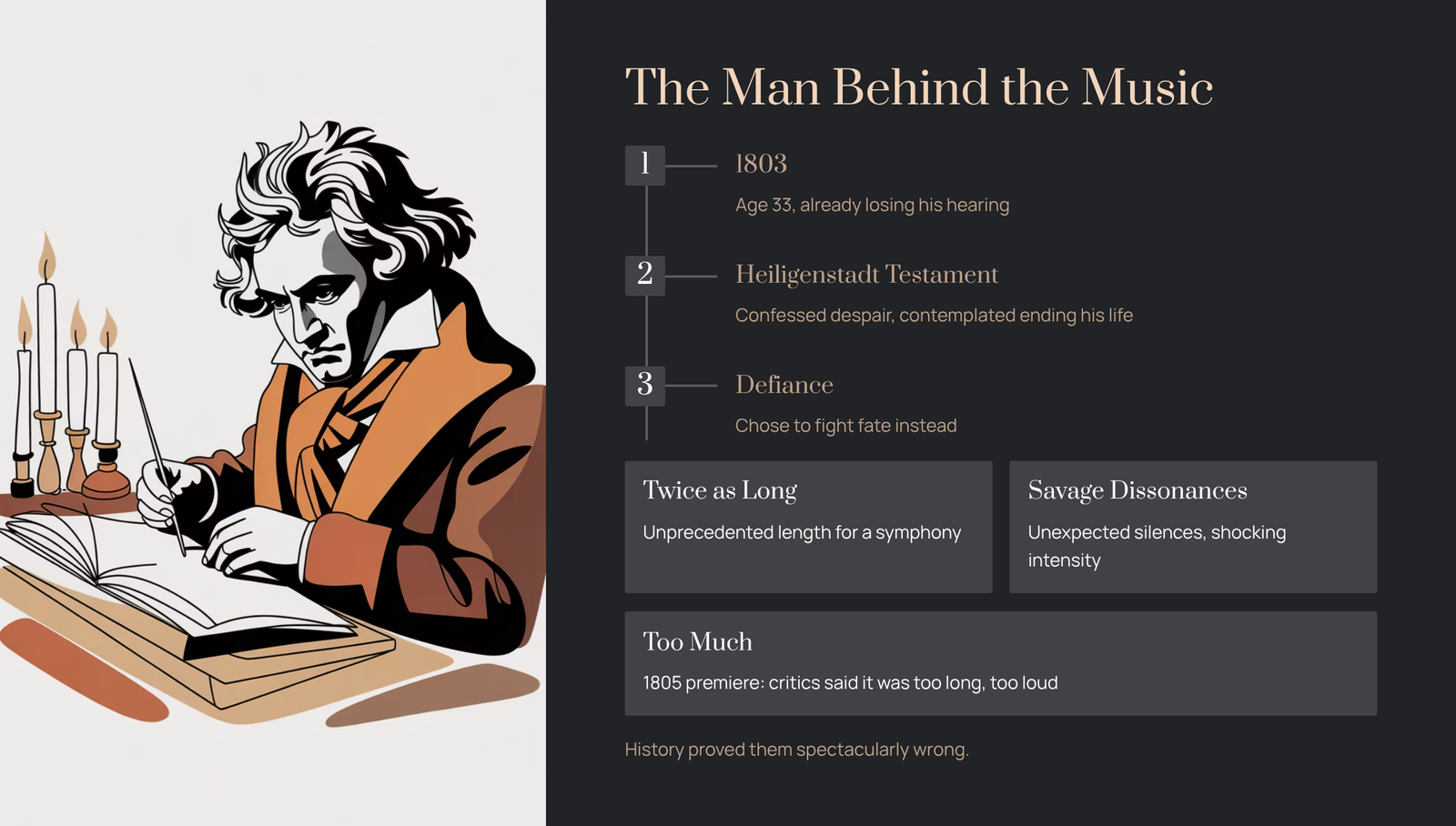
The Man Behind the Music
By 1803, Ludwig van Beethoven was 33 years old and already losing his hearing—a cruel fate for a musician. Just two years earlier, he had written the Heiligenstadt Testament, a devastating letter to his brothers in which he confessed his despair and even contemplated ending his life.
But Beethoven chose defiance instead.
The Third Symphony was his declaration of war against fate itself. Gone were the elegant proportions of Mozart and Haydn. In their place came something unprecedented: a symphony that was twice as long as any before it, filled with savage dissonances, unexpected silences, and an emotional intensity that shocked audiences.
When it premiered in 1805, some listeners thought it was simply too long, too loud, too much. One critic famously suggested that the symphony “would gain immensely if Beethoven would make up his mind to shorten it.”
History proved that critic spectacularly wrong.
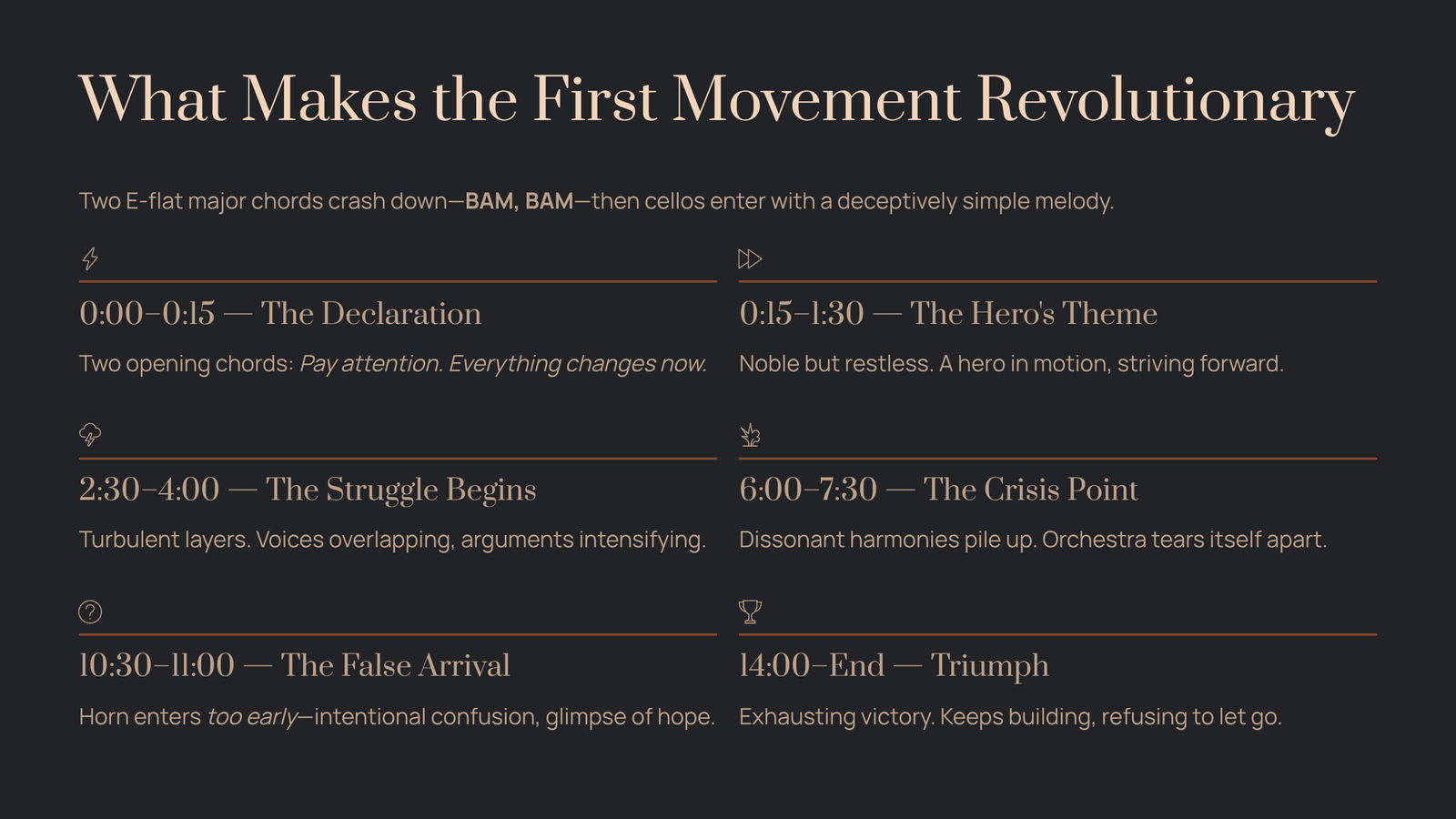
What Makes the First Movement Revolutionary
The opening is deceptively simple. Two massive E-flat major chords crash down like hammer blows—BAM, BAM—and then the cellos enter with what sounds like a straightforward melody.
But listen closer. Something is already wrong.
Within just seven bars, Beethoven introduces a C-sharp—a note that doesn’t belong in E-flat major. It’s like a crack appearing in a perfect marble statue. This tiny disruption tells you everything about what’s coming: this is music that will break the rules.
Here’s what to listen for in this 15-minute journey:
0:00–0:15 — The Declaration
Those two opening chords aren’t just an introduction; they’re a statement of intent. Beethoven is announcing: Pay attention. Everything changes now.
0:15–1:30 — The Hero’s Theme
The main melody in the cellos sounds noble but restless. Notice how it keeps pushing forward, never quite settling. This isn’t a hero at rest—it’s a hero in motion, striving toward something.
2:30–4:00 — The Struggle Begins
The music grows increasingly turbulent. Beethoven layers theme upon theme, building tension through what’s called “development.” Imagine a conversation that keeps getting more heated, voices overlapping, arguments intensifying.
6:00–7:30 — The Crisis Point
Here, the music reaches a breaking point. Dissonant harmonies pile on top of each other. The orchestra seems to be tearing itself apart. In a traditional symphony, this would resolve quickly. Beethoven makes you wait. And wait.
10:30–11:00 — The False Arrival
Just when you think the storm has passed, the horn enters too early with the main theme—while the strings are still playing the wrong harmony. At the premiere, someone in the audience supposedly shouted, “The horn player made a mistake!” But it was intentional. Beethoven was creating a moment of sublime confusion, a glimpse of hope before the final struggle.
14:00–End — Triumph
The ending isn’t just victorious—it’s exhausting. The music keeps building, keeps pushing, refusing to let you go. When those final chords arrive, you feel like you’ve survived something.
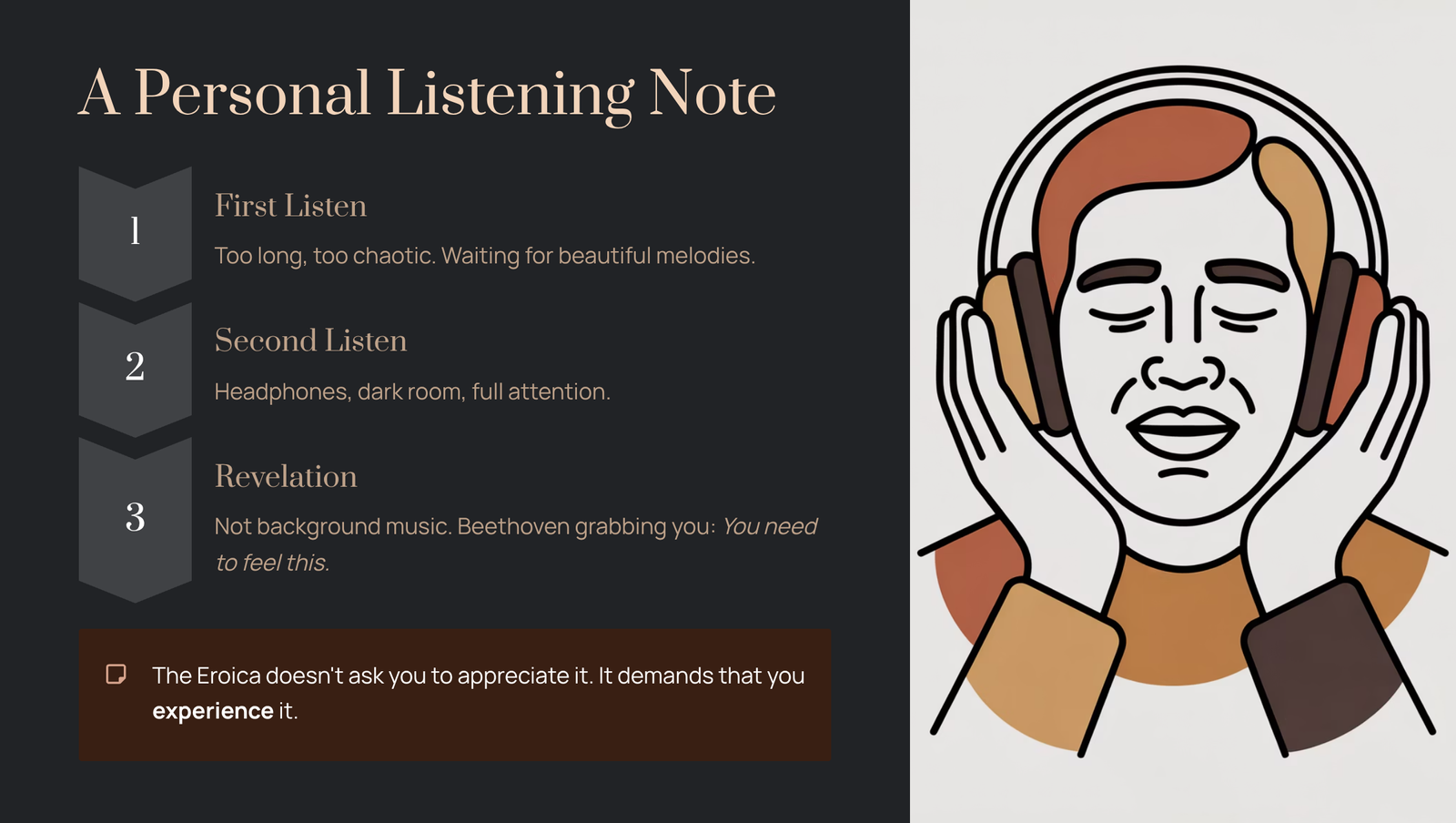
A Personal Listening Note
I’ll be honest: the first time I heard this symphony, I didn’t get it.
It felt too long, too chaotic. I was waiting for the beautiful melodies I associated with classical music, and instead I got what felt like controlled chaos.
Then I listened again—this time with headphones, in a dark room, with nothing else demanding my attention. And suddenly, I heard it differently. This wasn’t background music. This was Beethoven grabbing me by the shoulders and saying, You need to feel this.
The Eroica doesn’t ask you to appreciate it. It demands that you experience it.
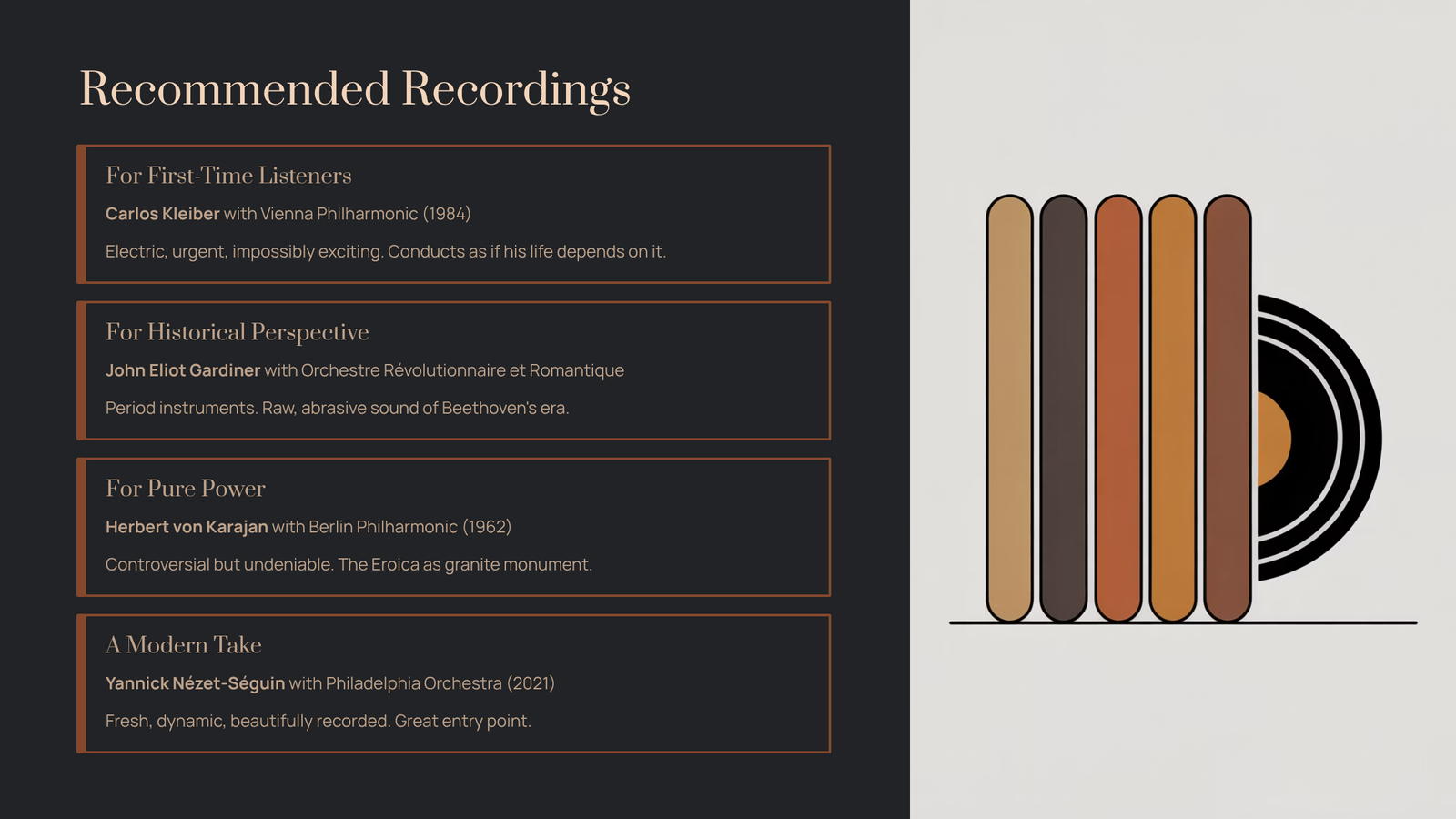
Recommended Recordings
For First-Time Listeners:
Carlos Kleiber with the Vienna Philharmonic (1984) — Electric, urgent, and impossibly exciting. Kleiber conducts as if his life depends on it.
For a Historical Perspective:
John Eliot Gardiner with the Orchestre Révolutionnaire et Romantique — Performed on period instruments, this recording captures the raw, almost abrasive sound that Beethoven’s original audiences would have heard.
For Pure Power:
Herbert von Karajan with the Berlin Philharmonic (1962) — Karajan’s interpretation is controversial among purists, but there’s no denying its overwhelming force. This is the Eroica as granite monument.
A Modern Take:
Yannick Nézet-Séguin with the Philadelphia Orchestra (2021) — Fresh, dynamic, and beautifully recorded. A great entry point for new listeners.
Why This Music Still Matters
Napoleon is long dead. The political struggles of 1804 are history. Yet the Eroica remains as powerful today as it was 220 years ago.
Why?
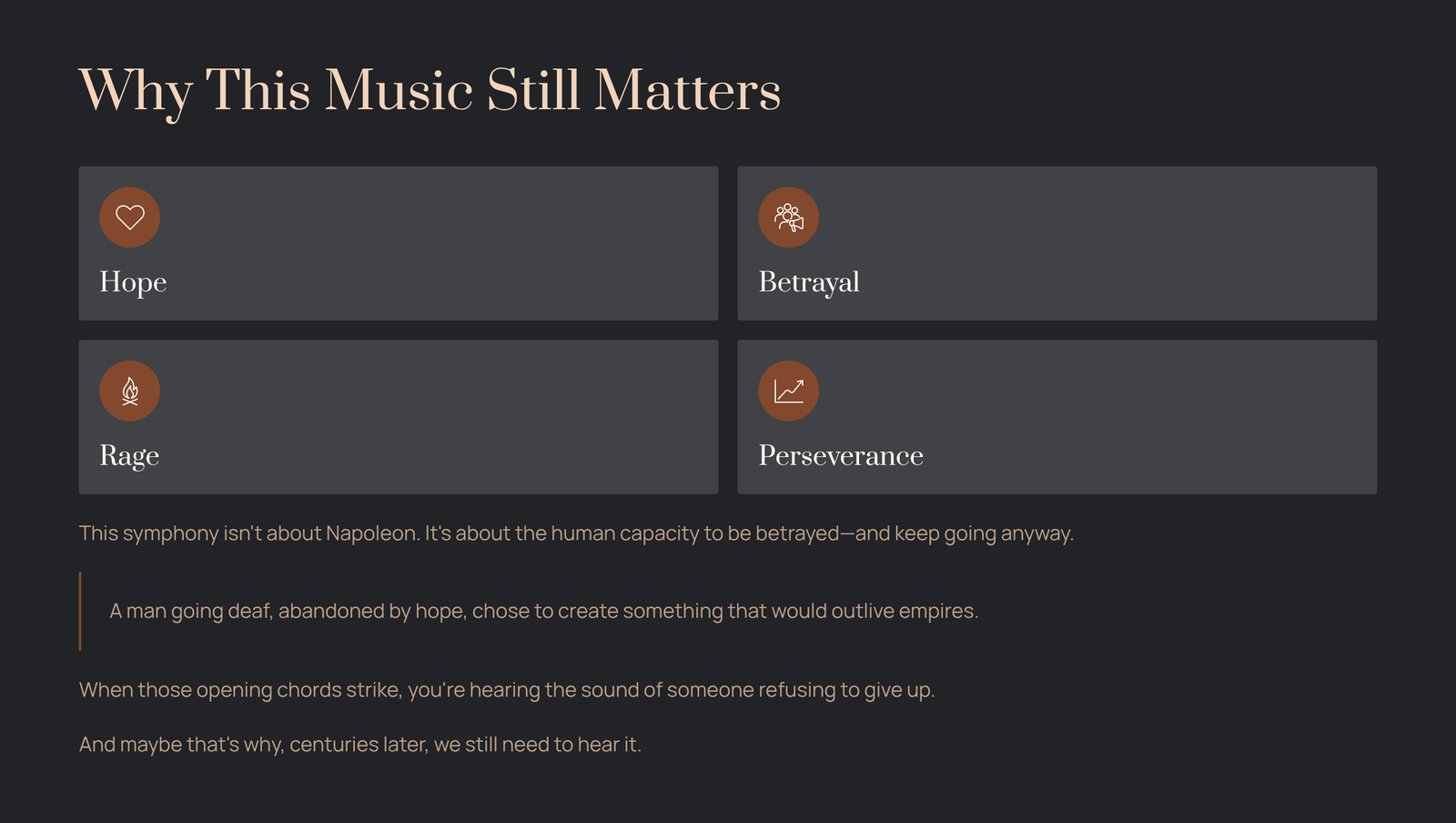
Because this symphony isn’t really about Napoleon. It’s about something more universal: the human capacity to hope, to be betrayed, to rage—and then to keep going anyway.
Beethoven didn’t just write a symphony about a hero. He became the hero of his own story. A man going deaf, abandoned by hope, chose to create something that would outlive empires.
When those opening chords strike and that restless cello theme begins its journey, you’re not just listening to music. You’re hearing the sound of someone refusing to give up.
And maybe that’s why, centuries later, we still need to hear it.