📑 Table of Contents
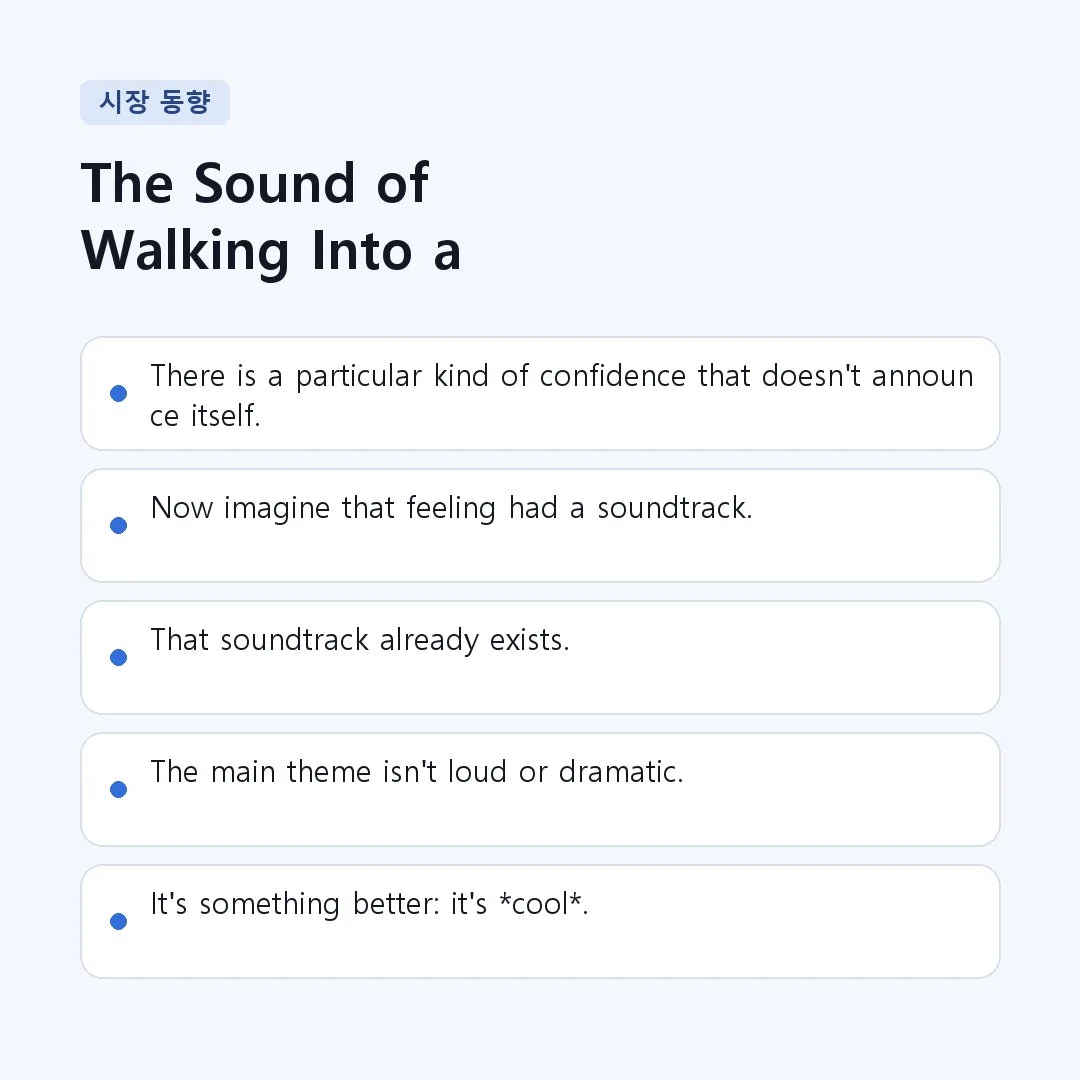
There is a particular kind of confidence that doesn’t announce itself. It doesn’t rush. It strolls. Think of the smoothest person you have ever watched cross a room — unhurried, certain, slightly amused by everyone else’s hurry. Now imagine that feeling had a soundtrack.
That soundtrack already exists. It’s the music David Holmes wrote for Ocean’s Eleven, the 2001 heist film where George Clooney, Brad Pitt, and a crew of charming thieves walk into a Las Vegas casino and walk out with $160 million as if it were the easiest thing in the world. The main theme isn’t loud or dramatic. It’s something better: it’s cool. And as it turns out, that cool is one of the most useful things you can put in your ears when you need to concentrate.

Who Is David Holmes?
If you came to this music expecting a powdered-wig composer, here’s a small surprise: David Holmes is a DJ and electronic music producer from Belfast, Northern Ireland. He didn’t train in conservatories writing symphonies. He came up through dance floors and record crates, building tracks out of beats, samples, and a deep love of vintage funk and jazz.
That background is exactly why his film music sounds the way it does. Director Steven Soderbergh had already worked with Holmes on the 1998 film Out of Sight and trusted him to bring the same hip, modern energy to Ocean’s Eleven. Holmes went on to score the whole trilogy — Eleven, Twelve, and Thirteen. His approach is closer to a great DJ assembling the perfect set than to a traditional composer filling a page with notes for a hundred-piece orchestra. He blends his own compositions with carefully chosen older tracks, so the whole thing flows like one continuous, irresistible groove.

A Heist Wrapped in Vegas Cool
To understand the music, it helps to know what it’s scoring. Ocean’s Eleven is a remake of a 1960 Rat Pack movie, and Soderbergh leaned hard into that retro glamour — the world of Frank Sinatra, dim casino lounges, and men in sharp suits who never break a sweat. Holmes’ job was to make a 2001 film feel like that golden-age cool without sounding like a museum piece.
So he reached back to the late 1960s and early 1970s — the funky, jazzy, slightly seedy sound of that era — and pulled it forward with modern production. One critic captured it perfectly, describing how the score swings between joy and a simmering menace, the way a glittering Vegas casino always hides something dangerous beneath its polished surface. That’s the secret of this music: it’s fun and relaxed on top, but there’s a coiled, watchful energy underneath. Exactly how you’d feel pulling off the perfect crime.

How to Listen: What to Notice
If you’re new to film scores, here’s the friendly thing about Holmes’ work — you don’t need any musical training to “get” it. You just need to notice a few things.
The groove comes first. In most classical music, melody is the star. Here, the rhythm leads. Listen for the steady, unbothered pulse, often built on a walking bassline — the kind of low, strolling bass that sounds like footsteps with a swagger. That pulse is the engine. Everything else is decoration laid over it.
The instruments are characters. A muted trumpet slinks in like someone whispering a secret. An electric organ adds a smoky lounge flavor. Light percussion ticks along like a clock counting down to the big moment. Each sound has a personality, and Holmes uses them sparingly, so nothing ever feels crowded. There’s a lot of space in this music — and that space is what makes it feel so effortless.
It refuses to panic. Even in scenes where the characters could lose everything, the music stays composed. That refusal to rush is the whole emotional point. It tells you these people are in control. And it’s why this works beautifully as focus music: it carries forward momentum without ever spiking your stress.
A small bonus for the curious: the film’s most famous musical moment isn’t Holmes’ own composition at all. In the final scene, as the crew stands by the Bellagio fountains and quietly drifts apart one by one, the music is Claude Debussy’s “Clair de Lune.” Written for solo piano around the turn of the twentieth century, it’s one of the most beloved pieces in all of classical music — gentle, moonlit, and impossibly tender. Soderbergh placed this genuine classical masterpiece at the emotional peak of a slick heist movie, and the contrast is what makes the ending land so softly. If you’ve ever wanted a doorway from film music into “real” classical, this is one of the loveliest there is.

Where to Start Listening
A few suggestions depending on what you’re after:
For the full experience, find the original soundtrack album, Music from the Motion Picture Ocean’s Eleven (Warner, 2001). It earned near-universal acclaim from critics and works as a complete listening journey on its own, not just background to the film. Just know going in that it includes snippets of movie dialogue between tracks — charming to some, distracting to others.
If you want the closing-scene magic, search out a good recording of Debussy’s “Clair de Lune.” The version heard in the film is performed by a full orchestra, but the original solo-piano form is where the piece truly lives. Pianists like Khatia Buniatishvili bring out its dreamy, rubato-soaked side, while Walter Gieseking, a classic interpreter of French music, offers a more crystalline, understated reading.
And if you simply want the groove for working or thinking, queue up the Holmes instrumental tracks and skip the dialogue interludes. The steady, low-stress momentum is tailor-made for deep work, a long drive, or any moment when you’d like to feel a little more like someone who has it all figured out.

A Closing Thought
We tend to assume that music for concentration has to be quiet, ambient, nearly invisible — the audio equivalent of beige. Ocean’s Eleven makes the opposite case. Here is music with personality, swagger, and style that still leaves your mind free to work. It turns out the best company for getting things done isn’t silence. It’s the sound of someone who is completely, unhurriedly in control — and is generous enough to let you borrow that feeling for a while.