Modest Mussorgsky wrote Night on Bald Mountain in 1867 to depict a witches’ gathering on St. John’s Eve. After Mussorgsky’s death, Nikolai Rimsky-Korsakov reshaped the piece and gave it the quiet dawn ending that Leopold Stokowski carried into Disney’s Fantasia.
The two scores tell different stories about what happens when the dancing ends. Mussorgsky’s original drives the gathering to a loud finish. Rimsky-Korsakov’s revision lets a bell break up the revels, then stays on the mountain long enough for you to hear the morning arrive.
📑 Table of Contents
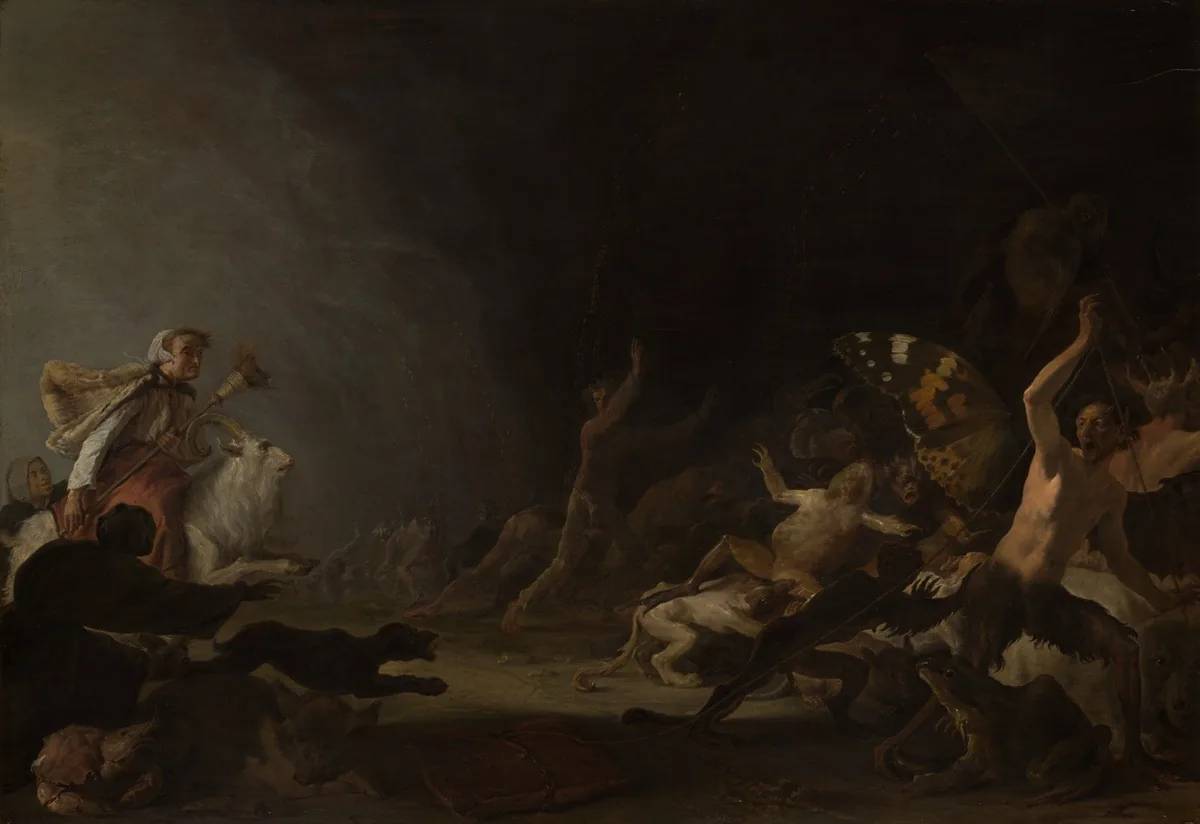
Mussorgsky’s 1867 Original and the Witches’ Sabbath
Mussorgsky’s original title is often translated as St. John’s Night on the Bare Mountain. “Bare” and “bald” both describe the exposed mountaintop where the witches gather. The reference to St. John’s Eve places the scene on a midsummer night associated in folklore with supernatural activity.
Mussorgsky laid out a sequence of events for the orchestra to depict. The witches assemble and chatter, Satan arrives and is glorified, and the gathering breaks into a sabbath, a wild celebration. You can hear the difference between the opening bustle and the later dance even without following the program. At first, little bursts seem to answer one another across the orchestra. As the gathering gets underway, the rhythm gives those bursts a more insistent direction.
Mily Balakirev, a composer and mentor to Mussorgsky, rejected the score, and the 1867 version went unperformed during Mussorgsky’s lifetime. Mussorgsky kept working with the material, adapting it for the collaborative stage project Mlada and later for a dream scene in his opera Sorochintsy Fair. Those later versions matter because the idea of ending the revels with a bell and daybreak came from Mussorgsky’s own work on the opera.
For another example of how directly Mussorgsky could suggest movement, start at the first notes of the piano suite Pictures at an Exhibition. The opening tune alternates groups of five and six beats, giving its walk a flexible, slightly irregular stride. That walk carries the listener from picture to picture in the story behind Mussorgsky’s opening Promenade.
How the Rimsky-Korsakov Revision Changes the Ending
The revision Rimsky-Korsakov introduced in 1886 reworked the piece’s structure as well as its orchestration, the way musical lines are assigned to instruments. It drew on Mussorgsky’s later treatment of the music and gave concert audiences a continuous scene that moves from a noisy gathering to a nearly empty mountainside. The bell is the turning point. After it sounds, the music thins out until a flute melody can hold your attention on its own.
Rimsky-Korsakov had a knack for making a story turn on a change in instrumental sound. You can hear it from the opening of his Scheherazade, where a weighty orchestral statement gives way to an exposed solo violin. In Night on Bald Mountain, try starting a little before the bell. The dance has built up enough momentum by then that the sudden space around a single sound feels like part of the action.
The dance itself is worth following before you skip to the ending. Listen for the short rhythmic figures that keep pulling the orchestra forward as different instruments take over. For a related sound, start with the slow, swaying melody in Borodin’s Polovtsian Dances from Prince Igor, then hear how the faster dances build excitement through repeated rhythms. Mussorgsky’s witches have that same sense of a crowd gaining energy as it moves.
Night on Bald Mountain in Fantasia
In Disney’s 1940 film Fantasia, Leopold Stokowski conducts his own adaptation of Rimsky-Korsakov’s revision. The animation gives the music’s demonic figure a name and a shape. Chernabog spreads his wings over the mountain and summons spirits from below. The bell breaks his hold over them, and the film continues into Franz Schubert’s Ave Maria as a procession moves through the dark toward daylight.
That transition can make the two pieces feel like one long finale. If your memory of Night on Bald Mountain includes a choir singing as the light comes up, you’re remembering Schubert. The bell and the quiet music immediately after the frenzy belong to the revision that Stokowski adapted. The procession carries that turn toward morning into a second piece.
Stravinsky’s The Firebird Suite offers another way to hear how an orchestra can set a supernatural scene in motion. Start at the “Infernal Dance,” where a sudden full-orchestra attack sets the dance going and sharp accents keep it lurching forward. The animated gestures in Fantasia make it easy to notice similar jolts in Night on Bald Mountain. Once you’ve heard them with the images, try following the same accents by ear.
Three Places to Compare the Two Scores
Start at the beginning of both versions. In the 1867 score, follow the shifts between quick, restless motion and blunt orchestral accents. In the revision, listen for how the skittering figures gather momentum before the heavier statements come forward. Give each opening a short stretch to establish its pace before you switch between them.
Then find the first passage in each version where the dance seems to settle into a stride. Tap along until a sharp accent or a sudden change of instrumental color pulls your attention elsewhere. Mussorgsky can make the pulse feel unstable even when a figure repeats. For a closer look at the character of that score, see our guide to Mussorgsky’s Night on Bald Mountain.
Finish with the closing stretch of each version. The 1867 score keeps its energy up through a forceful close. In Rimsky-Korsakov’s version, listen from the bell through the flute melody and notice how long the orchestra lets the scene settle. If you know the piece from Fantasia, hearing the original ending first makes it easier to appreciate how much of the film’s story depends on that change.
Frequently Asked Questions
Who wrote Night on Bald Mountain?
Modest Mussorgsky composed the original orchestral score in 1867. Nikolai Rimsky-Korsakov prepared the later concert revision, and Leopold Stokowski adapted that revision for Fantasia.
How can I tell which version of Night on Bald Mountain I’m hearing?
Check the track listing for “original 1867 version” or Rimsky-Korsakov’s name. The ending is also a quick clue. The original ends loudly, while the familiar revision has a bell followed by quiet dawn music.
What does Night on Bald Mountain mean?
The title refers to a night on an exposed mountaintop where witches gather for a sabbath. Mussorgsky’s original depicts the gathering and its revels, while the familiar concert revision follows the scene through to daybreak.
Sources
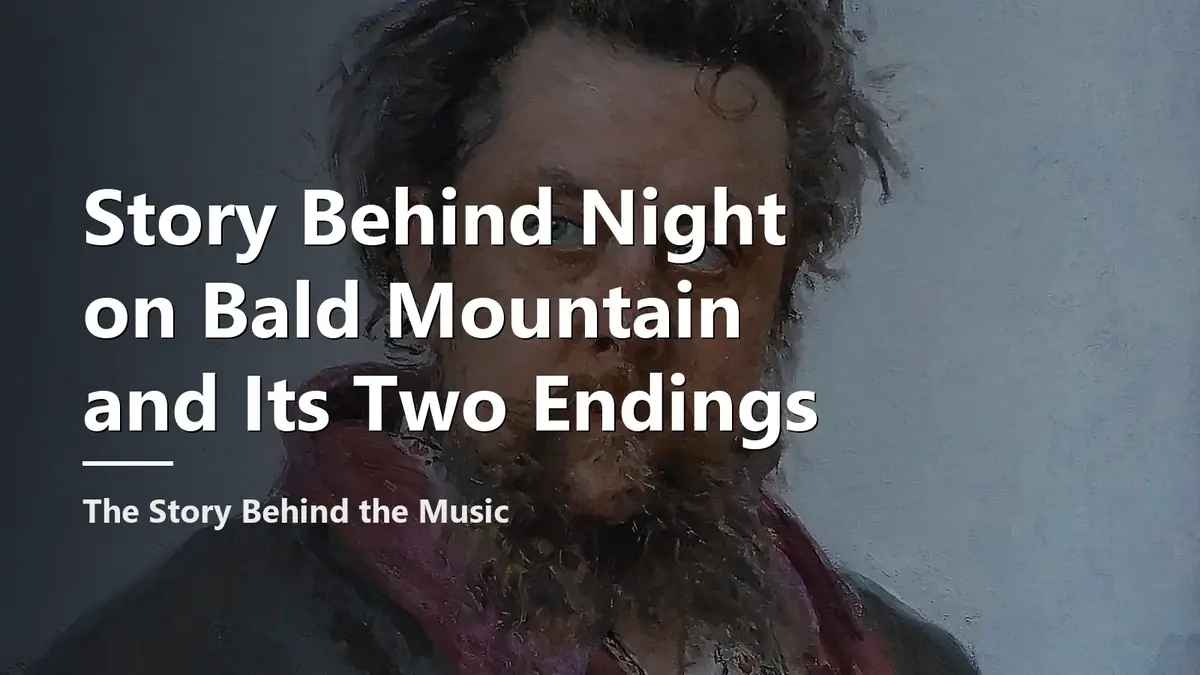
Cover art: Moscou, galerie Tretiakov Mussorgsky by Ilya Repin, Pierre André Leclercq, Taken on 12 May 2018 09:34. Wikimedia Commons (public domain). Image: A Witches' Sabbath, Cornelis Saftleven, c. 1650. Art Institute of Chicago (public domain).