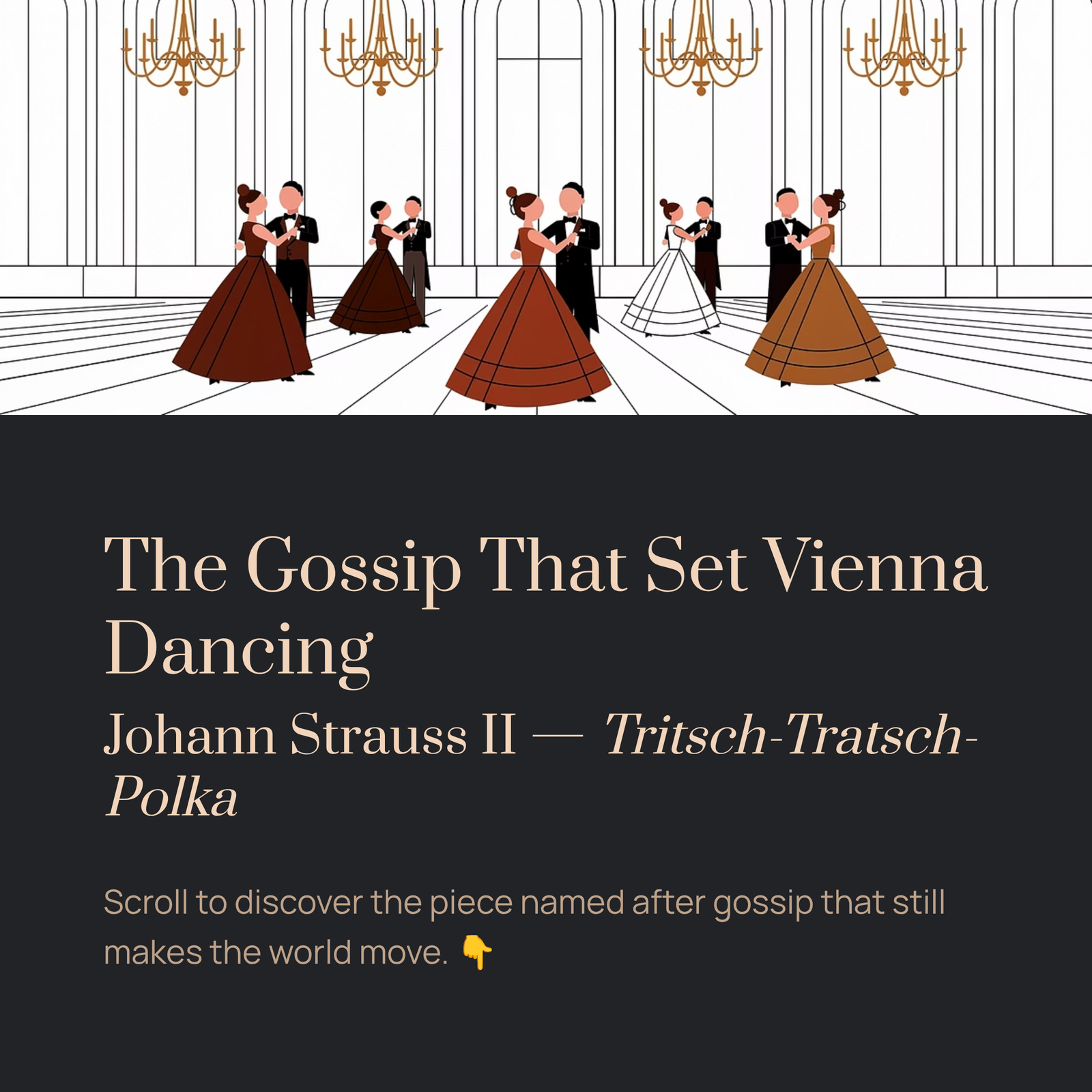
The Gossip That Set Vienna Dancing | Johann Strauss II – Tritsch-Tratsch-Polka
Composed in 1858, Tritsch-Tratsch-Polka captures the electric buzz of Vienna's ballrooms — and the irresistible rhythm of a city that couldn't stop talking.
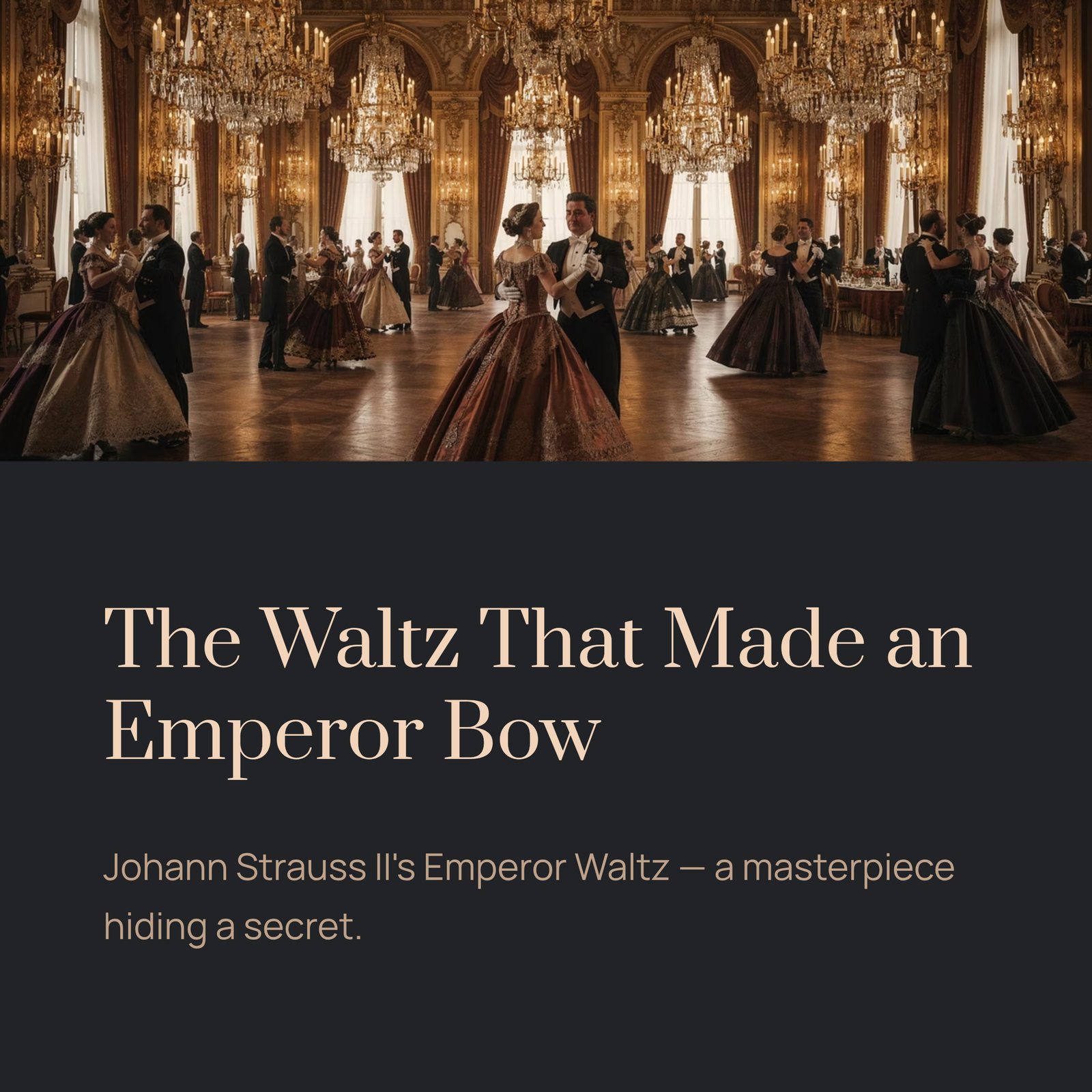
Discover how Johann Strauss II's Emperor Waltz (Kaiserwalzer, Op.437) from 1889 became the ultimate expression of imperial grandeur and Viennese elegance. A listening guide for classical music beginners.
Schubert composed Erlkönig at just 18, turning Goethe's terrifying poem into a four-character piano drama. Discover why this 1815 lied still makes listeners hold their breath.
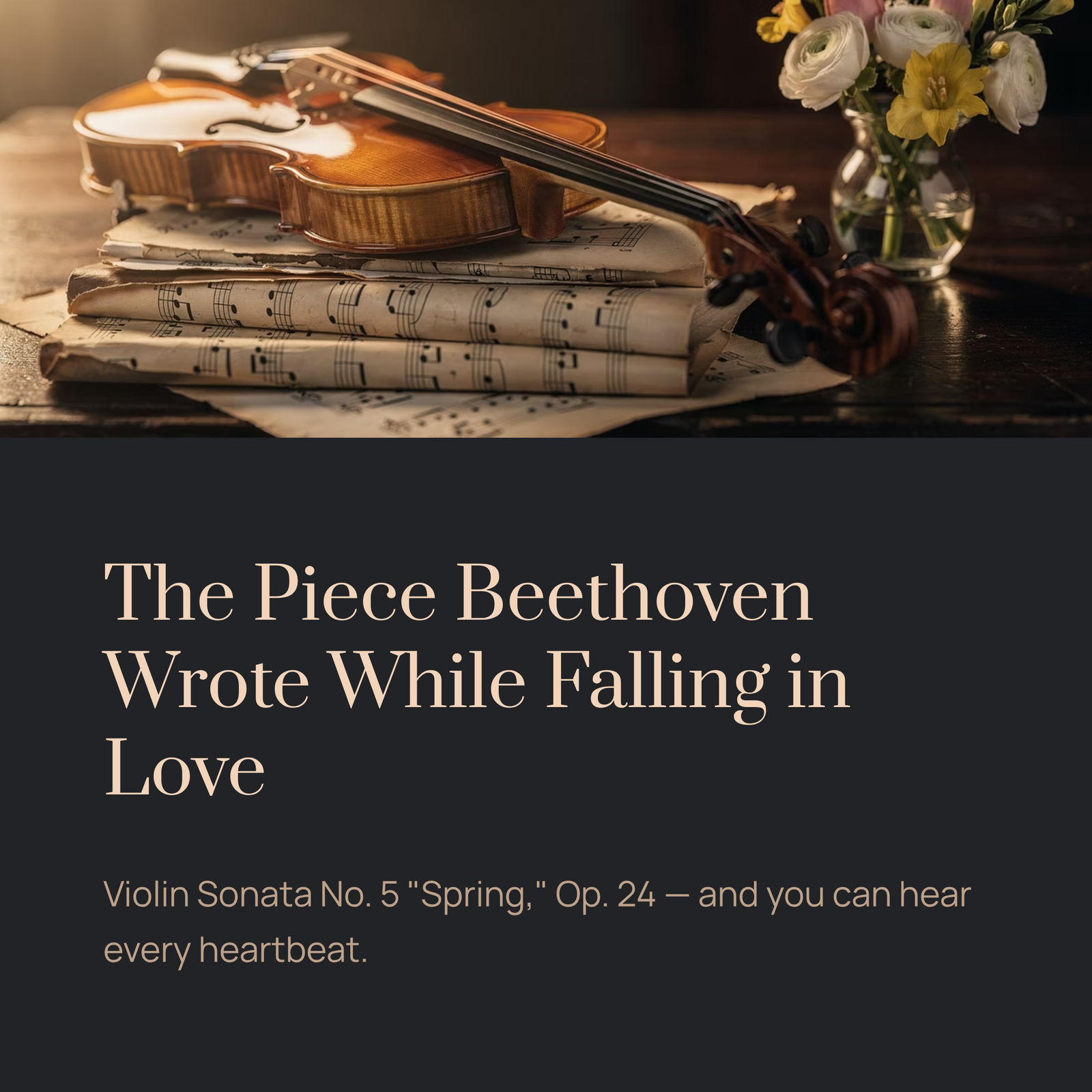
Discover Beethoven's Violin Sonata No.5 'Spring' Op.24, composed in 1801 during a rare season of hope. A beginner-friendly guide to hearing joy, tenderness, and sunlight in every phrase of the Allegro.
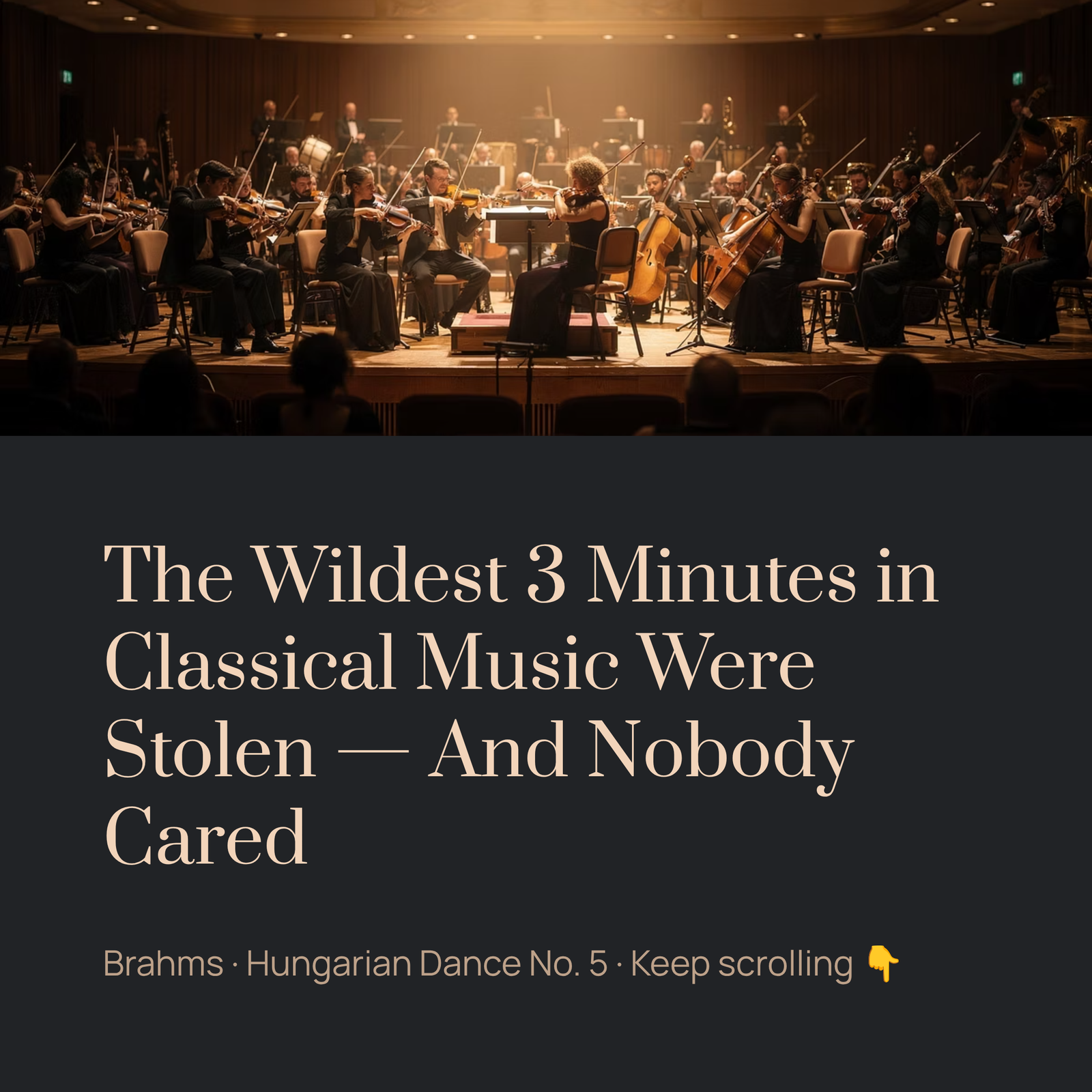
Brahms' Hungarian Dance No. 5 in G minor sparked a plagiarism scandal yet became one of the most recognized classical pieces ever. Discover the fiery Romani melodies, dramatic tempo shifts, and best recordings of this 1869 masterpiece.
Beethoven premiered his Symphony No.9 in 1824 completely deaf, yet created the most powerful choral symphony ever written. Discover the story behind 'Ode to Joy' and how to listen to every breathtaking detail.
Discover how Tchaikovsky composed the Waltz of the Flowers during one of his most turbulent years, turning personal grief into a swirling celebration of color and life. A beginner's guide to hearing every hidden layer.
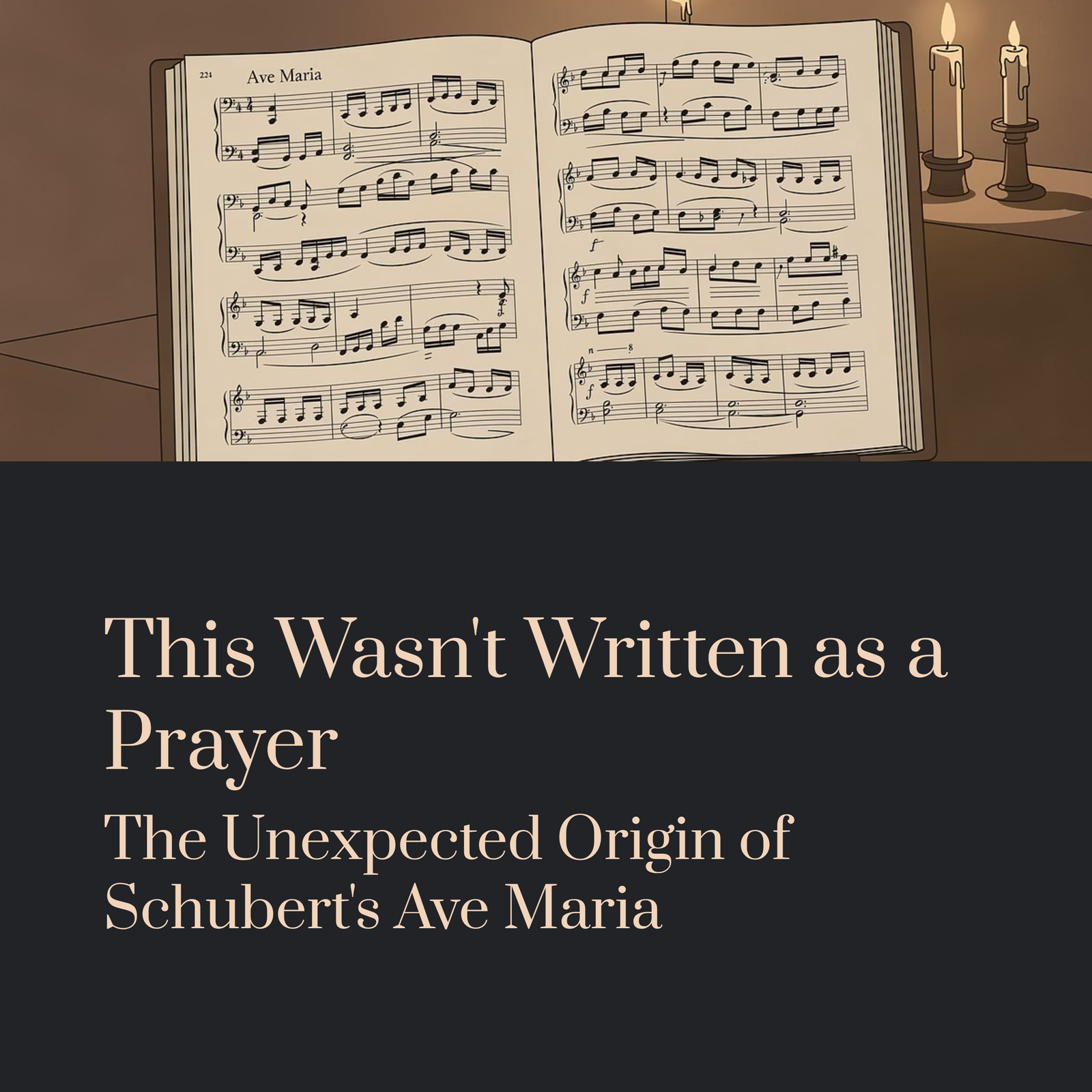
Schubert's Ave Maria (D.839) began as a scene from a Walter Scott poem, not a church hymn. Discover the surprising 1825 origin, emotional depth, and best recordings of this timeless melody.
How a waltz born from military defeat in 1867 became the unofficial anthem of Austria. Discover the surprising origins, hidden structure, and best recordings of Strauss II's Blue Danube.
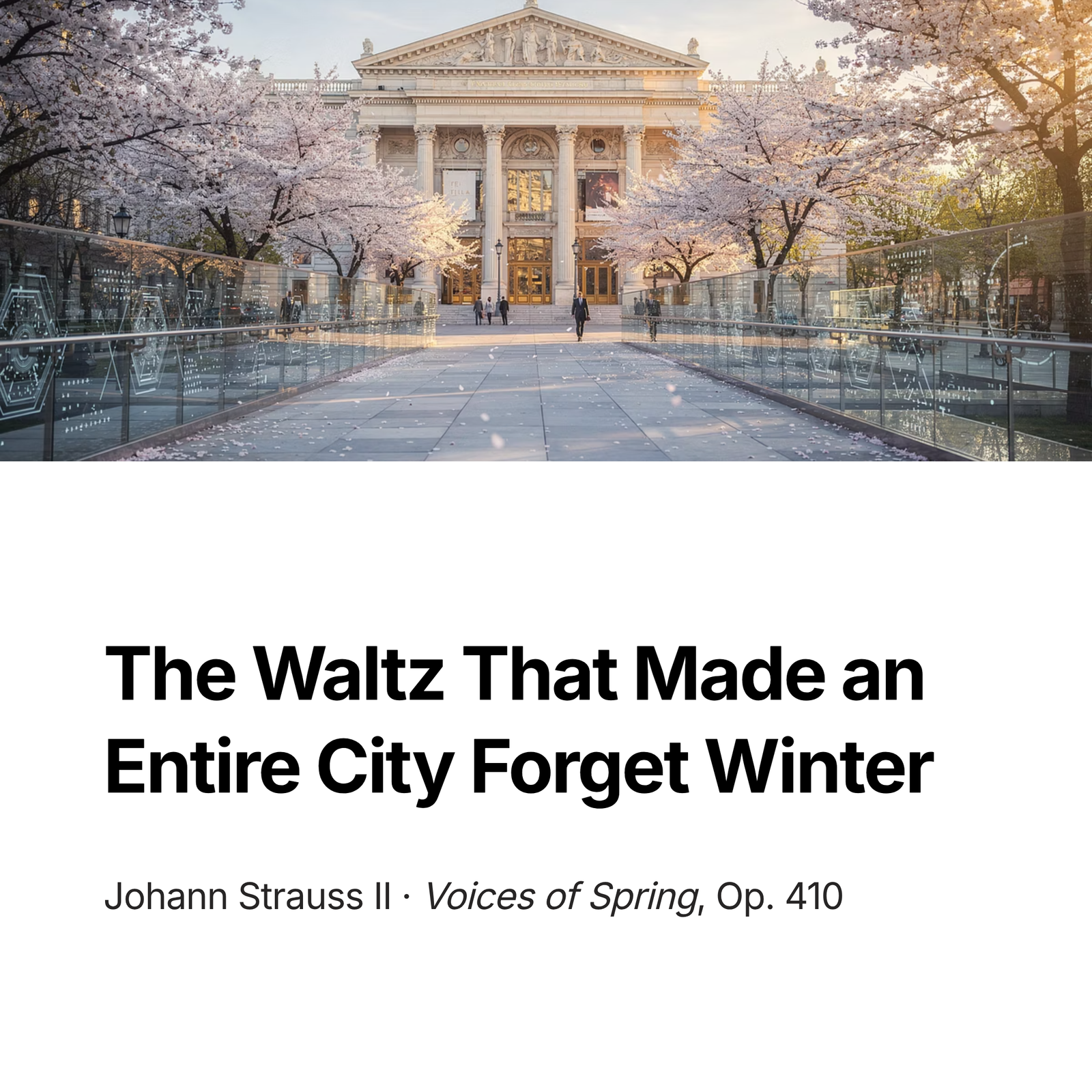
Discover how Johann Strauss II composed Voices of Spring in 1883 as a dazzling soprano showpiece that captured Vienna's joy of renewal. A listening guide with key moments, recommended performances, and the story behind this beloved waltz.