📑 Table of Contents
Picture this: a small, stubborn mermaid is dreaming of dry land, of legs and sunlight and a world above the waves. And then a crab—a crab, of all creatures—turns to her and basically says, “Are you out of your mind? Look around you.” What follows isn’t a lecture. It’s a party. The reef lights up, the fish form a band, and suddenly the entire ocean is dancing.
That’s the magic trick at the heart of “Under the Sea.” Even without the lyrics, even without Sebastian’s voice, the orchestral version carries that same irresistible pull. It’s the sound of being convinced that where you are, right now, might just be the most wonderful place in the world.
Who Is Alan Menken?
If you’ve ever cried during a Disney movie, there’s a good chance Alan Menken is partly to blame. Born in New York in 1949, Menken became the composer who, alongside lyricist Howard Ashman, essentially rescued Disney animation in the late 1980s and launched what fans now call the Disney Renaissance.
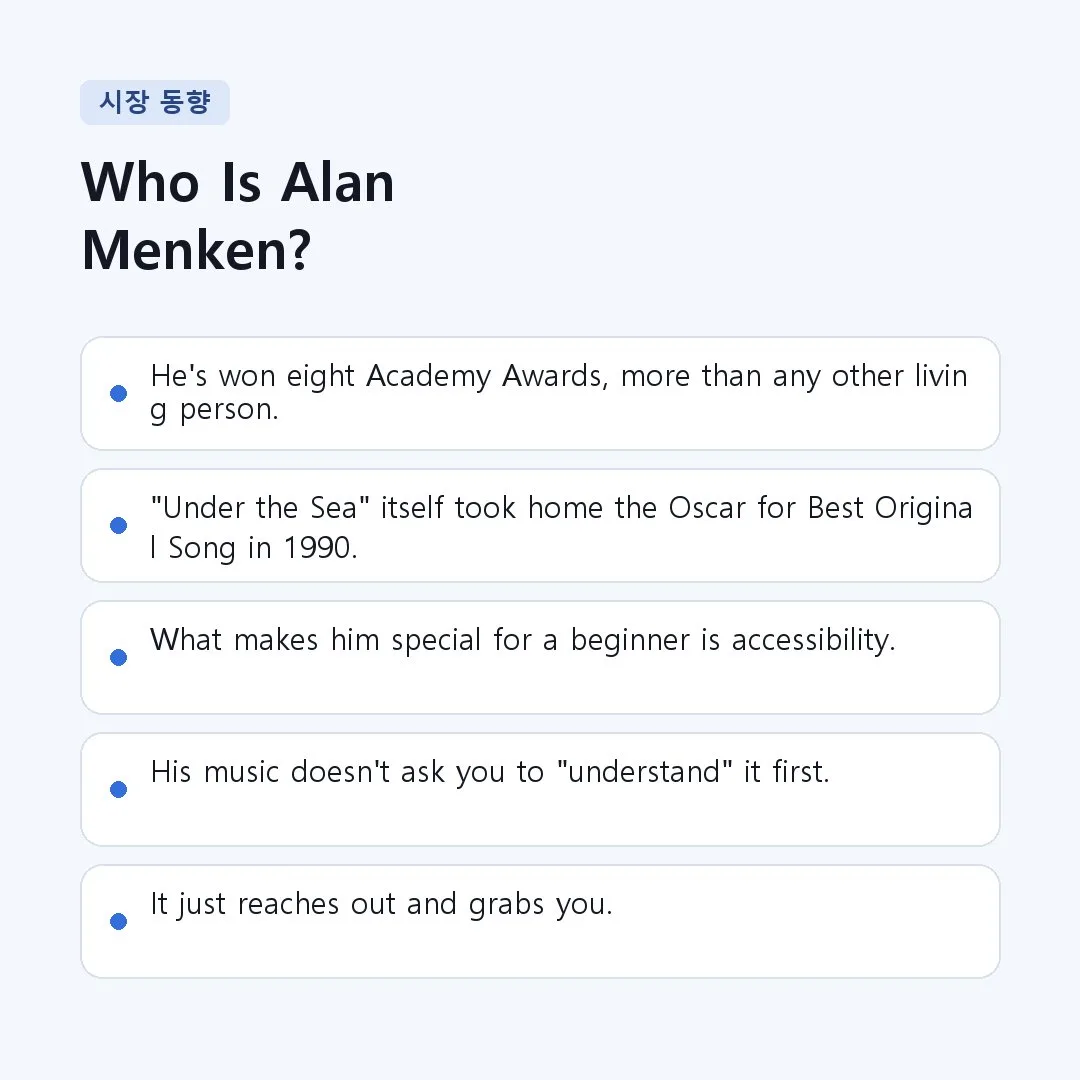
He’s not a “classical” composer in the textbook sense—he didn’t write symphonies for concert halls. But here’s the thing: the line between film music and classical music is blurrier than most people think. Menken writes for the orchestra, builds melodies with the craft of someone who studied the greats, and has the trophies to prove it. He’s won eight Academy Awards, more than any other living person. “Under the Sea” itself took home the Oscar for Best Original Song in 1990.
What makes him special for a beginner is accessibility. His music doesn’t ask you to “understand” it first. It just reaches out and grabs you.
The Story Behind the Song
“Under the Sea” was written for Disney’s The Little Mermaid (1989), the film that proved animated movies could once again be event cinema. Menken and Ashman built the song around a specific challenge: how do you make staying home sound more exciting than chasing your dreams?
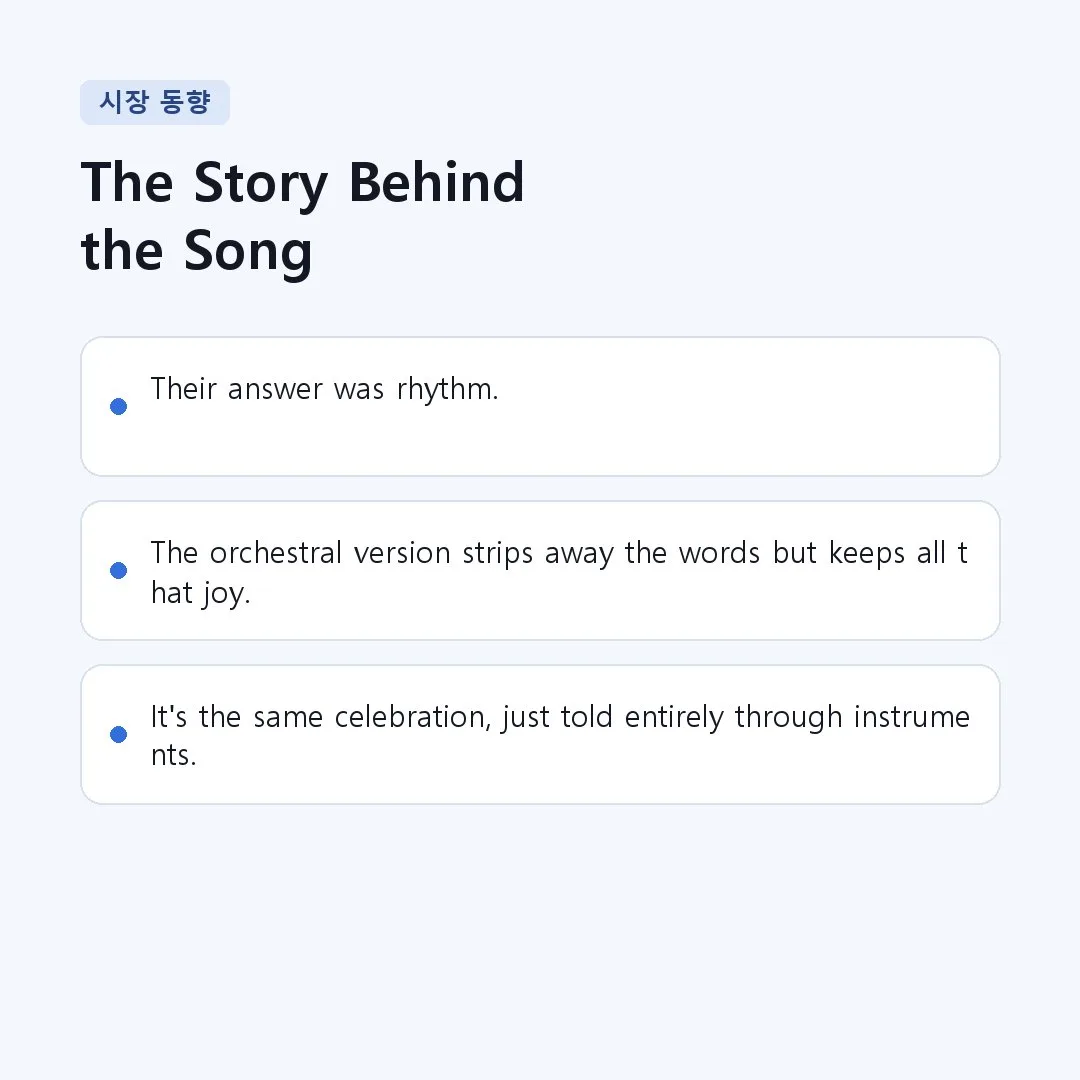
Their answer was rhythm. They reached for calypso—a bright, syncopated style born in the Caribbean, full of bouncing offbeats and steel-drum sparkle. It’s music designed for celebration, and it gives the song its sun-warmed, can’t-sit-still energy.
The orchestral version strips away the words but keeps all that joy. Without Sebastian narrating, the orchestra itself becomes the storyteller—the strings swirl like currents, the brass calls out like a fanfare from a coral palace, and the percussion keeps that calypso heartbeat alive. It’s the same celebration, just told entirely through instruments.
What to Listen For
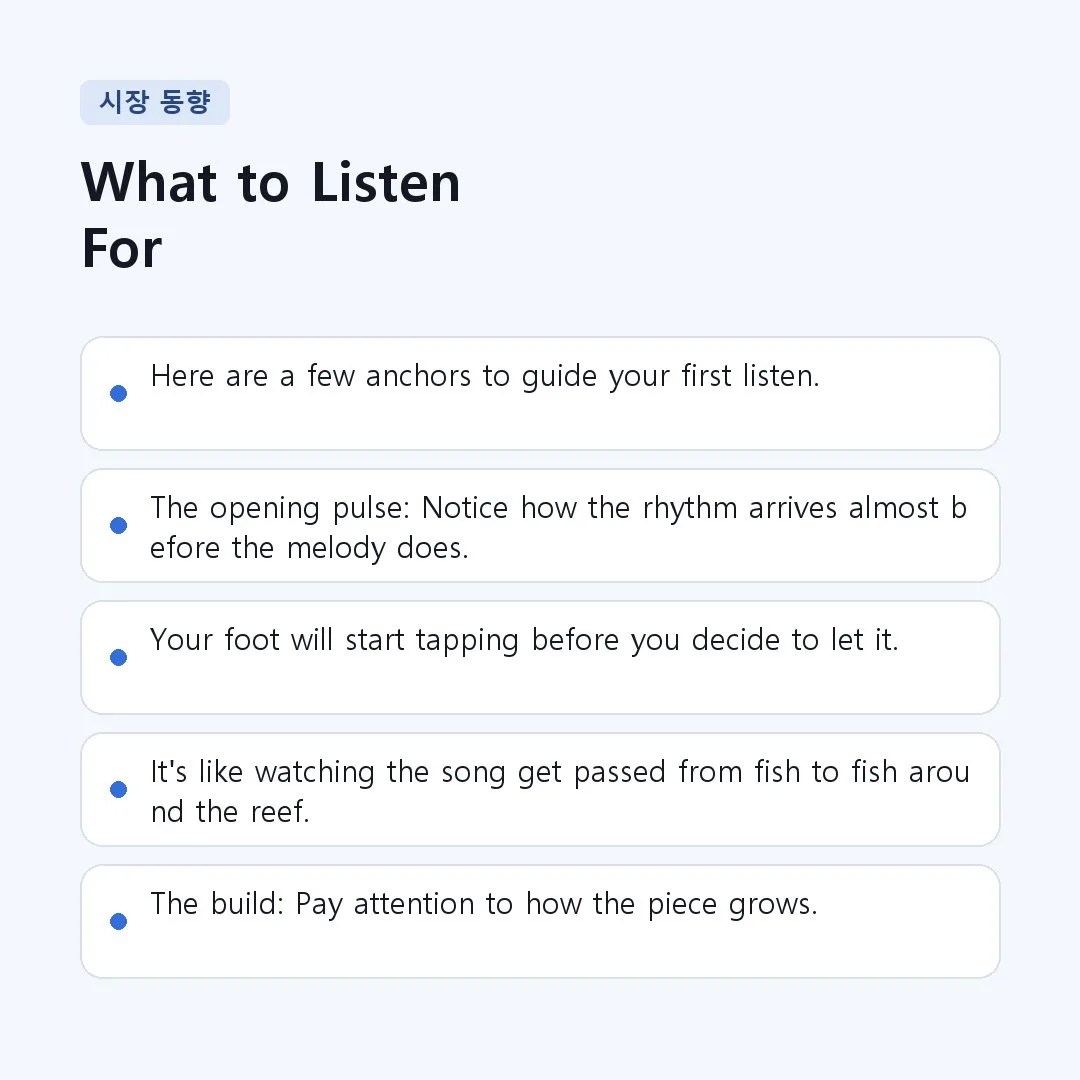
Here are a few anchors to guide your first listen.
The opening pulse: Notice how the rhythm arrives almost before the melody does. That gentle, swaying bounce is the calypso foundation—think of it as the ocean rocking you back and forth. Your foot will start tapping before you decide to let it.
The melody passed around: In the orchestral arrangement, the main tune doesn’t stay in one place. Listen for it traveling between sections—maybe a flute picks it up, then the strings, then the full brass. It’s like watching the song get passed from fish to fish around the reef.
The build: Pay attention to how the piece grows. It often starts playful and intimate, then layers in more and more instruments until the whole orchestra is in on the party. That swelling toward the big finish is the orchestral equivalent of the entire ocean joining the dance.
The little flourishes: Those quick, sparkling runs and bright xylophone-like sounds are the musical equivalent of bubbles and shimmer. Composers use these tiny details to paint pictures—here, they paint water and light.
Recordings Worth Your Time
If you want the original magic, start with the soundtrack version from The Little Mermaid (1989), with Menken’s own arrangement. It’s the definitive emotional reference point.
For a purely orchestral experience, look for recordings by major film-music orchestras—the London Symphony Orchestra and similar ensembles have recorded Disney and Menken collections that present these melodies in full concert color, ideal if you want to hear the craftsmanship without the vocals.
For something live and grand, search for performances from Disney concert tours or “Disney in Concert” programs, where a full orchestra plays the score in real time. Watching it performed live reveals just how much detail is packed into what sounds, on the surface, like a simple happy tune.
And if you simply want a relaxed listen, many streaming platforms offer instrumental Disney collections—perfect background music that’s secretly far more sophisticated than it lets on.
A Final Thought
There’s a quiet wisdom buried in “Under the Sea.” Beneath the bouncing rhythm and the sparkling orchestration, the song is making an argument we all need to hear sometimes: that contentment isn’t found by escaping to somewhere else, but by truly seeing where you already are.
Menken dressed that idea up in the most joyful music he could write, and that’s why it works. You don’t sit through “Under the Sea” feeling lectured. You finish it smiling, tapping your foot, and—just for a moment—convinced that the bottom of the ocean really might be the best seat in the house.