📑 Table of Contents
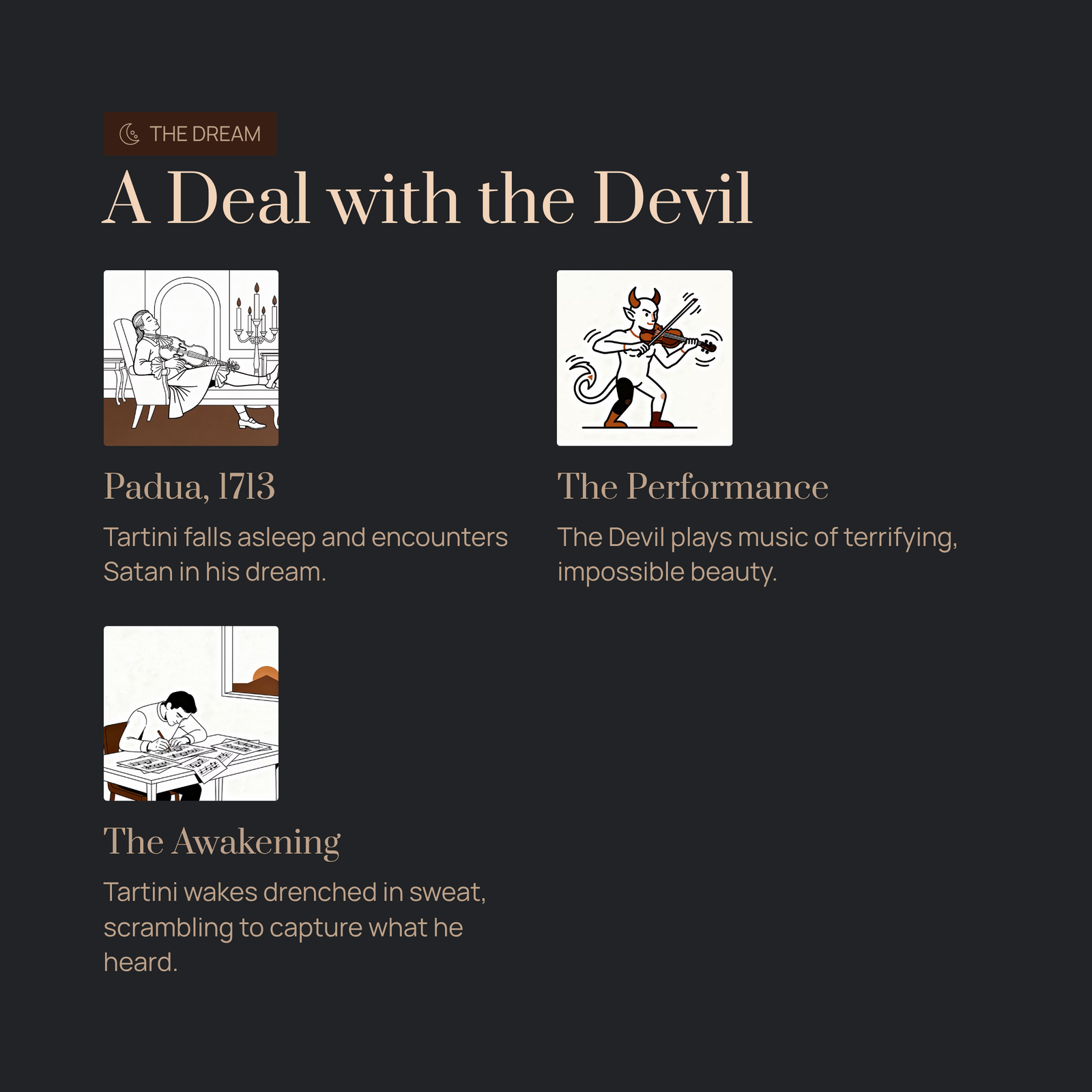
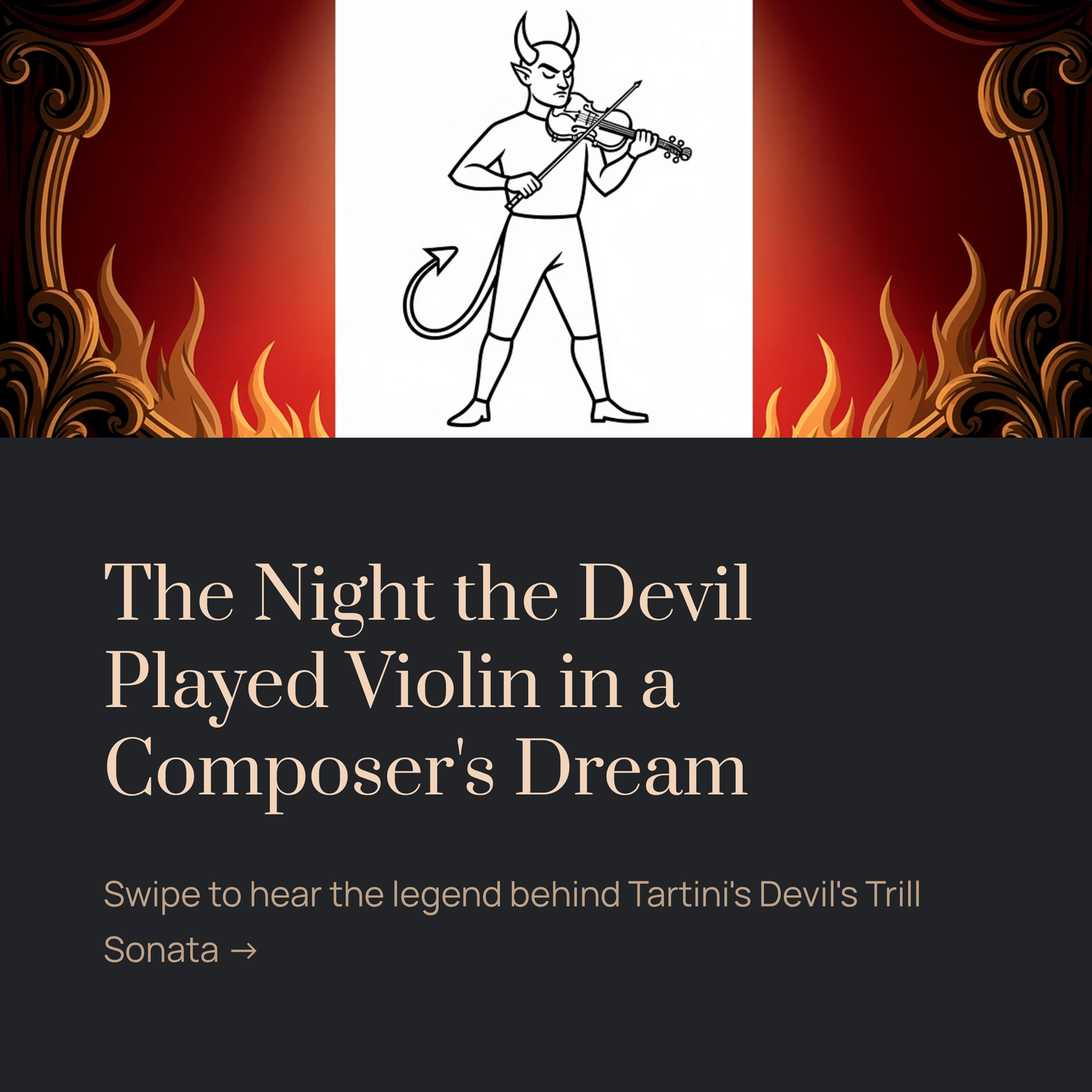
Picture this: it’s a warm night in Padua, 1713. A young violinist named Giuseppe Tartini falls asleep and finds himself face to face with the Devil. But Satan hasn’t come to steal his soul — he’s come to make a deal. Tartini hands him a violin, and what happens next is something no composer could have imagined. The Devil tucks the instrument under his chin and plays a piece of such terrifying beauty that Tartini wakes up drenched in sweat, heart pounding, scrambling to write down what he just heard.
That piece became the Violin Sonata in G minor, known to the world as the Devil’s Trill Sonata — one of the most legendary works in all of violin literature. And its third movement? That’s where the devil truly shows up.
Who Was Giuseppe Tartini?
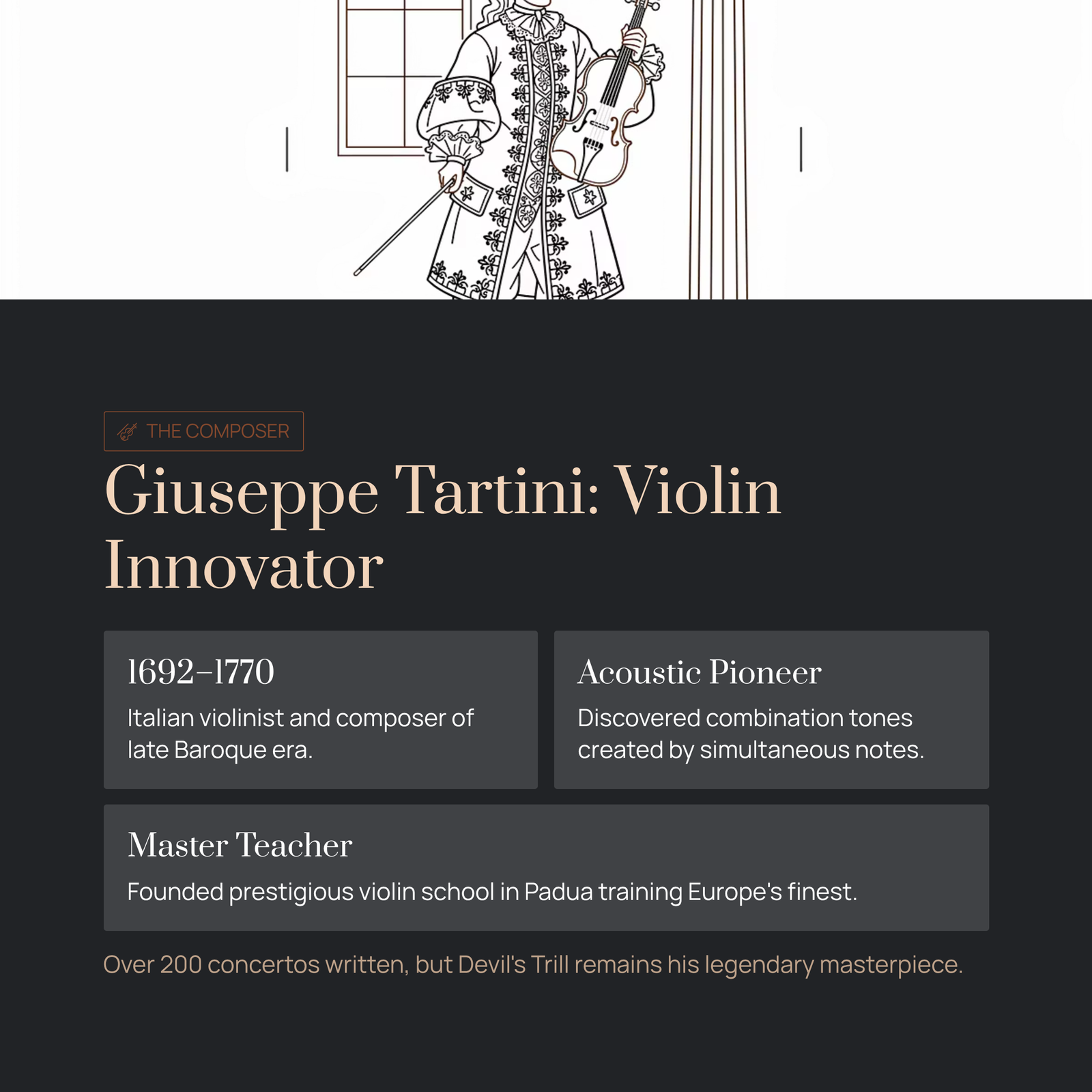
Giuseppe Tartini (1692–1770) was an Italian violinist and composer who lived during the late Baroque era. He wasn’t just a performer; he was a genuine innovator. He reportedly discovered the phenomenon of “combination tones” — acoustic illusions created when two notes are played simultaneously — and founded a prestigious violin school in Padua that trained some of the finest players in Europe.
But here’s the thing about Tartini that makes him so fascinating: he was obsessed with pushing the violin beyond its known limits. While many of his contemporaries were content writing elegant dance suites and pleasant sonatas, Tartini wanted the violin to scream, whisper, and everything in between. The Devil’s Trill Sonata is the ultimate expression of that ambition.
Despite producing over 200 violin concertos and numerous sonatas, the Devil’s Trill remains his calling card — the one piece that refuses to let the world forget his name.
The Third Movement: Where the Legend Lives
If the first two movements of the sonata build atmosphere — lyrical, brooding, and contemplative — the third movement is where Tartini pulls back the curtain and lets chaos loose.
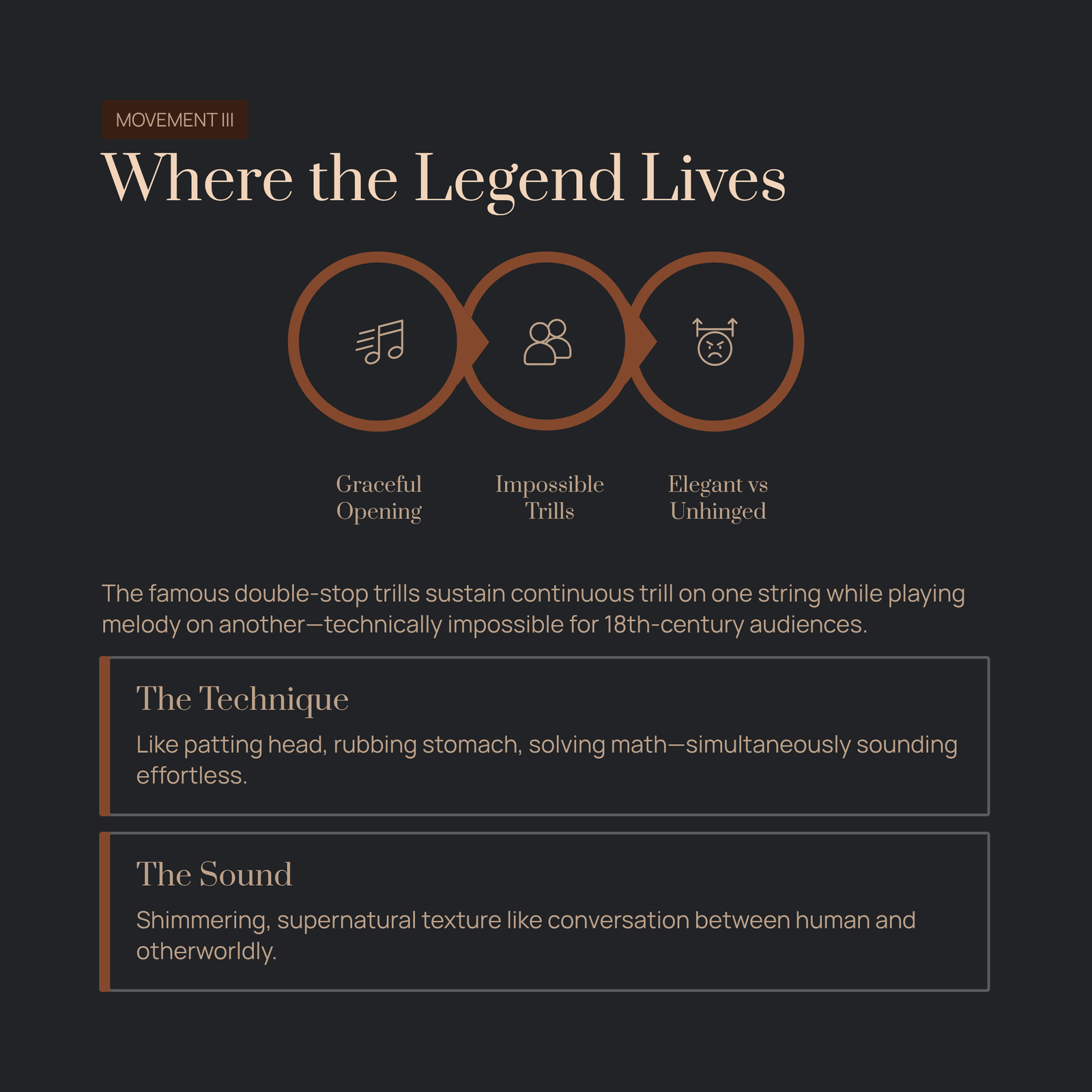
The movement opens with a deceptively graceful melody, almost like a courtly dance. But don’t be fooled. Within moments, the music spirals into a passage that must have sounded absolutely impossible to 18th-century audiences: the famous double-stop trills. This is the technique that gives the sonata its name. The violinist must sustain a continuous trill on one string while simultaneously playing a melody on an adjacent string. It’s like asking someone to pat their head, rub their stomach, and solve a math problem all at the same time — except it has to sound effortless and beautiful.
What makes this movement so gripping isn’t just the technical fireworks. There’s a constant tension between the elegant and the unhinged. One moment you hear a phrase that could accompany a Venetian sunset; the next, the violin seems to wrestle with itself, two voices fighting for control. It’s dramatic, theatrical, and oddly modern in its emotional range.
The trill passages — those diabolical trills — create a shimmering, almost supernatural texture. When played well, they don’t just sound like music. They sound like a conversation between two beings, one human and one decidedly not.
What Makes This Piece Emotionally Unforgettable
Tartini himself said something remarkable about the Devil’s Trill. He admitted that the version he wrote down was “so inferior to what I had heard” in his dream that he would have smashed his violin and abandoned music forever — if only he could have found any other way to possess the music he heard that night.
Let that sink in. The piece we hear today, the one that has challenged the greatest violinists for 300 years, is Tartini’s lesser version. His imperfect memory of a perfect dream.
And maybe that’s what makes the third movement so haunting. There’s something unfinished about it, something that reaches for a sound it can never quite grasp. The double-stop trills feel like they’re trying to capture two realities at once — the earthly and the otherworldly, the human and the demonic. That built-in impossibility is what keeps pulling listeners back.
For a piece written in the early 1700s, it also carries a surprisingly raw emotional honesty. Baroque music is often stereotyped as rigid and ornamental, but the Devil’s Trill throws that assumption out the window. It breathes, it rages, and in its quieter moments, it aches with a loneliness that feels startlingly personal.

How to Listen: A Practical Guide
If you’re hearing this piece for the first time, here are some ways to get the most out of it:
First listen — just feel it. Don’t worry about the history or the technique. Put on headphones, close your eyes, and let the music take you somewhere. Notice when your pulse quickens. Notice when you hold your breath. The third movement will find you — you don’t need to go looking for it.
Second listen — follow the two voices. Once you’re familiar with the melody, try to isolate the trill from the melodic line above it. These two threads weave in and out of each other like a conversation, and recognizing them separately will make the whole piece snap into focus.
Third listen — compare performers. This is where the real fun begins. Each violinist brings a radically different personality to the Devil’s Trill.
Here are some standout recordings to explore:
- Itzhak Perlman — Polished, luminous, and technically flawless. His version emphasizes the beauty within the diabolical.
- Viktoria Mullova — A more historically informed performance that strips away Romantic-era additions, letting Tartini’s original architecture speak for itself.
- Jascha Heifetz — Fierce intensity and unmatched precision. Heifetz plays as if the Devil is still watching over his shoulder.
- Anne-Sophie Mutter — Rich and deeply expressive, her interpretation leans into the emotional narrative of the piece.
One important note: many recordings of the Devil’s Trill use a version arranged by Fritz Kreisler, which adds piano accompaniment and some Romantic embellishments. If you want to hear something closer to Tartini’s original intent, look for performances with basso continuo (typically harpsichord and cello).

The Dream That Never Ends
Three hundred years later, Tartini’s midnight encounter with the Devil continues to haunt concert halls and practice rooms around the world. The third movement of the Devil’s Trill Sonata isn’t just a technical showpiece — it’s a threshold between the possible and the impossible, between what a human hand can do and what only a dream can conjure.
Every violinist who takes on this piece is, in some way, re-entering Tartini’s dream. And every listener who surrenders to those impossible trills is stepping briefly into a room where the ordinary rules of music no longer apply.
You don’t need to believe in the Devil to feel the presence of something extraordinary in this music. You just need to press play and listen — really listen — to what the darkness sounds like when it picks up a violin.