📑 Table of Contents
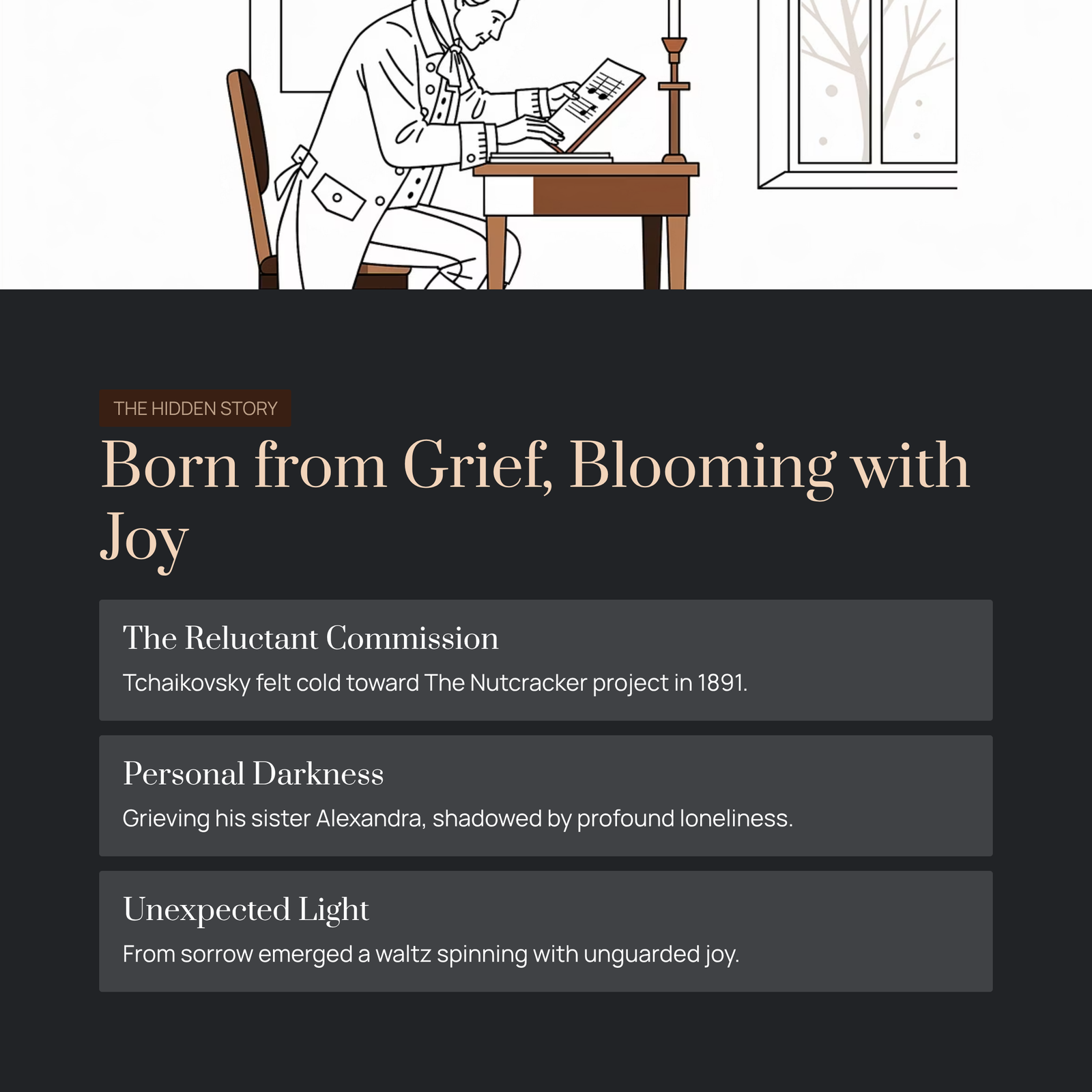
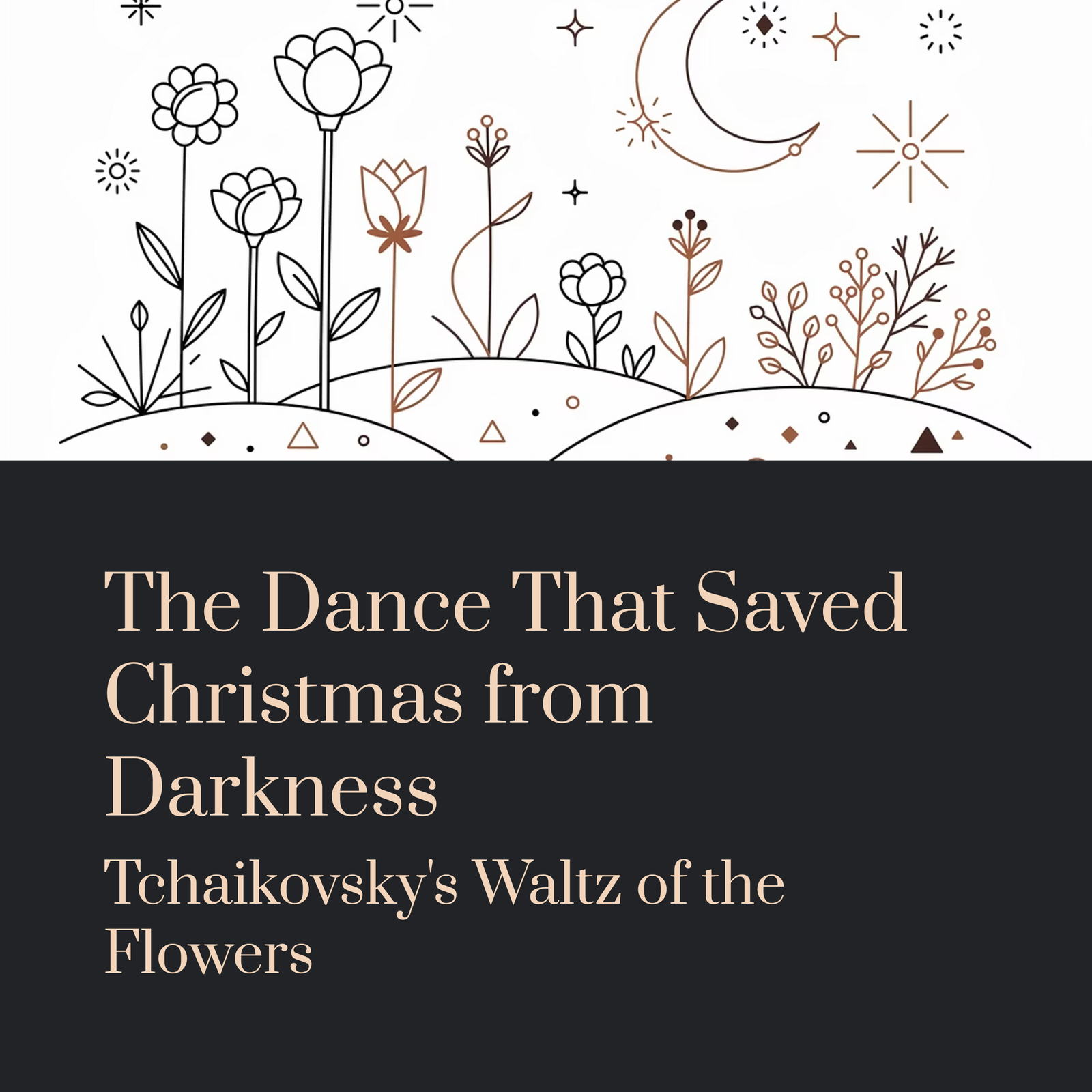
Here’s something most people don’t know about the Waltz of the Flowers: Tchaikovsky almost didn’t write it.
When he received the commission for The Nutcracker ballet in 1891, he confided in letters that the project left him cold. The fairy-tale libretto felt lightweight. The pressure from the Imperial Theatre felt suffocating. And privately, Tchaikovsky was grieving — his beloved sister Alexandra had recently died, and the composer was grappling with a loneliness that shadowed nearly everything he touched.
Yet somewhere inside that grief, he found this waltz. Not a sad one. Not a brooding one. A waltz that spins with such unguarded joy that it feels like sunlight breaking through a frozen window. And that contradiction — beauty born from sorrow — is precisely what makes this piece so extraordinary.
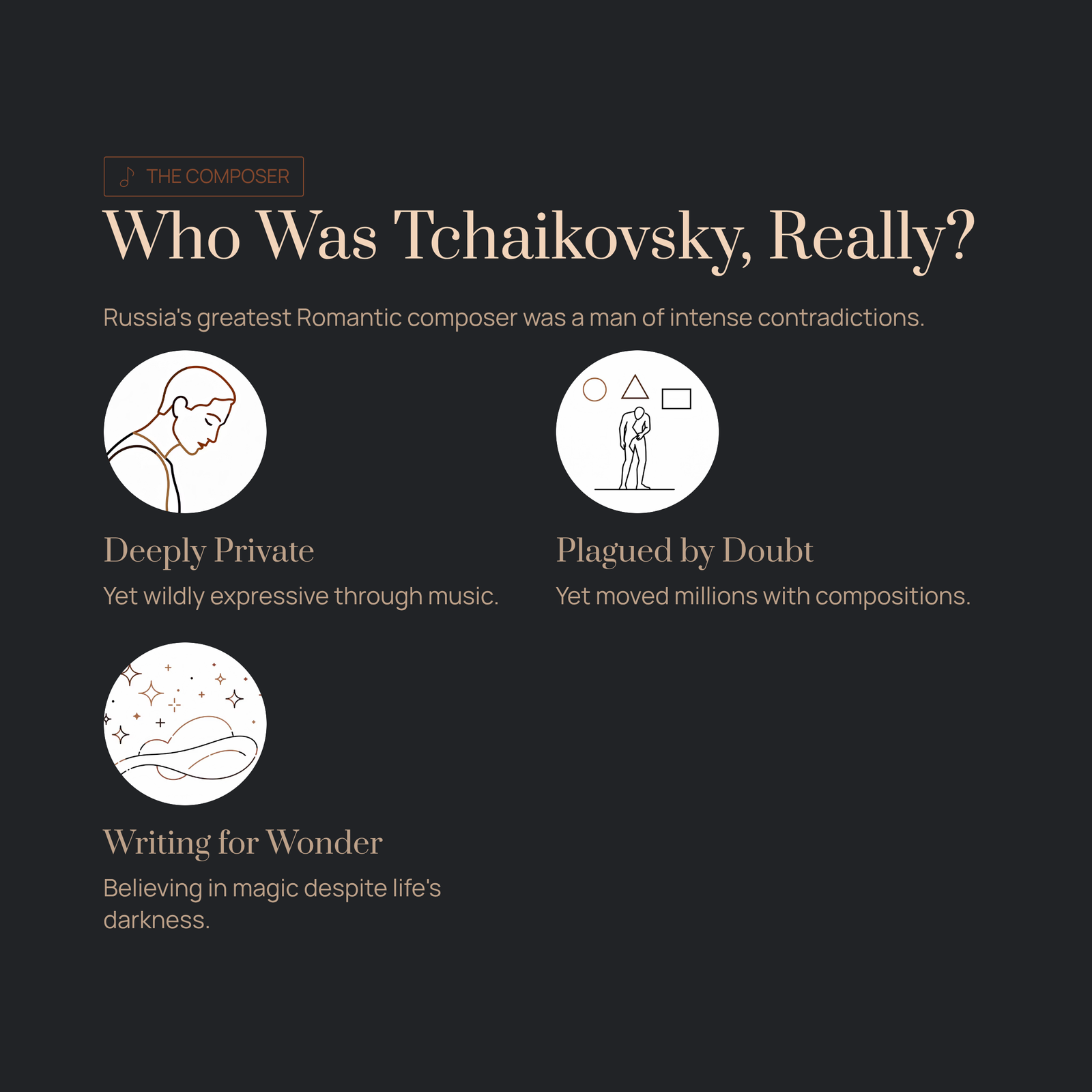
Who Was Tchaikovsky, Really?
Pyotr Ilyich Tchaikovsky (1840–1893) is often introduced as “Russia’s greatest Romantic composer,” but that label barely scratches the surface. He was a man of intense contradictions: deeply private yet wildly expressive, plagued by self-doubt yet capable of composing music that moved millions.
His catalog reads like an emotional autobiography. Swan Lake channels longing. The Pathétique Symphony wrestles with despair. The 1812 Overture erupts with triumph. But The Nutcracker occupies a different space entirely — it’s Tchaikovsky writing for children, for wonder, for the part of the human spirit that still believes in magic even when life has given every reason not to.
Among all the numbers in the ballet, the Waltz of the Flowers stands as perhaps the most generous moment. It asks nothing of the listener except to be swept away.
The Story Behind the Scene
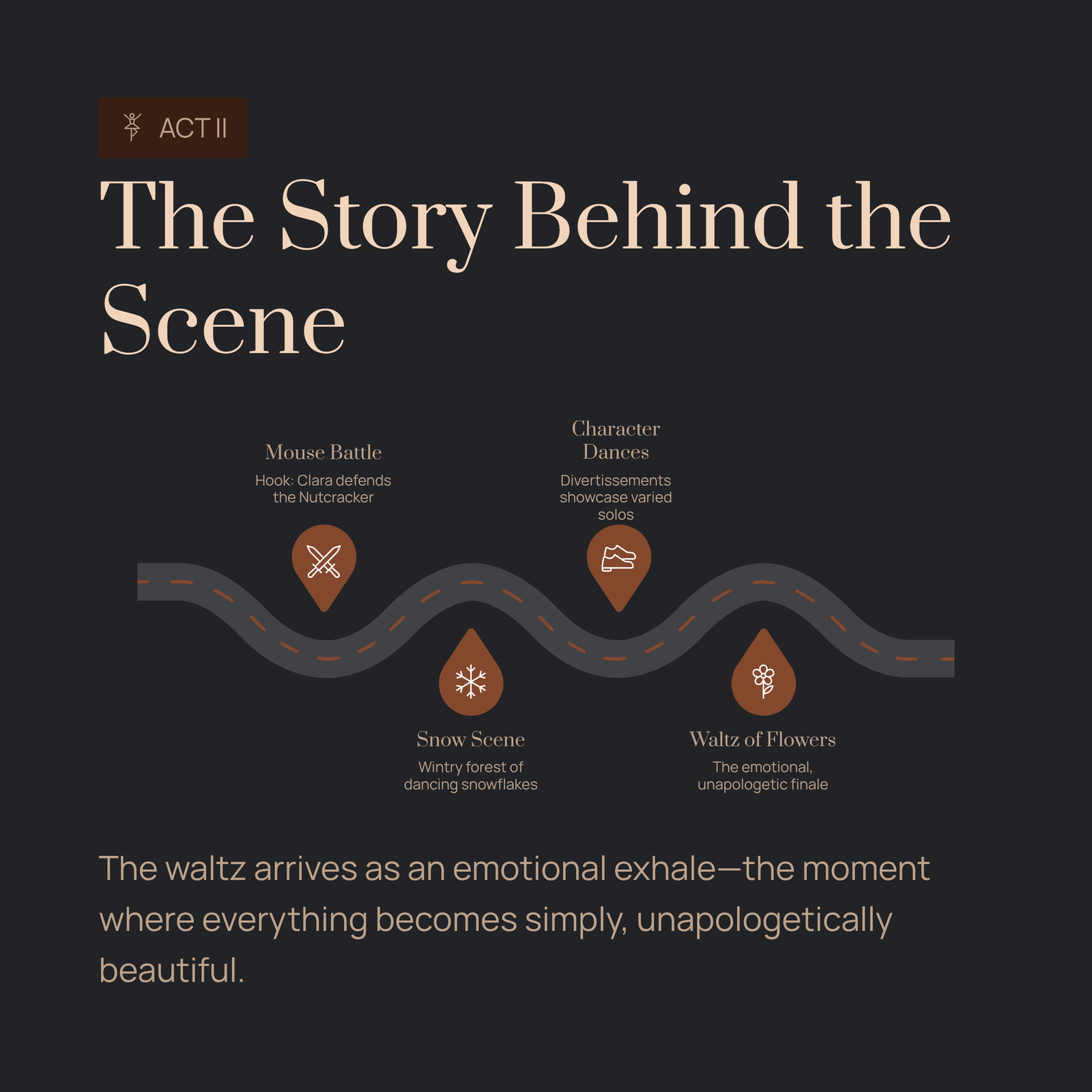
In the ballet’s narrative, the Waltz of the Flowers arrives in Act II, after Clara has journeyed through the Land of Sweets. The Sugar Plum Fairy has welcomed her, a parade of international dances has unfolded — Spanish chocolate, Arabian coffee, Chinese tea — and then the stage fills with flowers.
But forget the plot for a moment. What matters musically is the feeling of arrival. By the time this waltz begins, the audience has traveled through darkness (the battle with the Mouse King), through wonder (the snowflake scene), and through spectacle (the character dances). The Waltz of the Flowers is the emotional exhale — the moment where everything is simply, unapologetically beautiful.
Tchaikovsky knew exactly what he was doing. He placed this waltz as a kind of emotional summit, the point where the entire ballet takes a breath and says: stay here. Rest. Let the music hold you.
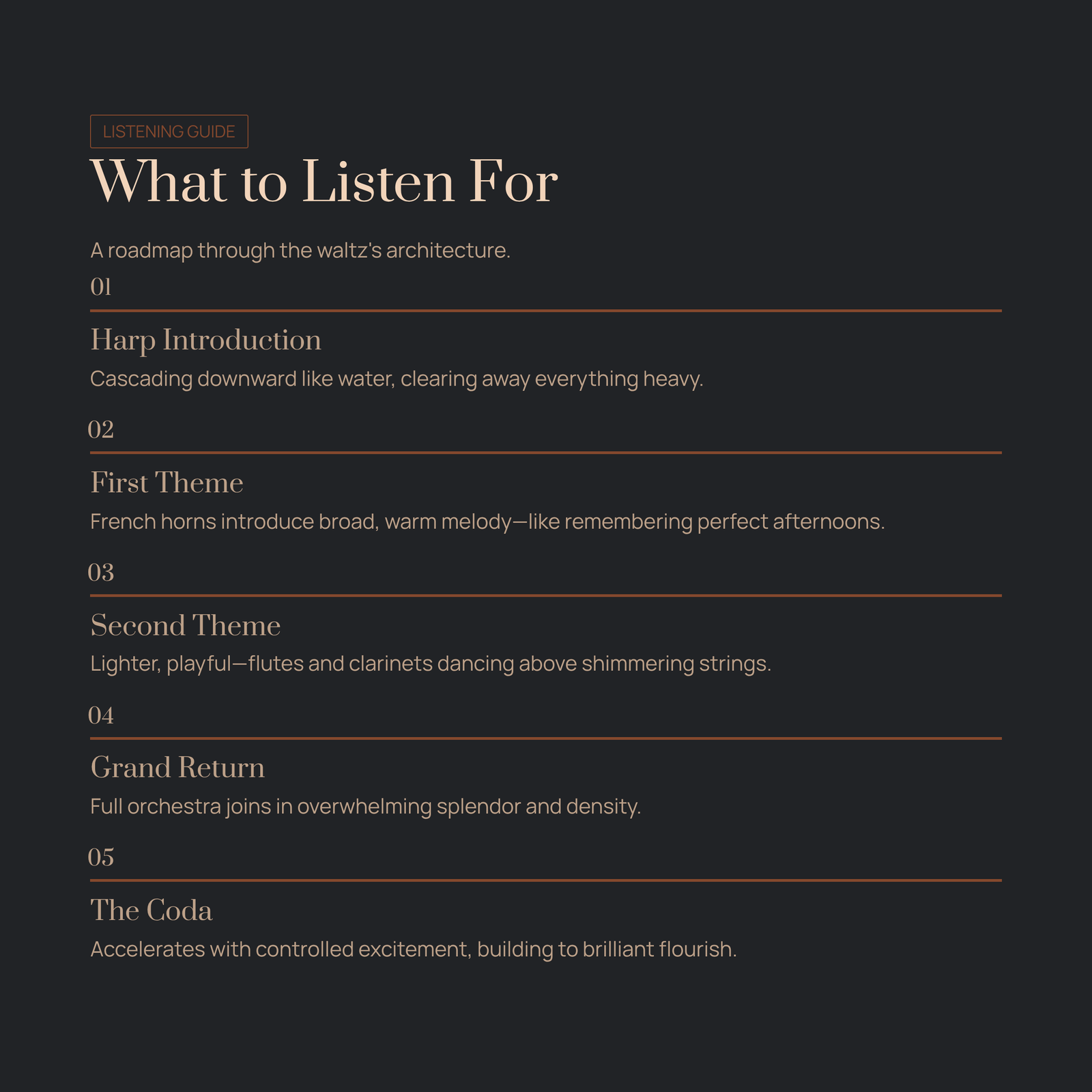
What to Listen For: A Roadmap Through the Waltz
Even if you’ve never studied a note of music theory, this waltz reveals its secrets generously. Here’s how to hear its architecture on your very first listen.
The Harp Introduction — The piece opens with a cadenza for solo harp, cascading downward like water over stone. This wasn’t just an artistic choice; Tchaikovsky had recently discovered the celesta (a keyboard instrument with a shimmering, bell-like tone) and was fascinated by delicate timbres. The harp solo sets the stage by clearing away everything heavy. It’s a musical cleansing, an invitation to enter a lighter world.
The First Theme (Horns) — After the harp, the French horns introduce the main waltz melody. It’s broad, warm, and slightly nostalgic — like remembering a perfect afternoon that you know can’t last. Notice how the melody rises and falls in long, graceful arcs. Tchaikovsky doesn’t rush. He lets each phrase breathe, the way a dancer lets each movement settle before flowing into the next.
The Second Theme (Strings and Woodwinds) — About a third of the way through, a new melody emerges — lighter, more playful, carried by flutes and clarinets dancing above shimmering strings. If the first theme is the garden itself, this second theme is the butterflies within it. Listen for the way Tchaikovsky passes the melody between instruments like a conversation between old friends.
The Grand Return — After exploring several variations, the original waltz theme returns in full orchestral splendor. The entire orchestra joins in, and the effect is overwhelming — not through volume alone, but through the sheer density of voices all singing the same song. It’s the musical equivalent of a room full of people suddenly laughing at the same time.
The Coda — The final moments accelerate with controlled excitement, building to a finish that feels both inevitable and exhilarating. Tchaikovsky doesn’t let the energy dissipate; he gathers it all and releases it in one brilliant flourish.
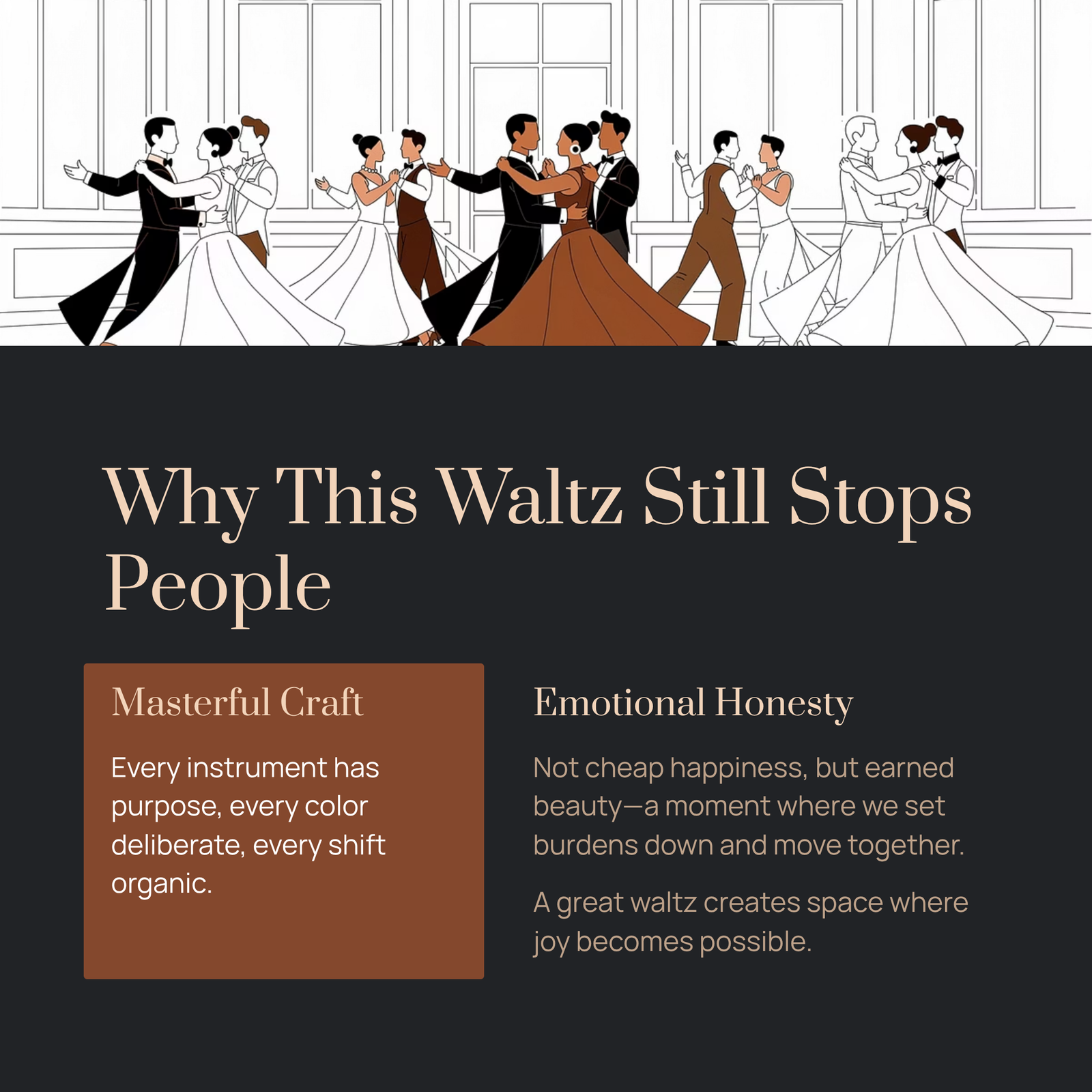
Why This Waltz Still Stops People in Their Tracks
There are thousands of waltzes in the classical repertoire. So why does this one endure?
Part of the answer is craft. Tchaikovsky’s orchestration is masterful — every instrument has a role, every color is deliberate, every dynamic shift feels organic rather than imposed. He had an almost supernatural gift for making an orchestra sound like it was breathing.
But the deeper answer, I think, is emotional honesty. This waltz doesn’t pretend that life is simple. It doesn’t offer cheap happiness. Instead, it offers something rarer: a moment of pure, earned beauty — the kind that exists not because the world is perfect, but because, for three and a half minutes, we collectively agree to set our burdens down and move together in time.
That’s what a great waltz does. It doesn’t argue for joy. It simply creates the space where joy becomes possible.
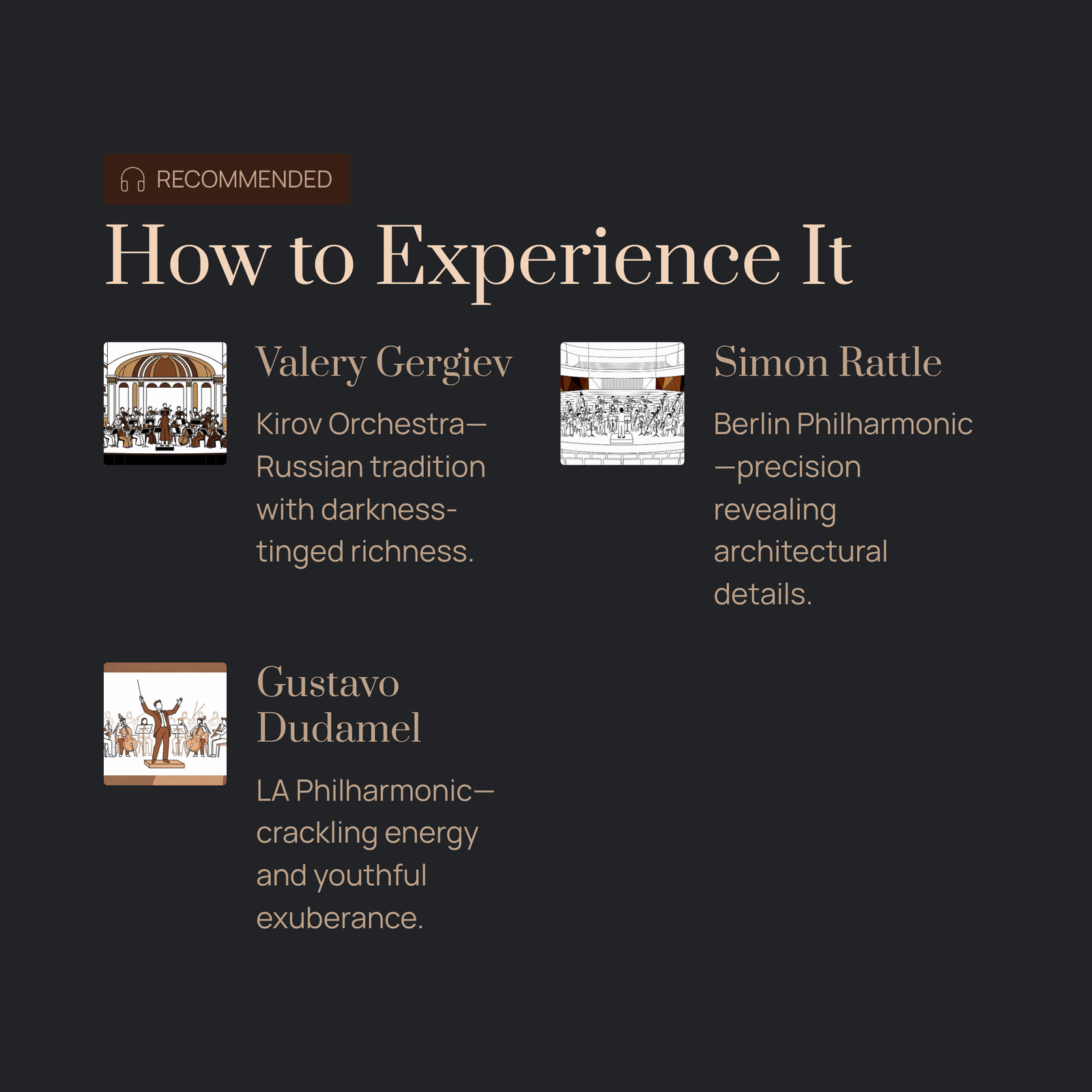
How to Experience It: Recommended Recordings
If you’re hearing this piece for the first time, here are three recordings that each reveal a different dimension:
Valery Gergiev with the Kirov Orchestra — This is the Waltz of the Flowers in its natural habitat: a Russian orchestra playing with the weight and warmth of tradition. Gergiev lets the tempos breathe and the strings sing with a darkness-tinged richness that reminds you this is Tchaikovsky, not a greeting card.
Sir Simon Rattle with the Berlin Philharmonic — Rattle brings precision and transparency. You’ll hear inner voices and instrumental details that other recordings blur. If you want to understand the architecture of the piece, start here.
Gustavo Dudamel with the LA Philharmonic — Dudamel’s version crackles with energy and youthful exuberance. It’s the recording most likely to make you want to stand up from your chair and move.
For a visual experience, seek out the Bolshoi Ballet’s production — watching actual dancers interpret this music adds a dimension that audio alone cannot capture.
A Final Thought
There’s a reason the Waltz of the Flowers keeps appearing in places far removed from ballet stages — in coffee shops, in film soundtracks, in the background of winter evenings when someone simply wants to feel something gentle.
Tchaikovsky wrote it during a season of personal winter. He poured into it something he desperately needed and couldn’t find in his own life: the feeling that the world, despite everything, could still bloom.
Every time you press play, you’re accepting that invitation. You’re stepping into a garden that a lonely, brilliant man planted over a century ago — and finding, remarkably, that the flowers are still alive.