📑 Table of Contents
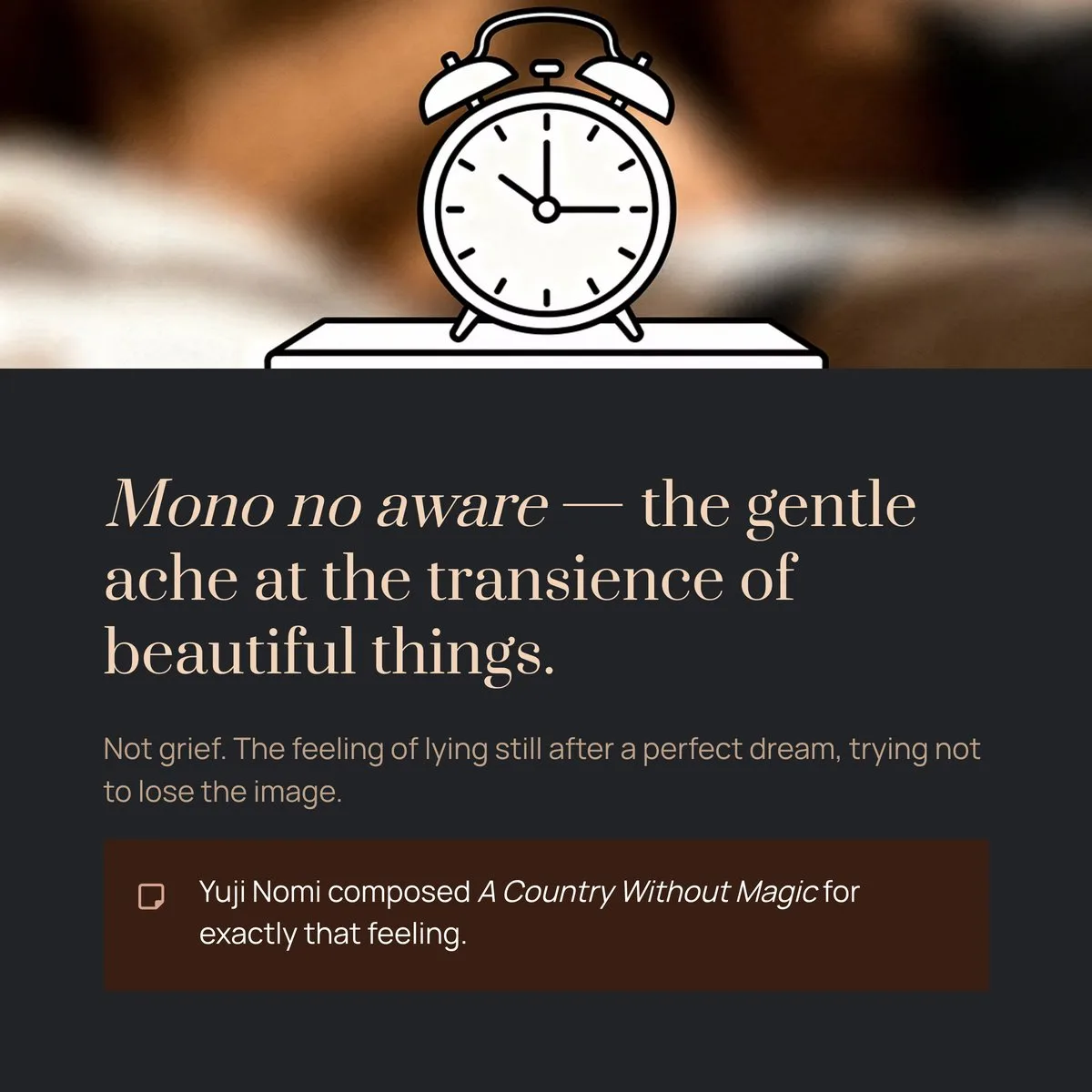
There is a particular kind of sadness that has no clean name in English. The Japanese call it mono no aware — a gentle ache at the transience of beautiful things. It’s not grief, exactly. It’s the feeling you get at the end of a perfect dream, when the alarm clock pulls you back and you lie still for a moment, trying not to lose the image before it fades.
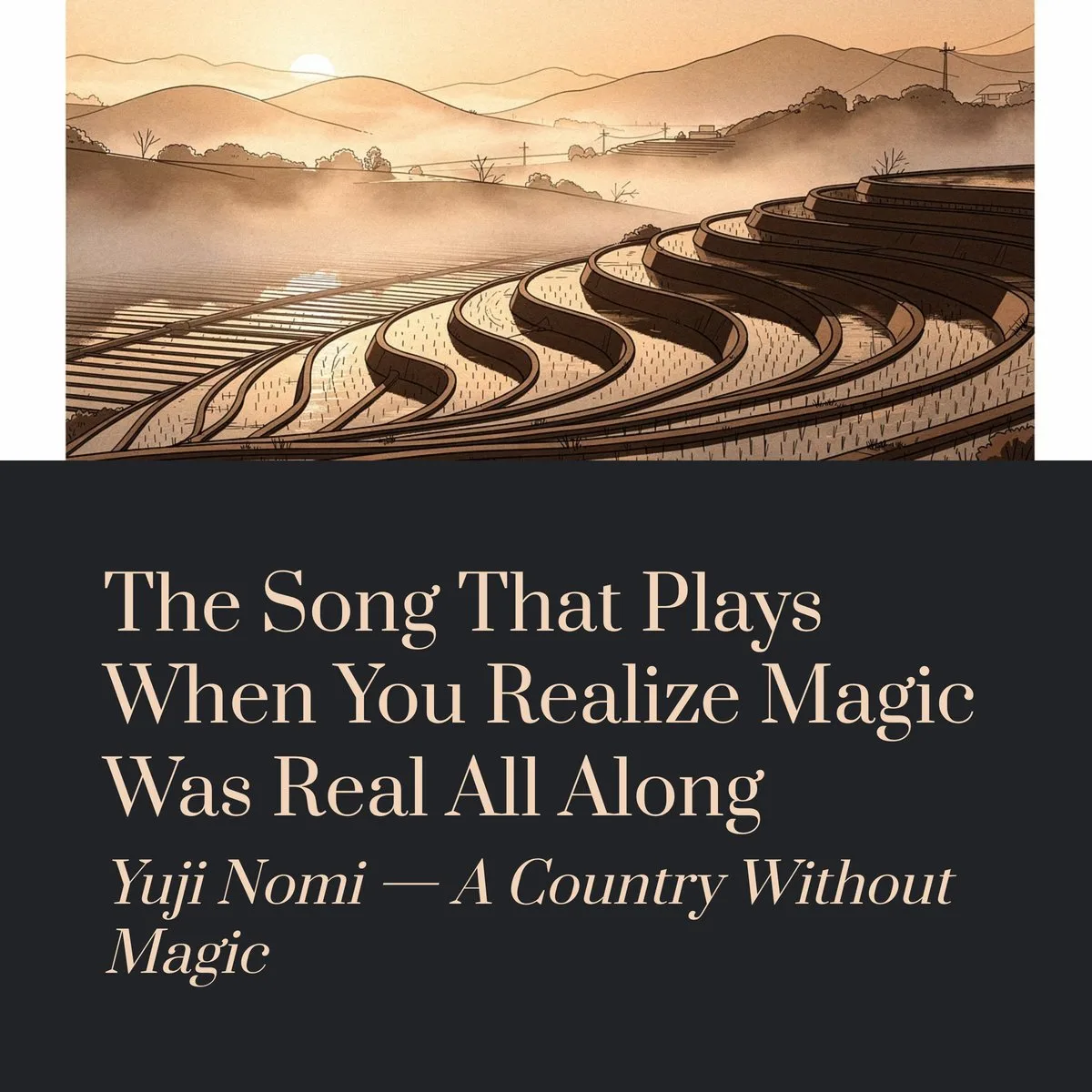
Yuji Nomi composed A Country Without Magic for that exact feeling.
Who Is Yuji Nomi? A Composer Who Speaks in Whispers
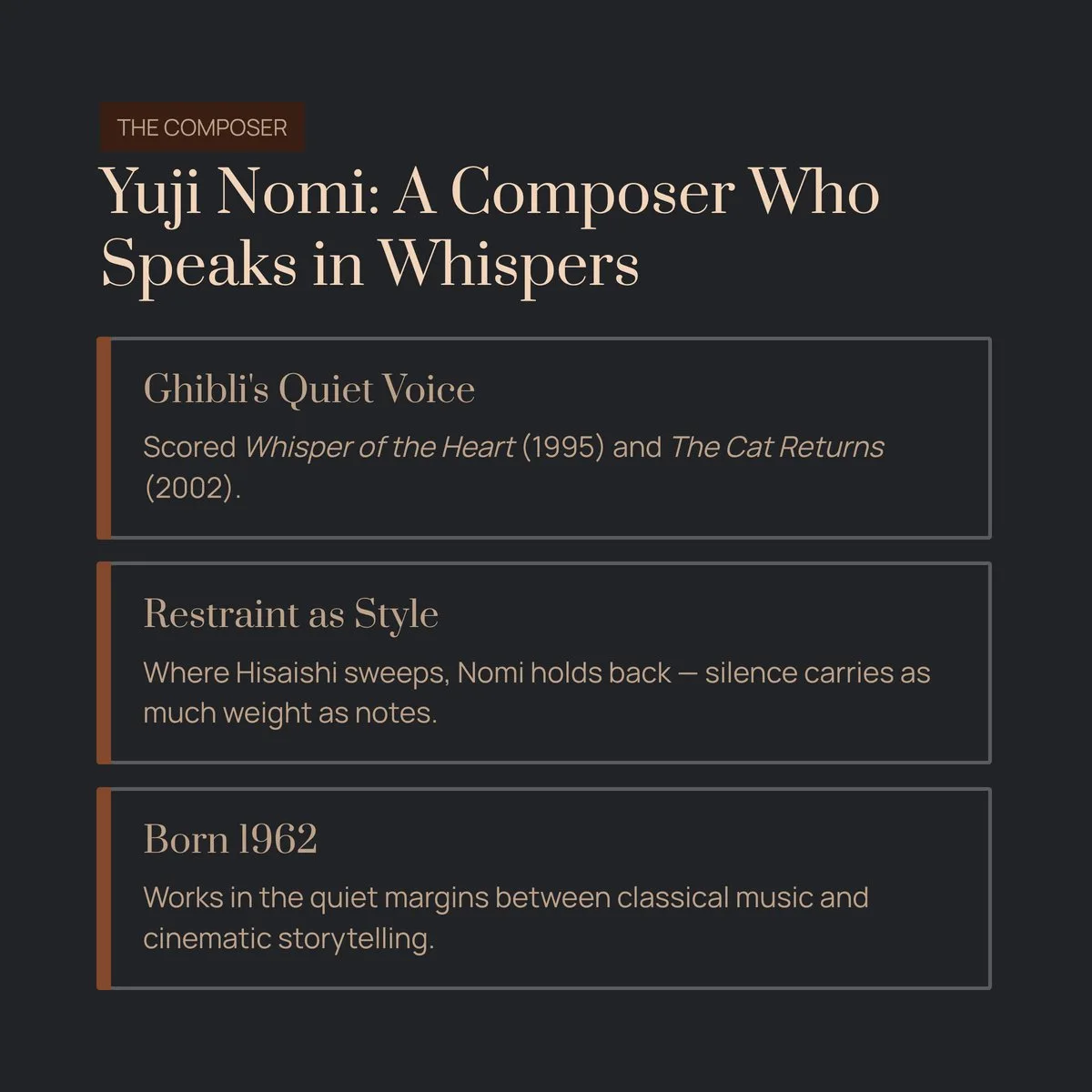
If you’ve spent any time in the world of Studio Ghibli, you’ve already heard Yuji Nomi — you just may not have known his name. Born in 1962, Nomi is a Japanese composer and arranger who works in the quiet margins between classical music and cinematic storytelling. He isn’t as widely celebrated as Joe Hisaishi, Ghibli’s most famous musical collaborator, but those who know his work tend to hold it with a particular tenderness.
Nomi’s most recognized scores come from two Ghibli films: Whisper of the Heart (1995) and The Cat Returns (2002). Both films share a thematic DNA — they’re about young women on the edge of becoming who they’re meant to be, caught between the ordinary world and something more. Nomi’s music doesn’t announce this tension. It inhabits it.
His style is characterized by restraint. Where Hisaishi often reaches for sweeping orchestral crescendos, Nomi tends to hold back, to leave space, to let the silence between notes carry as much weight as the notes themselves. It is the musical equivalent of someone speaking softly in a loud room — you lean in, and suddenly you’re hearing something private.
The Cat Returns: A World Built on Borrowed Magic
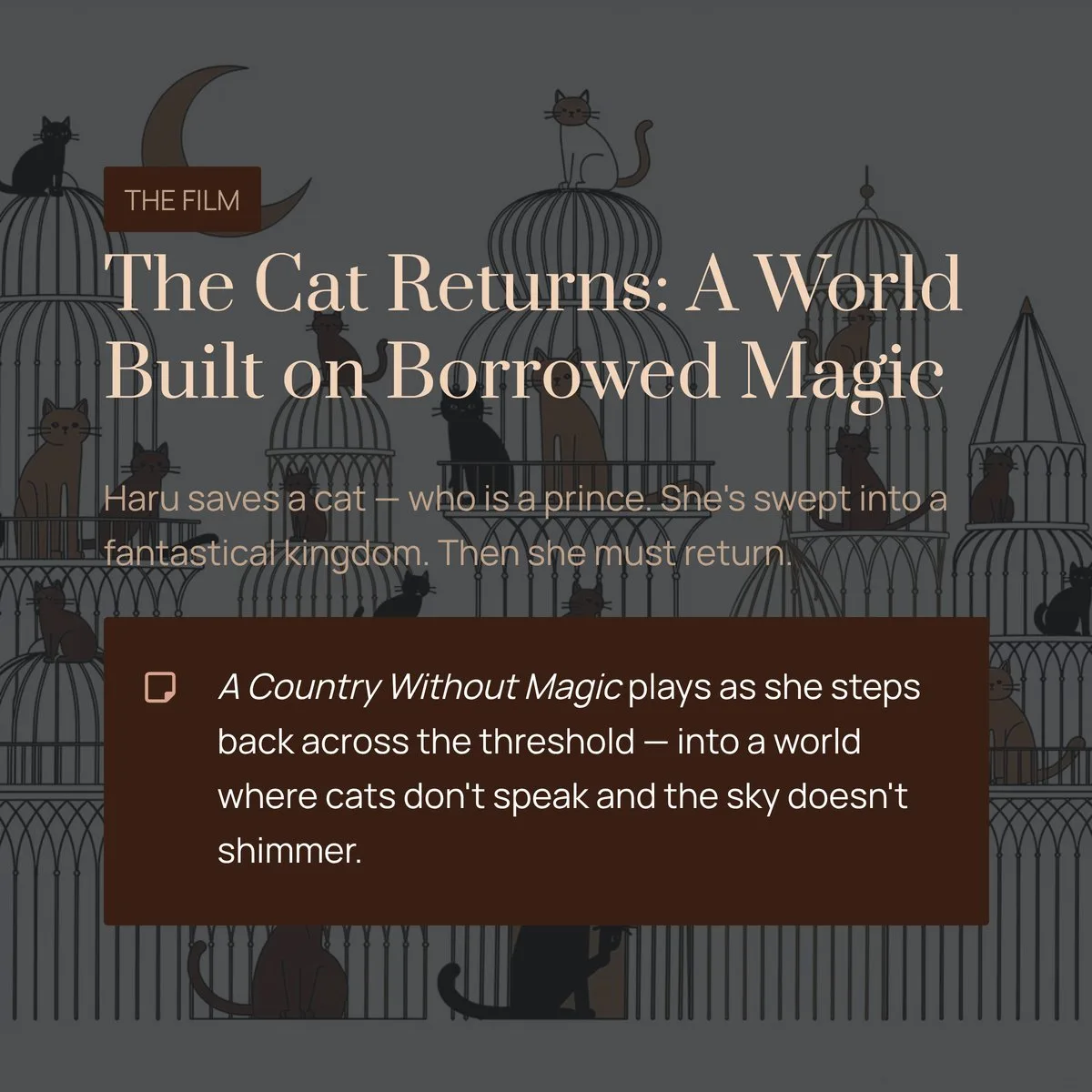
The Cat Returns (猫の恩返し) is, on the surface, a whimsical adventure. Haru, a clumsy and good-natured high school student, saves a cat from being hit by a truck — and the cat turns out to be the prince of the Cat Kingdom. She is whisked away to a fantastical realm full of fish-bone architecture, cheese-moon banquets, and a portly Baron cat who carries himself with the quiet dignity of a diplomat.
But underneath all the enchantment is a question the film is quietly asking: What happens when the magic is over?
The Cat Kingdom is beautiful, chaotic, and utterly unlike the gray routines of Haru’s real life. And A Country Without Magic is the piece that plays as she steps back across the threshold — back into a world where cats don’t speak, where the sky doesn’t shimmer, where she has homework and a lunch box and a life that doesn’t have fairy-tale logic to hold it together.
This is the context that makes the piece so affecting. It isn’t a sad song about loss. It’s something more complicated: a song about the specific weight of returning.
Inside the Music: What to Listen For
A Country Without Magic is built around a piano melody so simple it almost feels unfinished — and that unfinishedness is the point.
The opening phrase is spare: a gentle, stepwise descent that doesn’t quite resolve where you expect it to. It feels like a sentence that trails off mid-thought, or the way a door closes just before you can hear what’s being said on the other side. Nomi is not trying to impress you with complexity. He is recreating, note by note, the experience of looking back at something you can no longer reach.
What makes this piece work:
-
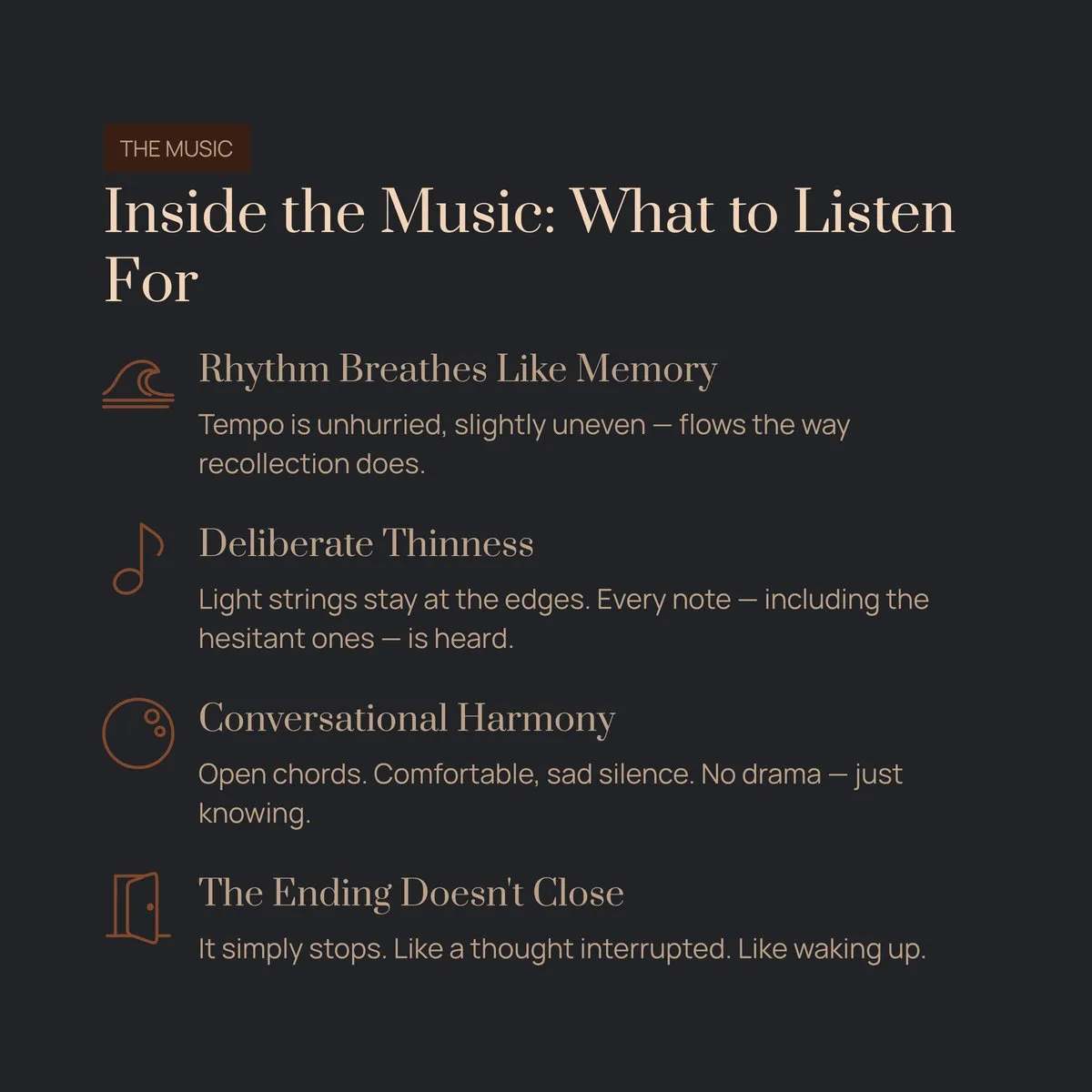
The rhythm breathes like memory. The tempo is unhurried but slightly uneven, as if the music is replaying something imperfectly recalled. Notes linger just a fraction longer than you’d expect, then release. There’s no mechanical pulse — it flows the way recollection does.
-
The orchestration is deliberate in its thinness. Light strings accompany the piano, but they stay at the edges. The melody is never buried. Nothing competes with it. You are meant to hear every single note, including the ones that hesitate.
-
The harmonic language is conversational, not dramatic. Nomi avoids the kind of dissonant tension that would signal danger or tragedy. Instead, he uses gentle, open chords — the musical equivalent of sitting with someone in comfortable, sad silence. You don’t need to say anything. The notes already know what you mean.
-
The ending doesn’t close. The piece doesn’t sweep to a triumphant finish or sink into despair. It simply… stops. Like a thought interrupted by the alarm clock. Like waking up.
Why This Piece Matters for Classical Beginners
If you’re new to classical or orchestral music and have been told it requires some kind of specialized knowledge to appreciate, A Country Without Magic is the perfect place to begin dismantling that idea.
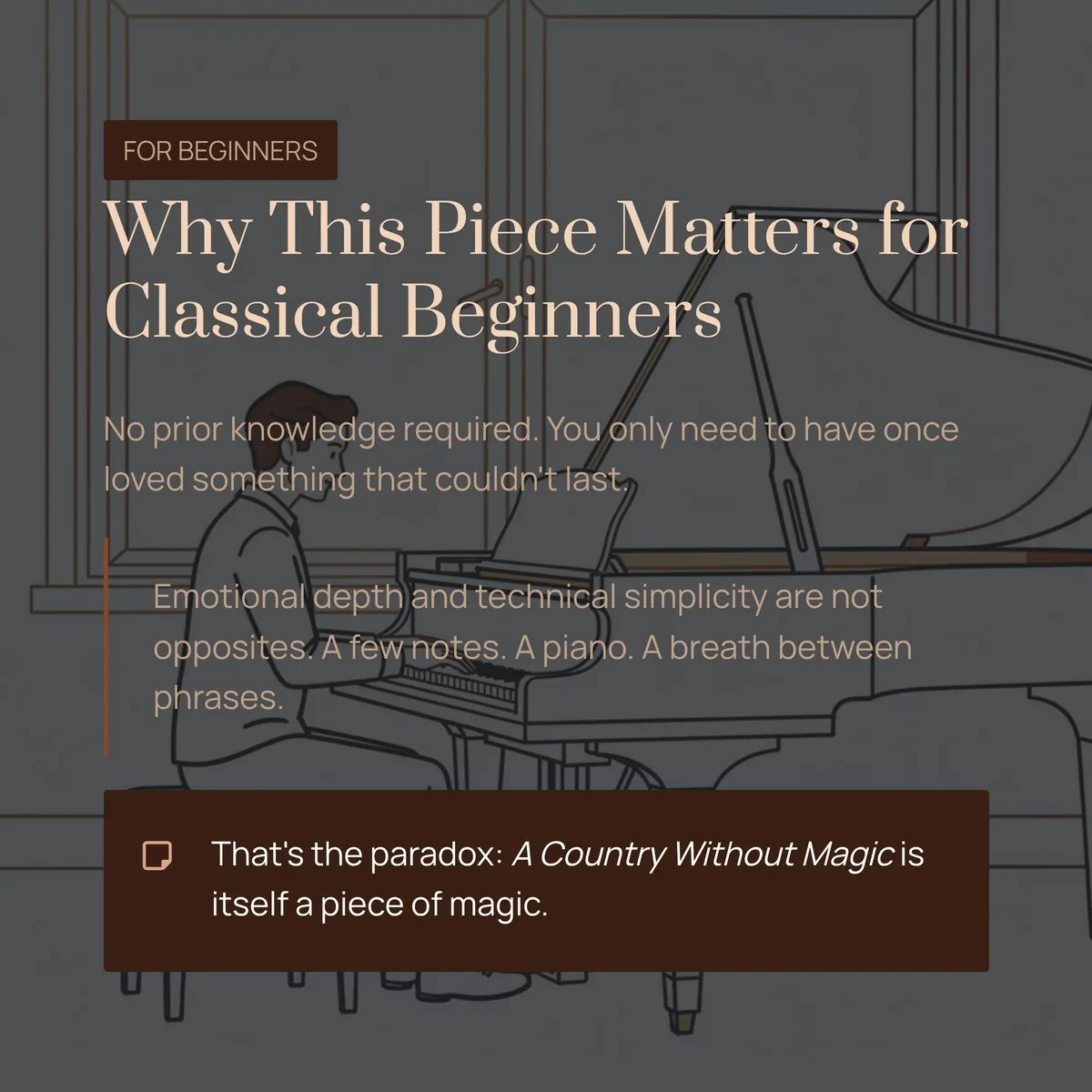
There is no prior knowledge required here. You do not need to understand sonata form or harmonic analysis to feel what this piece is doing. You only need to have once loved something that couldn’t last — a childhood place, a version of yourself, a summer that ended too quickly. The music will do the rest.
What Nomi teaches us, quietly, through this piece, is that emotional depth and technical simplicity are not opposites. Some of the most complex feelings we carry — homecoming, loss, gratitude, longing — arrive in the plainest musical language. A few notes. A piano. A breath between phrases.
That’s the paradox buried in the title: A Country Without Magic is itself a piece of magic.
Recommended Listening
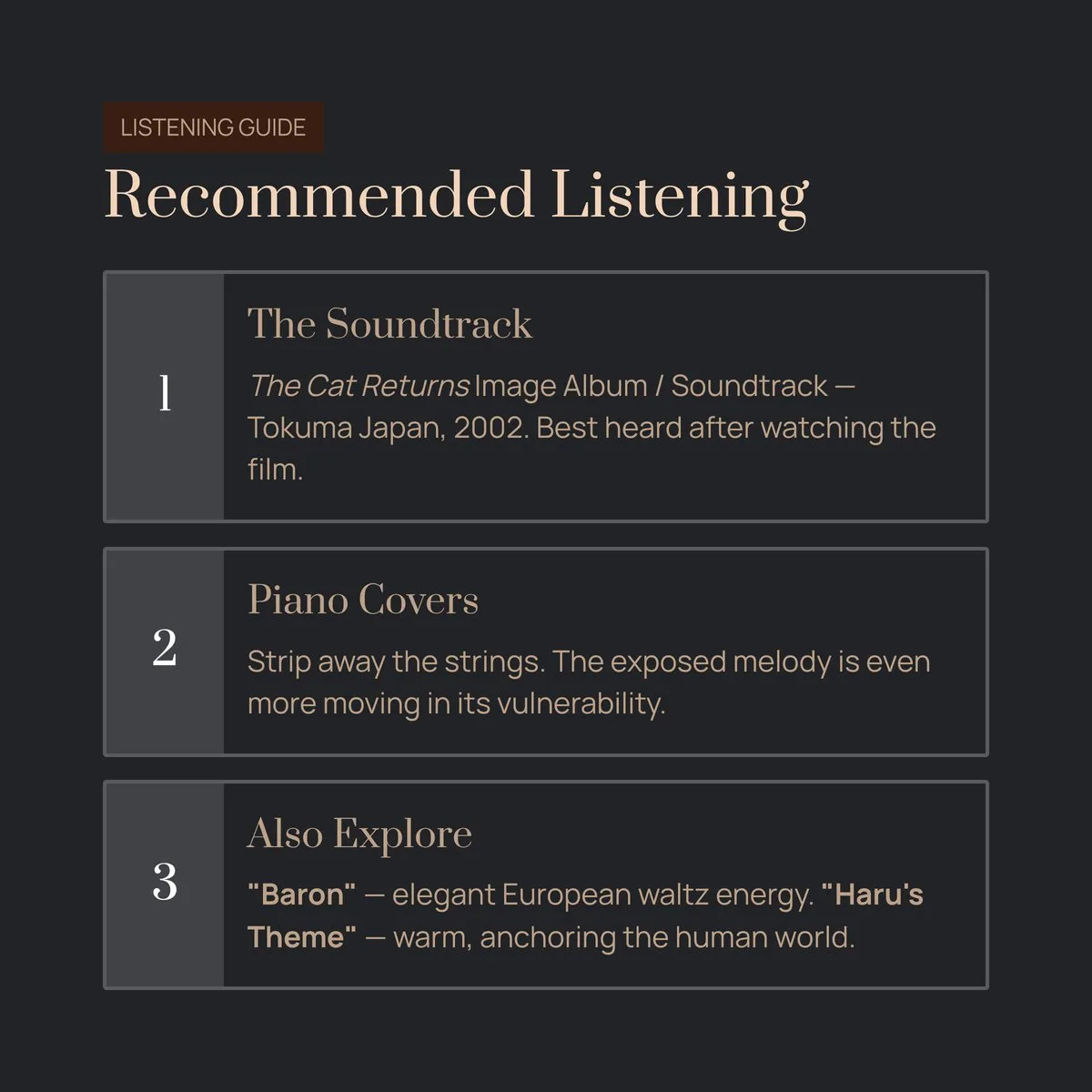
The original soundtrack, The Cat Returns: Image Album / Soundtrack (composed and arranged by Yuji Nomi, released by Tokuma Japan in 2002), is the most direct way to experience this piece in its proper context. Listening to it after watching the film transforms the music into something almost unbearably personal — you bring your own face to it.
For those seeking a more meditative standalone experience, look for piano arrangement covers that strip away even the light string accompaniment. Without the orchestration, the melody stands completely exposed, and that vulnerability makes it even more moving.
If you’d like to explore the broader emotional world Nomi builds in The Cat Returns, pay particular attention to two other tracks: “Baron” (which introduces the film’s most elegant character with a theme that feels borrowed from an old European waltz) and “Haru’s Theme” (a warmer, rounder melody that anchors the human world against the Cat Kingdom’s strangeness).
A Final Thought: The Ordinariness of Wonder
There’s something quietly radical about a film — and a piece of music — that ends not with a larger, more dazzling adventure, but with the suggestion that the world you’re returning to is enough. That the gray morning light through your window is its own kind of miracle. That magic doesn’t disappear when you leave the enchanted kingdom; it transforms.
A Country Without Magic is two things at once: a farewell to fantasy, and a very gentle argument for the worth of ordinary life. It plays at the threshold, where one world ends and another begins, and it holds the door open just long enough for you to look back.
Then it lets you go home.