📑 Table of Contents
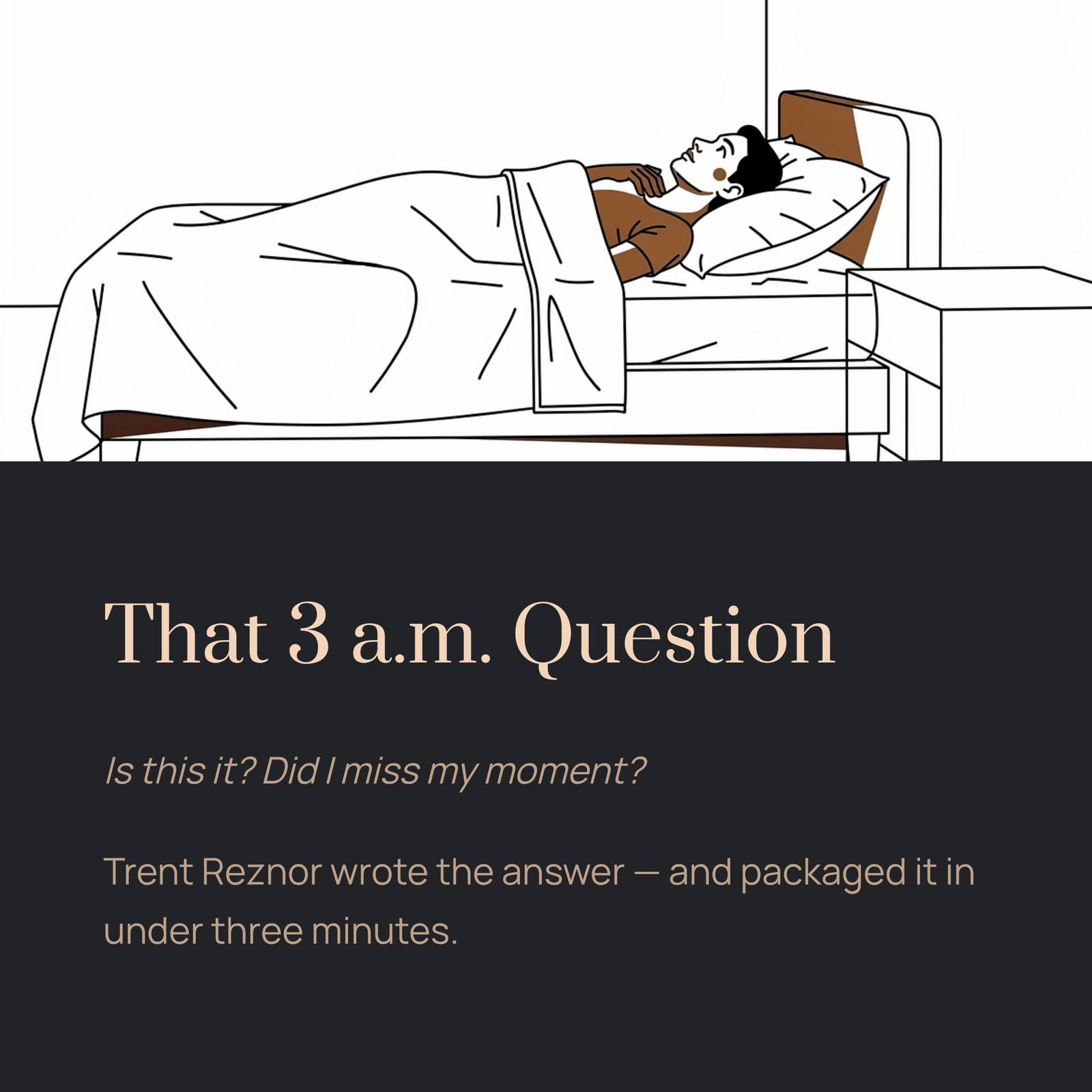
There’s a particular kind of quiet that arrives at 3 a.m. when you’ve been lying awake, not because anything is wrong exactly, but because you can feel the weight of everything you haven’t yet done. It isn’t grief. It isn’t panic. It’s more like a soft, insistent question the darkness keeps asking: Is this it? Did I miss my moment?
Trent Reznor wrote the answer to that question — and somehow, he packaged it in under three minutes.
The Last Person You’d Expect to Score a Pixar Film
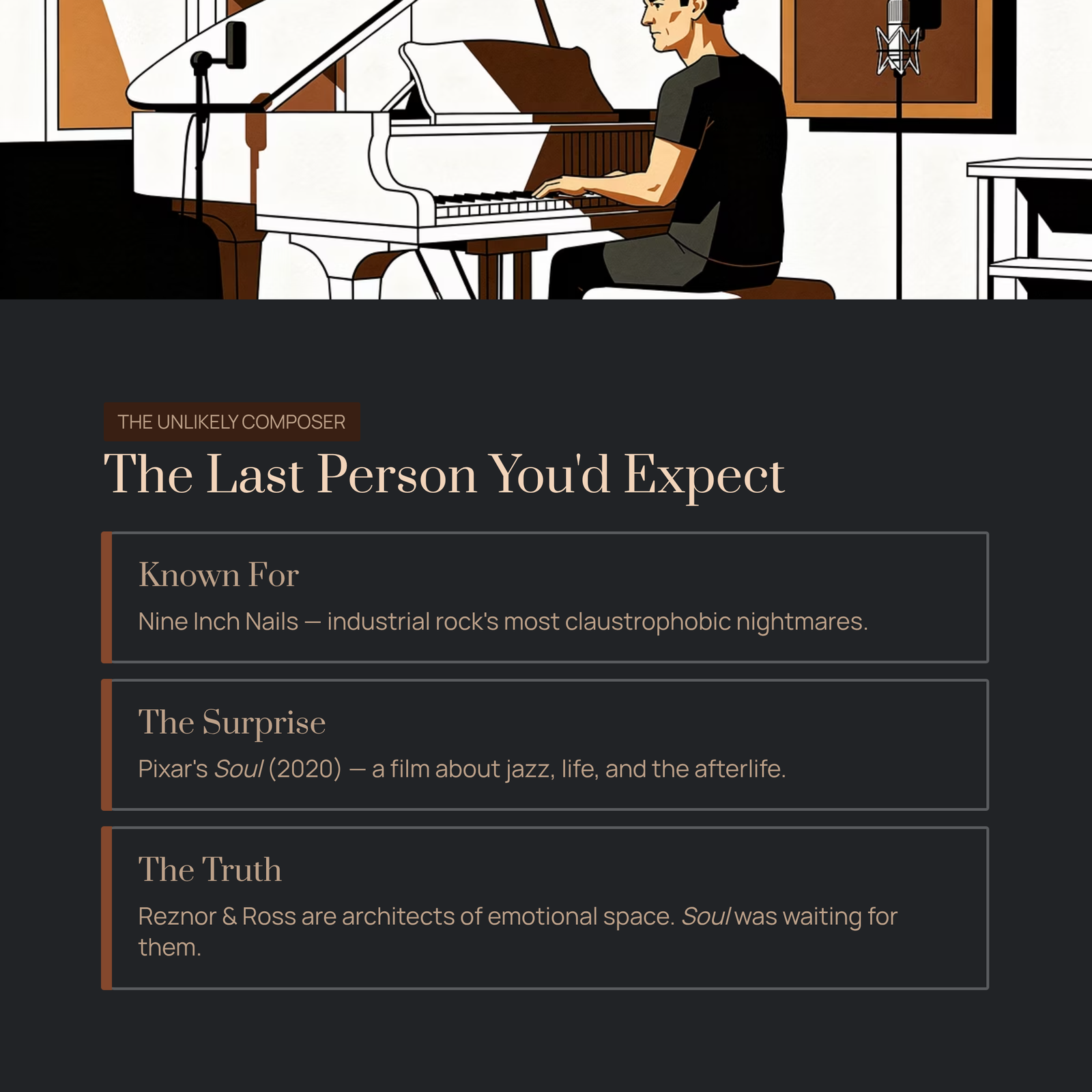
If you know Trent Reznor at all, you know him as the architect of industrial rock’s most claustrophobic nightmares. Nine Inch Nails built an entire career out of beautiful, controlled anguish — Closer, Hurt, The Downward Spiral. His music has always been the sound of a person absolutely at war with themselves.
So when Pixar announced that Reznor and his longtime collaborator Atticus Ross would score Soul (2020), the reaction ranged from baffled curiosity to genuine alarm. A film about a jazz musician’s journey through the afterlife — designed for children and their parents — handled by the man whose discography reads like a therapy intake form? Really?
And yet.
Anyone who had watched Reznor and Ross at work on David Fincher’s films — The Social Network, The Girl with the Dragon Tattoo, Gone Girl — already knew something important: these two men are not noise-makers. They are architects of emotional space. They understand silence. They understand what a note withheld can communicate that a note played never could.
Soul didn’t just fit them. It was almost as if it had been waiting for them.
What the Film Is Actually About (and Why It Matters Here)
Before you can understand the Main Theme, you need to understand what Soul is really saying — because the film has a quiet thesis that most people miss on a first viewing.
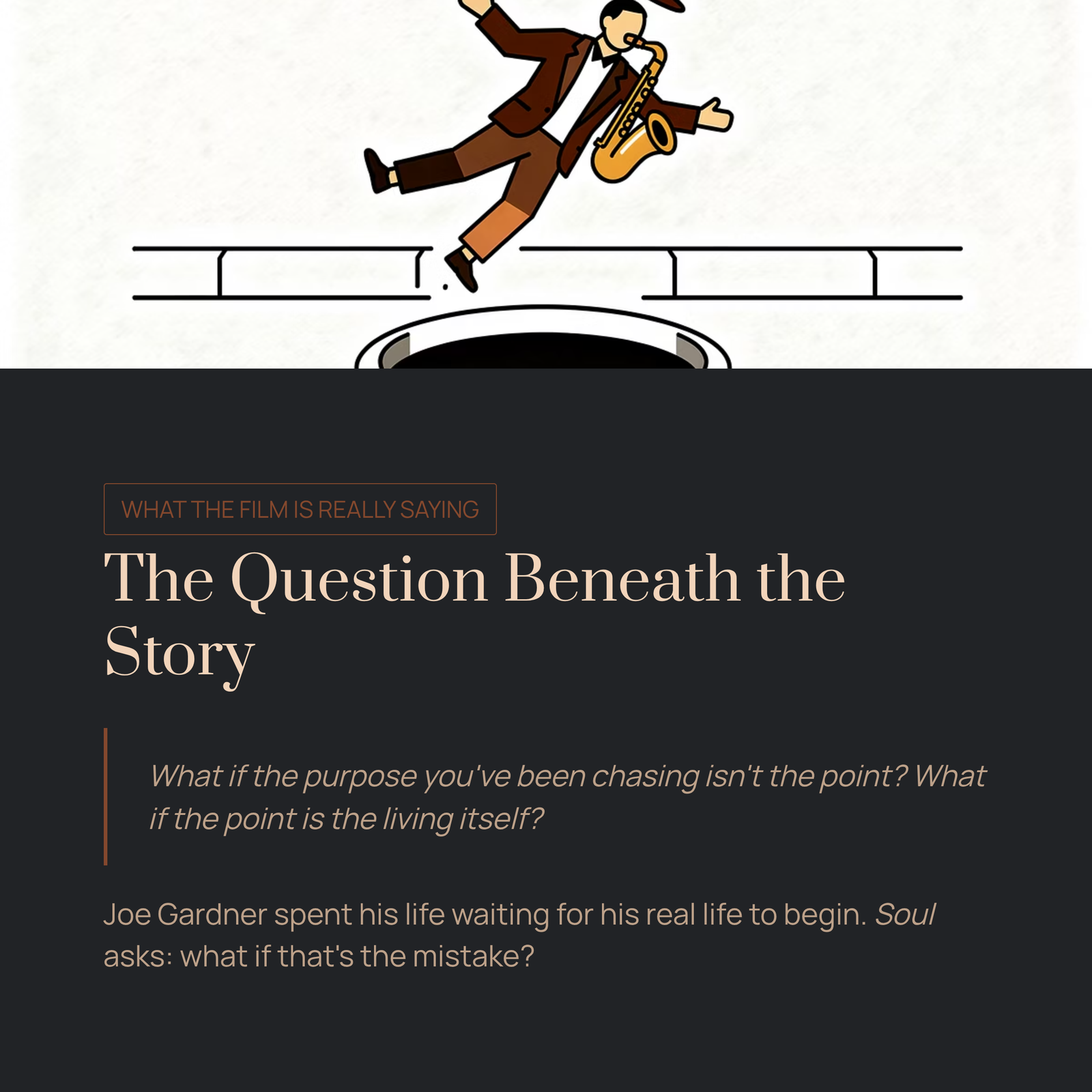
Joe Gardner is a middle school band teacher. He has spent his entire adult life waiting for his real life to begin. One day, impossibly, he gets his shot — a gig with a legendary jazz quartet. And then, in the kind of cosmic joke the universe specializes in, he falls down an open manhole. He ends up in the Great Before, a pastel realm where new souls are prepped for life on Earth.
The rest of the film follows Joe trying to get back to his body, to his moment, to his purpose. But here is what the film is actually asking, in the gentlest possible voice: What if the purpose you’ve been chasing isn’t the point? What if the point is the living itself?
It’s a staggering question to hand a composer. How do you score the emotional gap between a life fully inhabited and a life perpetually deferred?
The Architecture of the Main Theme
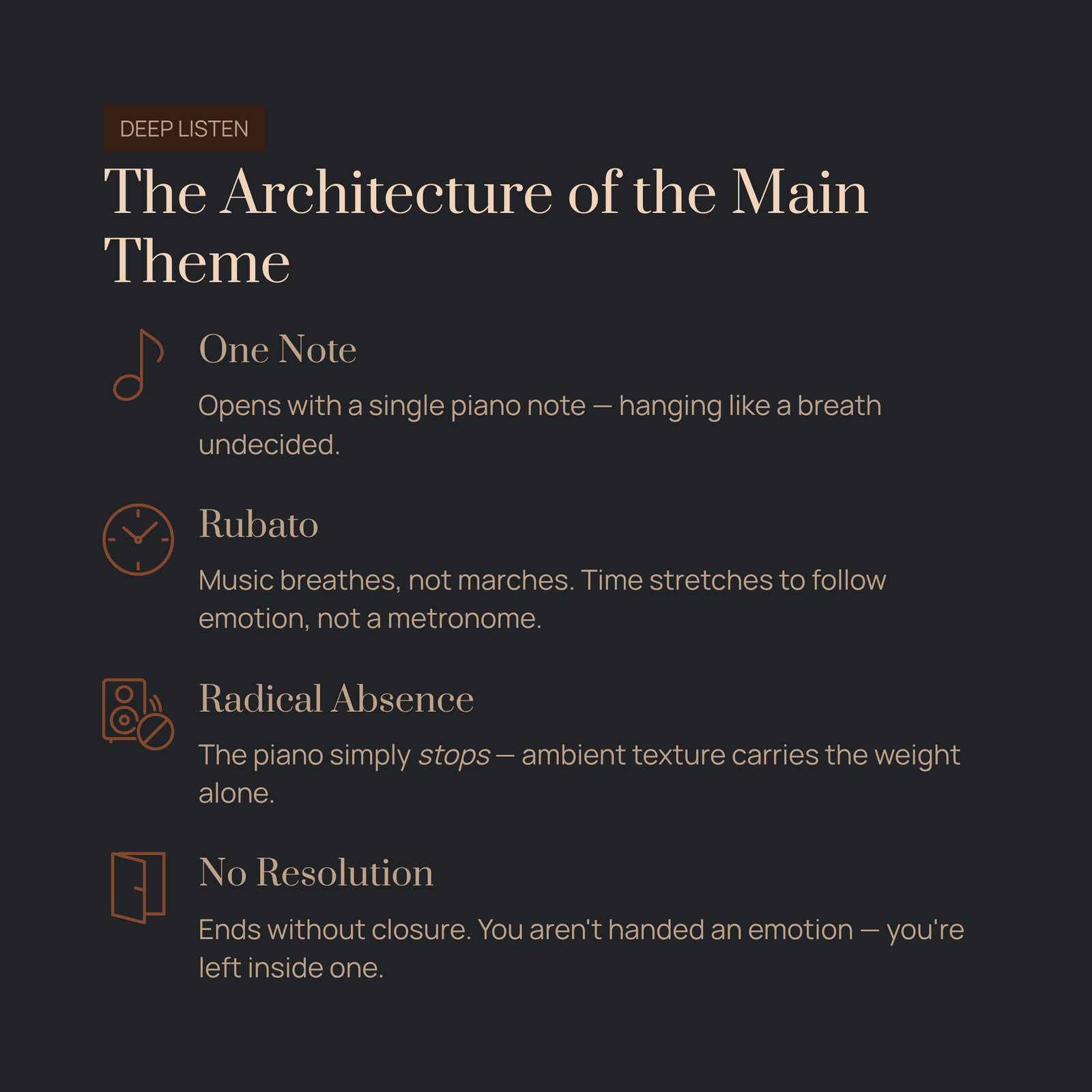
The Soul Main Theme opens with a single piano note — not a chord, not a flourish, just one note — hanging in the air like a breath that hasn’t decided whether to exhale. What follows is one of the most compositionally restrained pieces Reznor and Ross have ever written, and that restraint is exactly the point.
The theme operates in layers that arrive slowly, almost reluctantly. A sparse, impressionistic piano line carries the main melody, but it’s surrounded by something harder to name: a texture of ambient electronics that functions less like accompaniment and more like atmosphere. It doesn’t fill space so much as describe space — the vast, echoing, almost architectural quiet of a mind trying to locate itself.
A few things worth listening for:
The rhythm — or the lack of one. Classical composers call this rubato — “robbed time” — where the performer stretches and compresses the beat to follow the emotional contour of a phrase rather than a metronome. Reznor and Ross build rubato directly into the composition. The music breathes rather than marches. It feels less like a composed score and more like a thought being thought in real time.
The space between notes. One of the oldest truths in music is that what is not played is as meaningful as what is. Reznor, who built his reputation on walls of sound, leans here into radical absence. There are moments in the Main Theme where the piano simply stops — not fades, stops — and the ambient texture underneath is left to carry the emotional weight alone. It’s a compositional choice that requires immense confidence. It earns it.
The resolution that never fully resolves. The theme ends without the kind of harmonic closure that most film scores use to tell the audience how to feel. You are not handed an emotion. You are left inside one. This is Reznor and Ross trusting the listener — an unusual and generous act.
A Man Arriving at His Own Work
There’s a biographical dimension to this music that makes it richer, once you know it. By the time Trent Reznor scored Soul, he had been making music for over three decades, much of it excavating his own darkness with forensic precision. He had also, by then, entered sobriety, found a family, and arrived at what he described in interviews as something resembling peace — a state that had once seemed unreachable to him.
Soul‘s central question — what does it mean to finally be present in your own life? — is not an abstract one for Reznor. He lived the negative space of it for a long time. When you hear the Main Theme knowing that, it takes on a different texture. This is music written by someone who knows, from the inside, what it costs to be absent from your own existence, and what it feels like to finally stop.
The Academy Award for Best Original Score that Reznor and Ross received for Soul in 2021 was widely treated as a surprise. It shouldn’t have been. They didn’t score a children’s movie. They scored an existential reckoning that happened to have talking souls in it.
How to Listen: A Practical Guide for First-Timers
If you’ve never approached film scores as a standalone listening experience, Soul‘s Main Theme is an ideal place to start. A few suggestions:
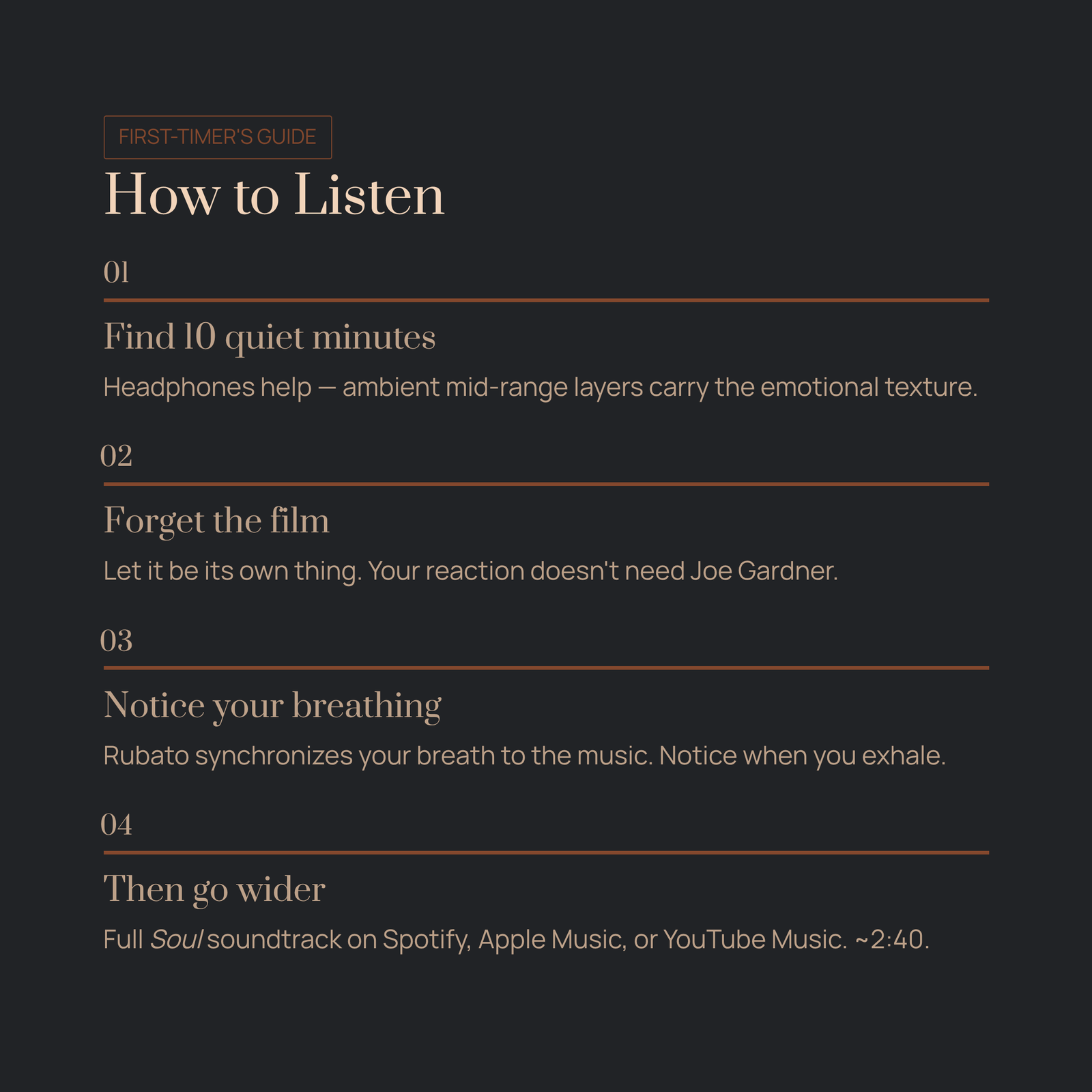
The environment matters more than usual here. This is not background music — or rather, it can function as background music, but it repays attention. Find 10 minutes where you are not likely to be interrupted. You don’t need headphones, but they help. The ambient layers in the mid-range that get lost in open-air listening are where much of the emotional texture lives.
Don’t try to picture the film while you listen. One of the remarkable things about this score is how fully it functions without its visual context. Let it be its own thing. Let yourself have a reaction that has nothing to do with Joe Gardner or the Great Before.
Notice your own breathing. This sounds like odd listening advice, but Reznor and Ross’s use of rubato and silence has a documented physiological effect: it tends to synchronize the listener’s breathing to its own rhythm. Pay attention to when you exhale. It will tell you something about where the emotional centers of the piece are.
Start here, then go wider. If the Main Theme reaches you, the full Soul soundtrack is consistently rewarding. The jazz tracks composed with Reznor and Ross’s collaborator Jon Batiste occupy an entirely different sonic register, and the dialogue between his live, warm jazz performances and their cooler, more abstract ambient compositions is one of the album’s great pleasures.
The score is available on all major streaming platforms. For a starting point, search for the Soul Original Motion Picture Soundtrack (Walt Disney Records / Pixar, 2020) on Spotify, Apple Music, or YouTube Music. The Main Theme is approximately two minutes and forty seconds. Take your time with it.
The Question the Music Is Still Asking
Here is the thing about music that works: it doesn’t really end when it stops. It leaves a residue. You carry the feeling somewhere into your day and at some point — driving, maybe, or standing in a grocery store line — it resurfaces, and you aren’t sure why, and then you remember.
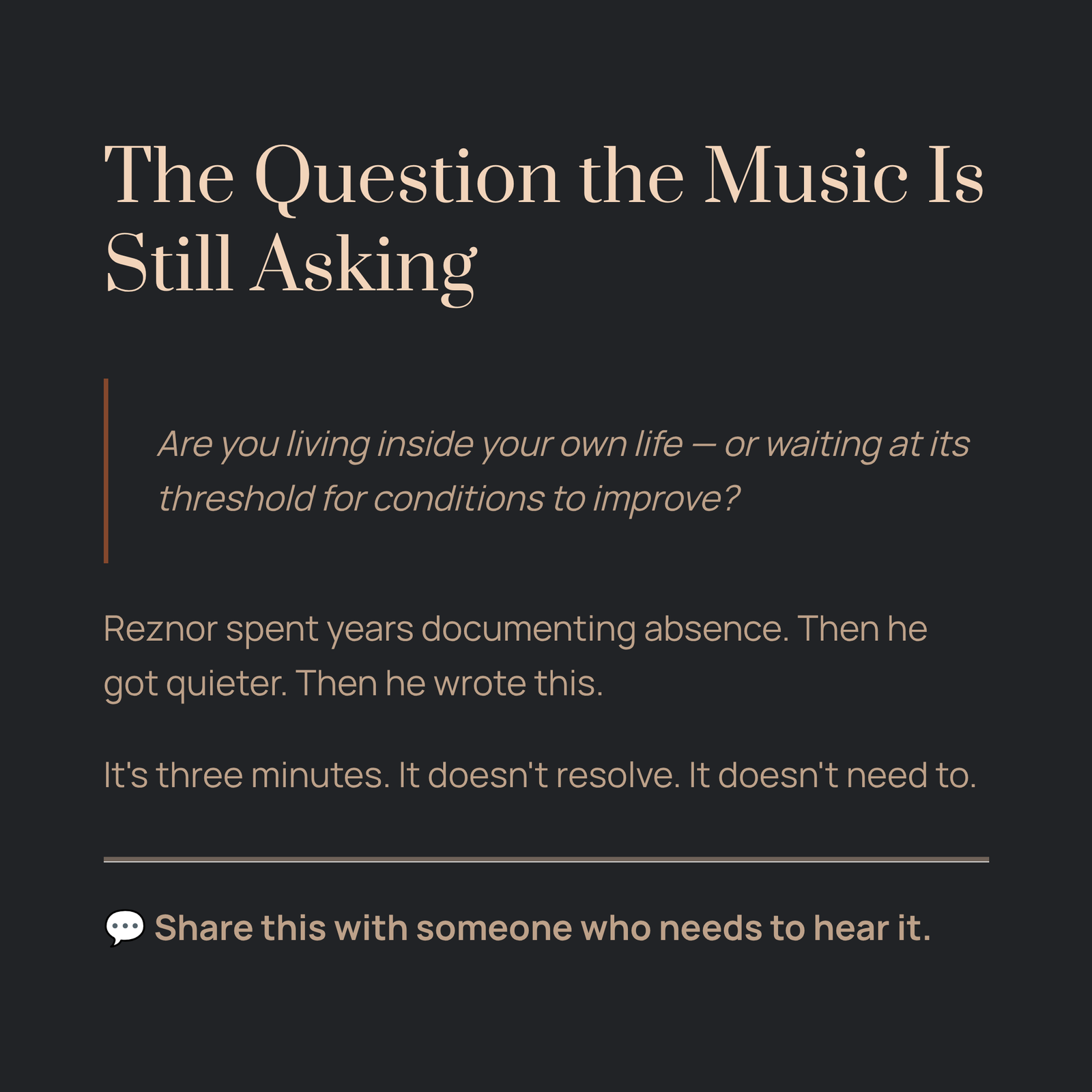
Soul‘s Main Theme asks, as gently as it knows how to ask, whether you are living inside your own life or waiting at its threshold for conditions to become more favorable. Whether the small moments — a meal, a familiar street, the particular quality of light at a specific hour — are filling you or passing through you unregistered.
Trent Reznor spent years recording music that was, at its core, a document of being absent from yourself. Then he got quieter. Then he wrote this.
It is three minutes long. It doesn’t resolve. It doesn’t need to.
The question it’s asking is one you’ll keep answering for the rest of your life, and the music is comfortable with that. Maybe you can be, too.