📑 Table of Contents
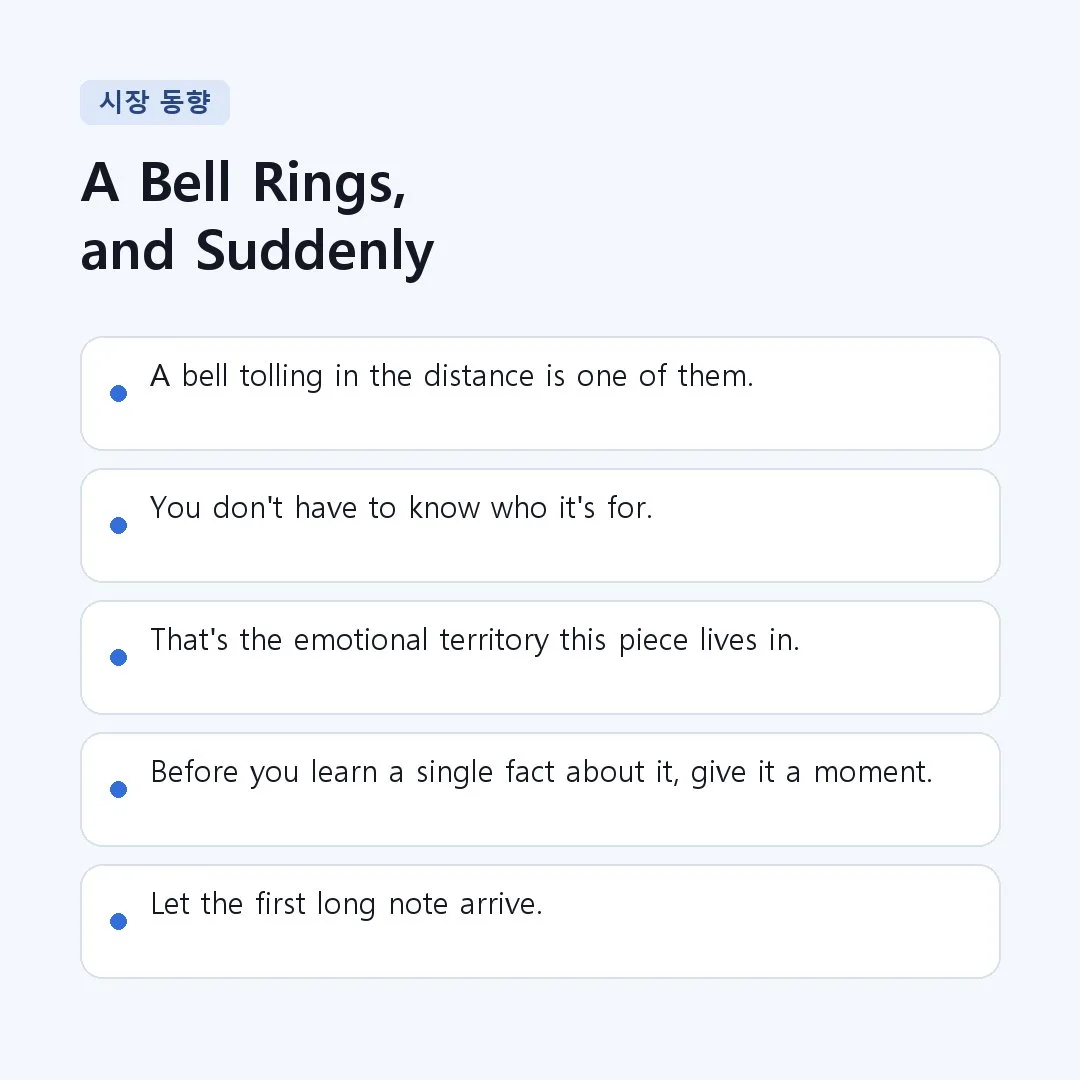
There’s a particular kind of sound that bypasses your thoughts and goes straight to the chest. A bell tolling in the distance is one of them. You don’t have to know who it’s for. The moment you hear it, something in you already understands: someone is being remembered.
That’s the emotional territory this piece lives in. Before you learn a single fact about it, give it a moment. Let the first long note arrive. Notice that you don’t have to decide to feel anything — the music has already reached in and done it for you. That instant, wordless recognition is exactly what Ennio Morricone spent his entire life learning to compose.
Who Was Ennio Morricone, Really?
If you’ve watched movies, you’ve heard him — even if you’ve never once read his name in the credits.
Ennio Morricone (1928–2020) was an Italian composer who scored more than 400 films across a career spanning over six decades. He grew up in Rome, trained at the prestigious Santa Cecilia Conservatory as a trumpet player, and learned to write music the old-fashioned, rigorous way: counterpoint, harmony, orchestration on paper. But what made him legendary wasn’t textbook craft. It was his willingness to break the rules of what a film score was allowed to sound like.
In an era when Hollywood favored lush, swelling orchestras, Morricone reached for the unexpected — a lone whistle, a cracking whip, a human voice used like an instrument, an electric guitar sitting next to a full string section. He treated silence as carefully as sound. For decades the film world treated him as a craftsman rather than an artist, and it wasn’t until 2016 that he finally received a competitive Academy Award for Best Original Score, for The Hateful Eight, after receiving an honorary Oscar in 2007.
Here’s the thing worth holding onto as a beginner: Morricone never separated “serious” music from “film” music. To him, a melody written for a movie deserved the same emotional truth as a symphony. That belief is why his themes outlive the films they were written for.
The Sound of Mourning Without Words
The bell is one of the oldest emotional instruments humanity has. For centuries, a tolling bell announced a death to an entire village before anyone could speak the news aloud. The English writer John Donne turned that image into a famous line about how no one’s death leaves the rest of us untouched — the bell tolls for all of us, because we’re all connected. That single idea is the heartbeat behind a piece built around mourning and remembrance.
Morricone understood something profound about grief: it isn’t loud. Real sorrow rarely shouts. It sits quietly, it lingers, it returns in waves. So music written in this spirit tends to move slowly and deliberately, letting each phrase breathe before the next one arrives. There’s no rush, because grief has no schedule.
Think of it less as a song with a destination and more as a space you’re invited to sit inside for a few minutes — a room where you’re allowed to feel what you’ve been carrying.
How to Listen: A Guide for Beginners
You don’t need to know music theory to listen well. You just need a few anchors. Here’s what to pay attention to:
Listen for the long notes first. Sustained, unhurried notes are the emotional foundation of a piece like this. They’re the equivalent of a held breath. Don’t wait for something “exciting” to happen — the stillness is the event.
Notice the space between sounds. Morricone was a master of restraint. The pauses aren’t empty; they’re where the feeling settles. Try listening on headphones in a quiet room so you can hear the silence as clearly as the notes.
Follow the single voice. Morricone loved to let one instrument carry the emotional weight — an oboe, a solo violin, sometimes a wordless human voice — while the orchestra holds it up from below. Find that lead voice and follow it like you’d follow a friend’s face across a crowded room.
Let the dynamics move you. Listen for the moments where the music swells and then pulls back. That rise-and-fall is the shape of breathing, the shape of weeping, the shape of remembering. You don’t have to analyze it. You just have to ride it.
If you find your mind wandering, that’s fine. This isn’t music that demands your concentration. It’s music that rewards your surrender.
Where to Begin: Listening Recommendations
If you’re new to Morricone and want to find this reflective, mournful side of his work, a few well-loved entry points capture the same spirit beautifully:
For the purest emotional hit — “Gabriel’s Oboe” (from The Mission, 1986). Many listeners consider this the most achingly beautiful melody Morricone ever wrote. A solo oboe sings over gentle strings, and within thirty seconds you’ll understand his entire approach to sorrow and grace. Start here if you want one piece to fall in love with.
For the official, definitive sound — recordings conducted by Morricone himself. Late in life, Morricone toured the world conducting his own film music with full orchestra and choir. These live concert recordings (widely available on streaming) are the closest thing to hearing the music exactly as he intended it, shaped by the only hands that truly knew it.
For warmth and intimacy — the cellist Yo-Yo Ma’s Yo-Yo Ma Plays Ennio Morricone (2004). Ma reimagines Morricone’s themes for cello, and the deeper, more human voice of the instrument brings out a tenderness that’s perfect for a quiet evening or a moment of reflection.
Any of these will give you a true sense of why Morricone’s music speaks the language of grief so fluently — and why, decades later, it still finds us exactly when we need it.
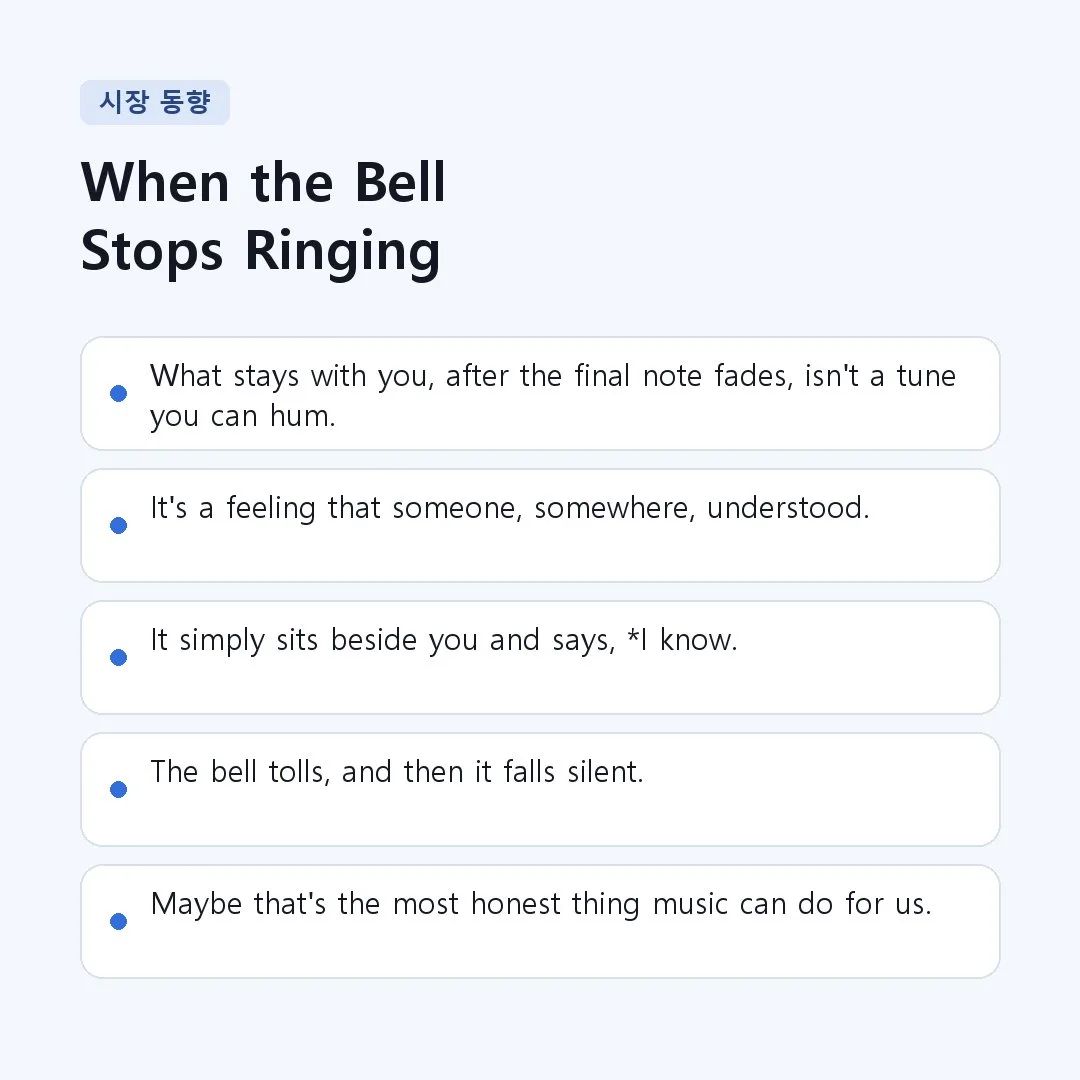
When the Bell Stops Ringing
What stays with you, after the final note fades, isn’t a tune you can hum. It’s a feeling that someone, somewhere, understood. That’s the quiet gift of music like this: it doesn’t try to fix your sadness or talk you out of it. It simply sits beside you and says, I know. Me too.
The bell tolls, and then it falls silent. But the resonance lingers in the air a moment longer — the way the memory of a person lingers after they’re gone. Maybe that’s the most honest thing music can do for us. Not erase the loss, but make us feel a little less alone inside it.
So the next time you hear a single, distant note hold in the air, don’t rush past it. Stay. Let it ring. It might be tolling for someone you’ve been carrying all along.