📑 Table of Contents
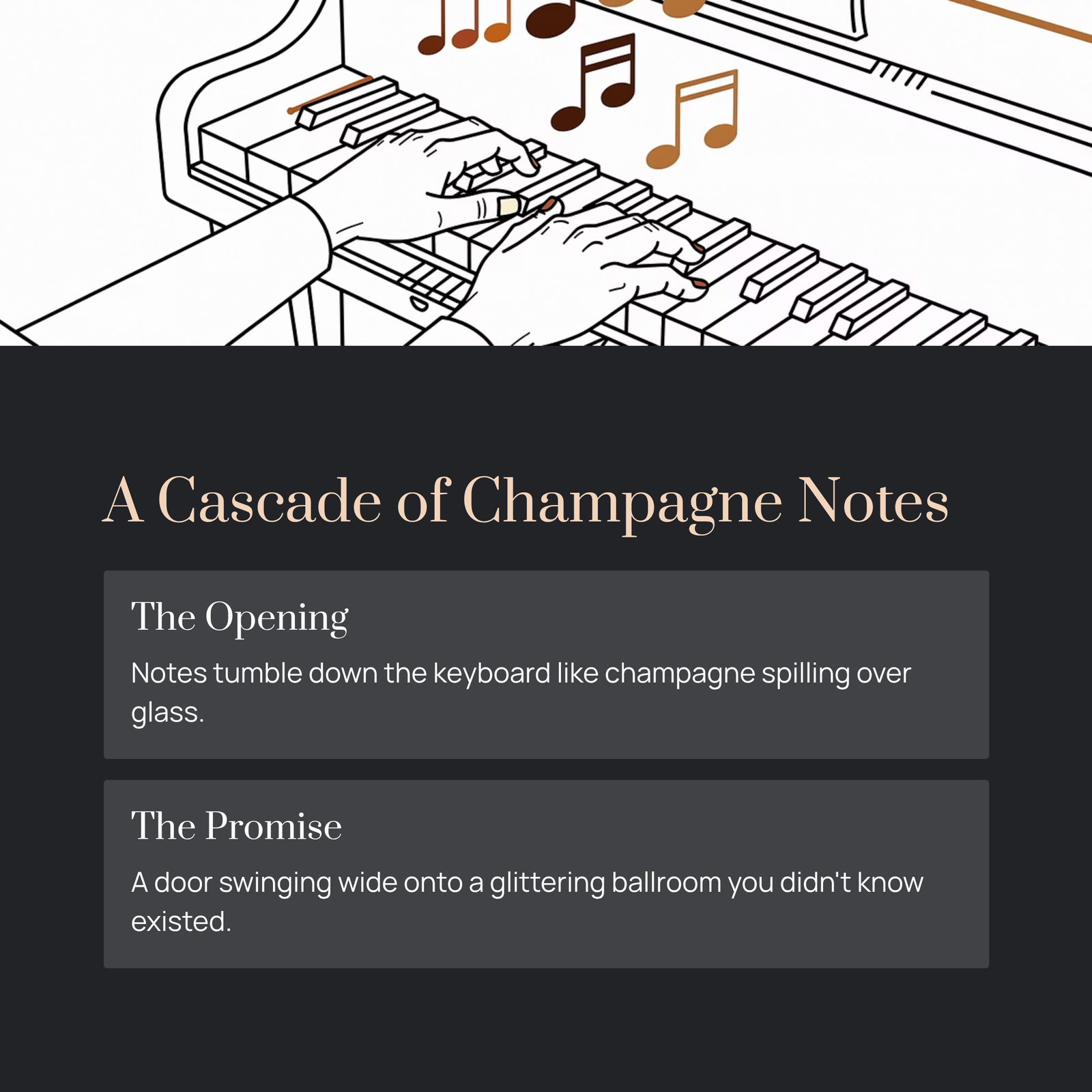
There’s a moment — right at the very opening — where a cascade of notes tumbles down the keyboard like champagne spilling over the rim of a glass. It lasts only a few seconds, but it tells you everything. Something magnificent is about to happen.
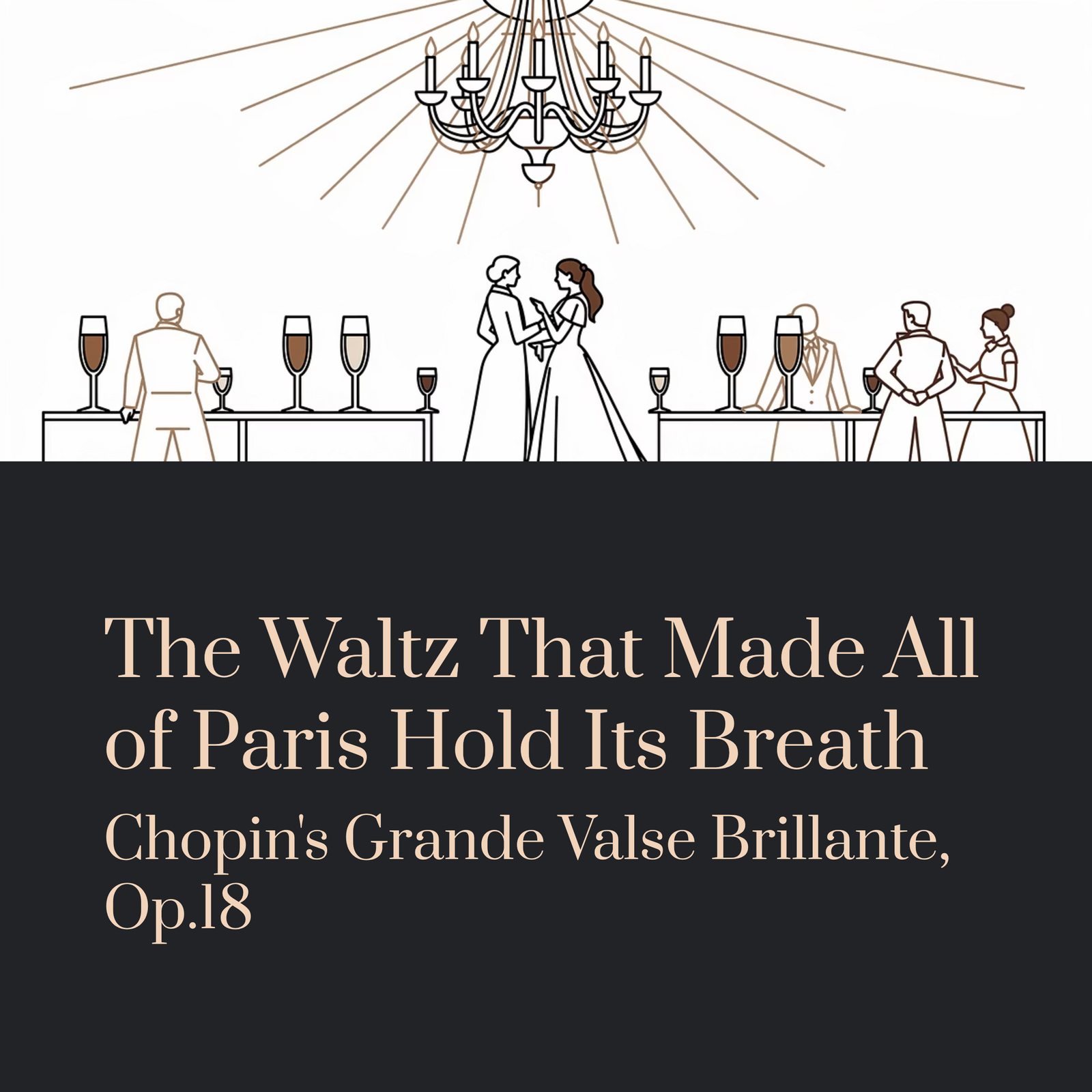
That opening is the calling card of Frédéric Chopin’s Grande Valse Brillante in E-flat major, Op.18, and when it first rang out in the salons of 1830s Paris, it must have felt like a door swinging wide open onto a glittering ballroom you didn’t know existed.
A Young Exile’s Secret Weapon
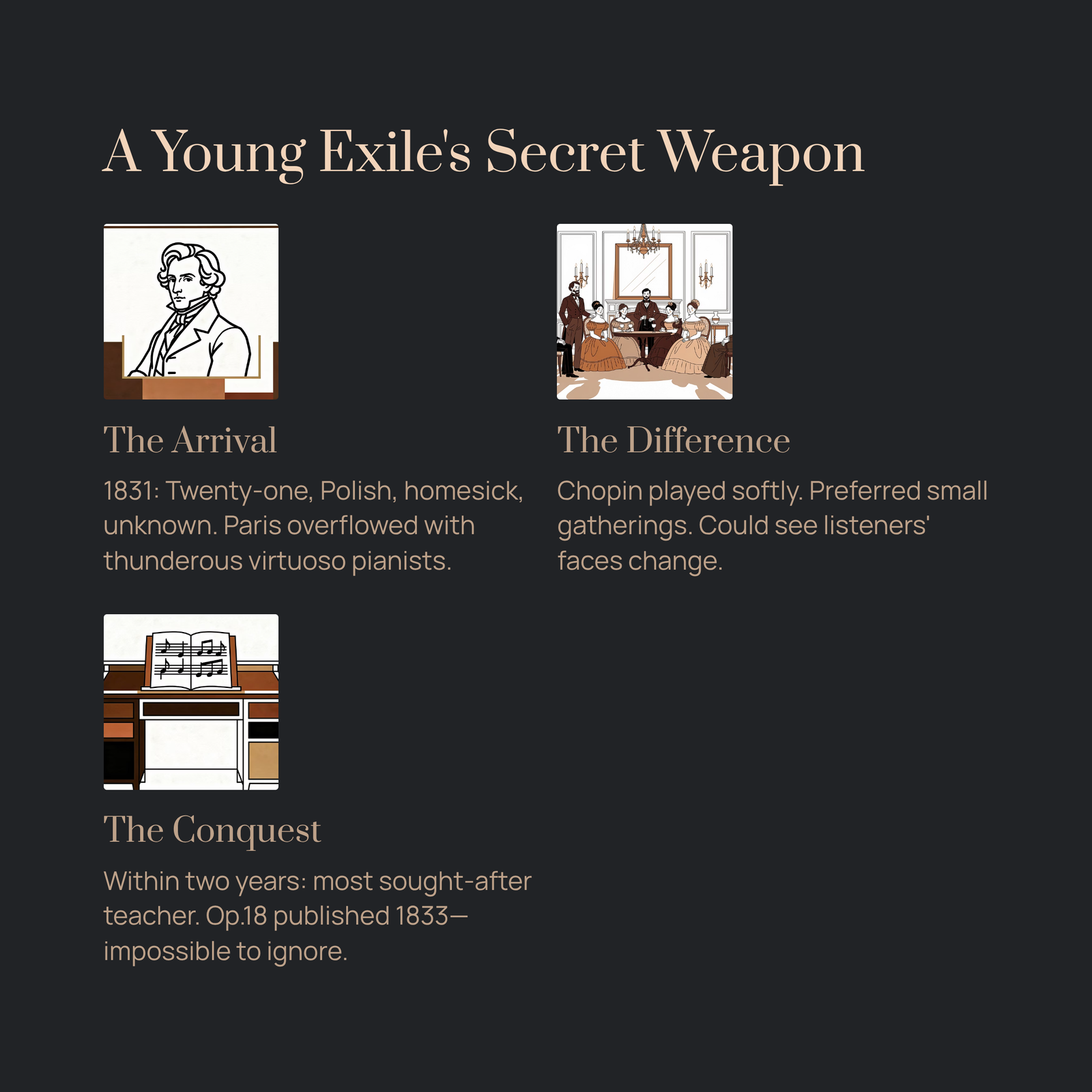
In 1831, Chopin arrived in Paris. He was twenty-one, Polish, homesick, and largely unknown. The city was overflowing with virtuoso pianists — thunderous showmen like Kalkbrenner and Herz who dazzled audiences with sheer speed and volume. Chopin was none of those things. He played softly. He hated performing in large concert halls. He preferred small gatherings where he could sit close enough to his listeners to see their faces change.
And yet, within two years, he had become the most sought-after piano teacher among the Parisian aristocracy. The Grande Valse Brillante, published in 1833, was both a product and a symbol of that unlikely conquest. It was the first waltz Chopin ever published — and he made sure it was impossible to ignore.
Why Chopin Published This Waltz (and Almost Nothing Else Like It)
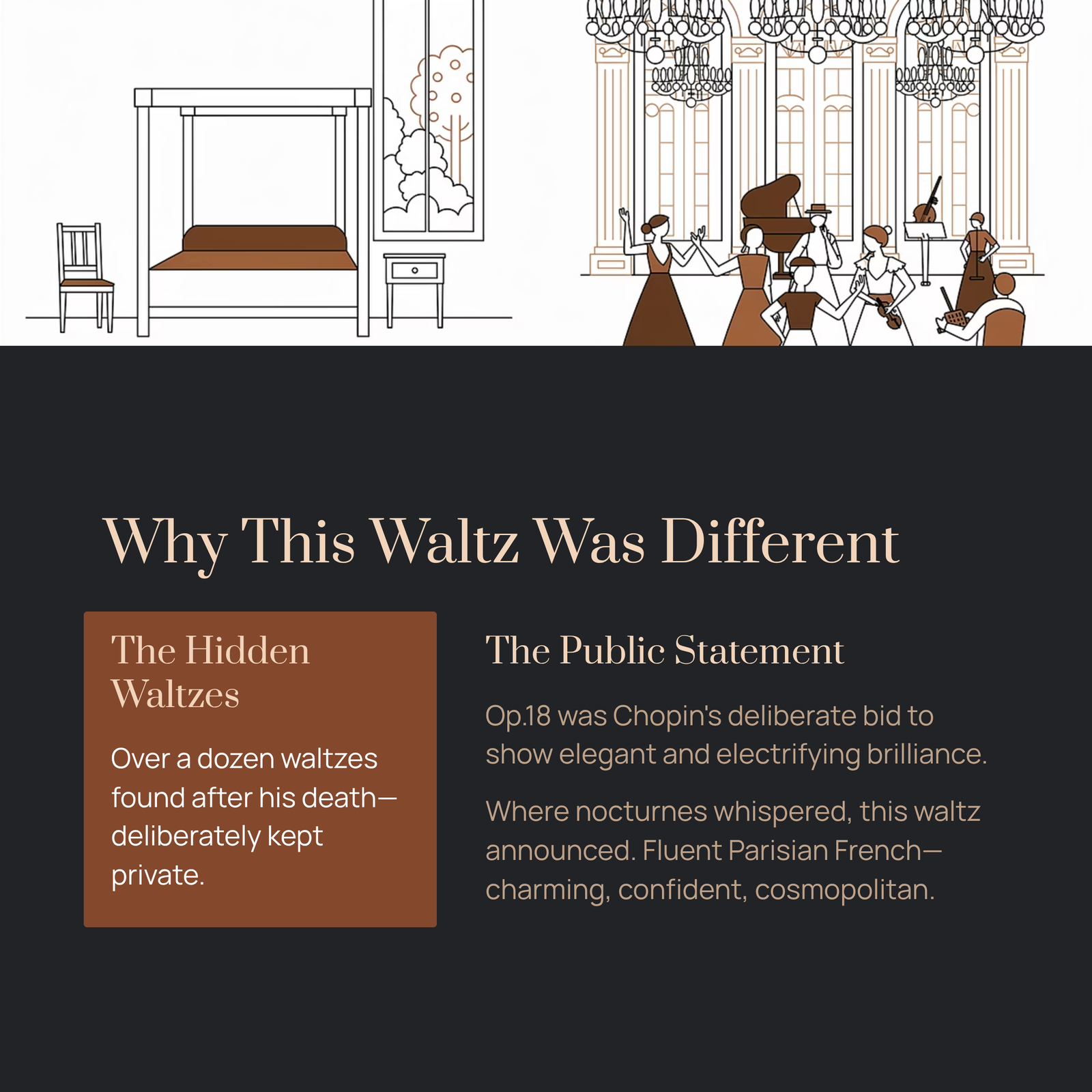
Here’s something most people don’t realize: Chopin was deeply ambivalent about waltzes. He considered many of his own too personal, too intimate for the public. After his death, over a dozen waltzes were found in his manuscripts — pieces he had deliberately kept hidden.
But Op.18 was different. This was Chopin’s public waltz, his deliberate bid to show the world he could write music that was both elegant and electrifying. Where his nocturnes whispered, this waltz announced. Where his mazurkas spoke in a private Polish dialect of the heart, this waltz spoke fluent Parisian French — charming, confident, and effortlessly cosmopolitan.
It’s worth holding that tension in your mind as you listen: this is Chopin choosing, for once, to be extroverted. And he does it brilliantly.
What to Listen For: A Guided Tour
Don’t worry about following a score or knowing music theory. Just notice these three things, and the piece will open up to you like a conversation.
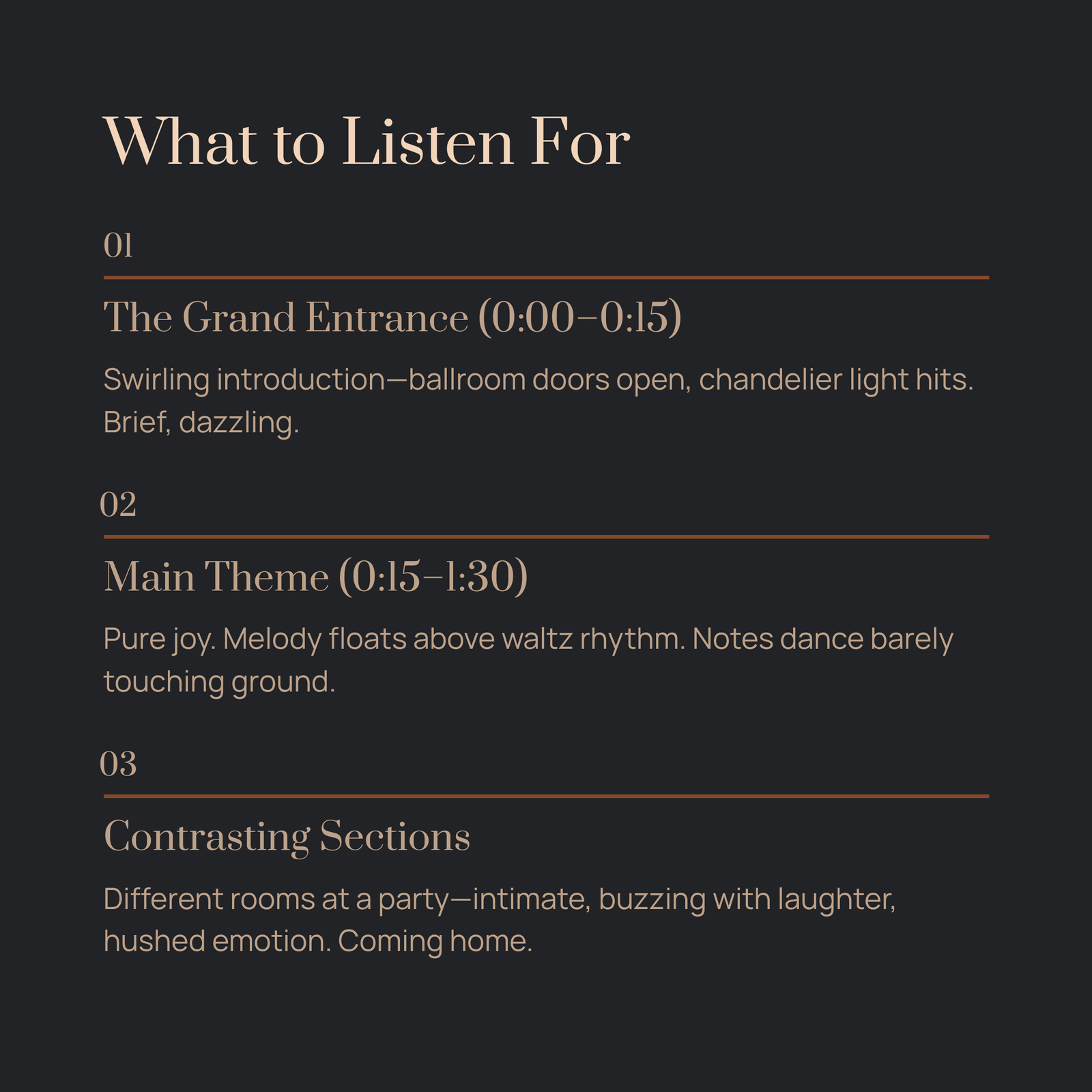
The Grand Entrance (0:00–0:15)
The piece begins with a swirling introduction — those cascading notes I mentioned. Think of it as the moment the ballroom doors open and the chandelier light hits you. It’s brief, dazzling, and purely designed to make you lean forward.
The Main Theme — Confidence in Three-Quarter Time (0:15–1:30)
Now the waltz proper begins, and it’s pure joy. The melody in the right hand floats above the steady one-two-three of the waltz rhythm in the left hand. Pay attention to how light it feels. Chopin doesn’t pound the keys — he lets the notes dance just above the surface, as if the melody is barely touching the ground. This lightness is Chopin’s signature, and it’s what separated him from every other pianist in Paris.
The Contrasting Middle Sections (Throughout)
The waltz isn’t just one melody on repeat. Chopin weaves in several contrasting themes — some tender and lyrical, others playful, one almost march-like in its confidence. Listen for the moments where the mood shifts. It’s as if you’re moving through different rooms at a party: one intimate and candlelit, the next buzzing with laughter, the next hushed with some unspoken emotion. Each time the main theme returns, it feels like coming home.
Recommended Performances to Start With
The beauty of this piece is that every great pianist brings a different personality to it.
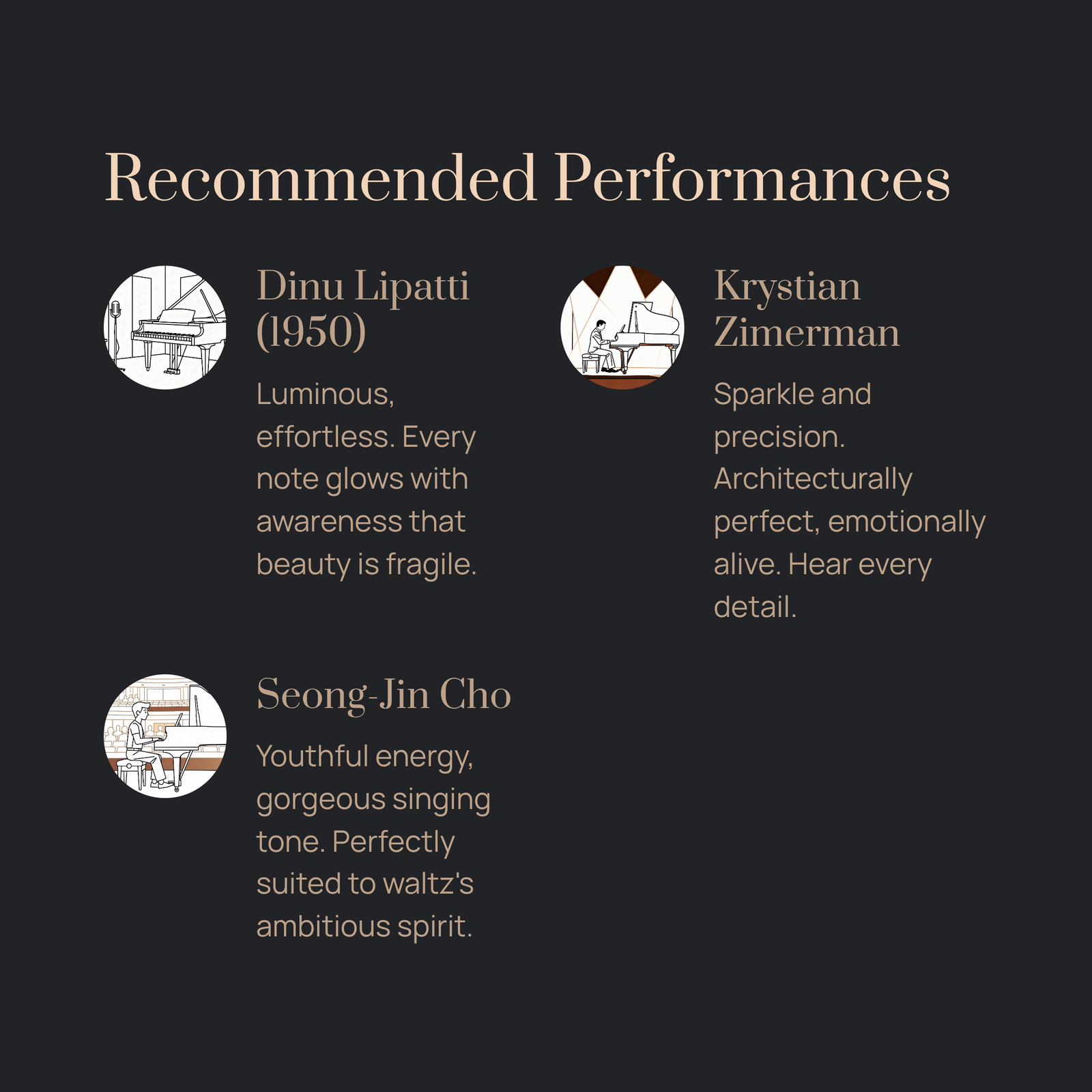
For your first listen, try Dinu Lipatti’s 1950 recording. It’s luminous and effortless — Lipatti makes the waltz sound like it’s playing itself. There’s a poignancy to this recording, too: Lipatti was gravely ill when he made it, and every note seems to glow with the awareness that beauty is fragile.
For sparkle and precision, Krystian Zimerman delivers a performance that’s as architecturally perfect as it is emotionally alive. You can hear every voice, every inner detail.
For a more modern take, Seong-Jin Cho brings a youthful energy and a gorgeous singing tone that feels perfectly suited to the waltz’s spirit of young ambition.
A Different Way to Experience This Piece
Here’s a small experiment. Listen to the Grande Valse Brillante twice. The first time, just enjoy it — let the melody carry you, don’t analyze anything, let yourself move to the rhythm if you feel like it.
The second time, listen while imagining the person behind it: a quiet, reserved young man, far from home, who wrote this piece to prove he belonged in the most glamorous city on earth. Notice how the confidence never quite hides a certain tenderness. Notice how the brilliance is always graceful, never aggressive.
That combination — vulnerability dressed in elegance — is the essence of Chopin. And this waltz is where he first showed the world what that looked like.
Why This Waltz Still Matters
Nearly two centuries later, the Grande Valse Brillante remains one of the most performed and recorded piano pieces in the repertoire. Not because it’s the most technically demanding (it isn’t), or because it’s Chopin’s most profound work (he would go on to write much deeper music). It endures because it captures something universally recognizable: the exhilarating moment when someone steps into a room and, against all odds, belongs.
If you’re just beginning to explore classical music, this is a wonderful place to start. It asks nothing of you except five minutes and an open ear. And in return, it offers something rare — a piece of music that is sophisticated without being intimidating, joyful without being shallow, and brilliant in the truest sense of the word.
Press play. The ballroom doors are open.