📑 Table of Contents

Most people picture Mozart as sunshine: powdered wigs, tinkling harpsichords, music for elegant dinner parties. Then the first movement of his Piano Sonata No.14 in C minor begins, and something feels wrong in the best possible way.
The opening doesn’t greet you. It confronts you. A single hand leaps upward in a sharp, jagged figure, then crashes back down, answered by silence. It sounds less like a sonata and more like someone throwing open a door in the middle of an argument. If you came expecting porcelain prettiness, the music seems to ask: who told you I was harmless?
This is Mozart with the mask off. And once you hear it, you can’t un-hear it.
The Man Behind the Myth
Wolfgang Amadeus Mozart was born in Salzburg in 1756 and spent his childhood as a touring prodigy, performing for emperors before most children learn to read. By the time he wrote this sonata, he was a grown man living in Vienna, freelancing in a brutally competitive city, juggling debts, students, and the exhausting business of being a genius without a steady paycheck.
We tend to flatten Mozart into a cartoon of effortless cheer. The truth is more interesting. He could be funny, crude, anxious, proud, and furious. The C minor sonata is where that fuller human being walks onto the page. C minor was, for Mozart, almost a private signal for high emotional stakes; it’s the key he would later use for some of his darkest and most powerful music.
Why This Sonata Sounded So Strange in 1784
Mozart completed this sonata in October 1784 and published it in 1785, pairing it with a brooding Fantasia in the same key. To understand why it mattered, you have to understand what a piano sonata was supposed to be at the time: pleasant, balanced, suitable for amateurs to play at home. It was domestic furniture made of sound.
This piece refuses that job. It is operatic in scale, demanding in technique, and emotionally volatile in a way that pointed straight toward the storm-driven Romantic music still decades in the future. Beethoven, who admired Mozart deeply, seems to have absorbed this very sonata; echoes of its drama and even its key turn up in his own celebrated C minor works. In other words, this is Mozart writing the future without quite knowing it.
The “Molto allegro” marking simply means “very fast,” but speed here isn’t decoration. It’s pressure. The movement moves like someone who can’t sit still because something is eating at them.
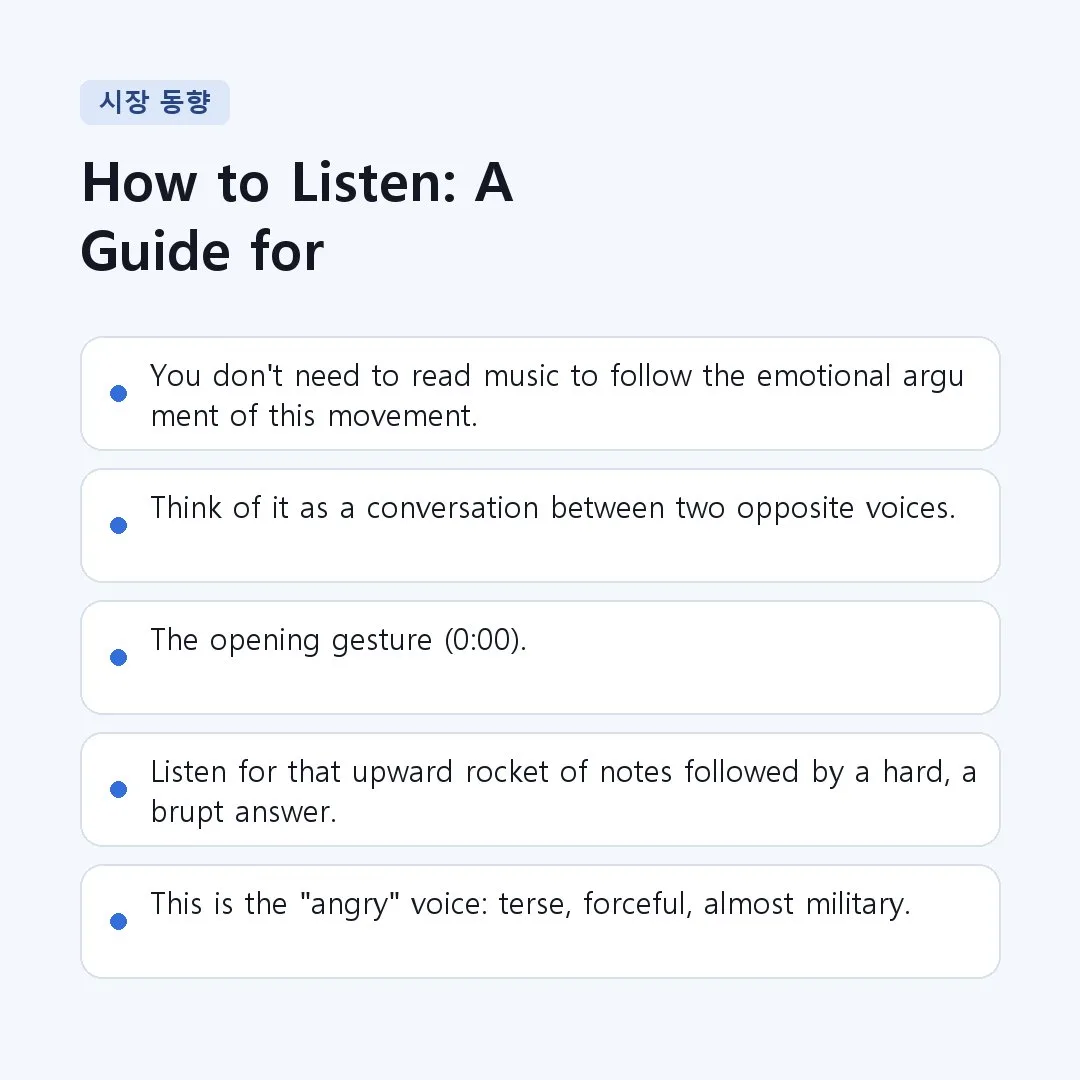
How to Listen: A Guide for First-Time Ears
You don’t need to read music to follow the emotional argument of this movement. Think of it as a conversation between two opposite voices.
The opening gesture (0:00). Listen for that upward rocket of notes followed by a hard, abrupt answer. This is the “angry” voice: terse, forceful, almost military. Notice how Mozart leaves gaps of silence. The silence is part of the threat.
The softer reply. Soon a gentler, more lyrical idea appears, like someone trying to calm the room. But it never fully wins. The two characters keep interrupting each other, and the tension between them is the whole drama.
The development (the stormy middle). This is where Mozart pulls the themes apart and runs them through shifting, unstable harmonies. If you feel slightly lost or unsettled here, that’s intentional; he wants you off balance. It’s the sound of an argument escalating before it resolves.
The return. The opening material comes back, but it has been through something. Listen for how the familiar gesture feels heavier the second time, like a person repeating a sentence after an emotional outburst.
A useful trick for beginners: don’t try to track every note. Just notice when the music tenses up and when it breathes. That alternation is the piece.

Recordings Worth Your Time
A few interpretations bring out very different sides of this music, depending on what you want from it.
Mitsuko Uchida is the place to start if you want clarity and intelligence. Her Mozart is transparent and beautifully shaped; you can hear every line thinking. Ideal for a first listen when you’re trying to follow the structure.
Maria João Pires brings warmth and a singing, human quality. If the drama feels intimidating, her playing makes the sonata feel like a confession rather than a battle.
Friedrich Gulda offers a leaner, more propulsive reading with real bite. Choose this when you want the danger and forward drive turned all the way up.
Glenn Gould, as always, is the eccentric option. His tempos and phrasing are unconventional and sometimes provocative, but they force you to hear the piece with fresh ears. Save him for after you know the music, when you’re ready to argue with someone brilliant.

What This Music Knows About You
There’s a reason this sonata still grips listeners more than two centuries later. It refuses the lie that being composed and being calm are the same thing. Underneath the elegant 18th-century surface, Mozart is making room for everything we’re usually told to keep quiet: frustration, restlessness, the urge to push back against a life that doesn’t fit.
If you’ve ever held it together on the outside while something churned underneath, this movement already understands you. Play it loud, let it be exactly as unsettled as it wants to be, and notice how strangely good it feels to hear someone, three hundred years gone, refusing to pretend everything is fine.