📑 Table of Contents
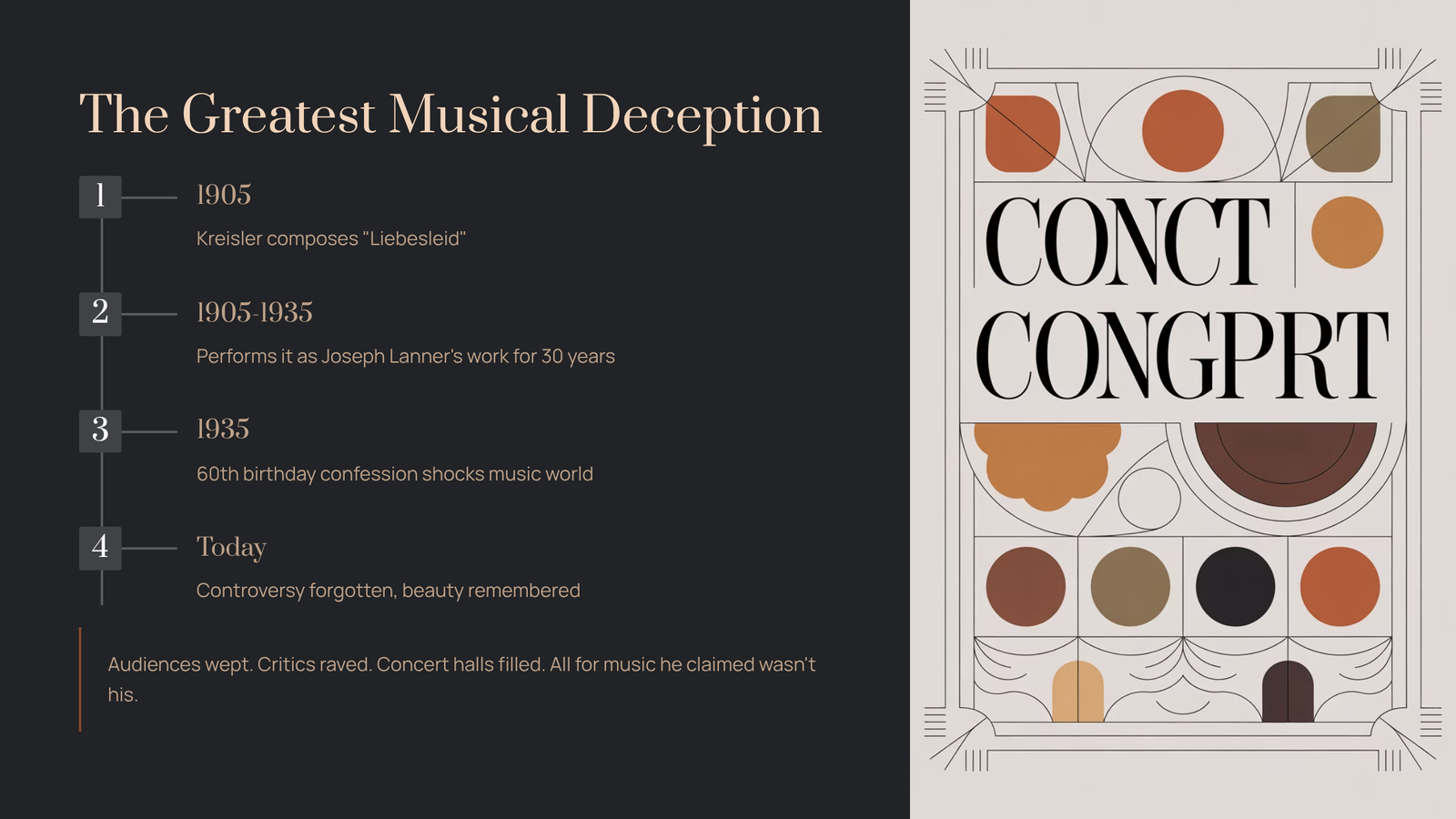
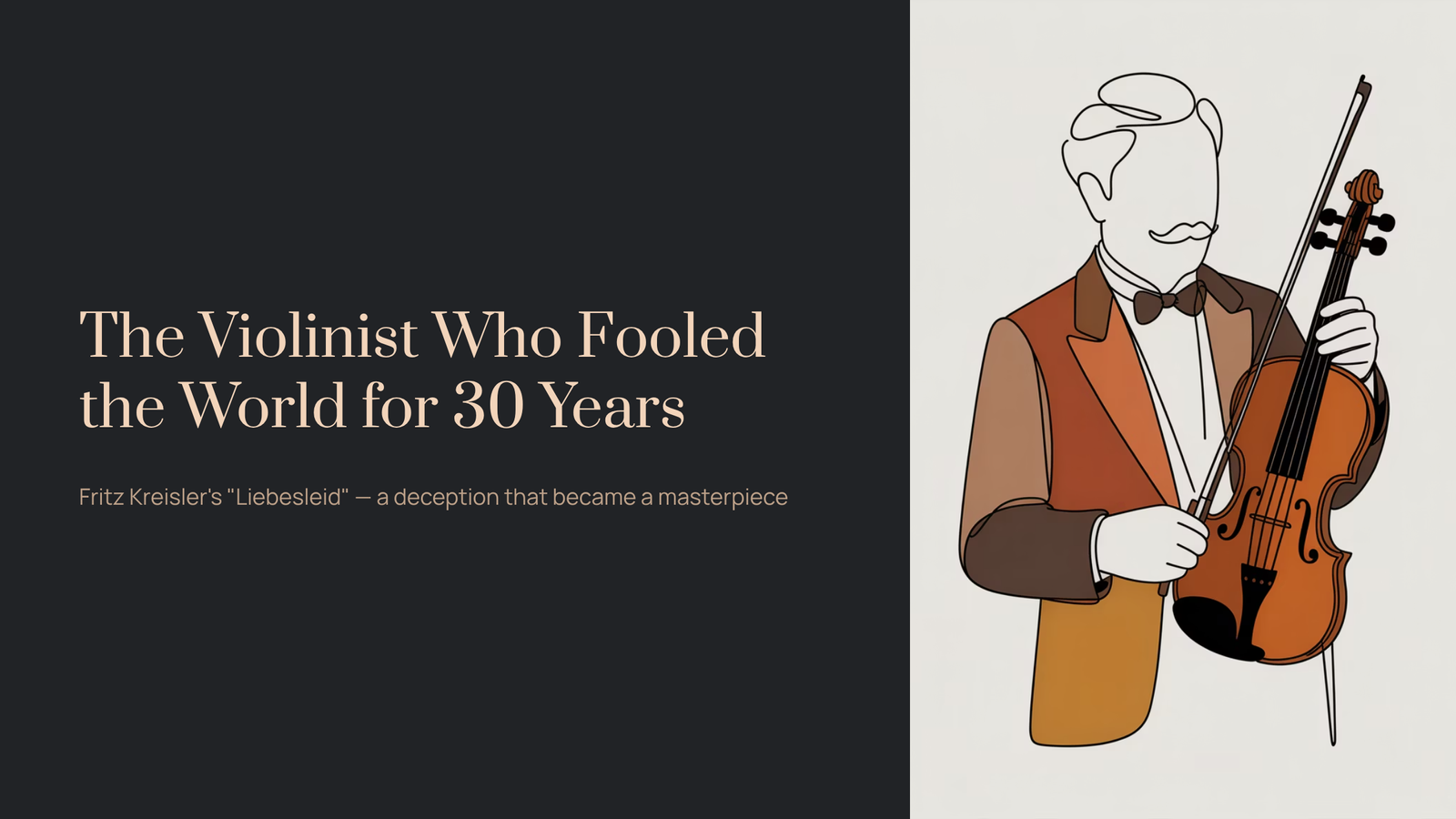
Imagine composing a piece so beautiful that audiences weep, critics rave, and concert halls fill to capacity — then telling everyone it was written by someone who died sixty years before you were born.
That’s exactly what Fritz Kreisler did with “Liebesleid.”
For three decades, one of the twentieth century’s greatest violinists performed this haunting waltz while insisting it was the work of Joseph Lanner, an obscure Austrian composer from the early 1800s. It wasn’t until his sixtieth birthday in 1935 that Kreisler finally confessed: he had written it himself all along.
The scandal rocked the classical music world. But today, we don’t remember the controversy. We remember the music — three and a half minutes of pure, aching beauty that captures something words never quite can.
What Does “Liebesleid” Actually Mean?
The German title translates directly to “Love’s Sorrow” or “Love’s Pain.” It’s not the sharp agony of heartbreak, but something more wistful — that particular melancholy you feel when remembering a love that once was, or perhaps one that never quite happened at all.
Kreisler composed this piece around 1905, during what was perhaps the happiest period of his life. He had recently married, his international career was flourishing, and Vienna was still the glittering capital of an empire. Yet he wrote music that sounds like someone gazing through rain-streaked windows at memories they can’t quite reach.
Perhaps that’s the secret of great art: you don’t need to be sad to understand sadness.
The Musical DNA: What Makes This Piece Work
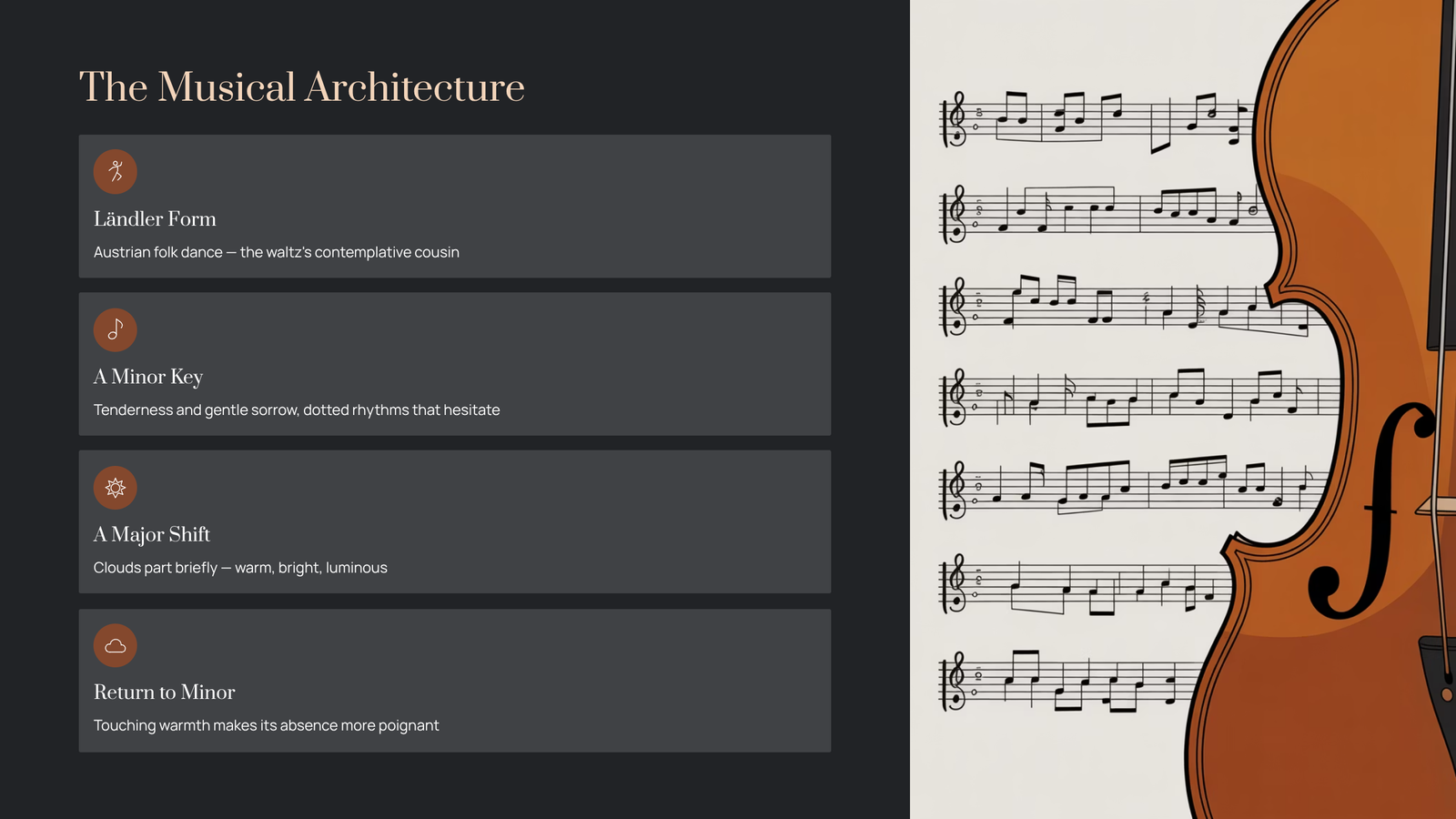
At its heart, “Liebesleid” is a Ländler — an Austrian folk dance that preceded the waltz. Think of it as the waltz’s older, more contemplative cousin. Where waltzes often sweep you off your feet, the Ländler invites you to sway gently in place, lost in thought.
The piece opens in A minor, a key historically associated with tenderness and gentle sorrow. The violin enters with a simple melody built on dotted rhythms that seem to hesitate, as if the music itself is reluctant to move forward. Underneath, the piano provides a light, almost tentative accompaniment — the footsteps of a dancer who isn’t sure whether to continue or stop.
But here’s where Kreisler’s genius shows: he doesn’t just write sad music. He writes music that remembers happiness. About a third of the way through, the key shifts from A minor to A major. The clouds part. For a brief, luminous moment, everything is warm and bright.
Then it fades. The minor key returns. And somehow, having touched that warmth makes its absence even more poignant.
The Secret Ingredient: A Chord You’ve Never Heard Of
Music theorists get excited about something called the “Neapolitan sixth chord” in this piece. Don’t worry about the technical name — what matters is what it does.
At several key moments, Kreisler introduces a chord that doesn’t quite belong. It’s like a stranger walking into a room who somehow makes you feel both unsettled and fascinated. This chord appears six times throughout the piece, always at emotional turning points, always with a slight slowing of tempo and a gentle fade.
The effect is subtle but powerful. Each time you hear it, you feel something shift — a shadow passing, a memory surfacing, a sigh escaping. It’s one of those musical tricks that works on you whether you know it’s there or not.
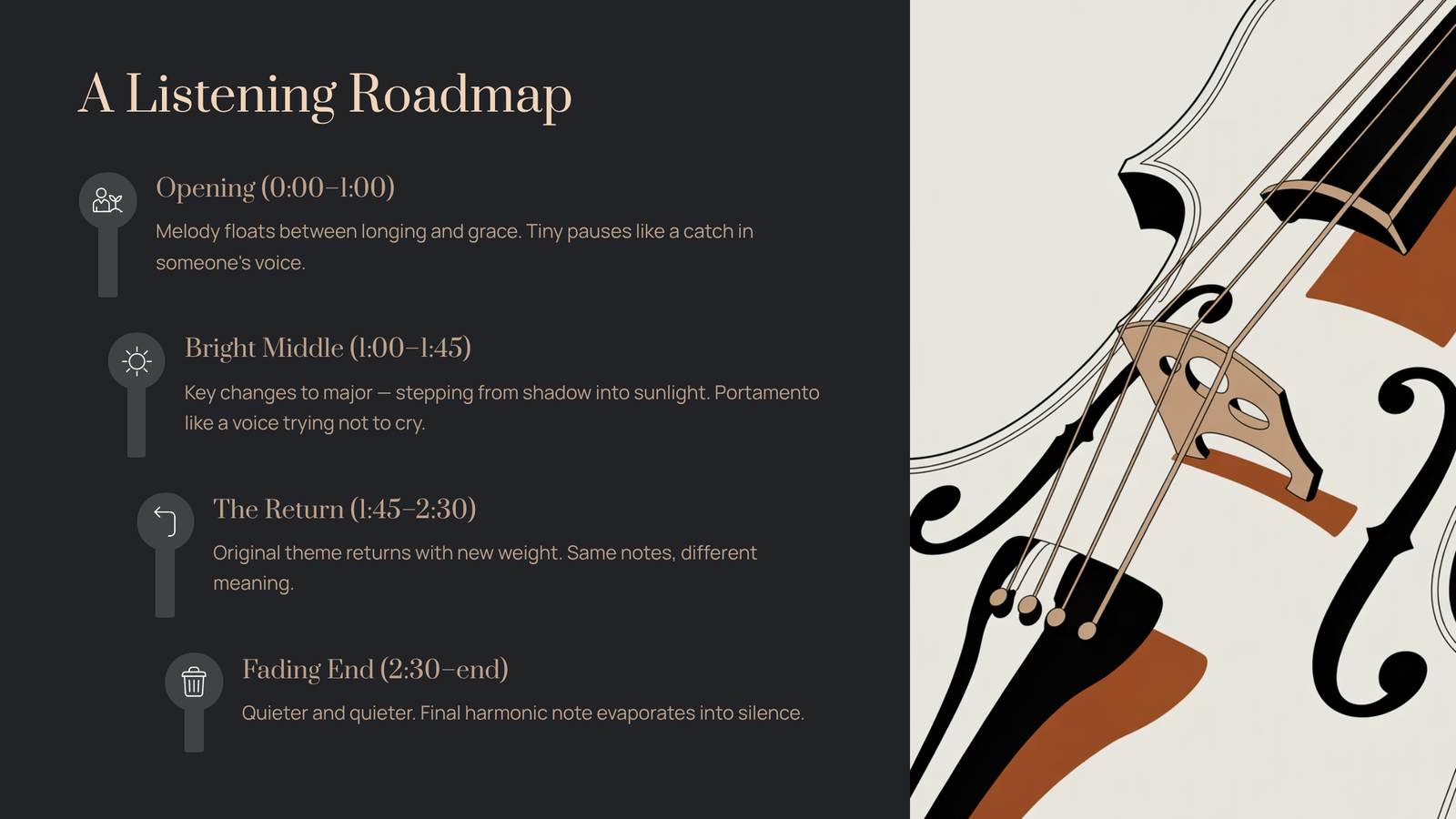
A Listening Roadmap
If you’re new to this piece, here’s what to listen for:
The Opening (0:00–1:00): Notice how the melody seems to float between longing and grace. The violin sings, but it’s always holding something back. Pay attention to the moments where the tempo slightly hesitates — these tiny pauses are the musical equivalent of a catch in someone’s voice.
The Bright Middle Section (around 1:00–1:45): When the key changes to major, the whole color of the music transforms. It’s like stepping from a shadowy room into sunlight. But listen carefully — even in this brighter passage, there’s something wistful. The portamento (the sliding between notes) sounds almost like a voice trying not to cry.
The Return (1:45–2:30): The original theme comes back, but now it feels different. You’ve experienced the bright memory in between. The same notes carry new weight.
The Fading End (2:30–end): The music grows quieter and quieter. The final note is often played as a harmonic — a ghostly, ethereal sound produced by barely touching the string. It’s as if the music doesn’t end so much as evaporate into silence.
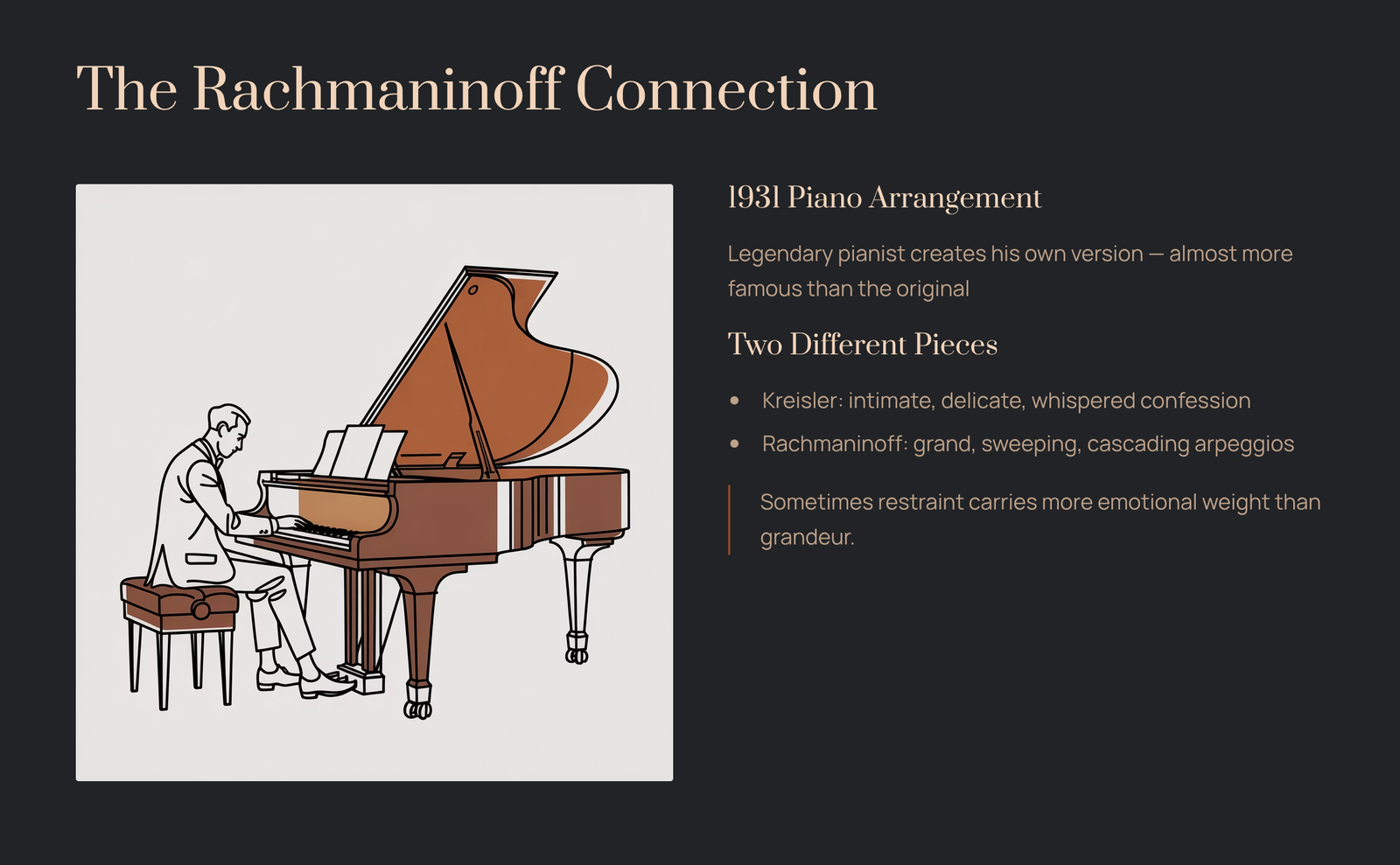
The Rachmaninoff Connection
In 1931, the legendary pianist Sergei Rachmaninoff created his own piano arrangement of “Liebesleid.” The two composers were friends, and Rachmaninoff’s version became almost as famous as the original — some would say even more so.
But they’re really two different pieces. Where Kreisler’s original is intimate and delicate, Rachmaninoff transforms it into something grand and sweeping, with cascading arpeggios and rich harmonies. It’s the difference between a whispered confession and a love letter read aloud in a cathedral.
If you listen to both versions back-to-back, you’ll discover something interesting: Kreisler’s version feels more sorrowful, despite being technically simpler. Sometimes restraint carries more emotional weight than grandeur.
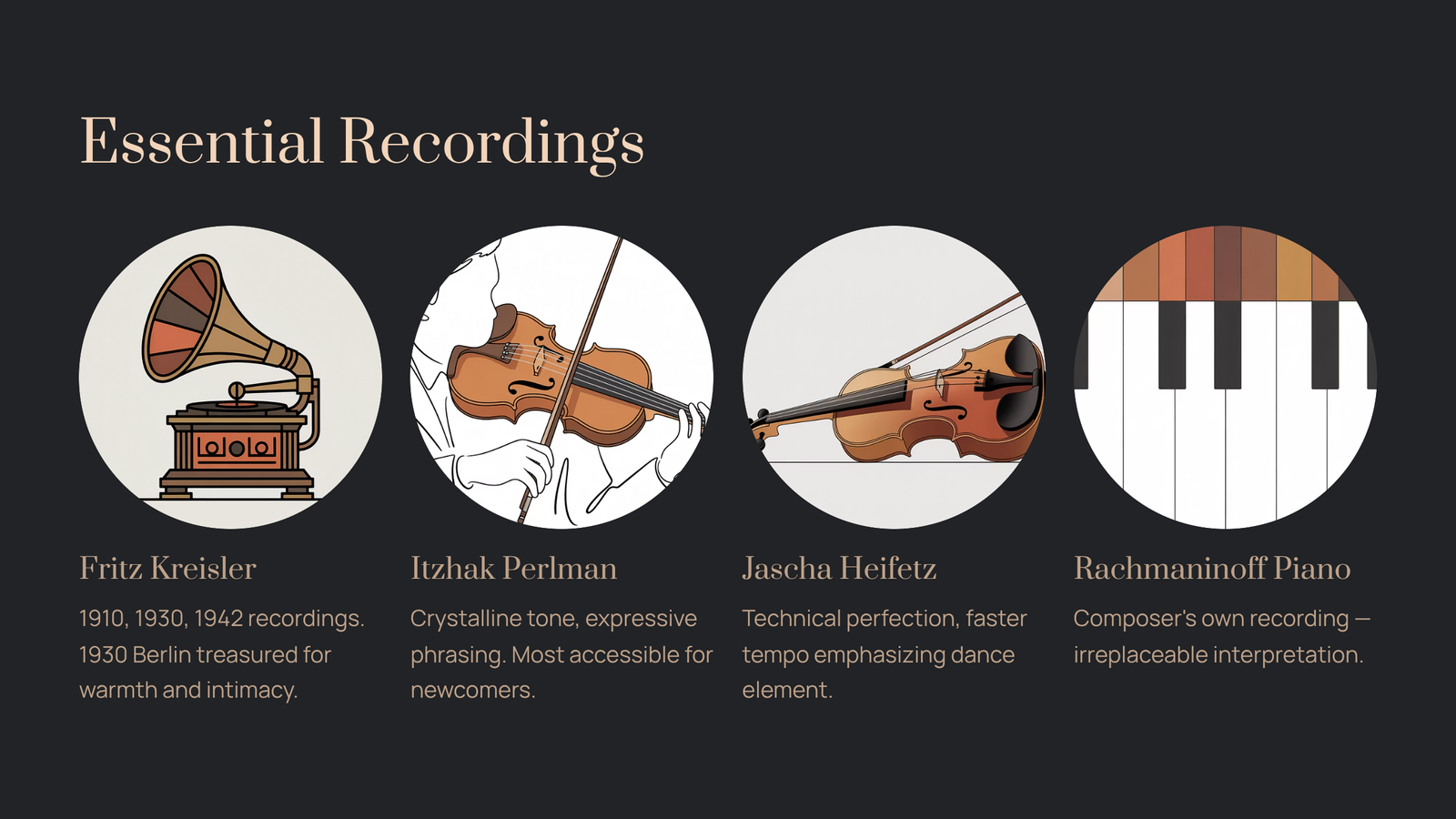
Recommended Recordings
The beauty of “Liebesleid” is that every great violinist brings something different to it:
Fritz Kreisler’s own recordings (1910, 1930, and 1942) offer a fascinating window into how interpretation evolves. His 1930 Berlin recording is particularly treasured for its warmth and intimacy.
Itzhak Perlman brings his signature crystalline tone and expressive phrasing. His version is perhaps the most accessible for newcomers.
Jascha Heifetz plays with technical perfection and a slightly faster tempo that emphasizes the dance element.
For Rachmaninoff’s piano transcription, seek out Rachmaninoff’s own recording — there’s something irreplaceable about hearing a composer perform their own arrangement.
Why This Piece Still Matters
A century after its composition, “Liebesleid” remains one of the most performed pieces in the violin repertoire. Wedding musicians play it. Conservatory students study it. Concert virtuosos program it as an encore.
Why? Perhaps because it captures something universal: the strange sweetness of sadness, the way memory and longing intertwine, the bittersweet recognition that some beautiful things exist precisely because they don’t last.
Fritz Kreisler may have lied about who wrote this piece. But the emotions it expresses? Those are as honest as music gets.
When you listen, don’t try to analyze. Just let the melody do what it was designed to do: find that quiet place inside you where love and loss have become the same thing.
And in that moment, you’ll understand why a violinist thought this music was too beautiful to claim as his own.