What Is a Cadenza? A Beginner’s Guide to Solo Flourishes
What is a cadenza? Learn why a concerto soloist suddenly plays alone, how that passage works, and what to hear when the orchestra returns.
0 Comments
October 26, 2026
What is a cadenza? Learn why a concerto soloist suddenly plays alone, how that passage works, and what to hear when the orchestra returns.
Brahms's 1881 Piano Concerto No. 2 opens with a lone horn call before unleashing one of the most demanding piano parts ever written. A beginner's guide to its grandeur, tenderness, and quiet defiance.
A gentle, aching cello melody from Brahms's Symphony No. 3 (1883) that has drifted into films and pop songs for over a century. Here's why this three-minute movement never lets go.
Brahms hid a fiery gypsy-inspired dance in the finale of his 1878 Violin Concerto. Here's why this Allegro giocoso is the most joyful three minutes in the violin repertoire—and how to hear it.
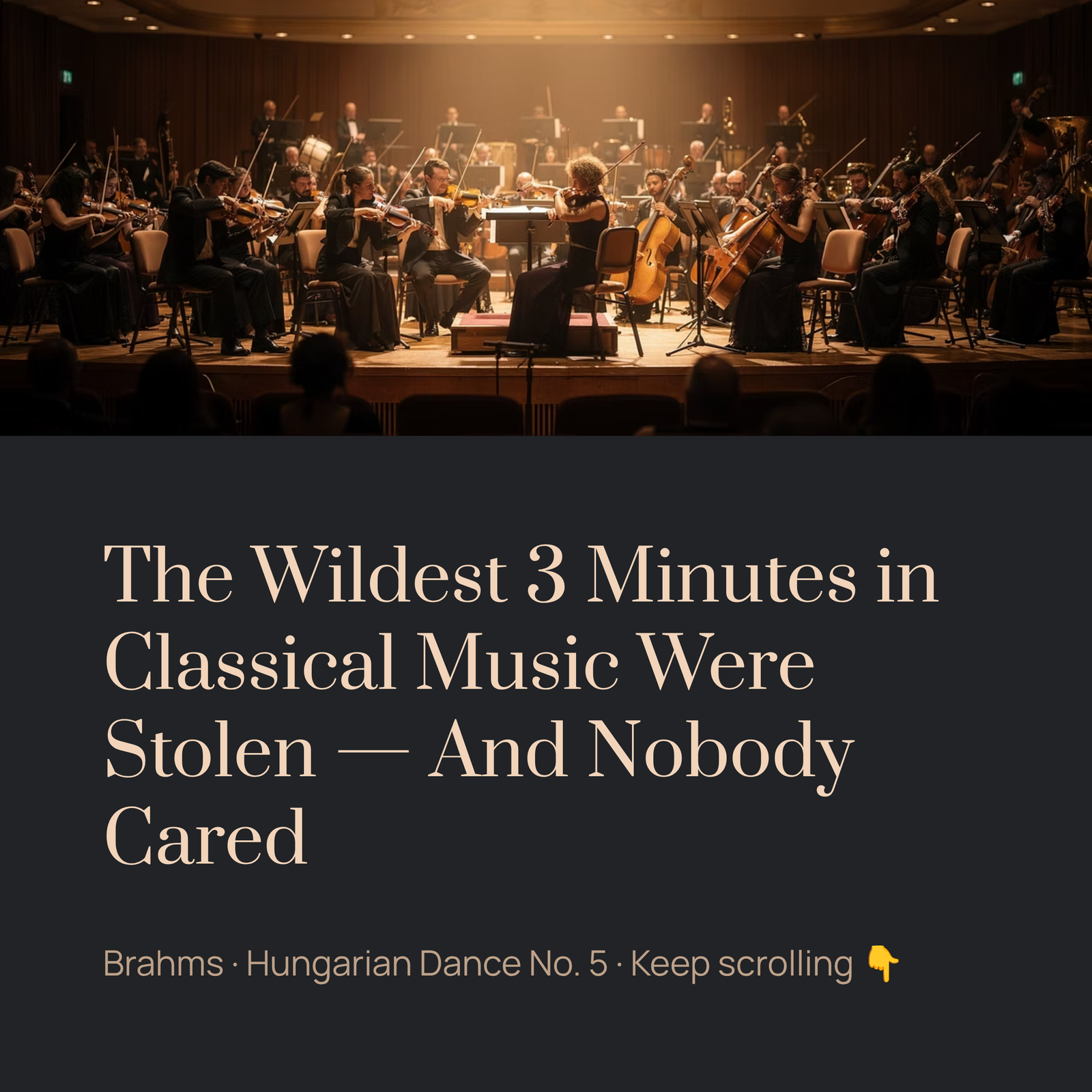
Brahms' Hungarian Dance No. 5 in G minor sparked a plagiarism scandal yet became one of the most recognized classical pieces ever. Discover the fiery Romani melodies, dramatic tempo shifts, and best recordings of this 1869 masterpiece.

Discover the fiery story behind Brahms' most famous dance piece from 1869. From gypsy taverns to Charlie Chaplin's barbershop, explore why this two-minute masterpiece still electrifies audiences worldwide.

Exploring the hidden inner voice melodies and Chopin's influence in Brahms Intermezzo Op. 76 No. 7, discovering the depths of 19th-century Romantic piano music through restrained emotional expression
Explore the profound beauty and emotional depth of Brahms' final piano masterpiece, Intermezzo Op.118 No.2, dedicated to Clara Schumann. Discover the hidden story behind this jewel of late Romantic piano literature.
An emotional interpretation and musical analysis of Brahms' Hungarian Dance No. 1. Exploring the captivating charm of this passionate dance created by a 19th-century German composer through Hungarian folk music.

Exploring the profound emotions of Brahms Symphony No. 3, 3rd Movement Poco Allegretto. From the cello's poignant melody to the horn's solitary soliloquy, discover the timeless beauty of classical music that transcends time.