📑 Table of Contents
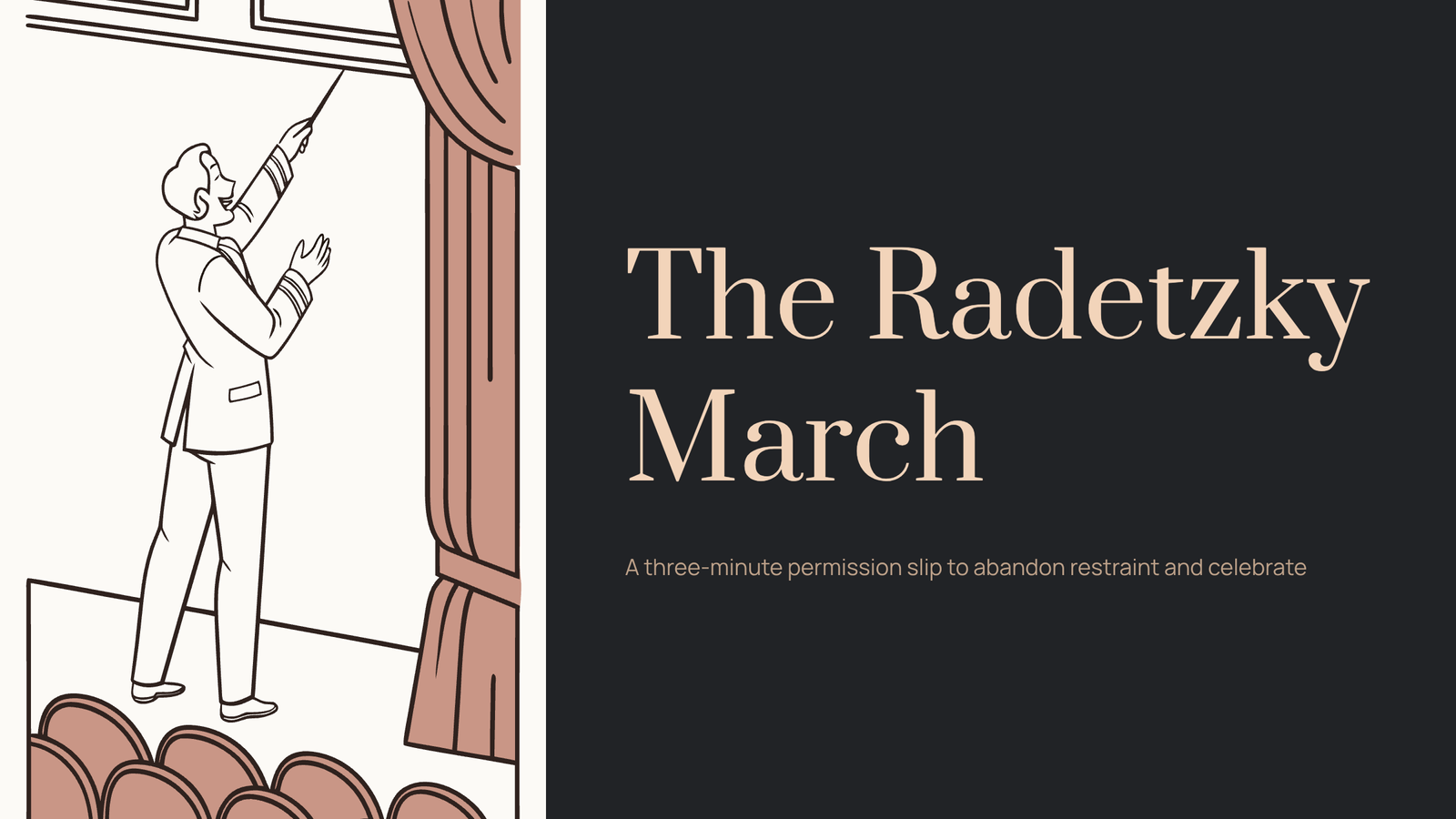

When the Whole World Claps Together
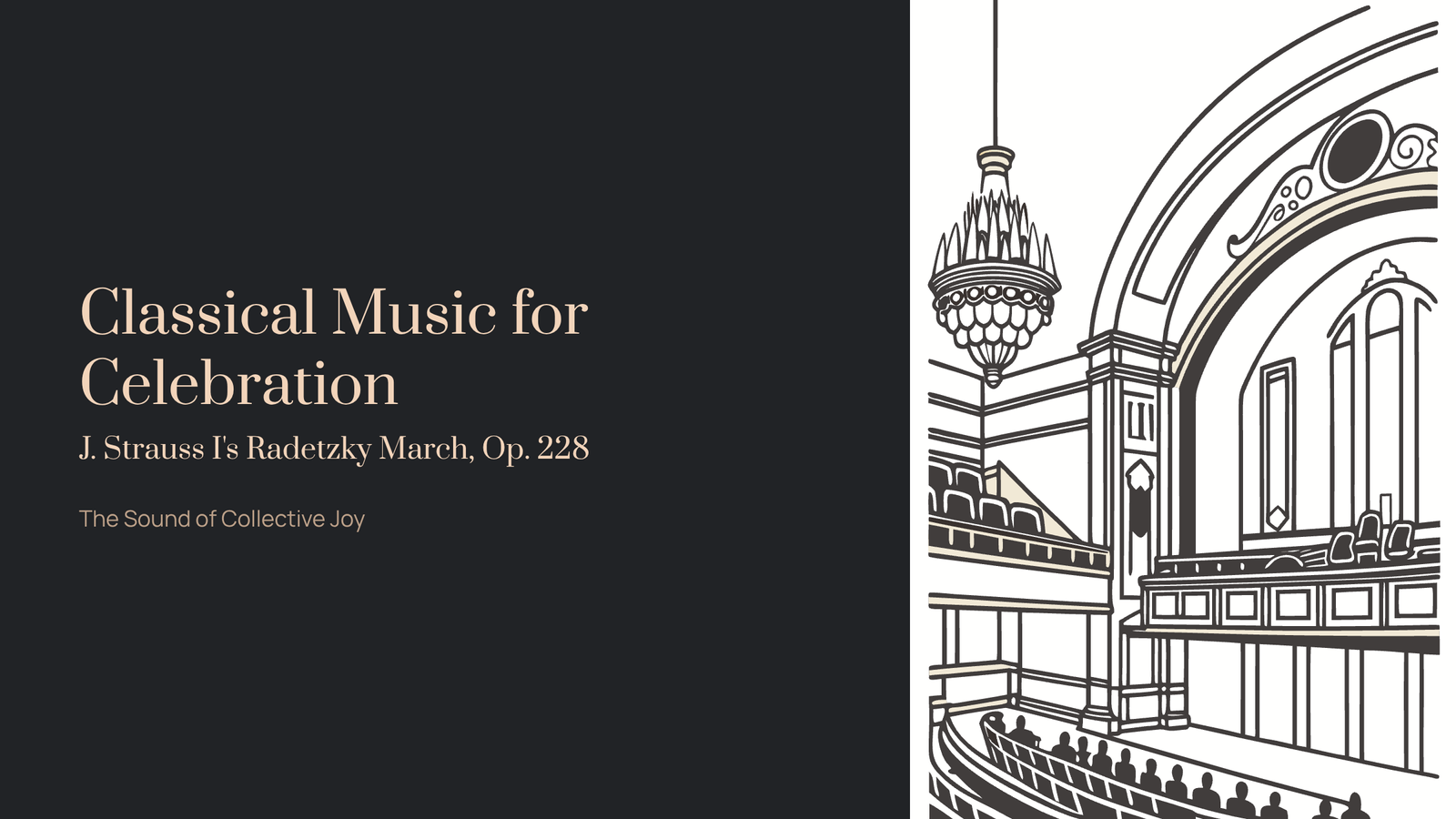
Every New Year’s Day, something extraordinary happens in Vienna’s Musikverein. As the final notes of the concert approach, an unspoken agreement ripples through the audience. Hands rise. Palms meet. And suddenly, thousands of people across the globe—watching from living rooms in Tokyo, cafés in Paris, and family gatherings in New York—find themselves clapping in unison to a melody written nearly two centuries ago.
This is the Radetzky March. It is not merely a piece of music; it is a ritual of collective joy, a three-minute permission slip to abandon restraint and simply celebrate.
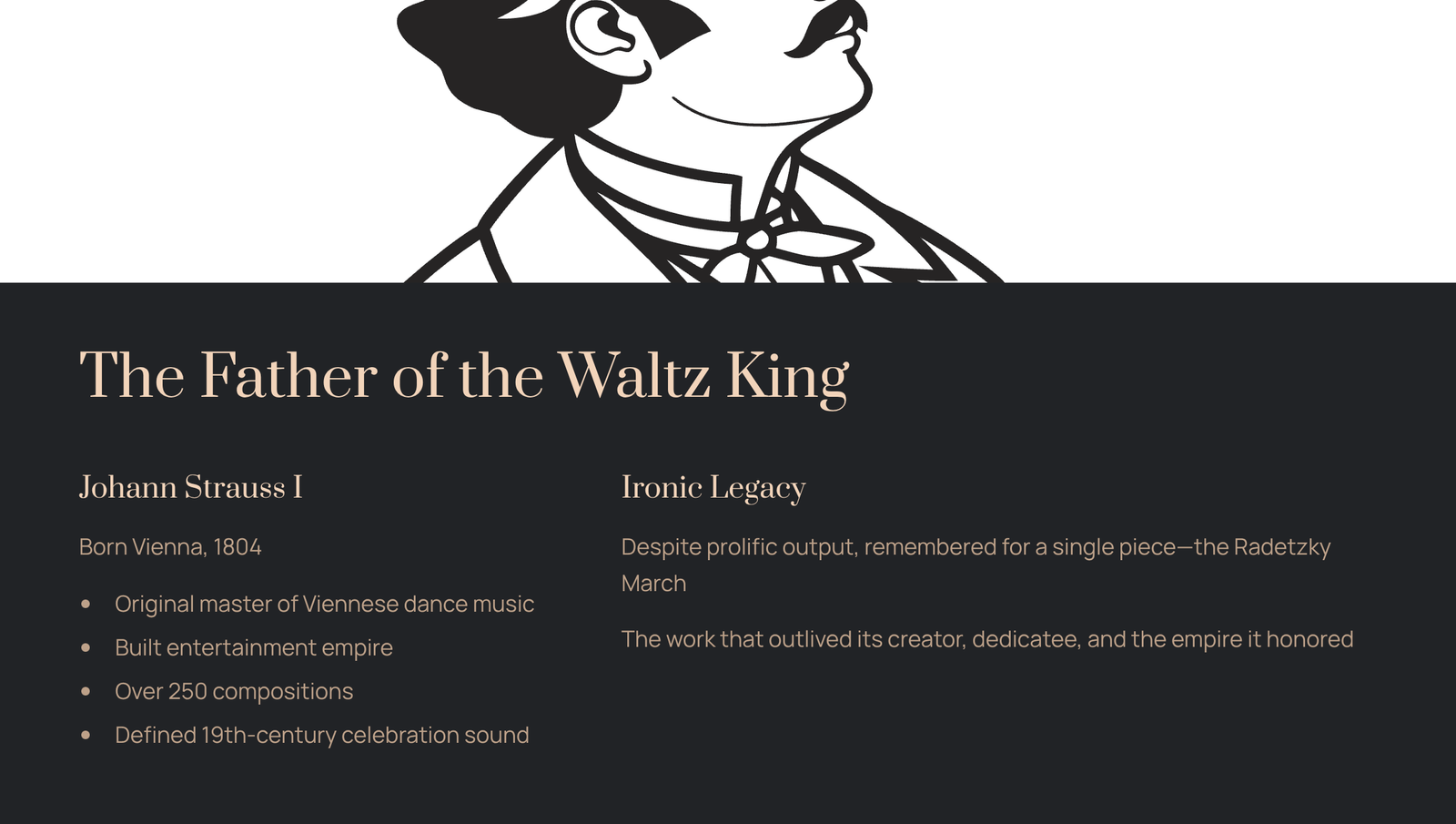
The Father of the Waltz King
Before there was the famous Johann Strauss II, the “Waltz King” who gave us “The Blue Danube,” there was his father—Johann Strauss I. Born in Vienna in 1804, the elder Strauss was the original master of Viennese dance music. He built an empire of entertainment, leading orchestras that made all of Vienna sway, and composed over 250 works that defined the sound of 19th-century celebration.
Yet fate has a peculiar sense of irony. Despite his prolific output, Johann Strauss I is remembered today primarily for a single piece—this very march. It is the work that outlived its creator, its dedicatee, and the empire it once honored.
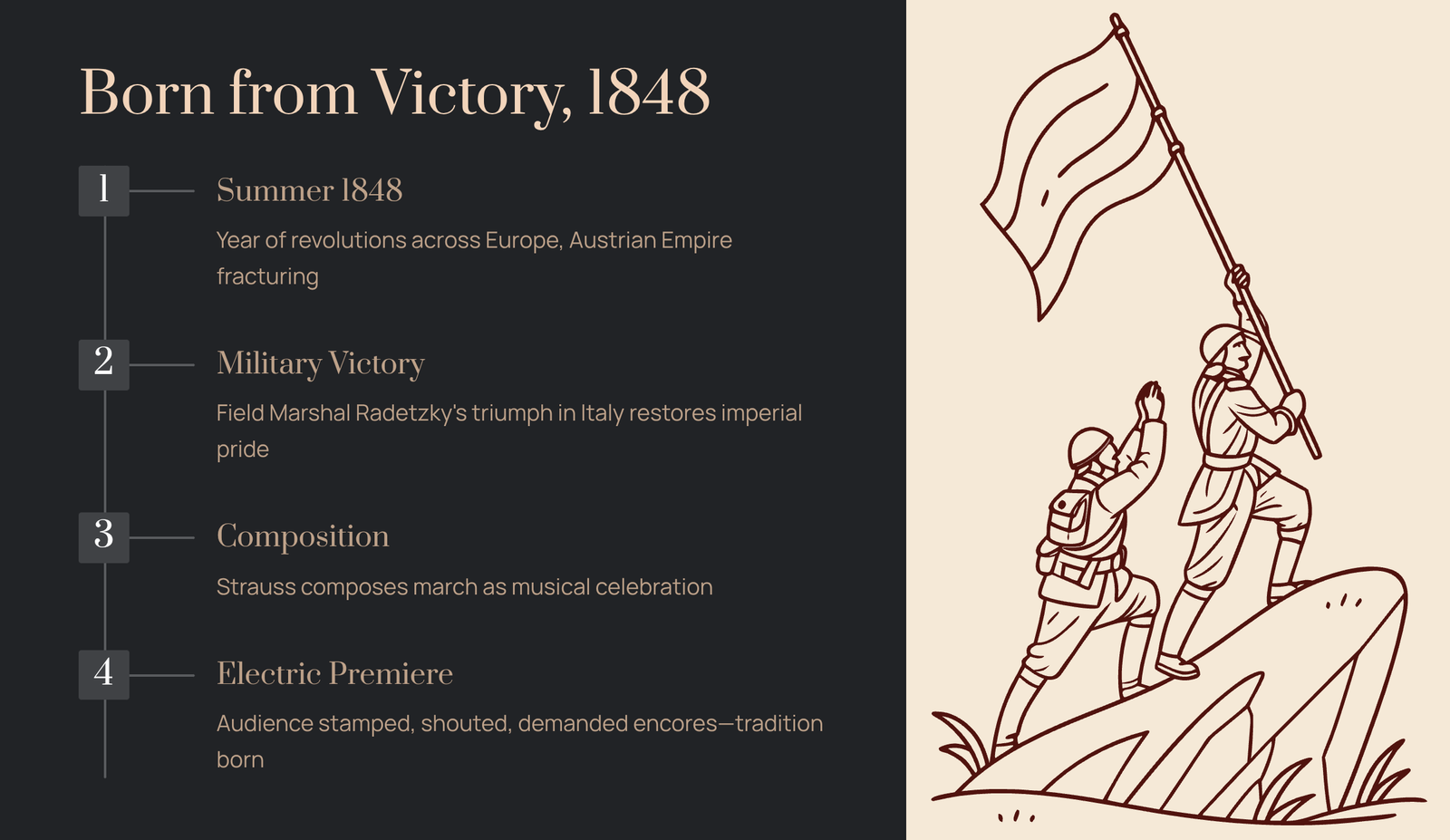
Born from Victory, 1848
The Radetzky March was composed in the summer of 1848, a year of revolutions sweeping across Europe. The Austrian Empire was fracturing, its authority challenged on multiple fronts. Then came news of Field Marshal Joseph Radetzky von Radetz’s military victory in Italy—a triumph that temporarily restored imperial pride.
Strauss, ever the opportunist of public sentiment, composed this march as a musical celebration of Radetzky’s success. He premiered it at a public concert, and the response was immediate, electric. The audience didn’t just applaud—they stamped their feet, they shouted, they demanded encore after encore. A tradition was born that night, though no one yet knew it would last nearly two hundred years.
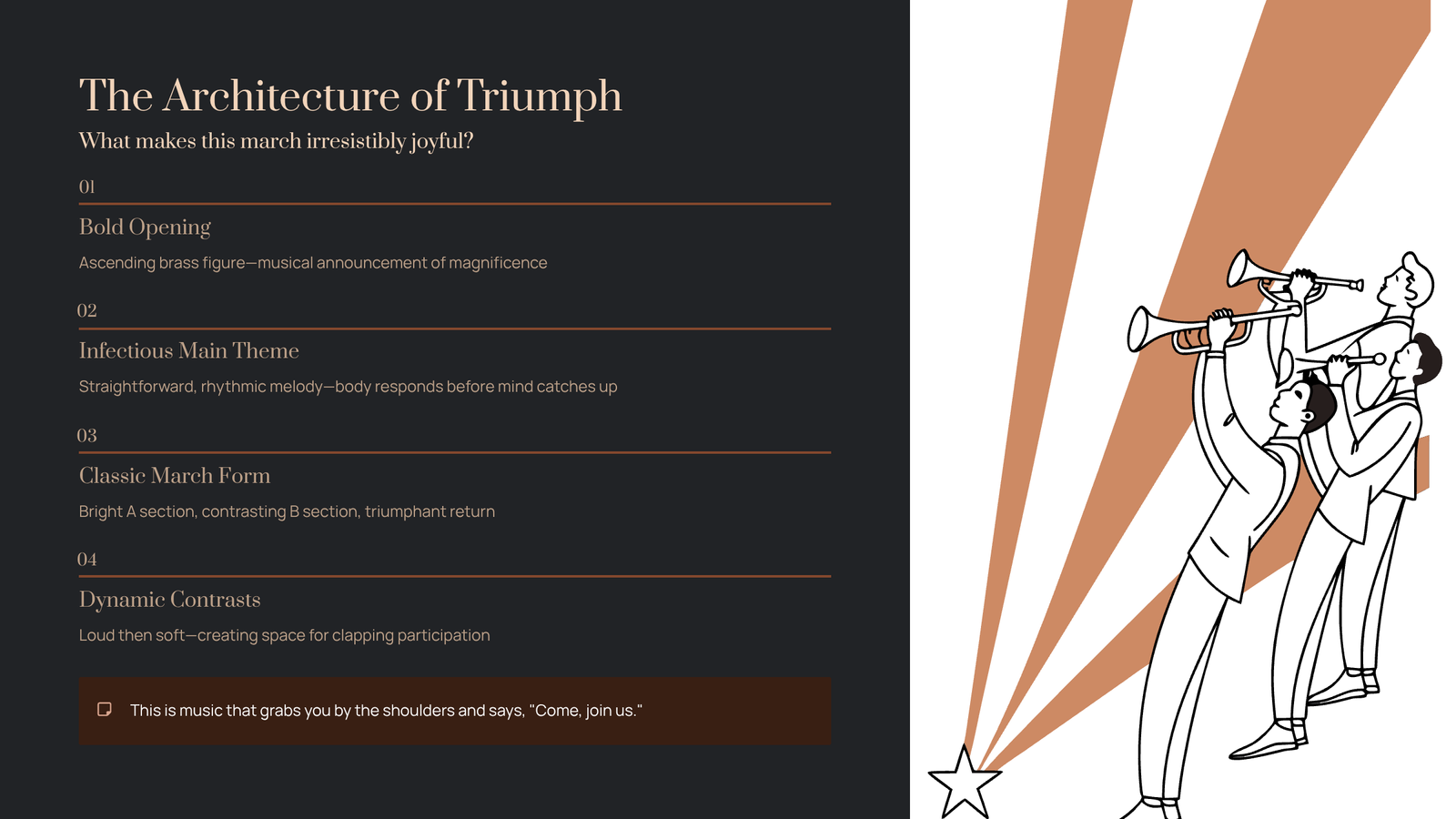
The Architecture of Triumph
What makes this march so irresistibly joyful? The answer lies in its brilliant simplicity.
The piece opens with a bold, ascending figure in the brass—a musical announcement that something magnificent is about to happen. Then comes the main theme: a melody so straightforward, so infectiously rhythmic, that your body responds before your mind can catch up. Your foot begins tapping. Your head starts nodding. You are already part of it.
The structure follows the classic march form—a bright A section, a contrasting B section in the subdominant key offering a brief moment of lyrical sweetness, then a triumphant return. But Strauss adds something special: dynamic contrasts that practically invite participation. The orchestra plays loud, then suddenly soft, as if creating space for hands to fill with clapping.
This is not music that asks you to sit still and contemplate. This is music that grabs you by the shoulders and says, “Come, join us.”

The Vienna New Year’s Concert Tradition
Since 1946, the Vienna Philharmonic has broadcast their New Year’s Concert to the world, and the Radetzky March has become its unofficial signature finale. But what makes this performance unique is the conductor’s role.
As the march begins its final iteration, the conductor turns to face the audience—a gesture found nowhere else in classical music. With gentle hand motions, they guide the clapping: softer here, louder there, building toward an explosive final cadence. The conductor becomes not a leader of musicians, but a leader of humanity itself, uniting strangers across continents in shared rhythm.
It is, perhaps, the most democratic moment in all of classical music. No expertise required. No tickets necessary beyond a television screen. Just hands, rhythm, and the universal human need to celebrate together.
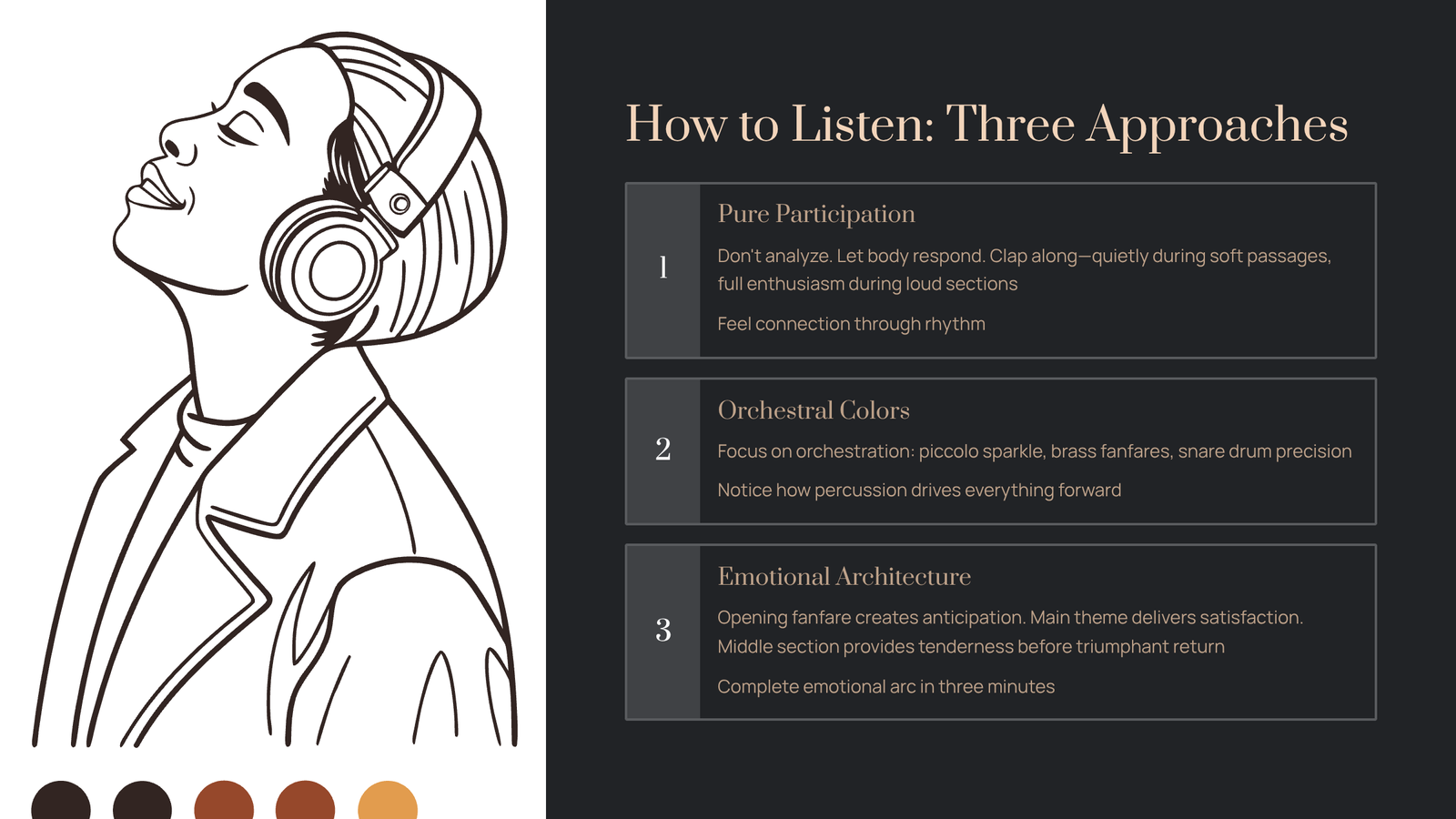
How to Listen: Three Approaches
First Listen: Pure Participation
Don’t analyze. Don’t think. Simply let your body respond. When the famous theme arrives, clap along—quietly at first during soft passages, then with full enthusiasm during the loud sections. Feel what millions of New Year’s listeners feel: connection through rhythm.
Second Listen: Orchestral Colors
Focus on Strauss’s orchestration. Notice how the piccolo adds sparkle above the melody. Listen for the brass fanfares that punctuate each phrase. Observe how the percussion—especially the snare drum—drives everything forward with military precision.
Third Listen: Emotional Architecture
Pay attention to the journey. The opening fanfare creates anticipation. The main theme delivers satisfaction. The contrasting middle section provides a moment of tenderness before the triumphant return. It’s a complete emotional arc in three minutes.
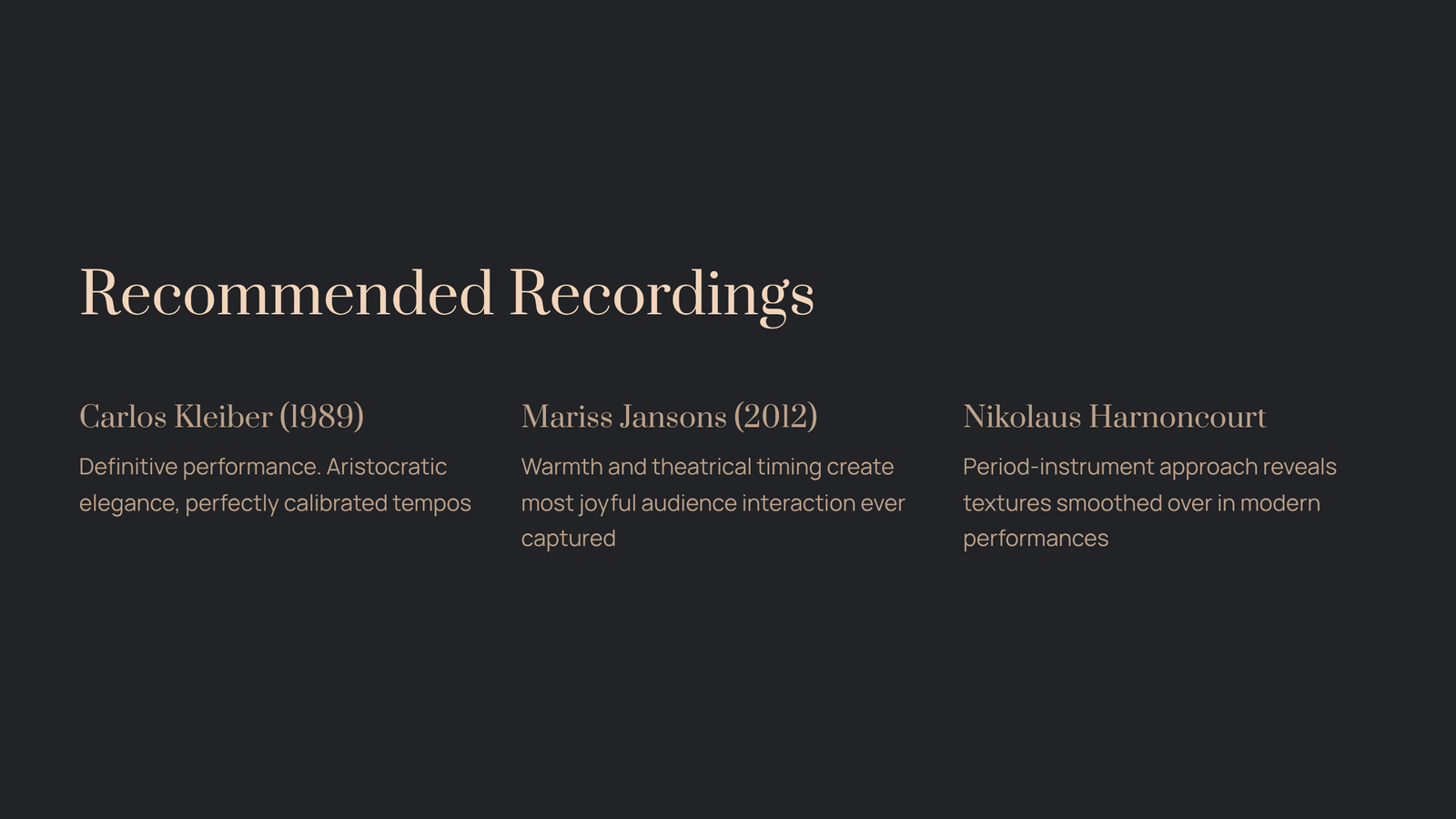
Recommended Recordings
Vienna Philharmonic, conducted by Carlos Kleiber (1989)
Many consider this the definitive performance. Kleiber brings an aristocratic elegance and perfectly calibrated tempos that make every phrase breathe.
Vienna Philharmonic, conducted by Mariss Jansons (2012)
Jansons’s warmth and theatrical timing create one of the most joyful audience interactions ever captured on film.
Original Instruments: Concentus Musicus Wien, Nikolaus Harnoncourt
For those curious about historical sound, Harnoncourt’s period-instrument approach reveals textures often smoothed over in modern performances.

More Than Music
The Radetzky March has long since shed its military and political origins. Field Marshal Radetzky is a footnote; the Austrian Empire is dust. What remains is something purer: a vessel for human joy that transcends its historical moment.
When you clap along to this march, you are not celebrating a 19th-century military victory. You are celebrating the simple, profound fact of being alive—together, in rhythm, with strangers who become, for three glorious minutes, your companions in joy.
Some music asks us to think. Some asks us to feel. The Radetzky March asks us simply to participate. And in that invitation lies its immortality.
#JohannStraussI #RadetzkyMarch #ViennaNewYearConcert #ClassicalMusicForCelebration #OrchestralMusic #FestiveClassical #ViennaPhilharmonic #MarchMusic #NewYearMusic #ClassicalMusicBeginners