📑 Table of Contents
There are pieces you listen to, and there are pieces that grab you by the collar and drag you somewhere you’ve never been. Sarasate’s Zigeunerweisen is the latter. From its very first notes — a slow, mournful cry rising from the violin — you’re no longer sitting in your living room. You’re standing on a dusty road at dusk, watching a caravan disappear over the horizon, and something inside your chest aches for reasons you can’t quite name.
Zigeunerweisen, which translates to “Gypsy Airs,” is one of the most electrifying pieces ever written for the violin. Composed in 1878, it packs the drama of an opera, the intimacy of a lullaby, and the raw adrenaline of a sprint — all into roughly eight minutes. If you’ve never listened to classical music before and someone handed you this piece, you might never look back.
Who Was Pablo de Sarasate?
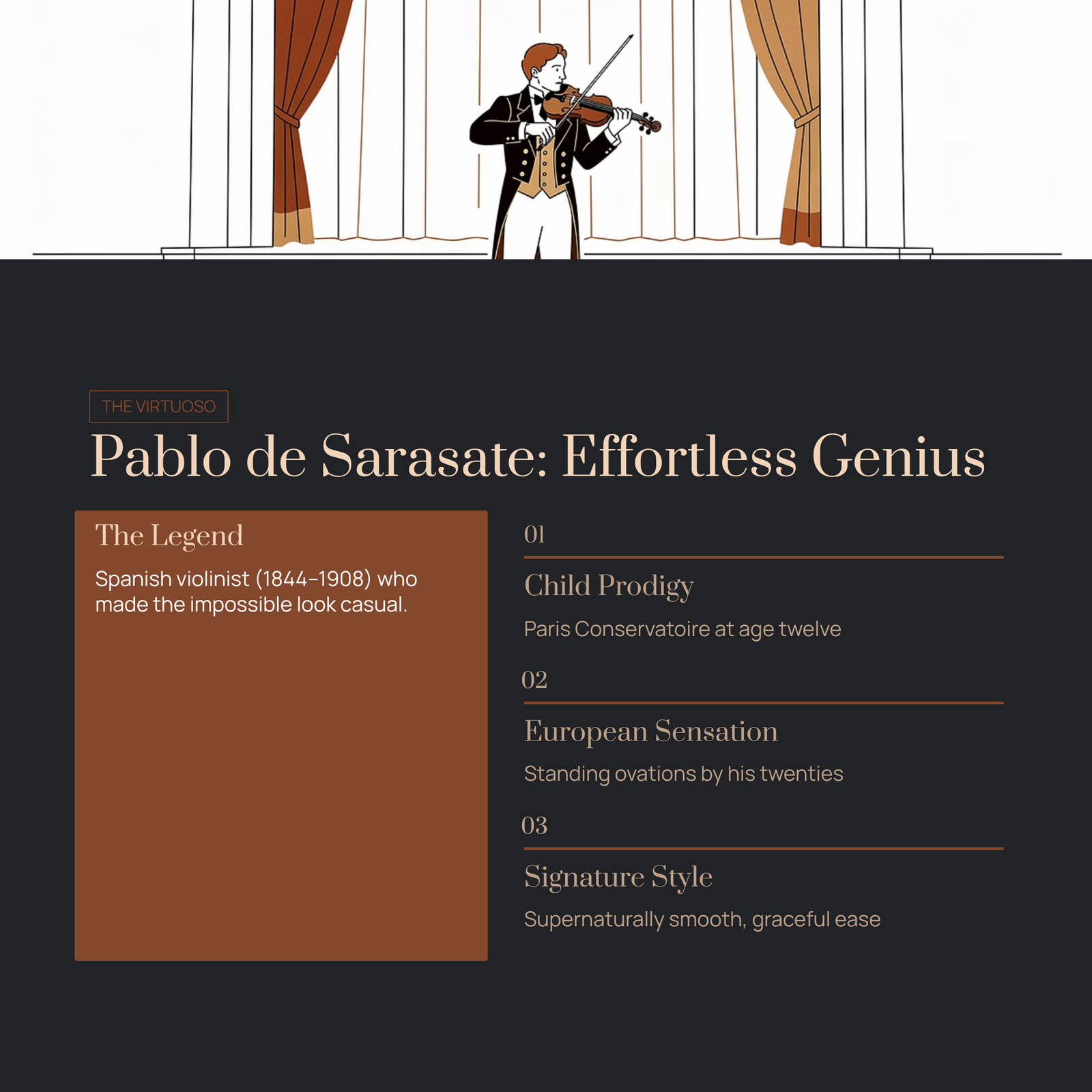
Pablo de Sarasate (1844–1908) was a Spanish violinist and composer who was, quite simply, one of the most celebrated performers of the nineteenth century. Born in Pamplona, he showed extraordinary talent as a child and was sent to study at the Paris Conservatoire at the age of twelve. By his twenties, he was touring Europe to standing ovations.
What set Sarasate apart wasn’t just technical perfection — though he had plenty of that. It was the effortlessness. Critics described his playing as almost supernaturally smooth, as if the violin were simply an extension of his breath. He didn’t sweat or grimace on stage. He made the impossible look like a casual afternoon stroll. This quality of graceful ease became his signature, and composers like Saint-Saëns and Lalo wrote concertos specifically for him.
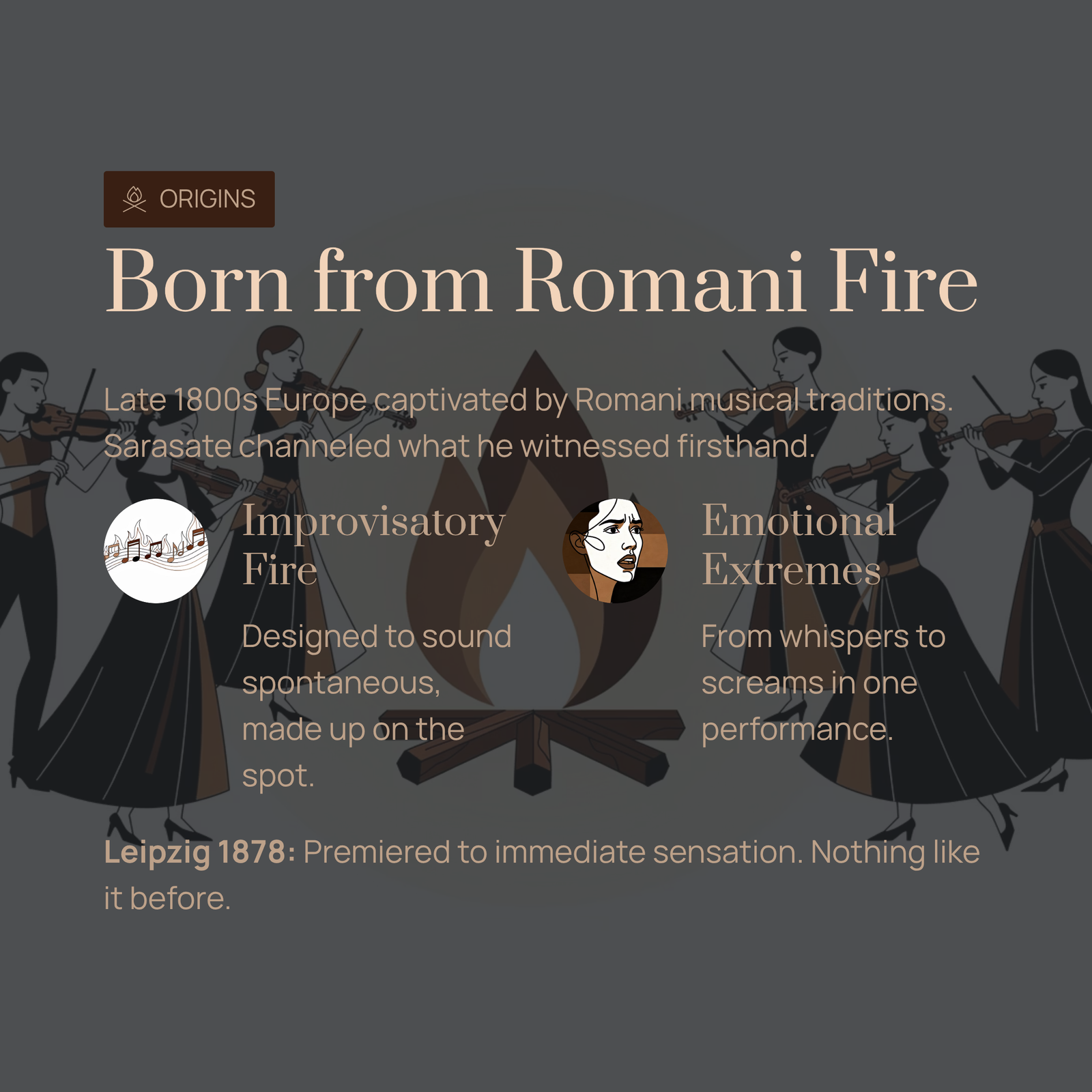
Zigeunerweisen was born from Sarasate’s deep fascination with Romani (Gypsy) musical traditions. During his travels, he absorbed the improvisatory fire, the emotional extremes, and the dazzling ornamentation of Romani fiddlers — and distilled it all into a concert piece that would become his most enduring legacy.
The Story Behind the Music
The late nineteenth century was a time when Romani musical culture captivated European audiences. Hungarian composers like Liszt and Brahms drew from these traditions, but Sarasate — as a performing virtuoso — had a uniquely personal relationship with this material. He wasn’t writing from a distance. He was channeling something he had witnessed firsthand in taverns, camps, and village squares across Central Europe.
Zigeunerweisen draws on several Hungarian and Romani folk melodies, weaving them into a structure that mimics the spontaneous, improvisatory feel of a live Romani performance. It’s composed, yes, but it’s designed to sound as if the violinist is making it up on the spot — responding to some invisible audience, pushing the tempo, pulling it back, whispering, then screaming.
The piece premiered in Leipzig in 1878 with Sarasate himself as soloist. It was an immediate sensation. Audiences had heard virtuoso showpieces before, but nothing quite like this — nothing that combined such raw emotional power with such breathtaking technical demands.
A Musical Roadmap: Three Worlds in Eight Minutes
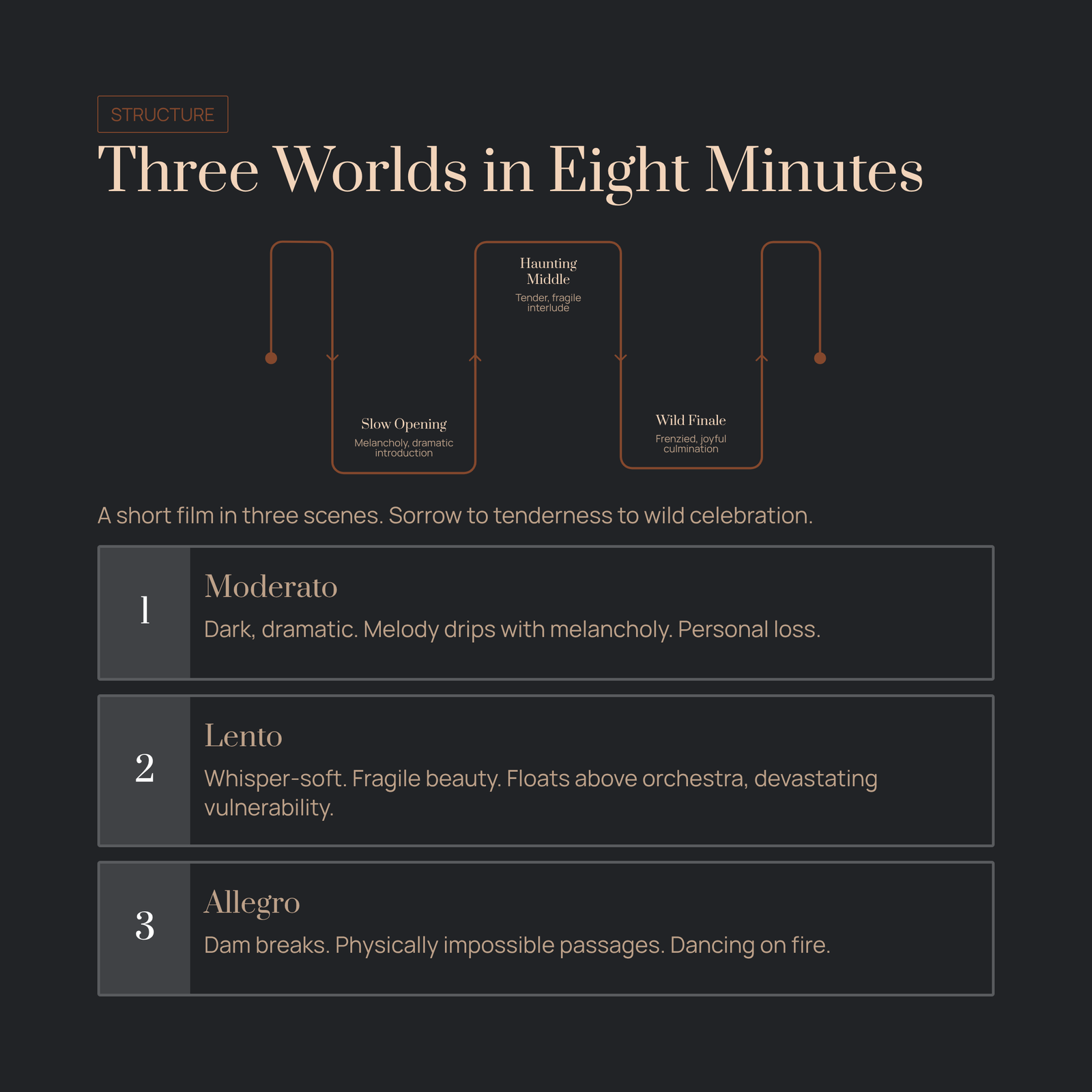
Even if you know nothing about musical form, Zigeunerweisen is remarkably easy to follow. Think of it as a short film in three scenes.
The Slow Opening (Moderato): The piece begins with an orchestral introduction that sets a dark, dramatic mood — almost cinematic. Then the violin enters with a long, singing melody that drips with melancholy. This section is all about expression. The notes bend and sway, the tempo stretches and contracts, and you can hear something deeply personal in every phrase. It’s like listening to someone tell you about a loss they’ve never fully recovered from.
The Haunting Middle (Lento): Here, the music slows to a whisper. The violin plays a melody so tender, so fragile, that it feels like it might shatter if you breathe too loudly. This is often the section that catches first-time listeners completely off guard. After the dramatic opening, this sudden vulnerability is devastating. Listen for the way the violin seems to float above the orchestra, almost disconnected from gravity.
The Wild Finale (Allegro molto vivace): And then — without warning — the dam breaks. The tempo erupts into a frenzied dance, and the violin launches into a series of passages that seem physically impossible. Rapid-fire notes, double stops, harmonics, and left-hand pizzicato fly past at dizzying speed. It’s exhilarating. It’s joyful. It’s the musical equivalent of watching someone set a tightrope on fire and then dance across it, laughing.
The genius of Zigeunerweisen is this emotional arc: sorrow to tenderness to wild celebration. It mirrors the emotional range of Romani music itself, where a single evening might move from heartbreaking ballads to ecstatic dance without any contradiction.
What to Listen For: A Beginner’s Guide
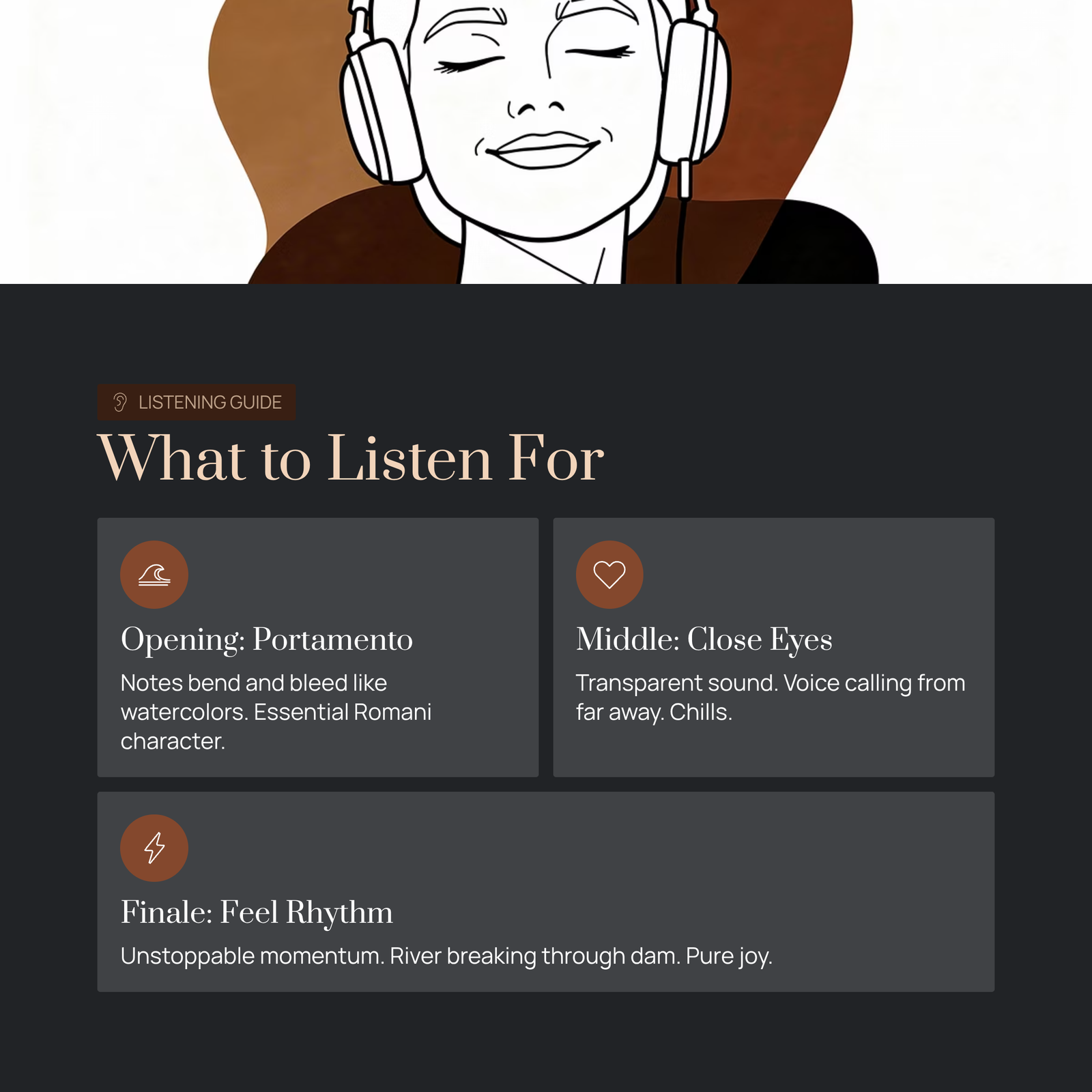
If this is your first time, here are a few things to tune your ears toward.
In the opening section, pay attention to how the violin bends its pitch. Those subtle slides between notes — called portamento — are essential to the Romani character of the music. A “clean” performance would miss the point entirely. The best violinists let the notes bleed into each other like watercolors.
During the slow middle section, close your eyes. This is the heart of the piece. Notice how the violin’s tone changes — it becomes thinner, more distant, almost like a voice calling from very far away. Some performers play this section with a nearly transparent sound that gives you chills.
When the finale explodes, try not to focus on individual notes. Instead, feel the rhythm. The momentum is what matters here. The best performances make this section feel like a force of nature — something unstoppable and joyous, like a river breaking through a dam.
Recordings That Will Change Your Evening
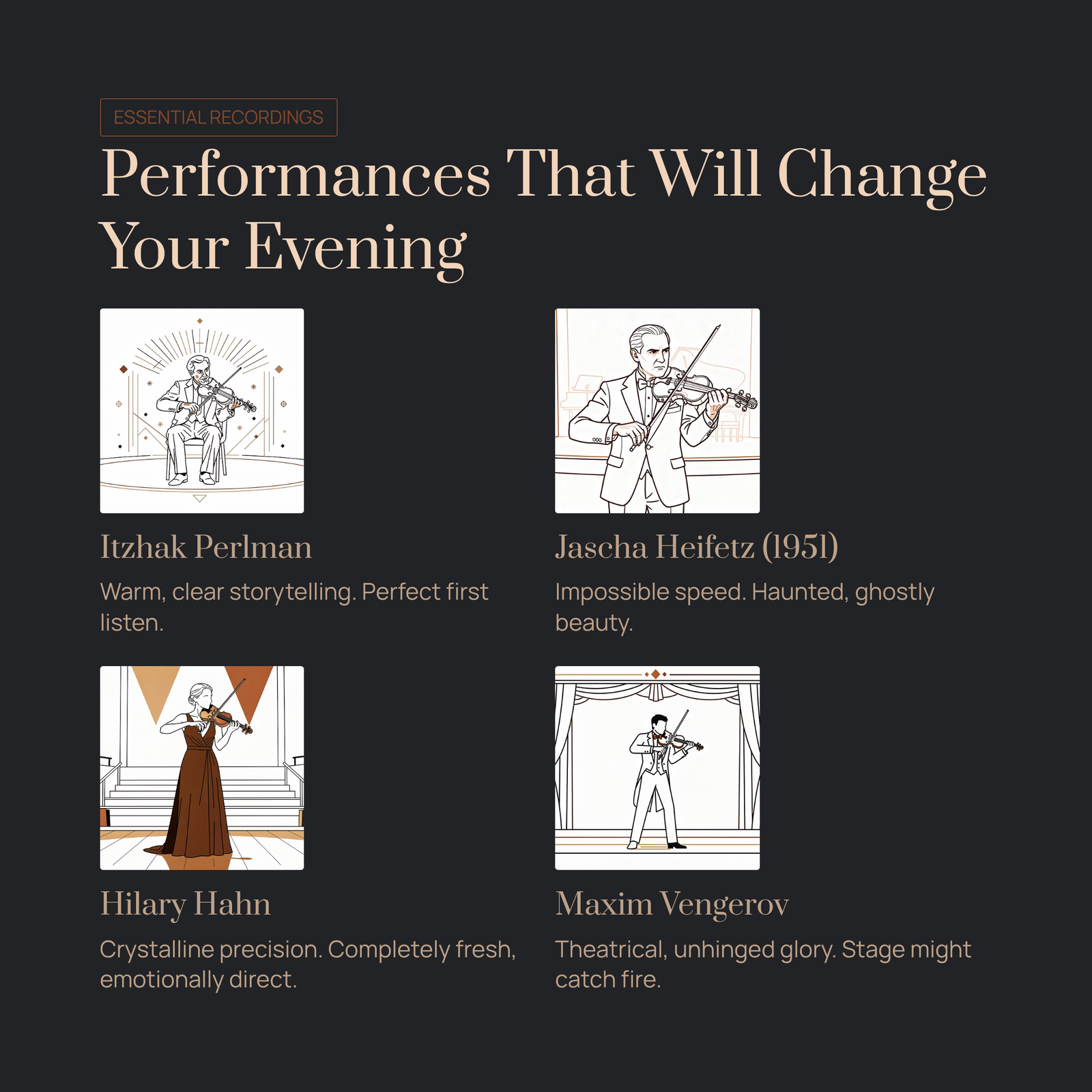
For a first listen, Itzhak Perlman’s recording with the Abbey Road Ensemble is a wonderful entry point. Perlman brings warmth, clarity, and a storytelling quality that makes every section vivid.
If you want something more intense, try Jascha Heifetz’s legendary 1951 recording. Heifetz plays the finale at a speed that still seems physically impossible, and the slow section has a haunted, almost ghostly beauty.
For a modern take, Hilary Hahn’s performances bring a crystalline precision and emotional directness that feels completely fresh. And if you want to hear Zigeunerweisen in its most theatrical, unhinged glory, look up a live performance by Maxim Vengerov — the man plays as if the stage might catch fire, and you wouldn’t be entirely surprised if it did.

Why This Piece Still Matters
Zigeunerweisen has survived for nearly 150 years not because it’s technically impressive — though it certainly is — but because it speaks to something universal. The longing in the opening, the tenderness of the slow section, the uncontainable joy of the finale: these aren’t “classical music emotions.” They’re human emotions, dressed in the clothes of a wandering tradition that valued freedom, expression, and the moment above all else.
In a world that often asks us to be composed, measured, and efficient, Zigeunerweisen is a reminder that sometimes the most beautiful thing you can do is let yourself feel everything — the sorrow, the stillness, and the wild, dizzy joy — all in the space of eight minutes.
Press play. The caravan is leaving. You don’t want to miss it.