📑 Table of Contents
Picture a graveyard at the stroke of midnight. The air is cold. A single harp plucks twelve notes—the chiming of the witching hour. Then a violin slides into a sound so wrong it makes your skin prickle: two notes that grate against each other like a rusty hinge. This is Death, tuning his fiddle. And once he starts to play, the skeletons climb out of their graves and dance.
That’s not a horror movie. That’s the opening of Danse macabre, written 150 years ago by a French composer who wanted to scare you—and delight you—all at once. If you think classical music is all powdered wigs and polite applause, this piece is here to change your mind.
Meet Camille Saint-Saëns: The Prodigy Who Loved a Good Scare
Camille Saint-Saëns (pronounced roughly “san-SONS”) was one of those almost annoyingly gifted people. Born in Paris in 1835, he could read and write before age three and gave his first public piano concert at ten, reportedly offering to play any of Beethoven’s 32 piano sonatas from memory as an encore. He went on to master not just music but also astronomy, geology, and ancient history.
But Saint-Saëns wasn’t a stuffy academic. He had a playful, even mischievous streak—the same composer who wrote this dance of the dead also wrote The Carnival of the Animals, a witty musical zoo. He loved the idea of using the orchestra to paint vivid pictures and tell stories, and Danse macabre is one of his most theatrical experiments.
The Story Behind the Music: A Poem, a Legend, and a Dancing Skeleton
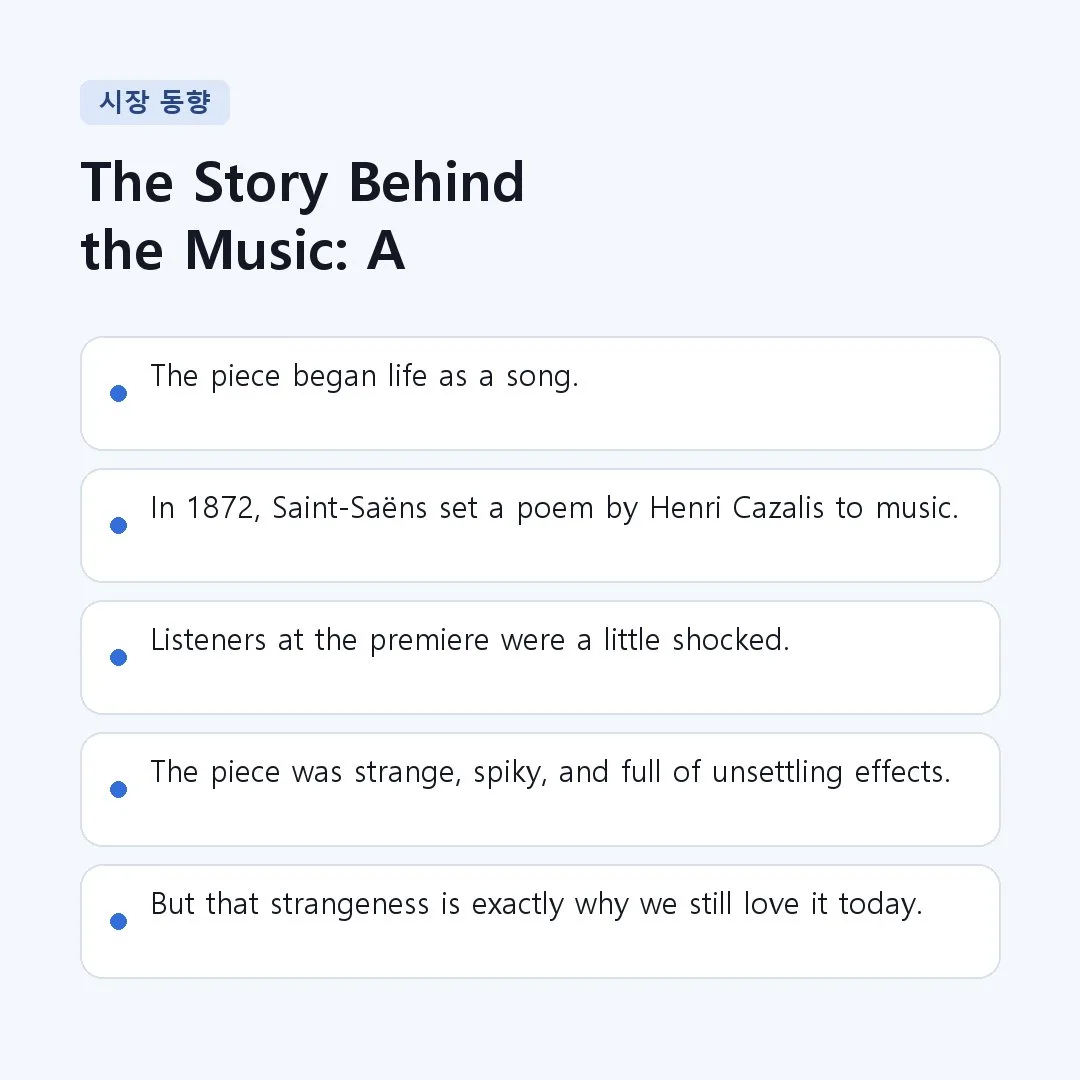
The piece began life as a song. In 1872, Saint-Saëns set a poem by Henri Cazalis to music. The poem draws on an old European legend: every year on Halloween night, Death appears at midnight and plays his violin, summoning the dead from their graves to dance until the first rooster crows at dawn.
Two years later, in 1874, Saint-Saëns reworked the idea into a purely orchestral “tone poem”—music that tells a story without any words. Listeners at the premiere were a little shocked. The piece was strange, spiky, and full of unsettling effects. But that strangeness is exactly why we still love it today.
One detail to listen for: Saint-Saëns weaves in a melody from the Dies irae, an ancient Latin chant about the Day of Judgment that composers have used for centuries to signal death and doom. He twists it into something almost jaunty—as if Death himself is in a good mood.
How to Listen: A Guided Tour Through the Night
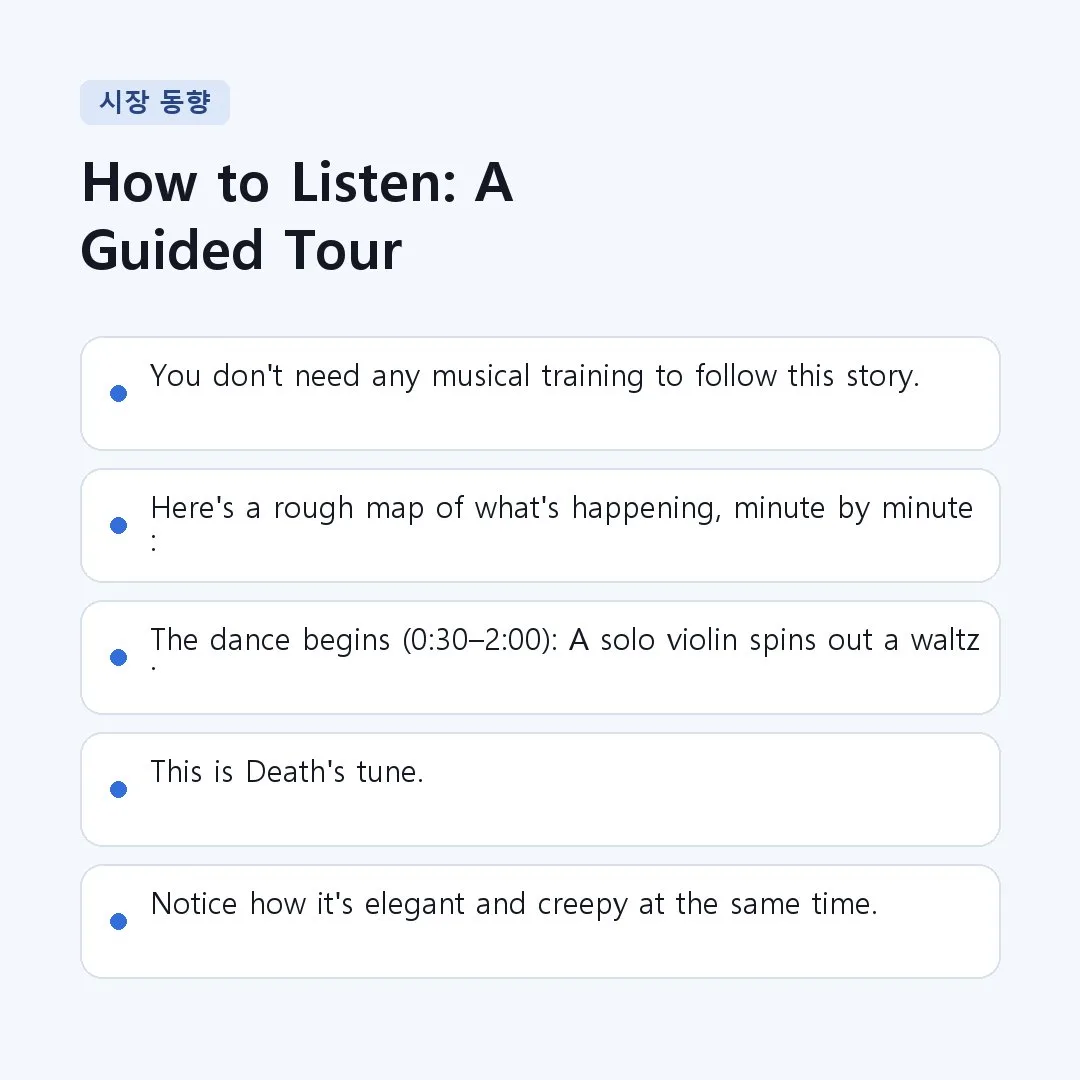
You don’t need any musical training to follow this story. Here’s a rough map of what’s happening, minute by minute:
The clock strikes (0:00–0:30): Listen for the harp playing a single note twelve times. That’s midnight. Then the violin enters with that deliberately “out of tune” sound—two clashing notes called a tritone, an interval so eerie that medieval musicians nicknamed it “the devil in music.”
The dance begins (0:30–2:00): A solo violin spins out a waltz. This is Death’s tune. Notice how it’s elegant and creepy at the same time. Other instruments gradually join, like more and more skeletons rising to dance.
The party builds (2:00–5:00): The music grows wilder and faster. You’ll hear the xylophone rattling away—Saint-Saëns used it specifically to imitate the sound of dry bones clacking together. It’s one of the first famous uses of the xylophone in orchestral music, and once you hear it, you’ll never forget it.
The frenzy and the dawn (5:00–end): The dancing reaches a fever pitch, then suddenly a solo oboe crows like a rooster. Dawn has come. The music softens, the skeletons retreat to their graves, and the violin plays one last wistful phrase before everything fades to silence. The party’s over—until next year.
The whole journey takes only about seven minutes, which makes it a perfect first piece for anyone new to orchestral music.

Recordings Worth Hearing
If you’d like to dive in, here are a few approaches depending on what you’re after:
For crisp, exciting energy: Charles Dutoit conducting the Orchestre symphonique de Montréal delivers a recording with dazzling clarity—you can hear every rattle of the xylophone. A great choice if you want to catch all the storytelling details.
For old-school drama: Look for Eugene Ormandy and the Philadelphia Orchestra. Their lush, full-bodied sound leans into the gothic atmosphere and makes the whole thing feel like a grand cinematic spectacle.
For something visual: There are wonderful animated versions on video platforms that follow the story beat by beat, with skeletons dancing in time to the music. These are especially fun if you’re a beginner who wants to “see” what the music is describing.
Any decent recording will do the trick, though—this is a piece that practically performs itself.
Why This Music Still Haunts Us
What makes Danse macabre so enduring isn’t just that it’s spooky. It’s that Saint-Saëns found a way to make death feel almost playful—a midnight party rather than a grim ending. There’s wit in those clacking bones, charm in that devilish waltz, and a strange tenderness in the final fading notes.
So the next time you need a soundtrack for a dark and stormy night—or you just want proof that classical music can be genuinely thrilling—let Death tune his violin and watch the skeletons dance. Just be sure to head home before the rooster crows.