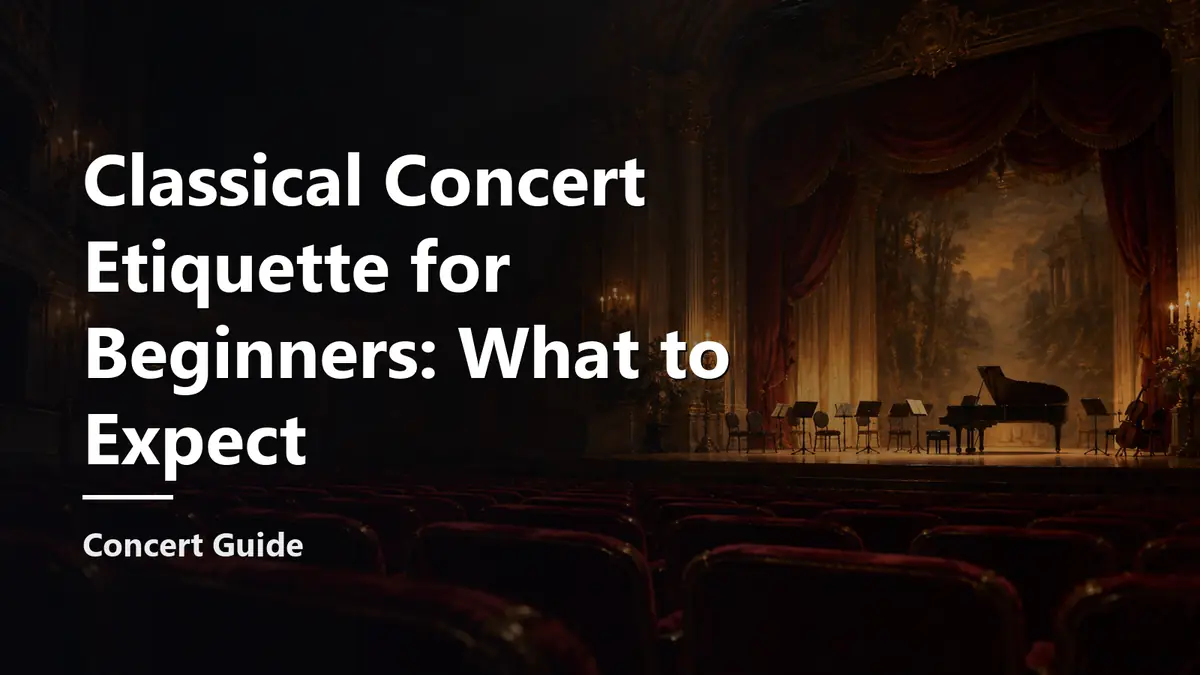
Classical concert etiquette for beginners comes down to a few courtesies: arrive before the music starts, silence your phone, save conversation for breaks, and clap when a piece ends. You can wear comfortable, neat clothes, and you do not need to know the music beforehand.
A live performance is easier to enjoy when you know the shape of the evening. Here is how to choose a first concert, follow the program, and handle the moments when you are unsure what to do.
📑 Table of Contents
How to Choose Your First Classical Concert
Start with the program, which is the list of works being performed, rather than the reputation of a composer or orchestra. If you want a shorter introduction, look for a chamber concert with a small group of musicians, a lunchtime performance, or a concert that features shorter works. If you want the sound of a full orchestra, choose a program with at least one title that catches your interest.
The program page usually gives you the most useful practical details: the venue, start time, works, performers, and often an estimated running time. Check whether there is an intermission, a break partway through the concert. Some performances also offer a short talk beforehand; it can give you a few things to listen for without requiring any preparation.
Familiar music can make a first program feel welcoming. Mozart’s The Marriage of Figaro Overture is a lively, compact orchestral opener. If it appears on a program, start at its very first quick notes and notice how the energy keeps moving; our guide to Mozart’s Figaro Overture offers a closer look.
A symphony asks for a longer stretch of attention, but you can simply follow its changes in mood. In Dvořák’s Symphony No. 9, start at the opening and notice the shift from a quiet introduction to a more forceful orchestral sound. Beethoven’s Symphony No. 9 includes a choral finale; if you choose a concert featuring it, expect voices to join the orchestra near the end. You do not have to recognize a theme to enjoy hearing a large group create it together.
What to Wear and When to Arrive
For most classical concerts, neat everyday clothes are fine. You may see dresses, jackets, jeans, and work clothes in the same audience. Check the venue’s guidance if you are attending a special event, but there is no need to dress formally just because an orchestra is playing.
Plan to reach the venue early enough to find your entrance, use the restroom, and locate your seat without rushing. Your ticket may name a particular door or seating area, so glance at it before you leave home. If you arrive after the music begins, an usher may ask you to wait until an appropriate pause before entering. That protects the performers’ concentration and keeps other listeners’ view clear.
You can usually pick up a printed program or open a digital one before the concert. It may list the works in order and show each symphony’s movements, the large sections that make up the whole piece. Read as much or as little as you like. Knowing where the intermission falls is more useful than memorizing every musical term.
Before the players begin, put your phone on silent and check that alarms are off. If you need to read a digital program during the performance, keep the screen dim and follow the venue’s rules; a bright screen can draw attention several rows away. Unwrap sweets and settle belongings before the music starts.
When to Clap at a Classical Concert
The simplest rule is to clap when a whole piece is finished. If a program lists a symphony with several movements, the musicians will often pause briefly between them. At many orchestral concerts, listeners wait through those pauses and applaud after the final movement.
You do not have to work this out by counting movements. Watch the conductor and musicians: when they relax, turn toward the audience, or stand to acknowledge it, the piece is over. You can also follow the audience around you. If you clap at an unexpected moment, it is a small mistake, not a disaster; concertgoers disagree about applause between movements, and customs vary by venue and performance.
An overture often stands alone on an orchestral program, so applause usually follows it. Mozart’s The Marriage of Figaro Overture is one example. A symphony, by contrast, contains several movements under one title. If you hear Dvořák’s Symphony No. 9, the pause after its opening movement is generally a moment to stay seated and listen for what comes next. The vigorous finale makes the eventual end much easier to hear; our guide to Dvořák’s Ninth Symphony finale can help you recognize its momentum.
There are exceptions. Audiences may applaud a soloist’s entrance, an especially striking performance, or individual numbers in opera. If you are unsure, let the room lead. Applause is a way to thank the performers, not an exam you have to pass.
What to Do While the Music Plays
Once the performance begins, give it your attention in whatever way feels natural. You can close your eyes, watch the conductor, follow an instrument, or let the sound wash over you. There is no requirement to sit motionless or understand the structure in real time.
Keep talking for intermission and avoid recording unless the venue explicitly permits it. Even a whispered comment can carry during a soft passage. If you cough, do your best to cover it; if you know a cough is coming, a louder moment may provide a less disruptive opportunity. Everyone makes some noise occasionally, so there is no need to spend the concert worrying about every breath.
If your mind wanders, pick one sound to follow when you return. In Beethoven’s Symphony No. 9, for instance, you might notice when the chorus enters in the finale and how the orchestra supports the voices. You can lose your place and still enjoy what happens next. A concert gives you one continuous performance, not a listening test.
Intermission and the End of the Evening
Intermission is your chance to stretch, talk, and look back at the program. It is also a good time to ask a companion what they noticed. There is no correct reaction to compare against: one person may remember a quiet melody, while another remembers the full orchestra at its loudest.
Check the time before leaving the hall during the break, and return when the venue signals that the second half is about to begin. When the final piece ends, stay for the applause. Performers may leave and return to the stage for another bow, especially after a warmly received performance. You are free to applaud, stand if you want to, or remain seated.
If you enjoyed one moment, note the title before you go. That gives you an easy starting point for your next concert or a recording at home. Over time, the unfamiliar parts of a program become familiar simply because you have heard more of them.
Frequently Asked Questions
How long is a classical concert?
Many orchestral concerts run around two hours, including an intermission, but lengths vary considerably. Check the event listing for an estimate, especially for a lunchtime concert, a chamber performance, or a program with a large choral work.
What should I wear to a classical concert?
Wear something comfortable and neat enough for the venue and occasion. Most regular concerts do not require formal clothes; if there is a dress code, the venue should state it.
When should I clap at a classical concert?
Clap when a complete piece ends. For a symphony with several movements, listeners usually wait until the last movement is over; if you cannot tell, follow the conductor and the audience.
Sources
Cover art: Cover illustration generated with AI image tools; contains no real person.