📑 Table of Contents
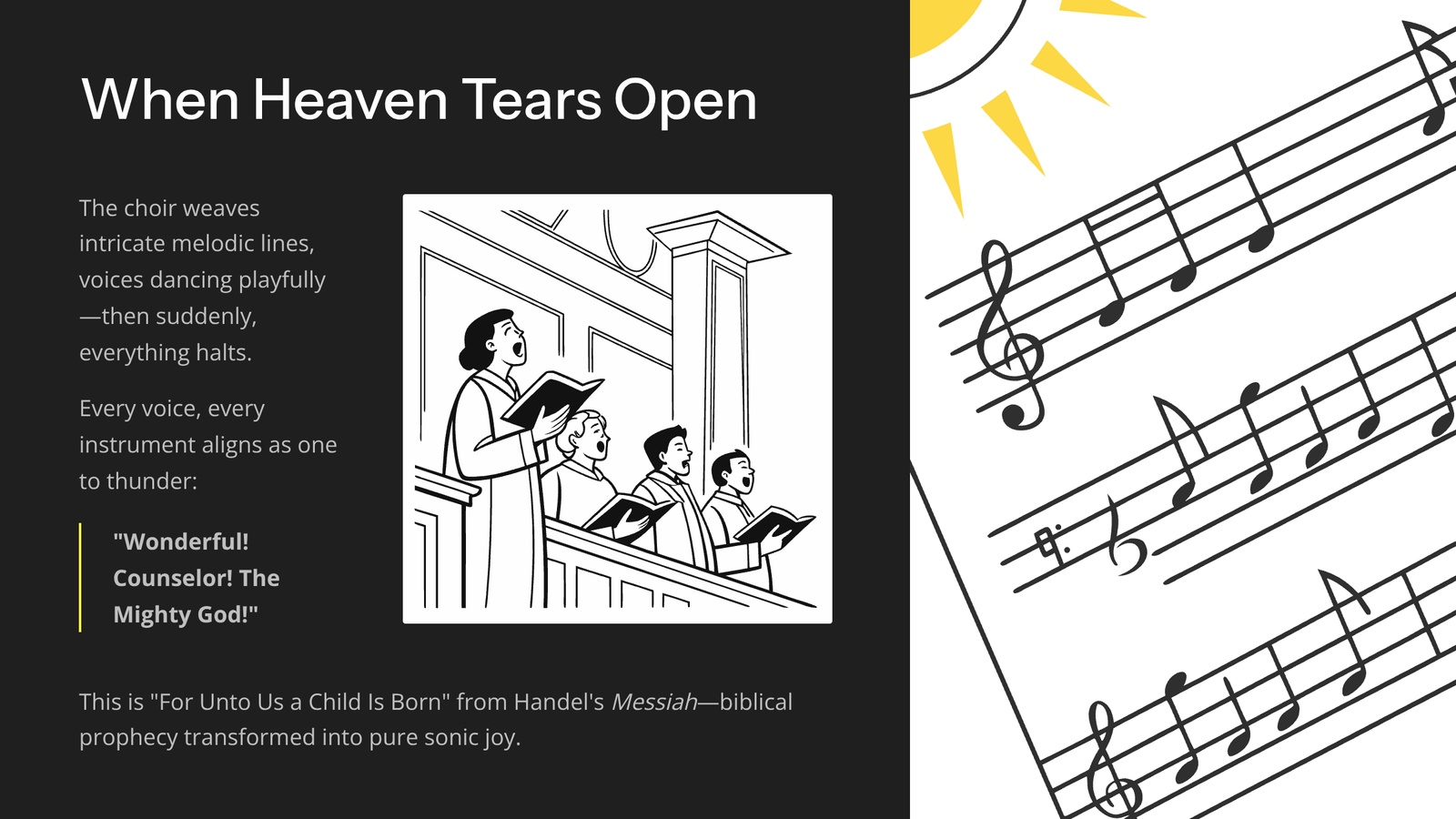
There’s a particular moment in this piece that never fails to stop me in my tracks. The choir has been weaving intricate melodic lines, voices dancing playfully around one another, when suddenly—everything halts. Every voice, every instrument aligns as one to thunder out: “Wonderful! Counselor! The Mighty God!” It’s as if heaven itself has torn open to make an announcement. Every time I hear it, I feel the same jolt of electricity I felt the very first time.
This is “For Unto Us a Child Is Born” from Handel’s Messiah—a piece that transforms biblical prophecy into pure sonic joy. But what makes this chorus so deeply moving? The answer lies in an extraordinary story of creative transformation, personal redemption, and musical genius that turned a secular love song into one of the most beloved sacred works in Western music.
A Masterpiece Born from Crisis
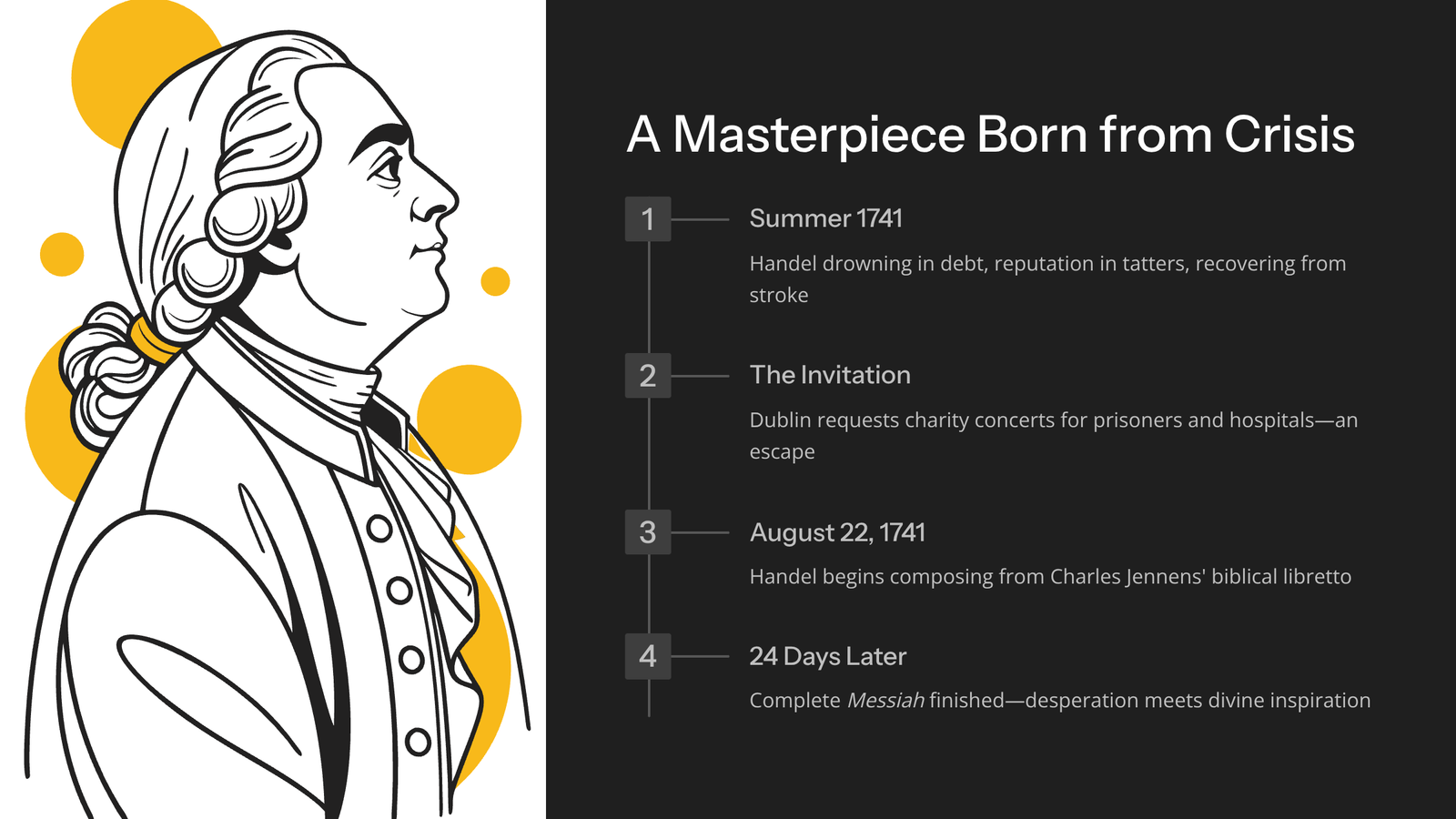
In the summer of 1741, George Frideric Handel was a man at the end of his rope. The German-born composer who had once dominated London’s opera scene was now drowning in debt. His Italian operas had fallen out of fashion with fickle English audiences. Three years earlier, he had suffered what was likely a stroke, leaving him temporarily paralyzed. Creditors circled. The public had moved on.
Then came an unexpected lifeline: an invitation to Dublin, Ireland.
The Lord Lieutenant of Ireland requested Handel’s presence for a series of charity concerts benefiting prisoners in debtors’ prison and local hospitals. It was, in many ways, an escape—a chance to rebuild far from London’s judgment. And it was for this occasion that Handel would compose something entirely new.
Working from a libretto assembled by Charles Jennens from the King James Bible, Handel began writing on August 22, 1741. What emerged over the next twenty-four days was nothing short of miraculous: the complete Messiah, from first note to last. “For Unto Us a Child Is Born” was part of this extraordinary creative outpouring—a testament to what can happen when desperation meets divine inspiration.
The Secret Origin: From Love Song to Sacred Chorus
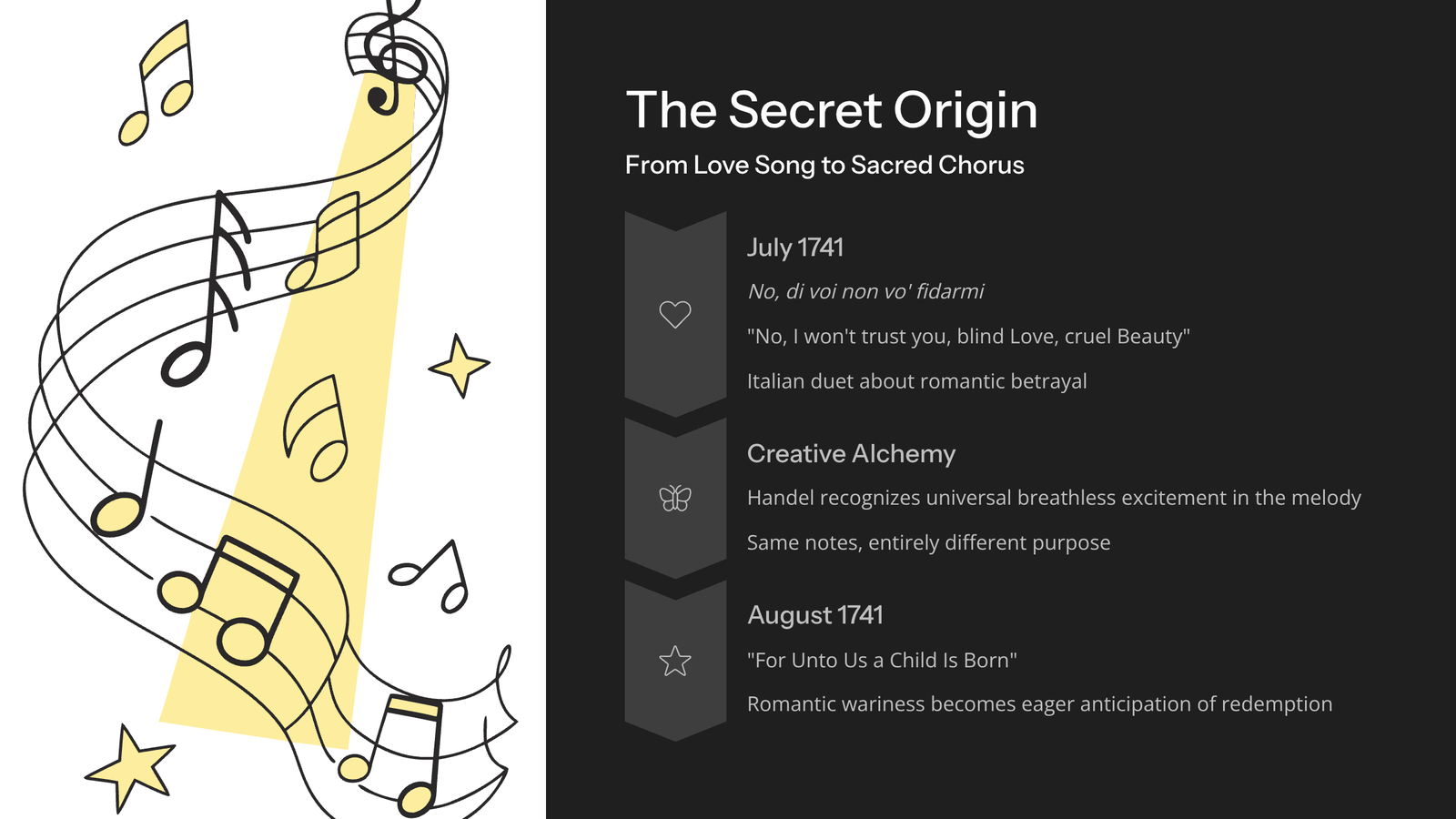
Here’s something that might surprise you: the jubilant melody you hear in “For Unto Us a Child Is Born” wasn’t originally written about Christ at all.
Just two months before composing Messiah, Handel had written an Italian duet called No, di voi non vo’ fidarmi—a secular piece about romantic betrayal. The original lyrics? “No, I won’t trust you, blind Love, cruel Beauty.” It was a song of suspicion and wounded hearts.
Yet Handel recognized something universal in that melody—a certain breathless excitement, a rushing forward quality that could serve an entirely different purpose. In a bold act of creative recycling (what musicologists call “parody technique”), he transformed this song of earthly disappointment into an anthem of divine promise. The same notes that once expressed romantic wariness now proclaimed the arrival of a Savior.
This transformation wasn’t laziness; it was alchemy. Handel understood that music carries emotional meaning beyond its words. That restless, searching energy in the original melody became, in its sacred context, the eager anticipation of all humanity awaiting redemption.
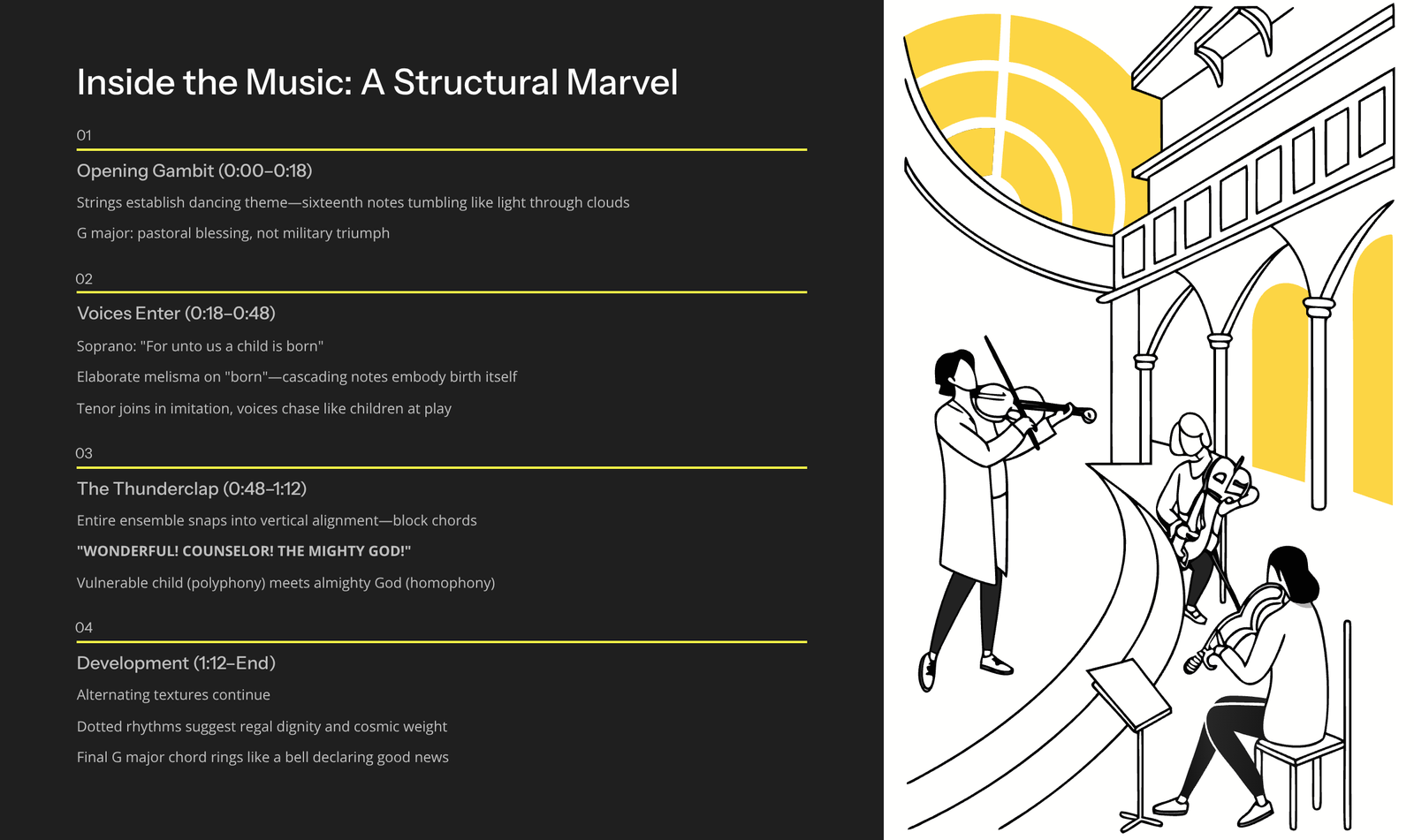
Inside the Music: A Structural Marvel
Let me walk you through what makes this chorus so architecturally brilliant. The piece is set in G major—a key that Baroque composers associated with pastoral scenes and divine blessing. The choice is deliberate: we’re witnessing not a king’s military triumph, but a child’s tender birth.
The Opening Gambit (0:00–0:18)
Before any voice enters, the strings establish the mood with a dancing, almost skipping theme. Listen to those sixteenth notes tumbling downward like light streaming through clouds. This isn’t solemn church music—it’s celebration, pure and simple.
Voices Enter the Dance (0:18–0:48)
The soprano enters first with the famous words: “For unto us a child is born.” Pay attention to what happens on the word “born”—the singer launches into an elaborate melisma, a long, flowing passage on a single syllable. This isn’t mere decoration. Those cascading notes embody the very act of birth itself: something new entering the world, unfolding, taking its first breath.
Then the tenor joins in imitation, creating a polyphonic texture where voices chase each other like children at play. The word “son” receives similar melismatic treatment. Handel is painting with sound: the lightness of an infant, the joy of new life, the playful innocence of heaven’s greatest gift.
The Thunderclap (0:48–1:12)
And then—the moment I mentioned at the start. Without warning, the entire ensemble snaps into vertical alignment. Where before we had independent melodic lines weaving around each other, now we have block chords, every voice singing the same rhythm simultaneously:
“WONDERFUL! COUNSELOR! THE MIGHTY GOD! THE EVERLASTING FATHER! THE PRINCE OF PEACE!”
The contrast is staggering. It’s as if Handel is showing us two aspects of Christ in musical form: the vulnerable child (represented by the delicate polyphony) and the almighty God (represented by the homophonic power chords). This is theology made audible.
Development and Return (1:12–End)
The piece continues alternating between these two textures. Notice the dotted rhythms on “and the government shall be upon his shoulder”—those long-short patterns suggest both regal dignity and the weight of cosmic responsibility. The music literally carries burden in its rhythm.
The final “Wonderful! Counselor!” section pushes everything to maximum intensity. Strings race underneath, voices overlap, and the G major chord at the end rings out like a bell declaring the good news to all the world.
What to Listen For: A Guided Experience
If you’re new to this piece, here’s my recommended listening approach:
First Listen: Simply let the music wash over you. Don’t analyze—just feel. Notice when you feel excited, when you feel at peace, when something catches your ear.
Second Listen: Focus on the soprano line. Follow it like a golden thread through the texture. Notice how often it rises up, as if lifting us toward heaven.
Third Listen: Wait for those “Wonderful! Counselor!” moments. Count them. Feel how each one hits with renewed force, how Handel spaces them for maximum impact.
Fourth Listen: Try to pick out individual voice parts in the polyphonic sections. The tenors and altos are doing remarkable things underneath those floating sopranos.
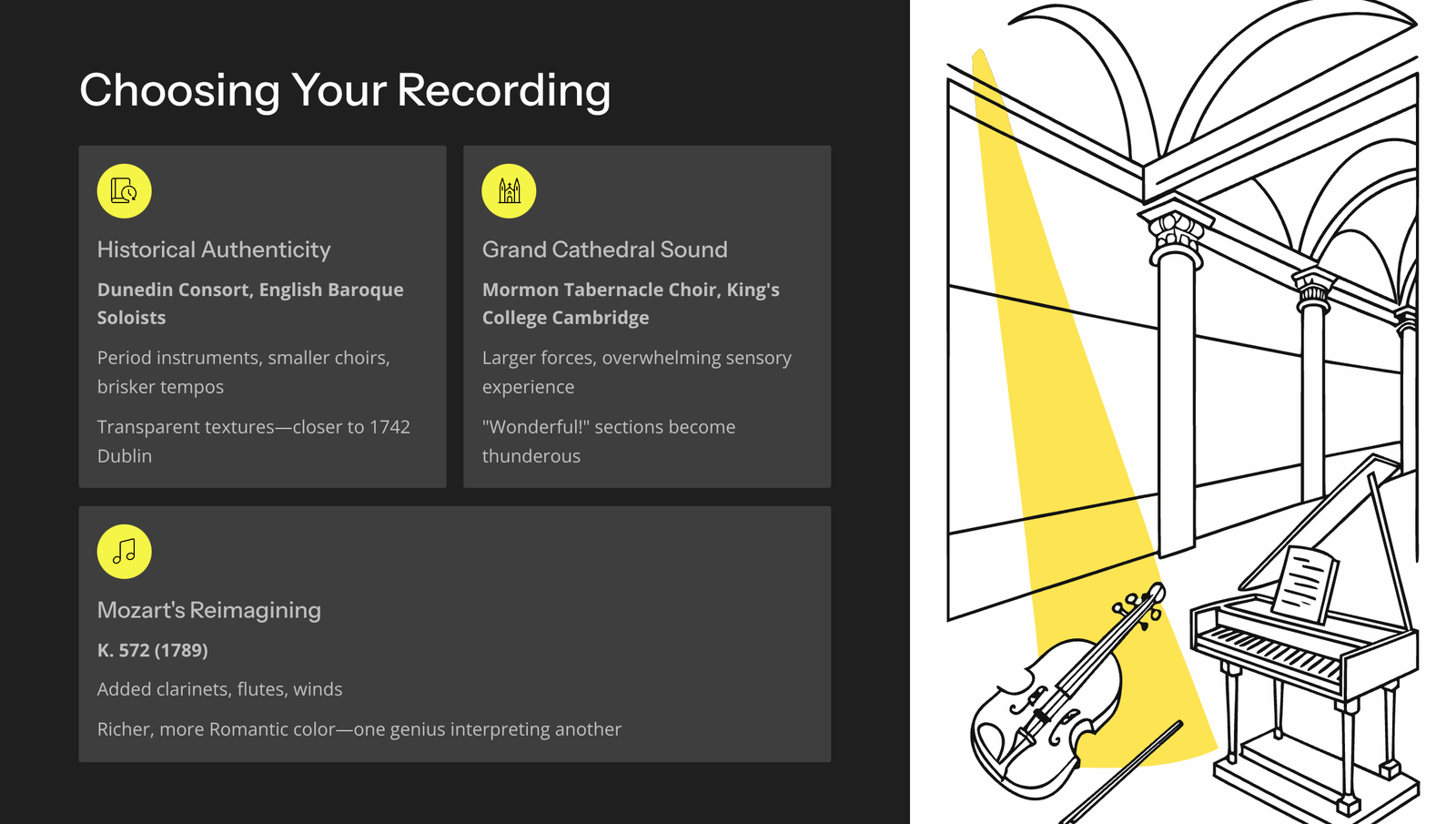
Choosing Your Recording
The way this piece sounds varies dramatically depending on who’s performing it. Here are some distinct approaches:
For Historical Authenticity: Seek out performances by early music ensembles like the Dunedin Consort or English Baroque Soloists. These use period instruments and smaller choirs, revealing details often buried in larger performances. The tempos tend to be brisker, the textures more transparent—closer to what Dublin audiences heard in 1742.
For Grand Cathedral Sound: Recordings with larger forces, such as those by the Mormon Tabernacle Choir or King’s College Cambridge, offer a more overwhelming sensory experience. The “Wonderful!” sections become absolutely thunderous.
For Mozart’s Reimagining: In 1789, Mozart re-orchestrated Messiah for Viennese audiences, adding clarinets, flutes, and other winds. His version (catalogued as K. 572) has a richer, more Romantic color. It’s a fascinating study in how one genius interpreted another.
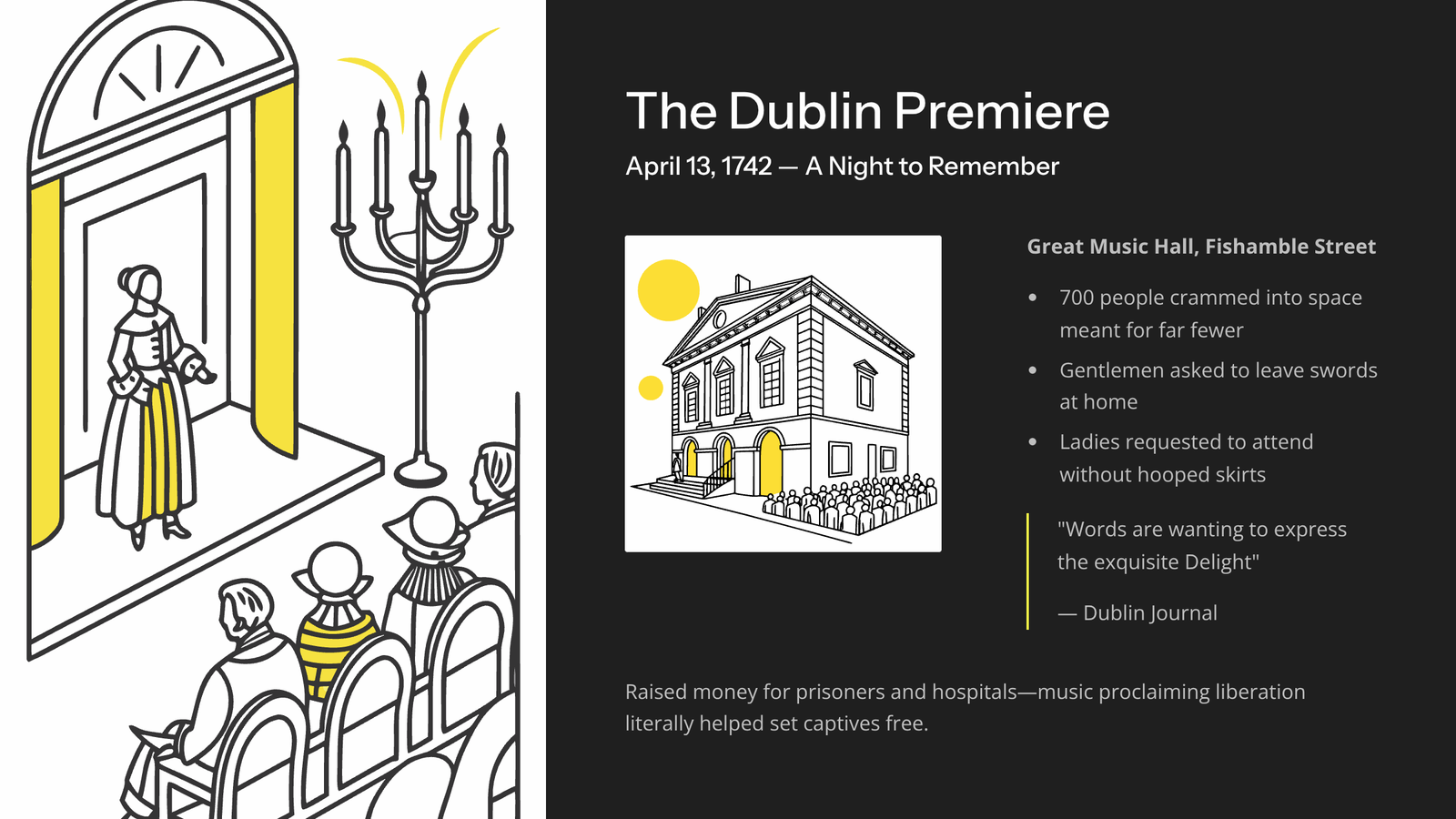
The Dublin Premiere: A Night to Remember
On April 13, 1742, Dublin’s Great Music Hall on Fishamble Street was packed beyond capacity. The organizers, anticipating enormous crowds, had published an unusual request in the newspapers: gentlemen were asked to leave their swords at home, and ladies were requested to attend without their hooped skirts. This wasn’t about fashion—it was about fitting more people into the hall.
The response was rapturous. The Dublin Journal wrote that “words are wanting to express the exquisite Delight” the performance inspired. Seven hundred people crammed into a space meant for far fewer. For Handel, who had arrived in Ireland with his reputation in tatters, it was vindication.
The charitable purpose of the concert adds another layer of meaning. Messiah‘s first performance raised money for prisoners and the sick—the very people Jesus said he came to serve. The music that proclaimed liberation was, in its first performance, literally helping to set captives free.
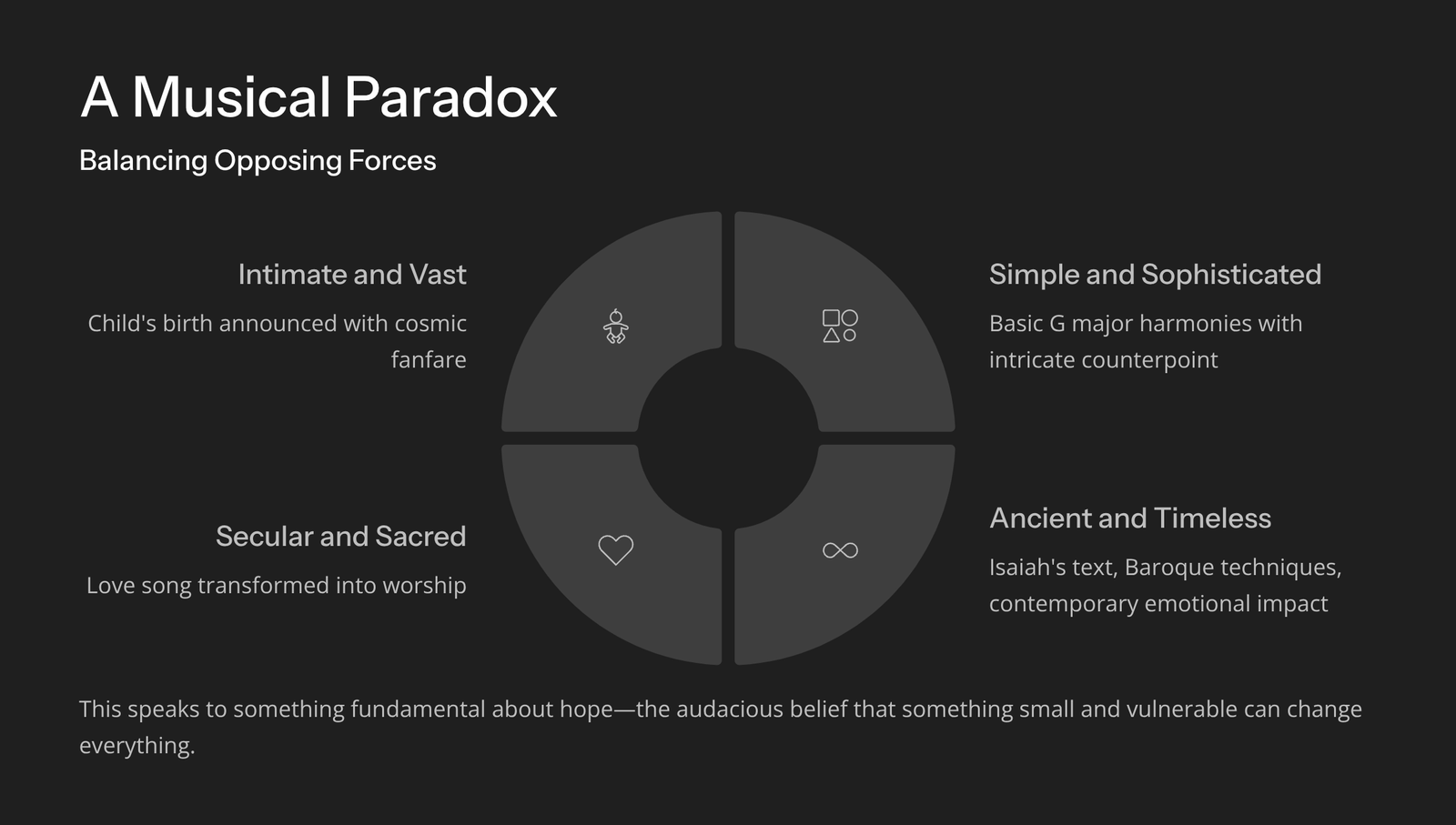
A Musical Paradox
Perhaps the most remarkable thing about “For Unto Us a Child Is Born” is how Handel balances opposing forces. The music is simultaneously:
- Intimate and vast — A child’s birth announced with cosmic fanfare
- Simple and sophisticated — Basic G major harmonies executed with intricate counterpoint
- Ancient and timeless — Text from Isaiah, techniques from the Baroque, emotional impact that feels utterly contemporary
- Secular and sacred — A love song transformed into worship
This is why the piece has endured for nearly three centuries. It speaks to something fundamental about hope—the audacious belief that something small and vulnerable can change everything.
Closing Thoughts
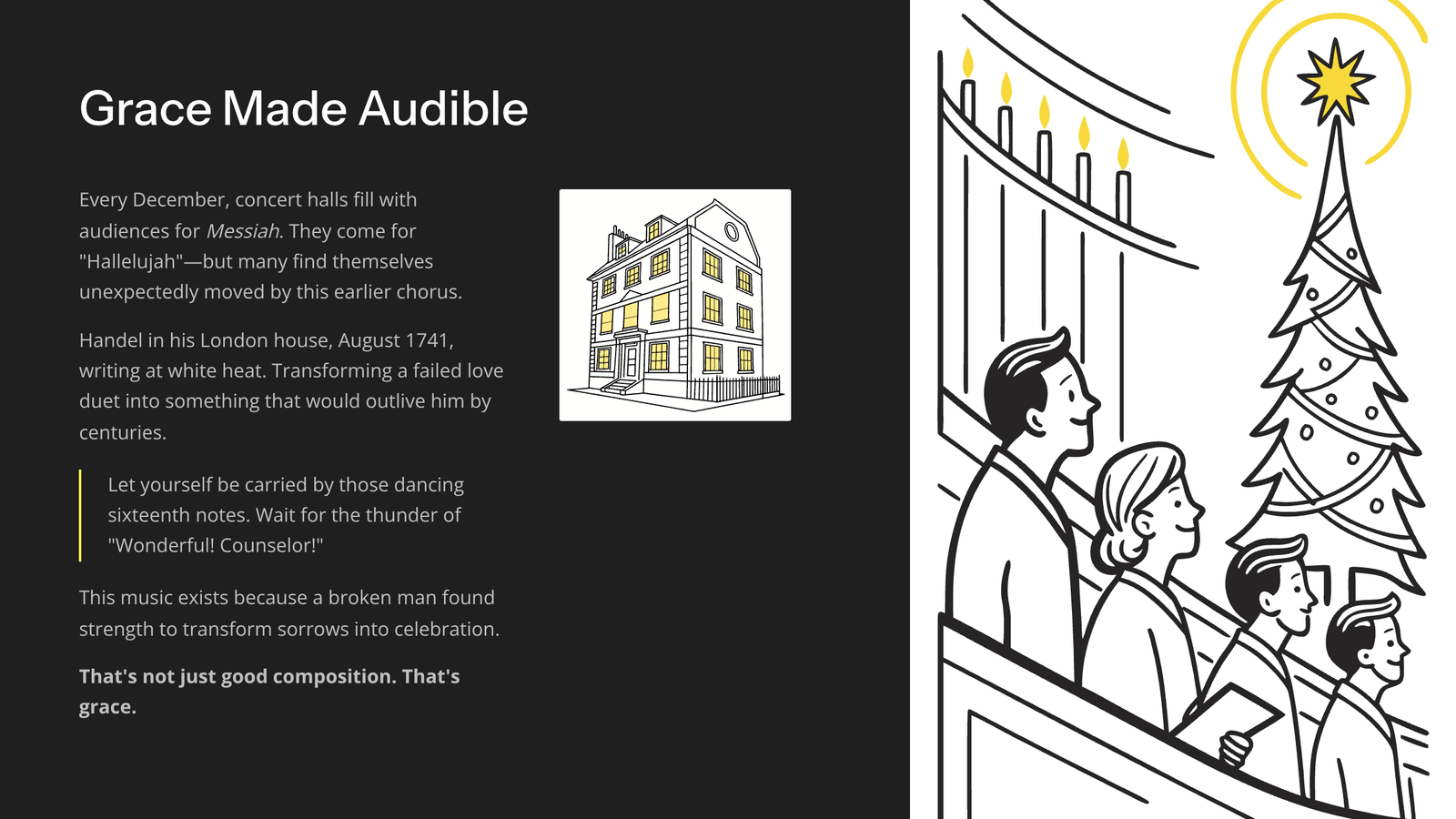
Every December, concert halls around the world fill with audiences eager to hear Messiah. They come for “Hallelujah,” of course—but many find themselves unexpectedly moved by “For Unto Us a Child Is Born,” this earlier, often overlooked chorus that contains its own kind of hallelujah.
I think of Handel in his London house on Brook Street in that extraordinary August of 1741, writing at white heat, transforming his failed love duet into something that would outlive him by centuries. He couldn’t have known then that these notes, written to escape debt and disappointment, would become the soundtrack to joy for millions.
The next time you hear this piece—perhaps at a holiday concert, perhaps alone with headphones—let yourself be carried by those dancing sixteenth notes. Wait for the thunder of “Wonderful! Counselor!” And remember: this music exists because a broken man found the strength to transform his sorrows into celebration.
That’s not just good composition. That’s grace.