📑 Table of Contents

There is a moment — maybe you have felt it too — when you stand near a fountain and the sunlight catches the spray at just the right angle. The water is not simply falling. It is dancing, scattering, turning into something almost musical before it even reaches your ears. That fleeting, luminous sensation is exactly what Maurice Ravel tried to trap inside a piano.
When I first heard Jeux d’eau, I did not understand what was happening. The notes seemed to move too fast to follow, too light to grasp, like trying to hold running water in open palms. It was not until I stopped trying to “understand” the music and simply let it wash over me that I realized — that was the entire point. This is not a piece you analyze. It is a piece you feel on your skin.
A Young Composer’s Quiet Revolution
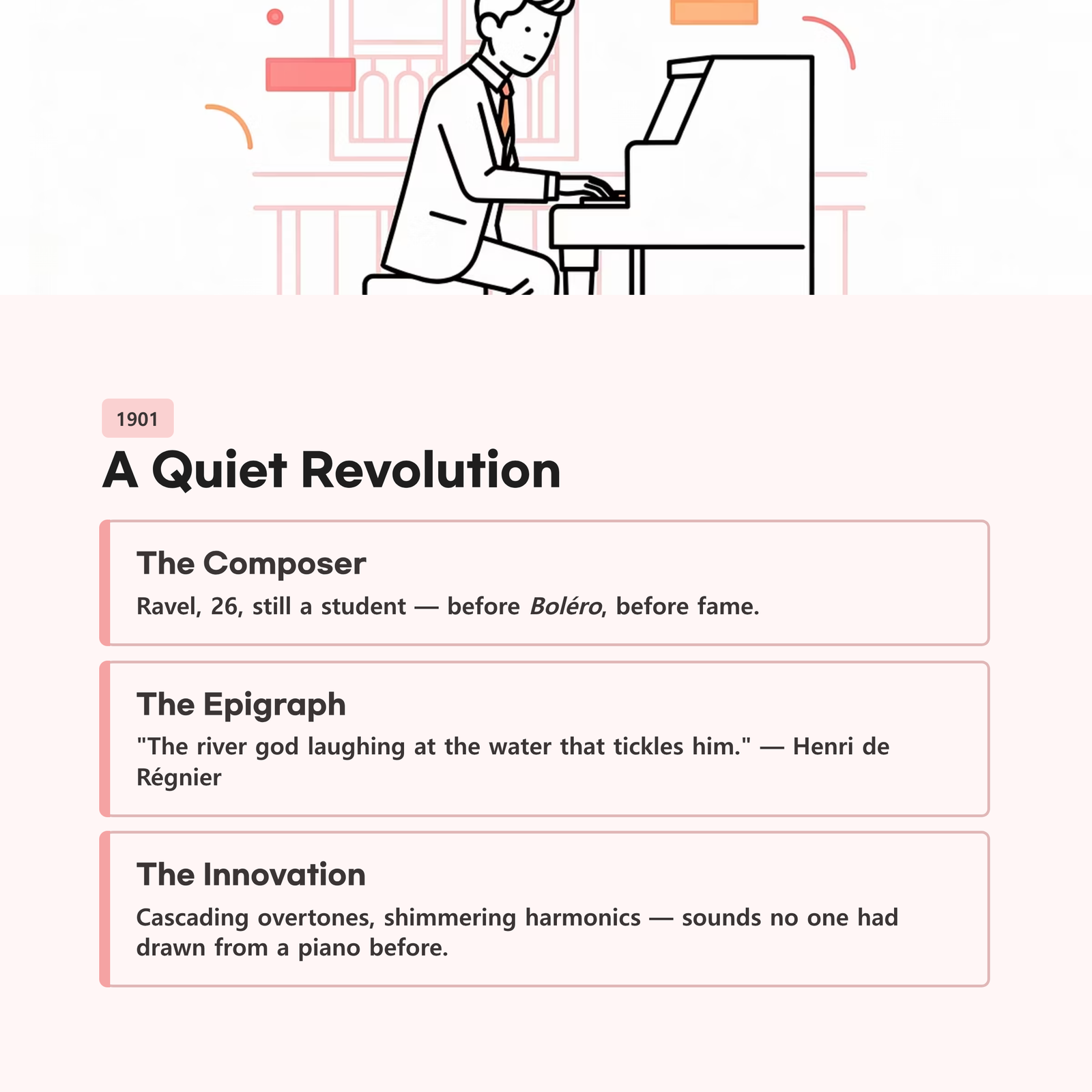
In 1901, Maurice Ravel was just twenty-six years old and still a student at the Paris Conservatoire. He had not yet written Boléro or Daphnis et Chloé — the works that would later make him a household name. He was, by most accounts, a quiet and meticulously dressed young man with an obsessive attention to detail and a stubborn streak that would serve him well.
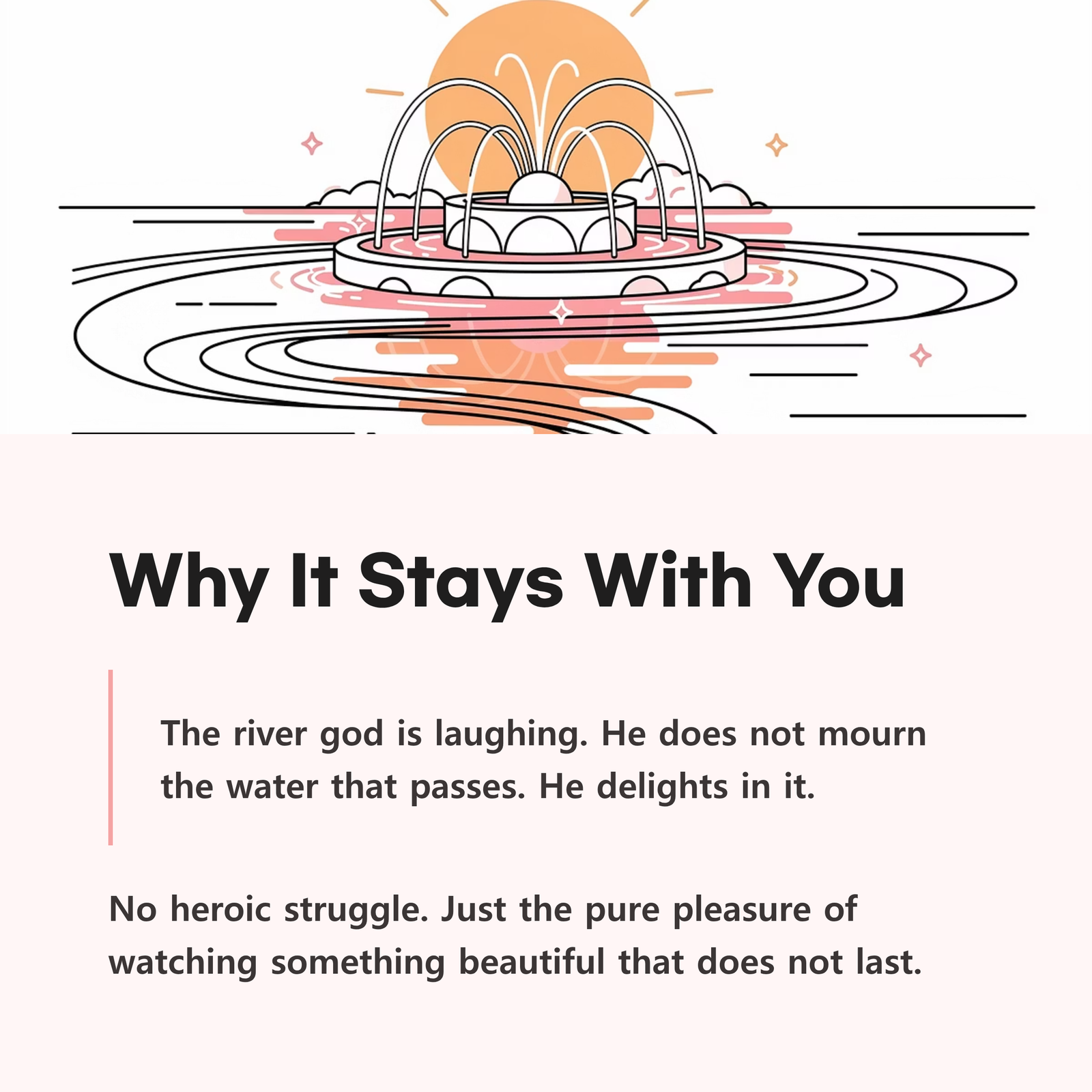
That year, he composed Jeux d’eau — literally, “play of water” or “water games” — and dedicated it to his teacher, Gabriel Fauré. The piece carried an epigraph borrowed from a poem by Henri de Régnier: “Dieu fluvial riant de l’eau qui le chatouille” — “The river god laughing at the water that tickles him.” It is a playful, almost mischievous image, and it tells you everything about the spirit of this music.
What made Jeux d’eau revolutionary was not its subject matter — composers had written about water before. Liszt had his famous fountains, and Chopin had suggested rain in his preludes. But Ravel did something entirely new with the instrument itself. He discovered sounds inside the piano that no one had drawn out before: cascading overtones, shimmering harmonics, textures so translucent they seemed to dissolve the boundary between notes and silence. He expanded the piano’s palette not through force, but through an almost supernatural lightness.
Some music historians consider Jeux d’eau the true starting point of modern piano writing in France — even more influential, in certain technical respects, than Debussy’s work from the same period. It is a bold claim, but spend five minutes inside this piece and you begin to see why.
Hearing the Water: A Listener’s Map
If you are new to this piece, here is what to listen for — not as a technical exercise, but as a way of letting the music speak to you more clearly.
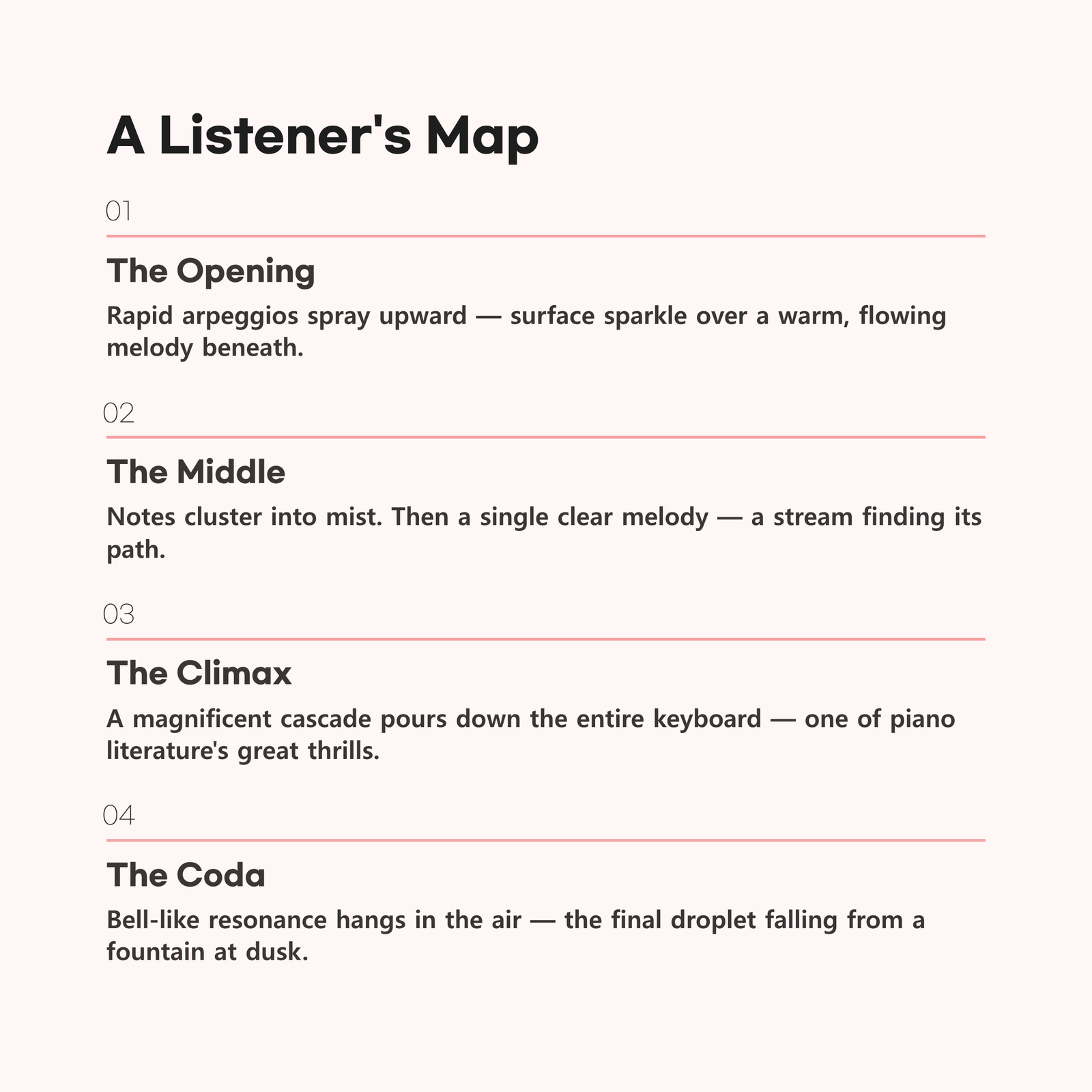
The opening measures arrive like a sudden jet of water catching sunlight. Ravel uses rapid, arpeggiated figures in the right hand that seem to spray upward from a single source. Underneath, the left hand provides a gentler current — a melodic line that flows with an almost vocal warmth. Think of it as two layers of water: one sparkling on the surface, one moving with deeper purpose beneath.
As the piece unfolds, Ravel plays with the idea of water in constant transformation. There are passages where the notes cluster together so tightly they become a kind of mist — you cannot pick out individual drops, only a luminous haze of sound. Then, without warning, a single clear melody emerges, like a stream finding its path through stones.
The middle section grows more turbulent. The harmonies become richer, denser, more complex. It is not a storm exactly — Ravel is too elegant for that — but there is a sense of gathering force, of water rising. And then comes the climax: a magnificent cascade that pours down the entire keyboard, one of the most thrilling moments in all piano literature.
After the storm, the piece settles into a magical coda. The water calms. The textures thin to almost nothing. And Ravel ends with a gentle, bell-like resonance that seems to hang in the air long after the last key is released — like the final droplet falling from a fountain at dusk.
Why This Piece Stays With You
What strikes me most about Jeux d’eau is how honest it is about impermanence. Water never holds a shape. It is always arriving and always leaving. And Ravel’s music captures that truth with a kind of joyful acceptance that I find deeply moving.
There is no drama here in the Romantic sense — no tortured confession, no heroic struggle against fate. Instead, there is something rarer: the pure pleasure of watching something beautiful that does not last. The river god is laughing, after all. He does not mourn the water that passes. He delights in it.
I think this is why Jeux d’eau works so well as a piece for newcomers to classical music. It does not demand that you know sonata form or understand key signatures. It asks only that you have ever watched light move across water and felt something stir inside you. If you have, then Ravel has already written your soundtrack.
Recommended Performances to Start With
Each pianist brings something different to this piece, and part of the pleasure is hearing how the same water can look so different depending on who is shaping it.
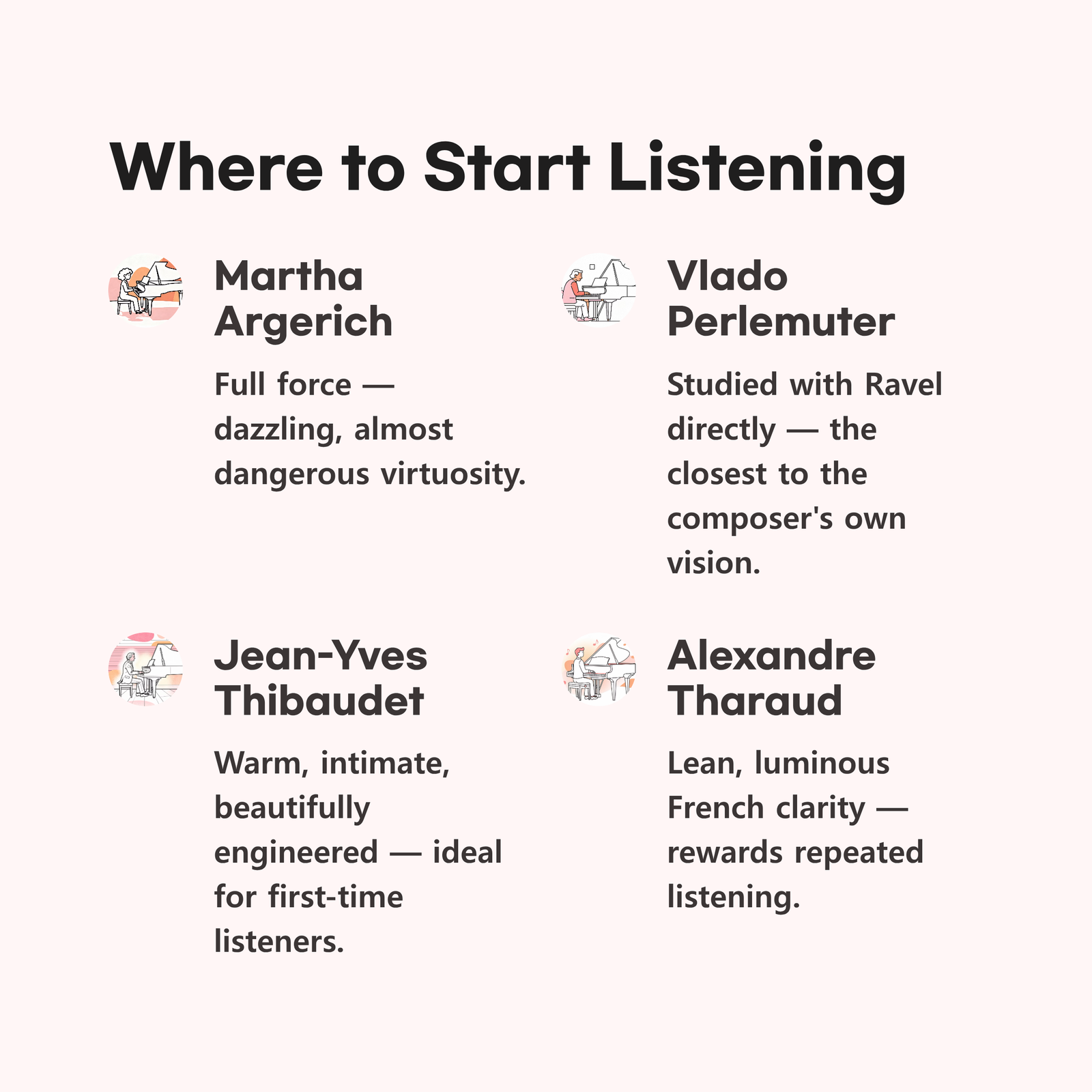
Martha Argerich plays Jeux d’eau with breathtaking speed and brilliance. Her performance is the fountain at full force — dazzling, almost dangerous in its virtuosity. If you want to feel the sheer physical excitement of this music, start here. There is a legendary live recording from the 1970s that captures her at her most electrifying.
Vlado Perlemuter studied directly with Ravel and recorded the complete piano works with the composer’s personal guidance still fresh in his memory. His Jeux d’eau is more restrained, more transparent — like watching water through clear glass. It is perhaps the closest we can get to hearing what Ravel himself imagined.
Jean-Yves Thibaudet offers a middle path — technically polished, sonically gorgeous, with a warmth that makes the piece feel intimate rather than spectacular. His recording on the Decca label is one of the most beautifully engineered versions available and an excellent entry point for first-time listeners.
Alexandre Tharaud brings a distinctly French clarity and precision. His interpretation is lean and luminous, stripping away any excess to reveal the architecture beneath the shimmer. It is a performance that rewards repeated listening.
Let the Water Find You
Here is my suggestion. Do not read another word about Jeux d’eau before you hear it. Find a quiet moment — perhaps late in the evening, perhaps with a window open — and press play. Do not try to follow the structure. Do not worry about what is “happening” in the music. Just close your eyes and let the water move.
Ravel spent painstaking hours perfecting every note of this piece, polishing each phrase until it gleamed. But the paradox of his genius is that all that labor disappears in the listening. What remains is something that feels as effortless and inevitable as water finding its way downhill.
Some music tries to tell you who the composer was. Jeux d’eau does something more generous — it reminds you of something you already knew but had forgotten. That the world is full of small, shimmering, unrepeatable moments. And that sometimes, the most profound thing you can do is simply stop and watch the light play across the water.