Pyotr Ilyich Tchaikovsky wrote Dance of the Sugar Plum Fairy for his ballet The Nutcracker, composed in 1891–92. The ballet premiered in St. Petersburg in 1892, and this short Act II dance gives the Sugar Plum Fairy her most recognizable musical moment.
You may know its delicate keyboard sound without knowing the instrument that makes it. That instrument is the celesta, and Tchaikovsky’s choice of it is central to the dance’s story.
📑 Table of Contents
Why Tchaikovsky Wrote the Dance
The Nutcracker was written for the stage. Its story draws on a tale about a child, a Christmas gift, and a journey into a fantastical world. In Act II, the Sugar Plum Fairy presides over the Land of Sweets. Her dance is part of the ballet’s sequence of musical entertainments, giving this character a sound of her own.
The music also reached audiences apart from the stage. Tchaikovsky assembled selections from the ballet into an orchestral suite, which was performed before the full ballet premiered. Dance of the Sugar Plum Fairy was among those selections. That helps explain why people who have never seen The Nutcracker can still recognize the tune.
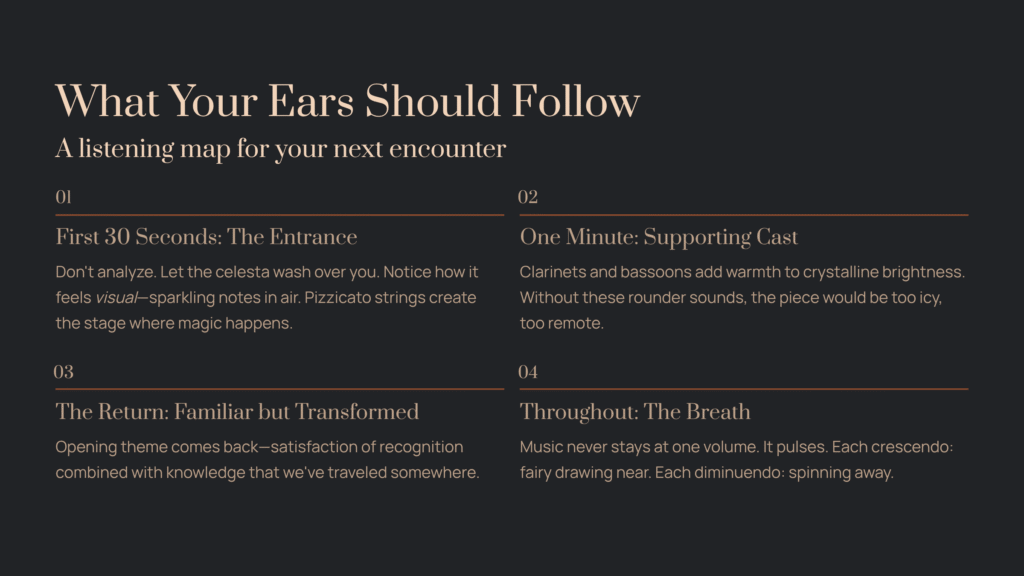
There is a more personal story nearby, but it needs care. Tchaikovsky’s sister Alexandra Davydova died in 1891, while he was working on the ballet. The original article treated the fairy’s dance as a possible expression of his grief. That is an interpretation, not an established reason he wrote this number. You can hear mystery or sadness in the music without claiming to know what Tchaikovsky meant each note to say.
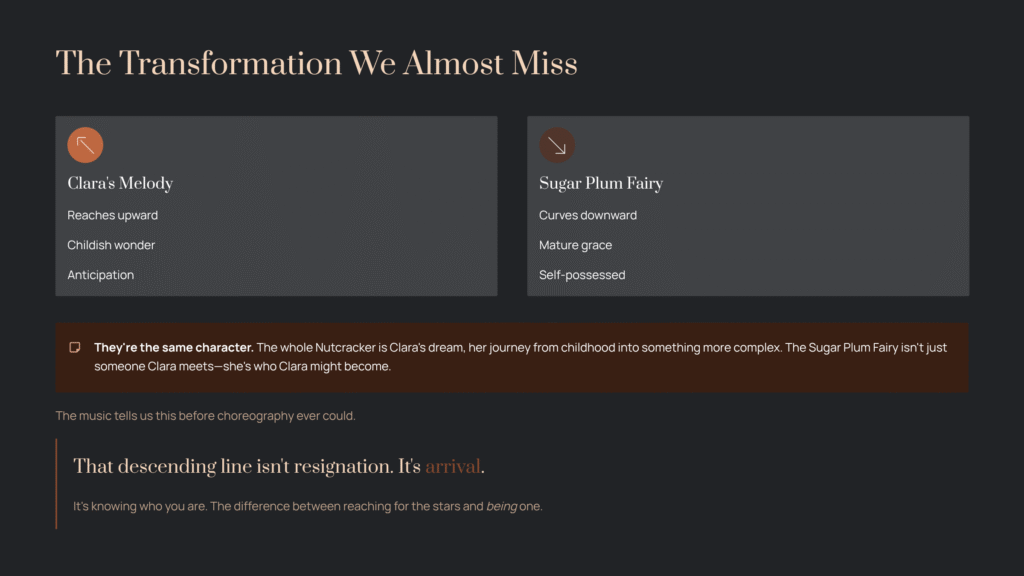
Nor is the Sugar Plum Fairy simply Clara grown older. Clara encounters the fairy in the ballet’s story; they are separate characters. You can still imagine a connection between them, but the music does not make them the same person.
How the Celesta Creates That Unusual Sound
A celesta looks rather like a small upright piano. Pressing a key moves a hammer, but the hammer strikes a metal plate instead of a string. Its notes ring clearly and fade quickly, giving Tchaikovsky a sound distinct from both a piano and an ordinary set of bells.
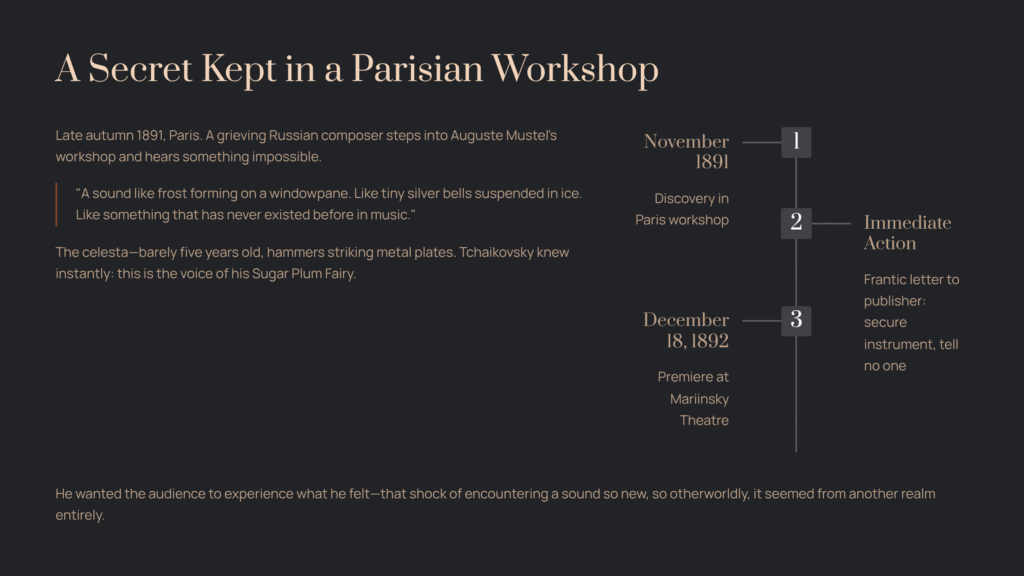
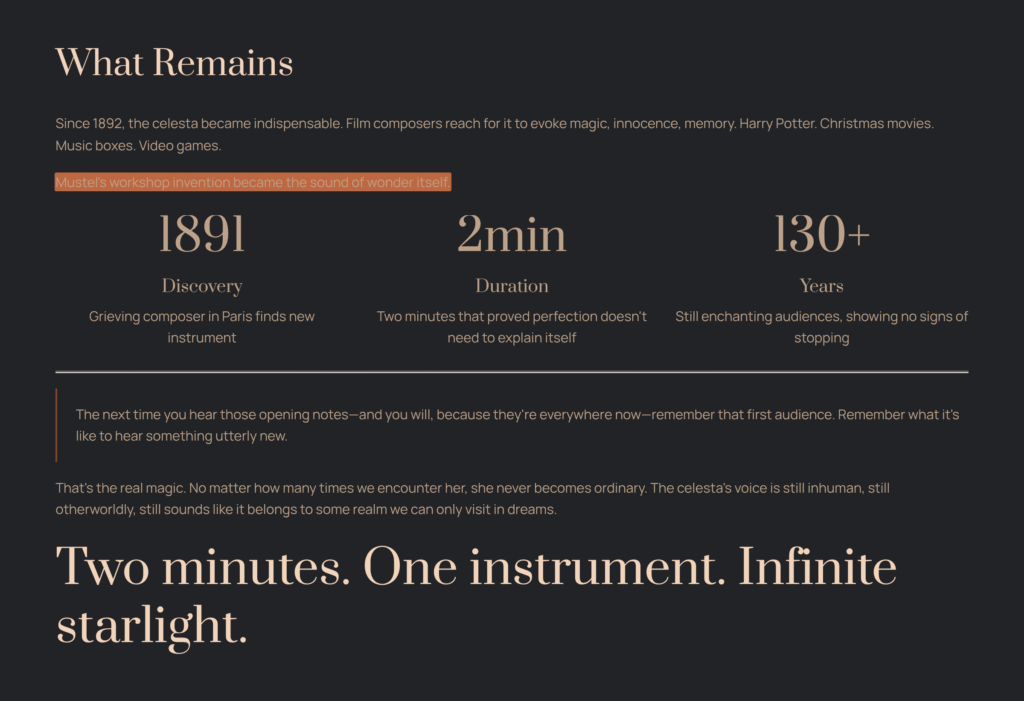
The instrument was developed by Auguste Mustel in the 1880s. Tchaikovsky encountered it while preparing The Nutcracker and was eager to use it. Accounts of his correspondence describe his wish to secure a celesta without other composers getting ahead of him. That documented interest is striking enough without inventing a scene in a workshop or claiming to know his first reaction.
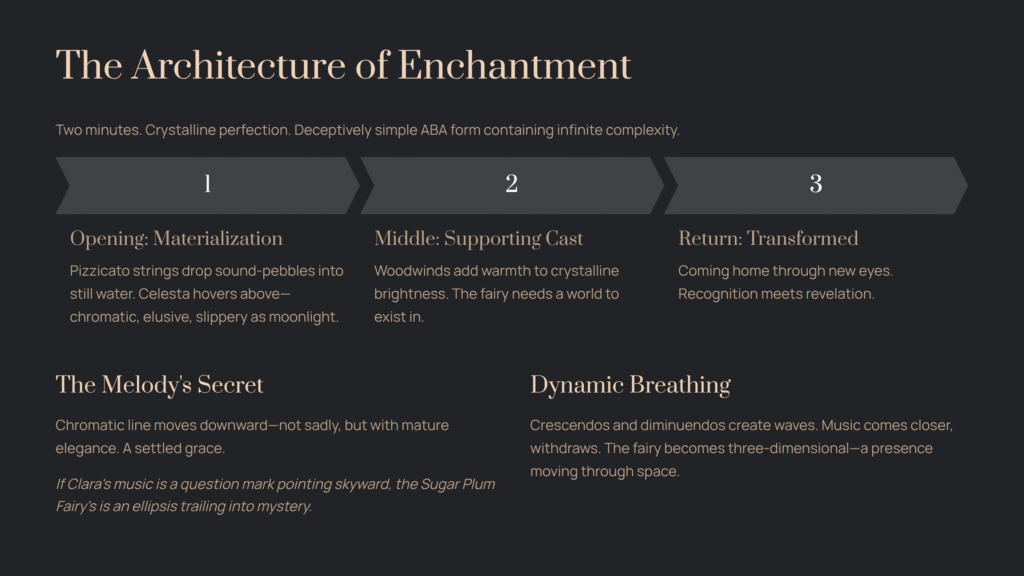
In this dance, the celesta does more than add sparkle around an existing tune: it carries the melody. Beneath it, plucked strings provide a quiet, regular pulse. The contrast makes each celesta note easy to pick out, even when the orchestra adds color around it.
Try imagining the melody played on a full, sustained string section. Its notes would be the same, but its character would change. On the celesta, each sound appears and disappears before you can quite hold on to it. The Sugar Plum Fairy’s music feels elusive partly because Tchaikovsky chose an instrument that behaves that way.
What to Listen for in the Dance
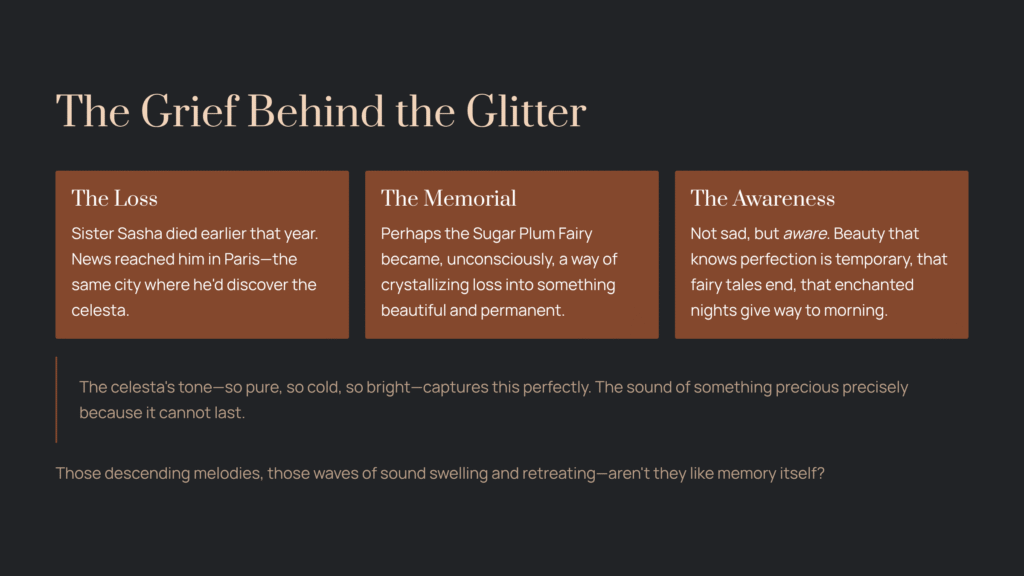
Start with the first few seconds. The low, plucked notes establish a measured tread, leaving plenty of space above them. Then the celesta enters. Notice how its light tone seems separate from the pulse underneath, even though the two fit precisely together. In a performance of the ballet, that measured beat also supports a dancer’s movement.
Next, follow the melody’s small steps. It does not simply rise into a broad, singable phrase. Some notes move by half steps, the smallest distance between neighboring keys on a piano. Those close movements give the line its slightly unsettled quality. If the tune feels playful but hard to predict, this is one reason.
As the dance continues, listen for the change in activity around the celesta. Low woodwinds and strings add weight and motion, so the piece briefly feels busier than its opening suggests. When the texture thins again, the celesta’s tone stands out afresh. There is no need to watch a clock for these moments: follow the shift from spare sounds to a fuller group and back.
The dance is brief, but it never needs to become loud to hold your attention. Its interest lies in the spacing of the notes, the contrast between high and low sounds, and the way the accompaniment lets you hear the melody clearly. On a second hearing, follow the plucked pulse instead of the celesta. You may find that the quiet background is what makes the famous sound seem to float.
For another dance from the same ballet, our guide to the Waltz of the Flowers follows a much broader orchestral sound. Tchaikovsky could give two dances in one work remarkably different shapes.
Dance of the Sugar Plum Fairy in Fantasia
One documented place to hear this music outside the ballet is Disney’s Fantasia (1940). Its animated sequence uses music from The Nutcracker suite, including Dance of the Sugar Plum Fairy. The images show fairies bringing changes to the natural world. For many viewers, that pairing made the celesta’s sound familiar long before they learned the instrument’s name.
Fantasia gives the music a new setting; it does not tell the ballet’s plot. If its images are what come to mind when you hear the opening notes, try hearing the dance once without them. The steady plucked accompaniment and the celesta’s small, darting melody offer their own picture of how the music moves.
The piece also works in concert because its details survive without scenery or choreography. Listen to how a conductor balances the celesta against the orchestra: the melody needs room, while the lower sounds give it shape. Different performances can bring those relationships forward in different ways.
Tchaikovsky wrote many dances, and a waltz offers another useful comparison. In our guide to the waltz from his Serenade for Strings, the melody flows through a longer, more continuous line. Returning to the Sugar Plum Fairy afterward makes its clipped, delicate phrases easier to hear.
What the Music Means
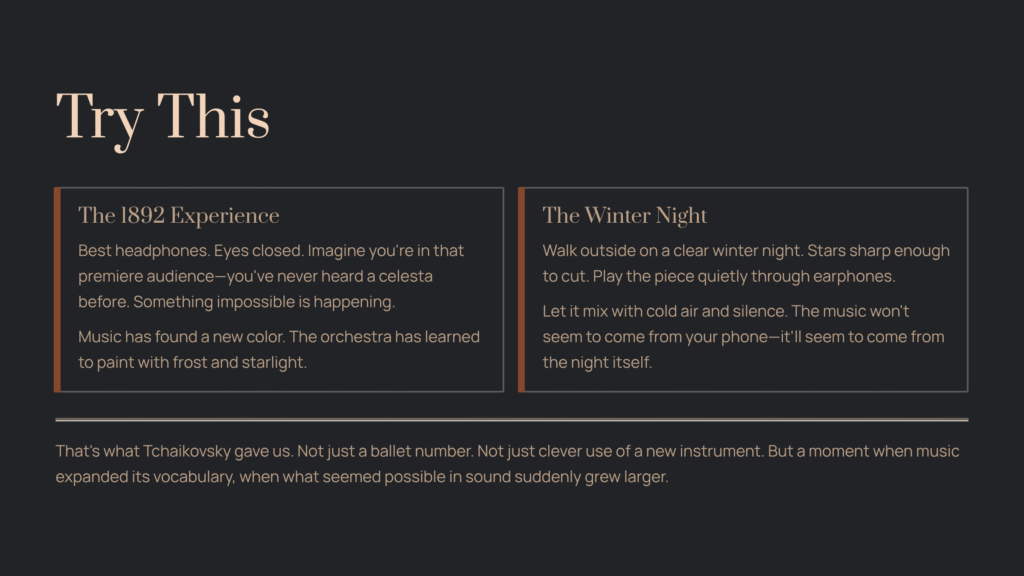
There is no single hidden message you need to decode. The dance belongs to a particular character and scene, and its unusual sound helps distinguish her from the other figures in The Nutcracker. Beyond that, listeners can reasonably hear elegance, playfulness, or an edge of strangeness in the same short piece.
Its familiarity can make the celesta seem like an obvious choice now. At the time Tchaikovsky wrote the ballet, it was a relatively new instrument. Hearing the dance with fresh ears means noticing the decision behind that familiar sound: a light melody set against a quiet pulse, with just enough movement around it to keep it from standing still.
Listen to This Piece
Frequently Asked Questions
Who wrote Dance of the Sugar Plum Fairy, and when?
Pyotr Ilyich Tchaikovsky wrote it for The Nutcracker in 1891–92. The full ballet premiered in St. Petersburg in 1892.
What instrument plays the famous melody?
The melody is played on the celesta, a keyboard instrument whose hammers strike metal plates. Its clear, quickly fading notes are a large part of the dance’s recognizable sound.
Is Dance of the Sugar Plum Fairy in Fantasia?
Yes. Disney’s Fantasia (1940) uses it in an animated sequence set to selections from The Nutcracker suite. That sequence presents its own images rather than staging the ballet’s Sugar Plum Fairy scene.
Sources
Part of: Heard It Somewhere? · Start Here